Mountjoy Castle
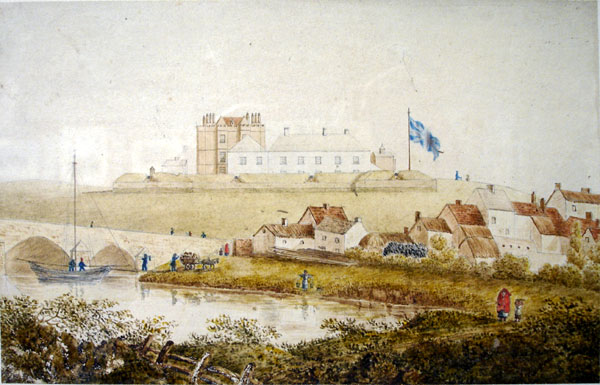
Mountjoy Castle stands as a significant 17th-century military fortification perched on a hill overlooking Lough Neagh, the largest lake in Ireland, near the hamlet of Brockagh in County Tyrone, Northern Ireland. Constructed between 1602 and 1605 by Charles Blount, the 1st Earl of Devonshire and 8th Baron Mountjoy, the castle was a strategic English stronghold designed to assert control over the rebellious province of Ulster during a turbulent period of Irish history.
The castle was built on the site of a former O'Neill clan fort known as Fuath na nGall, meaning "Hatred of Foreigners," which had been captured by Lord Mountjoy during the Nine Years' War. This location was chosen for its commanding views over the surrounding landscape and Lough Neagh, providing a critical vantage point for military operations against Irish chieftains such as Hugh O'Neill.
Historical context and strategic importance
Mountjoy Castle was constructed during the early 17th century as part of the English Crown's campaign to consolidate power in Ulster, a region that had long resisted English rule. The castle functioned primarily as a military fort rather than a traditional residential castle, reflecting the intense conflict of the era. Its establishment was integral to the suppression of the Nine Years' War (1594-1603) and subsequent Irish uprisings.
During the Irish Rebellion of 1641, Mountjoy Castle became a focal point of conflict. It was seized by forces loyal to Turlough O'Neill, who held it until 1643 when General Robert Monro retook the fortress. The castle endured multiple sieges and partial destruction, including a significant burning in 1643. Following the rebellion's suppression, the English Parliament ordered the castle's dismantling in 1648 to prevent its reuse by insurgents.
Later, in 1690, the castle served as a military base for King William III during the Williamite-Jacobite wars, underscoring its continued strategic relevance. After this period, Mountjoy Castle ceased to be used for military purposes and gradually fell into ruin.
Architectural features and construction details
Mountjoy Castle is a notable example of a hill castle designed primarily for defense and military utility. The structure is built predominantly from distinctive red clay bricks sourced locally from the Coalisland area, with the lower story faced externally in rough-cut stone to provide additional strength and protection against attack.
The castle's layout consists of a central rectangular block fortified by four spear-shaped angle towers positioned at each corner. These towers are equipped with gun loops, narrow apertures that allowed defenders to fire weapons while remaining shielded. The northwest tower and sections of the western curtain wall have suffered partial collapse, but much of the structure remains intact, offering valuable insight into early 17th-century military architecture.
The castle rises two stories high, with the upper floor featuring wide windows designed to admit natural light, suggesting that some level of comfort was considered within this otherwise austere fortress. The original entrance was located at the south side of the eastern curtain wall, which connected the towers and formed a defensive perimeter.
Defensive earthworks and garrison capacity
Surrounding the castle was an earthen rampart, an embankment of soil constructed to enhance its defensive capabilities. This enclosure was capable of housing a substantial garrison, reportedly accommodating up to 1,000 soldiers and 100 horses. The combination of natural elevation and man-made fortifications made Mountjoy Castle a formidable military installation during its operational period.
Current condition and preservation
Today, Mountjoy Castle stands as a partially preserved ruin. While some parts of the structure, such as the northwest tower and western curtain wall, have collapsed, the majority of the castle's footprint and key architectural elements remain visible. The site is freely accessible to the public, allowing visitors to explore the evocative remains and appreciate the castle's historical significance.
The castle is protected as a historic monument, recognized for its role in the military history of Northern Ireland and its distinctive red brick construction, which sets it apart from many other contemporary stone castles in the region.
Visiting Mountjoy Castle
Visitors to Mountjoy Castle can explore the ruins at their own pace, as the site is open without formal restrictions. The castle's elevated position offers panoramic views of the surrounding countryside and Lough Neagh, enhancing the visitor experience. While the structure lacks modern visitor facilities, its historical ambiance and scenic location make it a compelling destination for those interested in military history and early modern fortifications.
Nearby attractions
The castle's proximity to the town of Coalisland and the municipality of Dungannon provides opportunities to explore additional cultural and historical sites in County Tyrone. The natural beauty of the Lough Neagh area also offers recreational activities such as walking, birdwatching, and boating.
Frequently asked questions
- When was Mountjoy Castle built? Mountjoy Castle was constructed between 1602 and 1605 during the early 17th century by Lord Mountjoy as a military fortification.
- What materials were used to build Mountjoy Castle? The castle was built primarily from locally sourced red clay bricks with a stone-faced lower story for added defense.
- Can visitors access Mountjoy Castle freely? Yes, the castle ruins are freely accessible to the public without entrance fees or formal restrictions.
- What is the historical significance of Mountjoy Castle? It served as a key English military stronghold during the Nine Years' War and the Irish Rebellion of 1641, playing a crucial role in regional conflicts.
- Is Mountjoy Castle well preserved? The castle is partially preserved with some collapsed sections but retains significant architectural features and its original footprint.
- Are there guided tours available at Mountjoy Castle? There are no formal guided tours on site, but local heritage organizations occasionally offer events and informational materials.
- What can visitors see from Mountjoy Castle? The castle's hilltop location provides commanding views over Lough Neagh and the surrounding countryside.
Frequently asked questions (FAQ)
- When was Mountjoy Castle built?
- Mountjoy Castle was constructed between 1602 and 1605 during the early 17th century by Lord Mountjoy as a military fortification.
- What materials were used to build Mountjoy Castle?
- The castle was built primarily from locally sourced red clay bricks with a stone-faced lower story for added defense.
- Can visitors access Mountjoy Castle freely?
- Yes, the castle ruins are freely accessible to the public without entrance fees or formal restrictions.
- What is the historical significance of Mountjoy Castle?
- It served as a key English military stronghold during the Nine Years' War and the Irish Rebellion of 1641, playing a crucial role in regional conflicts.
- Is Mountjoy Castle well preserved?
- The castle is partially preserved with some collapsed sections but retains significant architectural features and its original footprint.
- Are there guided tours available at Mountjoy Castle?
- There are no formal guided tours on site, but local heritage organizations occasionally offer events and informational materials.
- What can visitors see from Mountjoy Castle?
- The castle's hilltop location provides commanding views over Lough Neagh and the surrounding countryside.
Information
Ticket prices
Free
Current owner
Local authorities
Website
Visit websiteAddress
Mountjoy Road, Brockagh, County Tyrone, Northern Ireland
Sources & official resources
Verify the information above using these authoritative references.
Loading map...
Visitor reviews
No reviews yet. Been here? Write the first review and help other travelers!
Write the first reviewVisited this castle? Share your experience
Your review helps other travelers and adds first-hand knowledge to our encyclopedia.