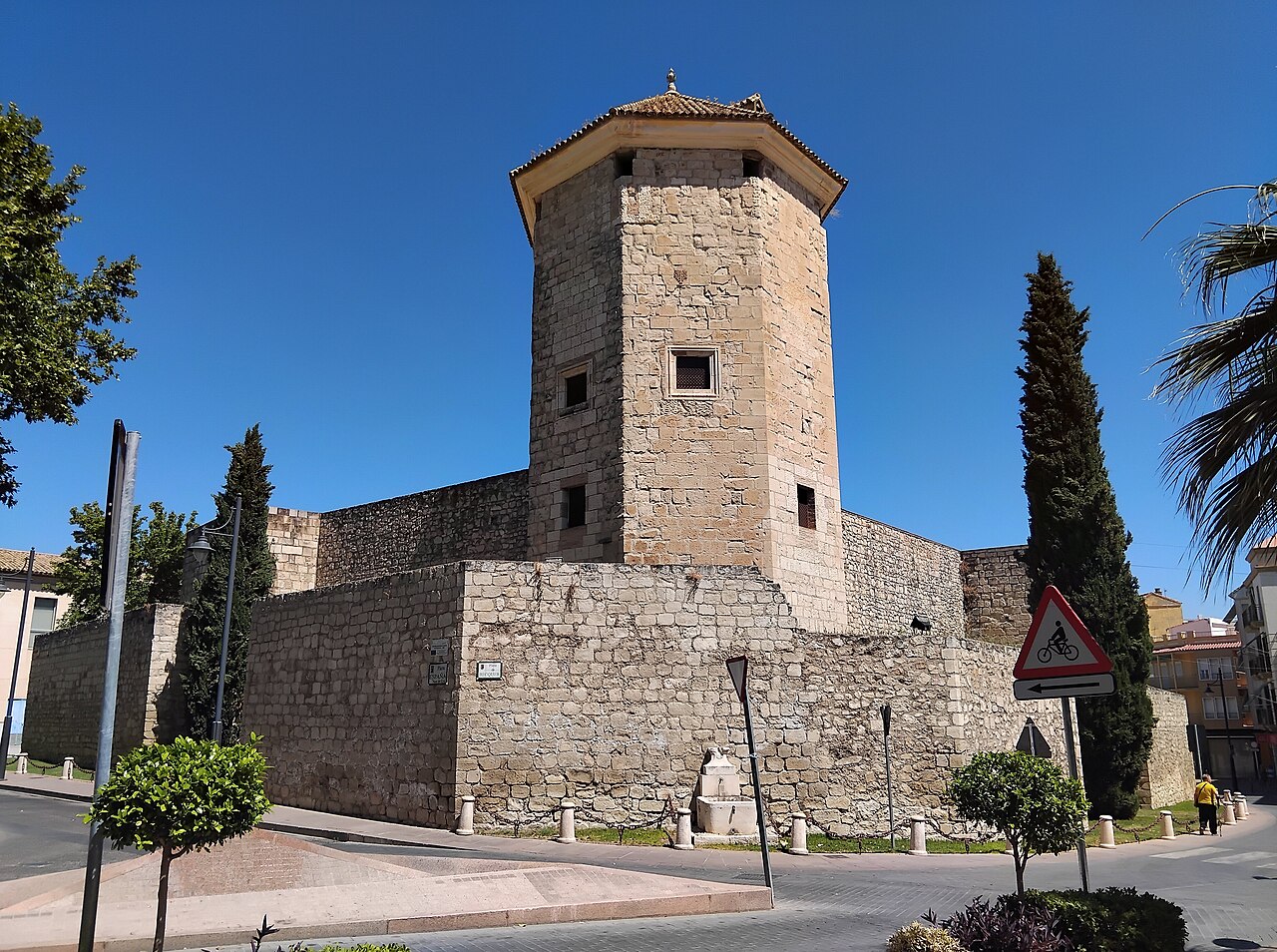
Monturque Castle
Monturque Castle, known locally as Castillo de Monturque, is a historic fortress situated on a hill overlooking the village of Monturque in the province of Córdoba, Spain. This castle occupies a strategic position that has been significant since ancient times, built atop the remains of Roman structures and later expanded during the Islamic period in the Iberian Peninsula.
Although the exact date of the castle's initial construction remains uncertain, archaeological evidence points to its origins during the reign of the Umayyad Caliphate (661–750 AD). The castle was established on Roman ruins, reflecting the layered history of this region where successive civilizations built upon earlier foundations. This early phase likely consisted of a fortified stronghold designed to control the surrounding territory.
The castle's medieval transformation and Christian conquest
In 1240, the castle was captured by Ferdinand III of Castile during the Christian Reconquista, marking a significant shift in control from Muslim to Christian hands. Following this conquest, the castle's ownership frequently alternated between the Crown and various noble families. A notable early record from 1273 documents how Martin Sánchez and his wife, Doña Munia, transferred half of the castle's keep to their grandson, Lope, illustrating the castle's role as a noble residence and feudal asset.
Architectural features and layout
The extant remains of Monturque Castle primarily date from the 13th and 14th centuries, reflecting extensive rebuilding efforts after the Christian takeover. The castle has a rectangular layout fortified by corner towers, a common design in late-medieval military architecture intended to provide comprehensive defensive coverage. The presence of a rock-cut moat on two sides of the castle, carved directly into the hill, further enhanced its defensive capabilities by isolating it from the rest of the terrain.
The keep (Torre del Homenaje) stands prominently at the center of the Patio de Armas. This tower is characterized by its sober and robust construction, indicative of its primary function as a defensive stronghold rather than a permanent residence. Architectural analysis suggests the keep was intended for short-term accommodation of guests or garrisons, lacking modifications for long-term habitation. The keep also shows evidence of late 15th-century rebuilding, reflecting ongoing maintenance and adaptation during the castle's active use.
Defensive elements and strategic location
Monturque Castle’s position atop a hill provided a commanding view of the surrounding landscape, which was crucial for surveillance and defense. The rock-cut moat served as a formidable barrier against attackers, while the corner towers allowed defenders to cover all approaches with crossfire. The castle’s fortifications embody typical features of late-medieval military architecture in southern Spain, combining natural topography with man-made defenses.
The castle's historical context and ownership
During the 14th century, Monturque Castle became part of the estate of the Aguilar family, who maintained possession for several centuries. Interestingly, historical records suggest that during the 14th and 15th centuries, the castle was not directly connected to a nearby village, indicating its role as a purely military or noble residence rather than a center of settlement. It was not until the 16th century that mentions of a village associated with the castle appear, reflecting changes in the local population and settlement patterns.
Current condition and accessibility
Today, Monturque Castle remains a partially preserved ruin, with significant portions of the keep and walls still visible. However, the castle is not open to public visits, limiting access to its interior spaces. Visitors can view the castle from public roads, particularly from Calle Rafael de Lara, which offers clear sightlines to the fortress. The inability to explore the interior is a loss for those interested in medieval architecture and history, as the castle contains valuable structural features and historical layers.
Preservation efforts and cultural significance
While the castle is not currently accessible, its preservation as a historic monument contributes to the cultural heritage of the Córdoba region. Monturque Castle illustrates the complex history of territorial control in Andalusia, transitioning from Roman to Islamic to Christian rule. Its architectural features provide insight into medieval fortification techniques and noble residence designs in southern Spain.
Architectural style and historical importance
Monturque Castle exemplifies late-medieval military architecture with its functional rectangular plan, corner towers, and defensive moat. The structure reflects the typical Gothic-influenced fortification style of the period, adapted to local topography. The castle’s layered construction phases—from Roman foundations to Umayyad origins and Christian modifications—offer a tangible narrative of the region’s turbulent history.
Its keep, the Torre del Homenaje, remains a focal point for understanding the castle’s defensive and residential functions. Despite its modest size, the tower was well-equipped to shelter guests or soldiers temporarily, underscoring its role as a military stronghold rather than a noble palace.
Visiting Monturque Castle
Although the castle’s interior is not accessible, visitors to Monturque can appreciate its historical presence from nearby vantage points. The castle’s silhouette against the hilltop landscape serves as a reminder of the region’s medieval past. The village of Monturque itself offers a glimpse into rural Andalusian life, complementing the historical experience of the castle ruins.
For enthusiasts of medieval architecture and Spanish history, Monturque Castle represents a noteworthy site illustrating the evolution of fortifications in southern Spain. Its combination of Roman, Islamic, and Christian elements makes it a unique example of cultural and architectural synthesis over centuries.
Frequently asked questions (FAQ)
- When was Monturque Castle built?
- Monturque Castle was built on Roman remains during the Umayyad Caliphate period, with significant rebuilding in the 13th and 14th centuries.
- Can I visit the interior of Monturque Castle?
- The interior of Monturque Castle is not open to the public, but the castle can be viewed from nearby public roads, especially Calle Rafael de Lara.
- What are the main architectural features of Monturque Castle?
- The castle features a rectangular layout with corner towers, a rock-cut moat on two sides, and a central keep known as Torre del Homenaje.
- Who owned Monturque Castle historically?
- The castle was owned by various nobles and the Crown, notably the Aguilar family from the 14th century onward.
- What is the condition of Monturque Castle today?
- Monturque Castle is partially preserved, with significant remains of its walls and keep still visible.
Information
Address
Calle Rafael de Lara, Monturque, Córdoba, Spain
Loading map...
Visitor reviews
No reviews yet. Been here? Write the first review and help other travelers!
Write the first reviewVisited this castle? Share your experience
Your review helps other travelers and adds first-hand knowledge to our encyclopedia.