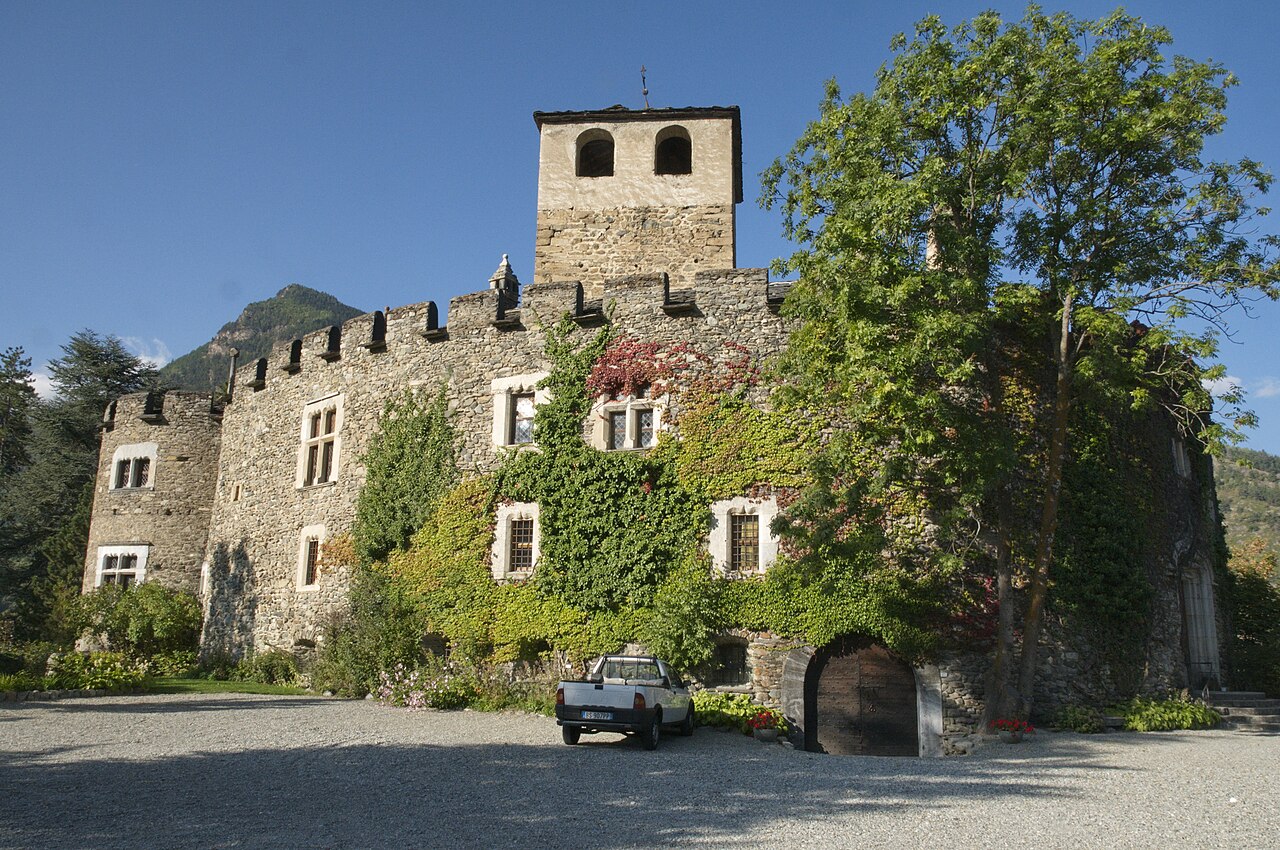
Montmayeur Castle

Montmayeur Castle in Arvier, Italy
Arvier, Italy
High Medieval (11th–13th c.)

Montmayeur Castle stands as a significant example of high medieval fortification in the Aosta Valley region of Italy. Constructed in 1271 by the brothers Anselmo and Aimone D'Avise, the castle was strategically positioned on a steep promontory overlooking the orographic right bank of the Dora Valgrisenche river. This commanding location allowed it to dominate the entrance to the valley, serving both defensive and territorial control purposes during the turbulent medieval period.

Historical context and strategic importance

During the 13th century, the Aosta Valley was a contested region with various noble families vying for control. The construction of Montmayeur Castle by the D'Avise family reflects the need to establish fortified strongholds to secure important routes and assert influence over the surrounding lands. The castle's position enabled surveillance of the valley and control over movement along the river, which was a vital artery for trade and military maneuvers.

Architectural features and layout

Although today Montmayeur Castle is largely in ruins, significant architectural elements remain that illustrate its original design and defensive capabilities. The most prominent surviving feature is the cylindrical tower, which is crowned with distinctive swallowtail battlements, a characteristic defensive motif typical of the period and region. These battlements provided protection for archers and defenders while allowing them to observe and repel attackers effectively.

Remnants of the boundary walls encircle the site, indicating the castle's enclosed courtyard and defensive perimeter. The walls would have been constructed with local stone, thick enough to withstand sieges and assaults common in medieval warfare. The castle's elevated position on a promontory added natural defense, making direct attacks difficult.

Access and current condition

Access to Montmayeur Castle is limited to footpaths, with the main route departing from the village of Grand Haury, situated just above the town of Arvier. The challenging terrain and the castle's ruinous state mean that visitors should be prepared for a hike and limited facilities. Despite its condition as a ruin, the site offers valuable insight into medieval military architecture and the historical landscape of the Aosta Valley.

Preservation and cultural significance

Montmayeur Castle is recognized as an important cultural heritage site within the region. Its ruins serve as a tangible link to the medieval history of northern Italy and the feudal dynamics that shaped the area. Efforts to preserve the remaining structures focus on preventing further decay while maintaining the site's accessibility for educational and touristic purposes.

The castle's distinctive cylindrical tower with swallowtail battlements is often highlighted in studies of medieval fortifications in the Alps, illustrating the adaptation of defensive architecture to mountainous terrain and regional styles.

Exploring the surroundings

The castle's location offers visitors not only a glimpse into medieval architecture but also stunning views of the Dora Valgrisenche valley and the surrounding Alpine landscape. The hike to the castle from Grand Haury is a popular activity for those interested in history, nature, and panoramic vistas. Nearby, the town of Arvier provides amenities and additional cultural experiences related to the heritage of the Aosta Valley.

Frequently asked questions (FAQ)

How do I get to Montmayeur Castle?
Montmayeur Castle is located in Arvier, Italy, and can be accessed by car or public transport. The nearest major city is Aosta, from where you can take a bus or drive to the castle. Parking is available nearby, making it convenient for visitors.
What is the historical significance of Montmayeur Castle?
Montmayeur Castle dates back to the 13th century and is an important example of medieval architecture in the Aosta Valley. It served as a defensive fortress during the feudal era and played a significant role in local history. Its well-preserved structure offers insights into the life and times of its original inhabitants.
When was Montmayeur Castle built?
The construction of Montmayeur Castle began in the 13th century, with various modifications and expansions taking place over the years. The castle has withstood the test of time and remains a significant landmark in the region. Its historical layers reflect the evolving architectural styles of medieval Italy.
Can I visit Montmayeur Castle?
Yes, Montmayeur Castle is open to visitors throughout the year. Guided tours are available, providing an in-depth look at the castle’s history and architecture. It is advisable to check the castle’s official website for any specific visiting requirements or seasonal changes in access.
Why is Montmayeur Castle a popular tourist attraction?
Montmayeur Castle attracts visitors due to its stunning architecture and rich history. The picturesque setting in the Aosta Valley offers breathtaking views, making it a perfect spot for photography and exploration. Its cultural significance and well-maintained grounds enhance the experience for history enthusiasts and casual visitors alike.
Is it possible to have guided tours at Montmayeur Castle?
Yes, guided tours are available at Montmayeur Castle, providing visitors with a comprehensive understanding of its history and architecture. These tours are led by knowledgeable guides who share fascinating stories and insights about the castle. It is recommended to book in advance, especially during peak tourist seasons.
What are the opening hours for Montmayeur Castle?
Montmayeur Castle typically opens to visitors from 10 AM to 6 PM, but these hours may vary based on the season. It is best to verify the current opening hours on the official website before planning your visit. Special events may also affect regular operating hours.
What are the ticket prices for Montmayeur Castle?
Ticket prices for Montmayeur Castle are generally affordable, with discounts available for children, students, and seniors. Group rates may also be offered, making it a great option for school trips or family outings. Check the castle's official website for the most current pricing information and any special promotions.
What are some nearby attractions to Montmayeur Castle?
In addition to Montmayeur Castle, the Aosta Valley offers various attractions such as the Roman Theatre of Aosta and the stunning Gran Paradiso National Park. Visitors can also enjoy local cuisine and explore charming villages nearby. The region is rich in history and natural beauty, making it an ideal destination for a full day of exploration.

Loading map...

Visitor reviews

No reviews yet. Been here? Write the first review and help other travelers!

Write the first review

Visited this castle? Share your experience

Your review helps other travelers and adds first-hand knowledge to our encyclopedia.

Write a review

(5/5)

0/2000 characters

Your review will be visible after admin approval

Nearby castles

2.2 km

Avise Castle

Avise, Italy

Avise Castle stands as a remarkable example of a late medieval hill castle located in the municipality of Avise in the region of Molise, Italy. Erected at the end of the 15th century by the noble d’Avise family, the castle embodies a transition from purely defensive medieval fortresses to fortified noble residences. Its historical and architectural significance is reflected in its enduring presence as a cultural landmark within the village, blending military architecture with Renaissance residential design. The origins and historical context of Avise Castle The castle’s origins trace back to the late 15th century, specifically around 1492, when it was constructed either by Bonifacio d’Avise or his relative Rodolphe d’Avise. This period marked a pivotal moment for the d’Avise family, who shifted their residence from the older Castello di Blonay near the village church to this new fortified home. Unlike earlier medieval fortresses, Avise Castle was designed primarily as a noble residence, reflecting the evolving social and political landscape of the Renaissance era in northern Italy. The d’Avise family maintained ownership of the castle for several generations, during which the structure was adapted to meet changing residential and defensive needs. In 1645, ownership of parts of the castle passed to the de Blonay family through familial ties, illustrating the interconnected noble lineages of the region. Later, the castle came into the possession of the Bianco di San Secondo family before being sold to private owners in 1798. Throughout these transitions, the castle retained its status as a symbol of noble authority and local governance. Architectural features and layout The tower and defensive elements The most prominent feature of Avise Castle is its three-story main building accompanied by a quadrangular tower that rises above the rest of the complex. The tower, originally part of the earlier medieval defensive system, features machicolations—overhanging openings used for defense—decorated with a distinctive Gothic "goccia rovesciata" (inverted drop) motif. This decorative element not only served a practical purpose but also added an artistic flourish characteristic of the period. The tower’s entrance is marked by carved coats of arms belonging to the d’Avise family and the inscription of their motto, "Qui tost Avise tard se repent", which translates roughly as "He who acts quickly repents late." This motto, prominently displayed on the main portal, underscores the family’s identity and their connection to the castle. Façade and materials The castle’s façade is notable for its 16th-century paired windows framed with ancient stone elements sourced from local quarries. The frames incorporate a unique combination of oceanic marble, gneiss from deeper continental layers, and amphibolite resulting from magmatic intrusions. Doorways and window surrounds utilize marble and calcareous schist (chert), showcasing the skilled regional craftsmanship and the aesthetic preferences of the Renaissance period. Interior rooms and artistic elements Inside, Avise Castle contains a variety of historically significant rooms that reveal much about the lifestyle and tastes of its noble inhabitants. The vast interior hall features a large fireplace and retains fragments of frescoes overlain by graffiti from different eras, illustrating the castle’s long and layered history. One notable chamber is the "chamber of the safe", which provides insight into the security and privacy concerns of the castle’s residents during the 19th century. Another unique room is the "chamber of corbels", named for its fourteen carved wooden corbels depicting animals, monsters, and figures dressed in fifteenth-century garments. These carvings reflect the d’Avise family’s patronage of art objects aligned with the official tastes of the period, emphasizing their cultural sophistication. The castle once housed a pewter collection and various furnishings that highlighted the noble lifestyle, though some of these items have been lost over time. The interior also includes a coffered ceiling and other decorative woodwork, which were restored during the 19th century, further cementing the castle’s Renaissance character. Historical uses and transformations Throughout its history, Avise Castle served multiple roles beyond that of a noble residence. The adjacent Blonay Castle complex, older and located near the parish church of San Brizio, initially functioned as a stronghold and prison tower, known locally as the "prison tower." In 1787, Philippe de Blonay asserted his feudal right to incarcerate criminals there, highlighting the castle’s judicial significance in the region. Avise Castle itself, while primarily residential, incorporated defensive features typical of the late medieval period. Its position on elevated ground offered strategic views over the village and surrounding landscape, reinforcing its role as a symbol of noble power and authority. By the late 20th century, the castle ceased to be inhabited continuously, marking the end of an era. It has since been restored and repurposed as a venue for cultural events and temporary exhibitions, maintaining its relevance within the community. Currently, the castle houses a wine bar and restaurant, which limits public access but preserves the site’s historical ambiance. Preservation and cultural significance Avise Castle is considered a well-preserved example of a late medieval fortified noble residence in northern Italy. Its combination of defensive architecture and Renaissance residential features offers valuable insights into the social and artistic developments of the period. The castle’s restoration efforts have focused on maintaining its architectural integrity while adapting it for contemporary use. The preservation of interior elements such as the carved corbels, frescoes, and stonework contributes to its status as a cultural heritage site. Its location near the parish church of San Brizio and its visibility from other historical ruins like Castello di Cré emphasize its integration within the historical fabric of Avise village. As a site that has witnessed centuries of noble lineage, judicial authority, and architectural evolution, Avise Castle remains a significant monument in the Molise region. Visiting Avise Castle While Avise Castle is not generally open to the public due to its current function as a wine bar and restaurant, visitors can appreciate its exterior and architectural details from the surrounding village. The castle’s prominent position and distinctive features make it a notable landmark for those interested in medieval and Renaissance architecture. Events and temporary exhibitions held at the castle occasionally provide opportunities for a closer look at its interiors and historical artifacts. Visitors are encouraged to check local listings for special openings or cultural programs hosted at the site.

Late Medieval (14th–15th c.)
Details
2.7 km

La Mothe Castle

Arvier, Italy

La Mothe Castle stands prominently on a hill overlooking the village of Arvier in the Aosta Valley region of Italy. This high medieval fortress dates back to the 12th century, with its earliest documented mention in 1287 when Aimone de Arverio paid feudal homage to the Count of Savoy. Though the castle now lies largely in ruins, its remaining structures provide valuable insight into medieval fortification architecture and the complex feudal history of the region.Historical background and ownershipThe castle’s origins are estimated between the late 12th century and early 13th century, a period marked by the consolidation of feudal power in the Alpine territories. Initially held by the noble De Arverio family, the castle was a symbol of their local authority. According to the 18th-century historian Jean-Baptiste De Tillier, the castle passed into the hands of the Savoy nobleman Aimar de la Mothe towards the end of the 13th century through marriage to the heiress of the De Arverio family. This union not only transferred ownership but also led to significant restoration and modifications, after which the castle was named La Mothe.Architectural features and layoutLa Mothe Castle was originally designed as a hill castle, strategically positioned to control the surrounding territory and oversee the village below. The fortress featured a four-sided tower which remains the most intact part of the structure today. This tower would have served as both a defensive stronghold and a residence.In addition to the square tower, the castle included a round tower and extensive perimeter walls, portions of which still survive as ruins. The round tower likely provided additional defense and observation capabilities, typical of medieval fortifications aiming to cover multiple angles of attack. The perimeter walls enclosed a courtyard and other ancillary buildings that supported the castle’s defensive and domestic functions.15th-century modificationsDuring the 15th century, La Mothe Castle underwent important modifications reflecting changes in military architecture and the needs of its occupants. These alterations may have included reinforcement of walls, adaptation of towers for artillery use, or the addition of new defensive structures to respond to evolving siege technologies. While specific details of these modifications are limited, they indicate the castle’s continued strategic importance well into the late medieval period.Strategic significance and feudal roleSituated in the Val d’Aosta, La Mothe Castle played a key role in regional defense and governance under the influence of the House of Savoy. Its location allowed control over important routes through the Alps, serving both military and administrative functions. The castle’s feudal lords exercised authority over the surrounding lands, collecting homage and managing local affairs.Current condition and preservationToday, La Mothe Castle is classified as ruins, with the four-sided tower standing as the most prominent surviving element. The remnants of the round tower and perimeter walls provide a glimpse into the castle’s original footprint and defensive design. The site is accessible to visitors who can explore the ruins and appreciate the castle’s commanding position above Arvier.Efforts to preserve and study La Mothe Castle contribute to understanding the medieval history of the Aosta Valley and the architectural evolution of hilltop fortresses in this Alpine region. The castle remains a significant cultural landmark, reflecting the feudal dynamics and military strategies of the high medieval period.

High Medieval (11th–13th c.)
Details
3.6 km
Introd Castle — Italy castle

Introd Castle

Introd, Italy

Introd castle is a striking example of a medieval hill castle located in the municipality of Introd, nestled within the scenic Aosta Valley region of Italy. Perched on a promontory safeguarded by the deep gorges of the Savara and Dora di Rhêmes rivers, the castle's name itself derives from the Latin term Interaquas or the French entre-eaux, meaning "between the waters," reflecting its natural defensive position. The site likely originated in the 12th century, initially constructed as a modest fortress to oversee and control the surrounding territory. The earliest known historical records mention the castle in the mid-13th century, specifically within the castellany archives of Châtel-Argent around 1244. Notably, in 1242, the fortress was conquered by Count Amadeus IV of Savoy, marking its integration into the expanding dominion of the House of Savoy. This transition was pivotal, as the castle became a strategic stronghold within the Savoyard territories. The architectural evolution of Introd castle Originally, Introd castle resembled other regional fortifications such as Graines castle, featuring a square keep (or mastio) surrounded by a defensive perimeter wall. This initial design emphasized straightforward defense and control. However, significant transformations occurred around 1260 under the direction of Pierre Sarriod of Introd, a prominent local lord. Sarriod's renovations expanded and fortified the castle, adapting it to the military needs of the period. During the 15th century, further architectural modifications softened the castle's angular outlines into a distinctive five-sided, almost circular shape. This unique form set Introd apart from other castles in the Val d’Aosta and enhanced its defensive capabilities by minimizing blind spots and better deflecting attacks. The castle's walls, towers, and battlements were adapted to meet evolving military strategies and technologies. Structural features and defensive elements The castle's main entrance is a later addition, modeled as an exact reproduction of the portal found at the nearby Issogne Castle. This gate combines both functional and aesthetic elements, symbolizing the architectural dialogue among regional fortresses. Inside, the castle contains an internal staircase inspired by the design of Fénis Castle, further linking Introd to the architectural traditions of the Aosta Valley. The central keep remains a focal point of the castle, with its robust stone construction and strategic vantage points. Inside the keep, visitors can find 16th-century inscriptions and graffiti, some of the oldest dated writings in the castle, providing valuable insights into the lives of its historical occupants. Artistic and cultural heritage within the castle The castle's interior spaces, particularly the large main hall, are adorned with decorative frescoes that run along the upper walls near the ceiling. These paintings depict various tree species and are complemented by trompe-l’œil wallpaper below, an artistic technique that creates an illusion of texture and depth. The inner courtyard also features frescoes influenced by those at Fénis Castle, highlighting a shared cultural and artistic heritage among the region's fortifications. Renaissance granary and ancillary buildings Just outside the castle stands a rare example of a Renaissance wooden granary, notable for its finely crafted wrought iron portals. This structure underscores the castle's role not only as a military fortress but also as a center of local agricultural management and storage. Nearby is the old stable known as L’Ôla, named after the local patois term for "wing," referring to its distinctive single-pitched roof. The stable's main façade is supported by five large columns, each approximately 1.8 meters in diameter. Architecturally significant, L’Ôla influenced the design of railway stations along the Aosta–Pré-Saint-Didier line, linking the castle's heritage to later regional infrastructure developments. Modern history and preservation efforts Introd castle suffered significant damage from two major fires during the 19th century, which compromised much of its original fabric. Restoration efforts began in the early 20th century, led by architect Jean Chevalley under the commission of Cavalier Gonella. These restorations aimed to preserve the castle's historical character while adapting it for contemporary use. Ownership eventually passed to the Counts Caracciolo of Brienza. As of November 30, 2023, the castle became the property of the Autonomous Region of Valle d’Aosta. It is currently managed temporarily by the Fondation Grand-Paradis in collaboration with the regional government and the municipality of Introd, reflecting a modern commitment to cultural preservation. Recent restoration projects have included the reopening of the central keep to the public in 2012, allowing visitors to explore the castle's historic core. The ground floor and castle gardens remain accessible to the public, offering a glimpse into the site's layered history and architectural grandeur. Significance within the Aosta Valley and beyond Introd castle stands as a testament to the complex history of medieval fortifications in the Aosta Valley. Its unique architectural evolution from a simple square keep to a five-sided fortress illustrates the adaptive strategies employed in castle construction over several centuries. The castle's artistic features, including frescoes and inscriptions, enrich its cultural value and provide insight into the region's historical aristocracy. Moreover, the castle's ancillary structures, such as the Renaissance granary and L’Ôla stable, link it to broader socio-economic activities beyond military defense. Its preservation and public accessibility contribute to the cultural tourism of the Aosta Valley, attracting visitors interested in medieval architecture, history, and art. Overall, Introd castle exemplifies the architectural ingenuity and historical depth of hill castles in northern Italy, making it a significant heritage site within the region and a valuable destination for scholars and tourists alike.

High Medieval (11th–13th c.)
Details