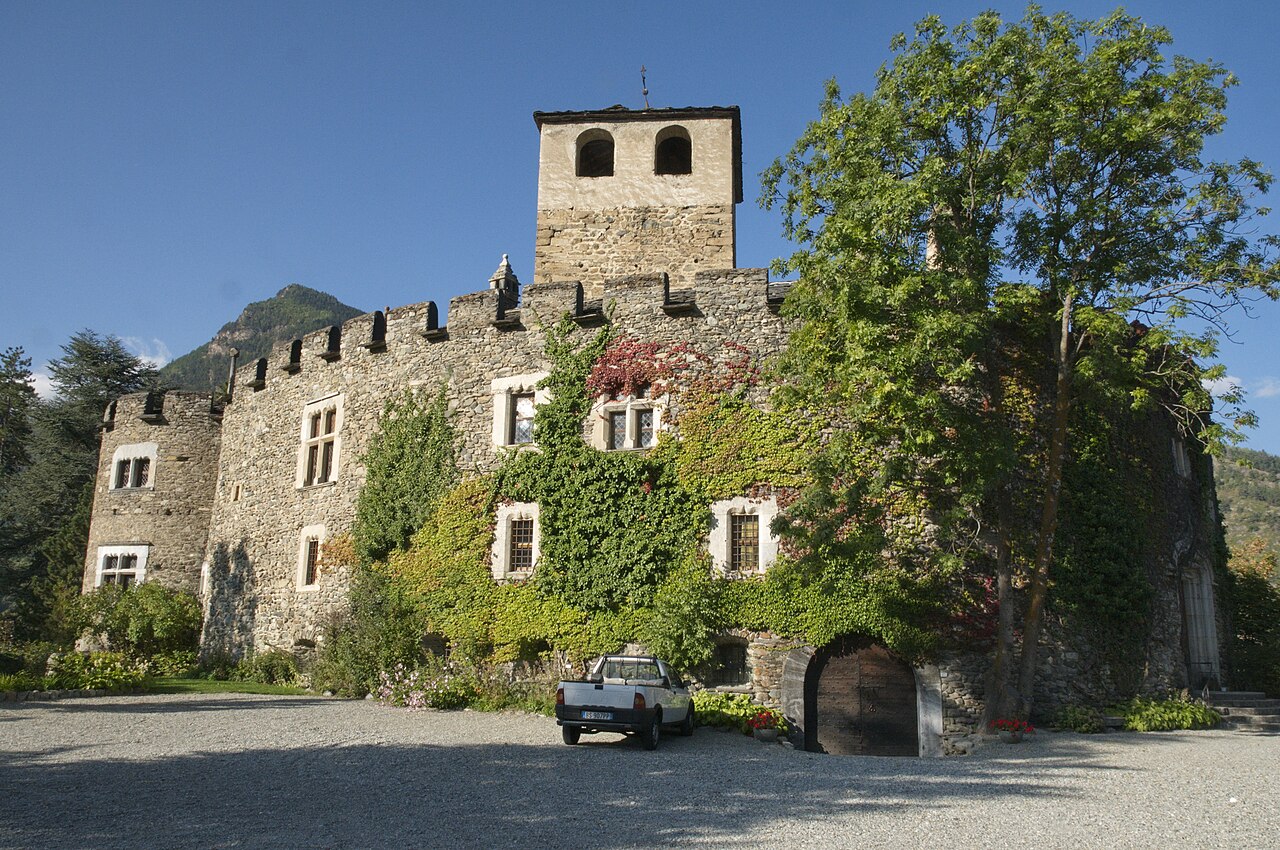
Avise Castle
Avise Castle stands as a remarkable example of a late medieval hill castle located in the municipality of Avise in the region of Molise, Italy. Erected at the end of the 15th century by the noble d’Avise family, the castle embodies a transition from purely defensive medieval fortresses to fortified noble residences. Its historical and architectural significance is reflected in its enduring presence as a cultural landmark within the village, blending military architecture with Renaissance residential design.
The origins and historical context of Avise Castle
The castle’s origins trace back to the late 15th century, specifically around 1492, when it was constructed either by Bonifacio d’Avise or his relative Rodolphe d’Avise. This period marked a pivotal moment for the d’Avise family, who shifted their residence from the older Castello di Blonay near the village church to this new fortified home. Unlike earlier medieval fortresses, Avise Castle was designed primarily as a noble residence, reflecting the evolving social and political landscape of the Renaissance era in northern Italy.
The d’Avise family maintained ownership of the castle for several generations, during which the structure was adapted to meet changing residential and defensive needs. In 1645, ownership of parts of the castle passed to the de Blonay family through familial ties, illustrating the interconnected noble lineages of the region. Later, the castle came into the possession of the Bianco di San Secondo family before being sold to private owners in 1798. Throughout these transitions, the castle retained its status as a symbol of noble authority and local governance.
Architectural features and layout
The tower and defensive elements
The most prominent feature of Avise Castle is its three-story main building accompanied by a quadrangular tower that rises above the rest of the complex. The tower, originally part of the earlier medieval defensive system, features machicolations—overhanging openings used for defense—decorated with a distinctive Gothic "goccia rovesciata" (inverted drop) motif. This decorative element not only served a practical purpose but also added an artistic flourish characteristic of the period.
The tower’s entrance is marked by carved coats of arms belonging to the d’Avise family and the inscription of their motto, "Qui tost Avise tard se repent", which translates roughly as "He who acts quickly repents late." This motto, prominently displayed on the main portal, underscores the family’s identity and their connection to the castle.
Façade and materials
The castle’s façade is notable for its 16th-century paired windows framed with ancient stone elements sourced from local quarries. The frames incorporate a unique combination of oceanic marble, gneiss from deeper continental layers, and amphibolite resulting from magmatic intrusions. Doorways and window surrounds utilize marble and calcareous schist (chert), showcasing the skilled regional craftsmanship and the aesthetic preferences of the Renaissance period.
Interior rooms and artistic elements
Inside, Avise Castle contains a variety of historically significant rooms that reveal much about the lifestyle and tastes of its noble inhabitants. The vast interior hall features a large fireplace and retains fragments of frescoes overlain by graffiti from different eras, illustrating the castle’s long and layered history.
One notable chamber is the "chamber of the safe", which provides insight into the security and privacy concerns of the castle’s residents during the 19th century. Another unique room is the "chamber of corbels", named for its fourteen carved wooden corbels depicting animals, monsters, and figures dressed in fifteenth-century garments. These carvings reflect the d’Avise family’s patronage of art objects aligned with the official tastes of the period, emphasizing their cultural sophistication.
The castle once housed a pewter collection and various furnishings that highlighted the noble lifestyle, though some of these items have been lost over time. The interior also includes a coffered ceiling and other decorative woodwork, which were restored during the 19th century, further cementing the castle’s Renaissance character.
Historical uses and transformations
Throughout its history, Avise Castle served multiple roles beyond that of a noble residence. The adjacent Blonay Castle complex, older and located near the parish church of San Brizio, initially functioned as a stronghold and prison tower, known locally as the "prison tower." In 1787, Philippe de Blonay asserted his feudal right to incarcerate criminals there, highlighting the castle’s judicial significance in the region.
Avise Castle itself, while primarily residential, incorporated defensive features typical of the late medieval period. Its position on elevated ground offered strategic views over the village and surrounding landscape, reinforcing its role as a symbol of noble power and authority.
By the late 20th century, the castle ceased to be inhabited continuously, marking the end of an era. It has since been restored and repurposed as a venue for cultural events and temporary exhibitions, maintaining its relevance within the community. Currently, the castle houses a wine bar and restaurant, which limits public access but preserves the site’s historical ambiance.
Preservation and cultural significance
Avise Castle is considered a well-preserved example of a late medieval fortified noble residence in northern Italy. Its combination of defensive architecture and Renaissance residential features offers valuable insights into the social and artistic developments of the period.
The castle’s restoration efforts have focused on maintaining its architectural integrity while adapting it for contemporary use. The preservation of interior elements such as the carved corbels, frescoes, and stonework contributes to its status as a cultural heritage site.
Its location near the parish church of San Brizio and its visibility from other historical ruins like Castello di Cré emphasize its integration within the historical fabric of Avise village. As a site that has witnessed centuries of noble lineage, judicial authority, and architectural evolution, Avise Castle remains a significant monument in the Molise region.
Visiting Avise Castle
While Avise Castle is not generally open to the public due to its current function as a wine bar and restaurant, visitors can appreciate its exterior and architectural details from the surrounding village. The castle’s prominent position and distinctive features make it a notable landmark for those interested in medieval and Renaissance architecture.
Events and temporary exhibitions held at the castle occasionally provide opportunities for a closer look at its interiors and historical artifacts. Visitors are encouraged to check local listings for special openings or cultural programs hosted at the site.
Frequently asked questions (FAQ)
- What is the historical significance of Avise Castle?
- Avise Castle, dating back to the 11th century, played a crucial role in the defense of the region during the Middle Ages. It served as a strategic fortification against invasions and has witnessed numerous historical events that shaped the local culture and heritage.
- When was Avise Castle built?
- The construction of Avise Castle began in the 11th century, with various additions and renovations occurring over the centuries. Its architecture reflects the medieval styles of the time, showcasing its long-standing presence in the region.
- What are the opening hours for Avise Castle?
- Avise Castle is typically open to visitors from 10 AM to 6 PM, Tuesday through Sunday. However, it is advisable to check the official website for any seasonal changes in hours or special closures.
- Can I take a guided tour of Avise Castle?
- Yes, guided tours are available for visitors wishing to learn more about the castle's history and architecture. These tours often provide deeper insights and stories that enhance the overall experience of exploring the site.
- Is it possible to access Avise Castle with limited mobility?
- While Avise Castle is a historic site, some areas may present challenges for visitors with limited mobility due to uneven terrain and stairs. It is recommended to contact the castle administration in advance to inquire about accessibility options and any assistance available.
- What is the best time to visit Avise Castle?
- The best time to visit Avise Castle is during the spring and early fall when the weather is mild and the surrounding scenery is at its most beautiful. These seasons also tend to have fewer tourists, allowing for a more enjoyable experience.
- Are there any nearby attractions to explore after visiting Avise Castle?
- Yes, after visiting Avise Castle, you can explore the charming village of Avise itself, as well as nearby attractions such as the stunning Valle d'Aosta region's natural parks and other historical sites. These locations offer a rich experience of both culture and nature.
- What are the ticket prices for Avise Castle?
- Ticket prices for Avise Castle are generally reasonable, with discounts available for children, seniors, and groups. It’s best to check the official website for the latest pricing information and any special promotions that may be available.
Information
Loading map...
Visitor reviews
No reviews yet. Been here? Write the first review and help other travelers!
Write the first reviewVisited this castle? Share your experience
Your review helps other travelers and adds first-hand knowledge to our encyclopedia.