Introd Castle
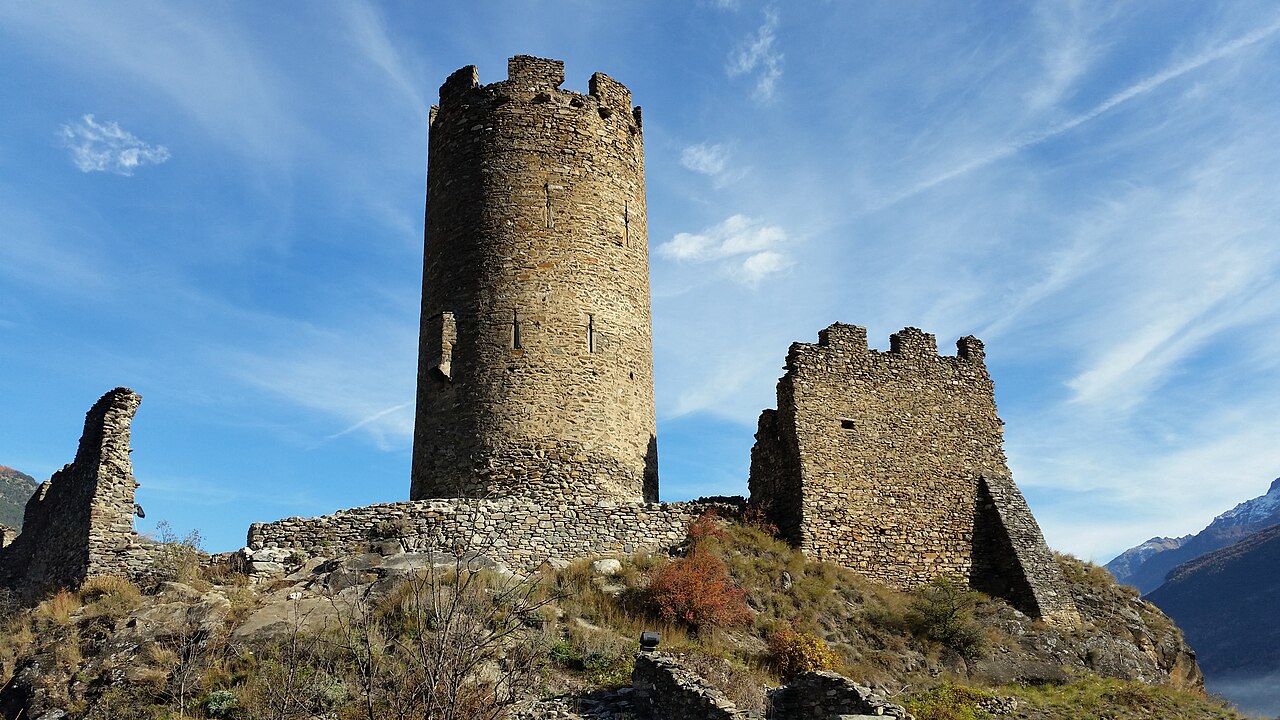
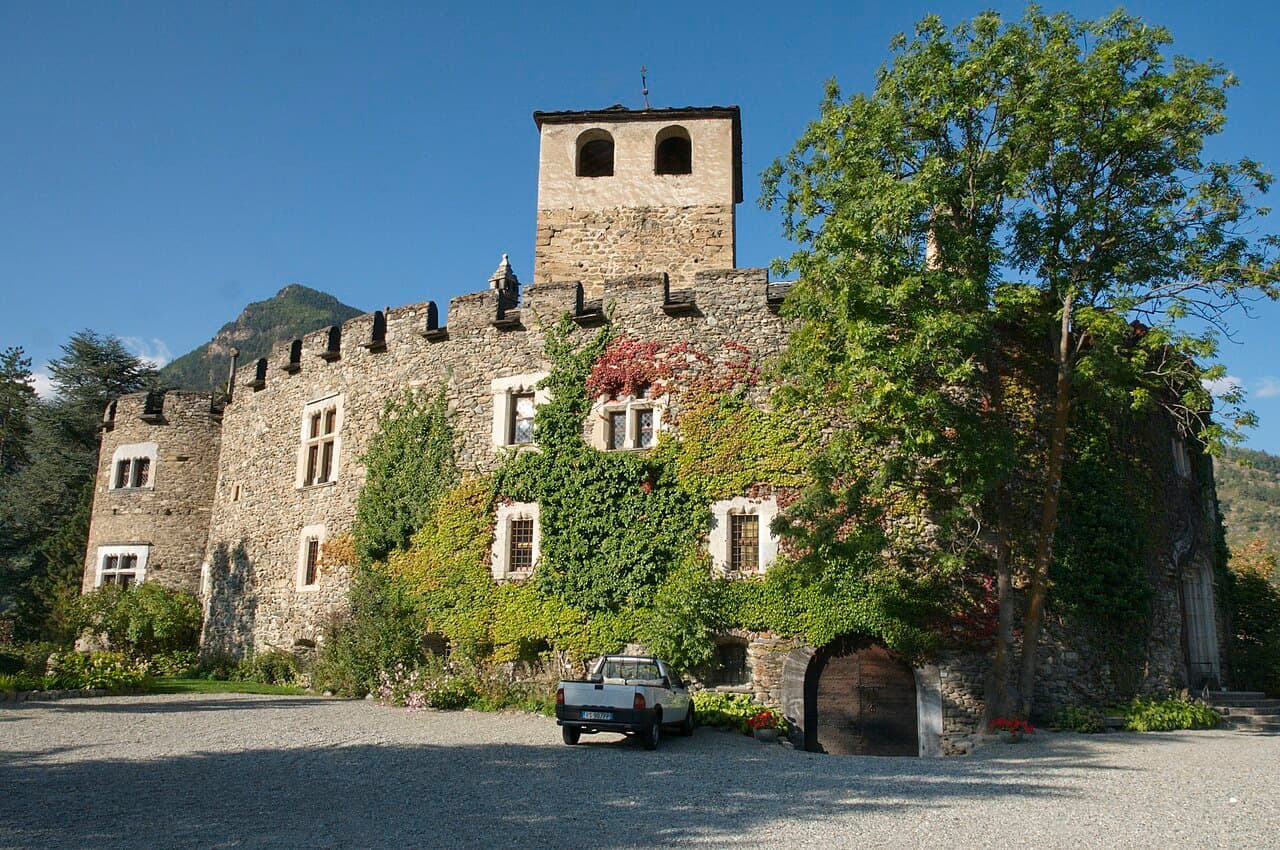
Introd castle is a striking example of a medieval hill castle located in the municipality of Introd, nestled within the scenic Aosta Valley region of Italy. Perched on a promontory safeguarded by the deep gorges of the Savara and Dora di Rhêmes rivers, the castle's name itself derives from the Latin term Interaquas or the French entre-eaux, meaning "between the waters," reflecting its natural defensive position. The site likely originated in the 12th century, initially constructed as a modest fortress to oversee and control the surrounding territory.
The earliest known historical records mention the castle in the mid-13th century, specifically within the castellany archives of Châtel-Argent around 1244. Notably, in 1242, the fortress was conquered by Count Amadeus IV of Savoy, marking its integration into the expanding dominion of the House of Savoy. This transition was pivotal, as the castle became a strategic stronghold within the Savoyard territories.
The architectural evolution of Introd castle
Originally, Introd castle resembled other regional fortifications such as Graines castle, featuring a square keep (or mastio) surrounded by a defensive perimeter wall. This initial design emphasized straightforward defense and control. However, significant transformations occurred around 1260 under the direction of Pierre Sarriod of Introd, a prominent local lord. Sarriod's renovations expanded and fortified the castle, adapting it to the military needs of the period.
During the 15th century, further architectural modifications softened the castle's angular outlines into a distinctive five-sided, almost circular shape. This unique form set Introd apart from other castles in the Val d’Aosta and enhanced its defensive capabilities by minimizing blind spots and better deflecting attacks. The castle's walls, towers, and battlements were adapted to meet evolving military strategies and technologies.
Structural features and defensive elements
The castle's main entrance is a later addition, modeled as an exact reproduction of the portal found at the nearby Issogne Castle. This gate combines both functional and aesthetic elements, symbolizing the architectural dialogue among regional fortresses. Inside, the castle contains an internal staircase inspired by the design of Fénis Castle, further linking Introd to the architectural traditions of the Aosta Valley.
The central keep remains a focal point of the castle, with its robust stone construction and strategic vantage points. Inside the keep, visitors can find 16th-century inscriptions and graffiti, some of the oldest dated writings in the castle, providing valuable insights into the lives of its historical occupants.
Artistic and cultural heritage within the castle
The castle's interior spaces, particularly the large main hall, are adorned with decorative frescoes that run along the upper walls near the ceiling. These paintings depict various tree species and are complemented by trompe-l’œil wallpaper below, an artistic technique that creates an illusion of texture and depth. The inner courtyard also features frescoes influenced by those at Fénis Castle, highlighting a shared cultural and artistic heritage among the region's fortifications.
Renaissance granary and ancillary buildings
Just outside the castle stands a rare example of a Renaissance wooden granary, notable for its finely crafted wrought iron portals. This structure underscores the castle's role not only as a military fortress but also as a center of local agricultural management and storage.
Nearby is the old stable known as L’Ôla, named after the local patois term for "wing," referring to its distinctive single-pitched roof. The stable's main façade is supported by five large columns, each approximately 1.8 meters in diameter. Architecturally significant, L’Ôla influenced the design of railway stations along the Aosta–Pré-Saint-Didier line, linking the castle's heritage to later regional infrastructure developments.
Modern history and preservation efforts
Introd castle suffered significant damage from two major fires during the 19th century, which compromised much of its original fabric. Restoration efforts began in the early 20th century, led by architect Jean Chevalley under the commission of Cavalier Gonella. These restorations aimed to preserve the castle's historical character while adapting it for contemporary use.
Ownership eventually passed to the Counts Caracciolo of Brienza. As of November 30, 2023, the castle became the property of the Autonomous Region of Valle d’Aosta. It is currently managed temporarily by the Fondation Grand-Paradis in collaboration with the regional government and the municipality of Introd, reflecting a modern commitment to cultural preservation.
Recent restoration projects have included the reopening of the central keep to the public in 2012, allowing visitors to explore the castle's historic core. The ground floor and castle gardens remain accessible to the public, offering a glimpse into the site's layered history and architectural grandeur.
Significance within the Aosta Valley and beyond
Introd castle stands as a testament to the complex history of medieval fortifications in the Aosta Valley. Its unique architectural evolution from a simple square keep to a five-sided fortress illustrates the adaptive strategies employed in castle construction over several centuries. The castle's artistic features, including frescoes and inscriptions, enrich its cultural value and provide insight into the region's historical aristocracy.
Moreover, the castle's ancillary structures, such as the Renaissance granary and L’Ôla stable, link it to broader socio-economic activities beyond military defense. Its preservation and public accessibility contribute to the cultural tourism of the Aosta Valley, attracting visitors interested in medieval architecture, history, and art.
Overall, Introd castle exemplifies the architectural ingenuity and historical depth of hill castles in northern Italy, making it a significant heritage site within the region and a valuable destination for scholars and tourists alike.
Frequently asked questions (FAQ)
- When was Introd castle originally built?
- Introd castle likely dates back to the 12th century, with significant expansions around 1260 under Pierre Sarriod of Introd.
- What architectural style characterizes Introd castle?
- The castle features medieval military architecture with a unique five-sided design developed in the 15th century, blending functional fortification with regional stylistic influences.
- Is Introd castle open to the public?
- Yes, the ground floor, castle gardens, and the central keep (reopened in 2012) are accessible to visitors, offering a rich historical experience.
- Who currently owns Introd castle?
- As of November 2023, Introd castle is owned by the Autonomous Region of Valle d’Aosta and managed by the Fondation Grand-Paradis in cooperation with local authorities.
- What notable artistic features can be seen inside the castle?
- Visitors can admire frescoes depicting various tree species, trompe-l’œil wallpaper, and 16th-century inscriptions and graffiti within the keep.
- How did the castle's shape change over time?
- Originally a square keep, the castle was transformed in the 15th century into a distinctive five-sided, almost circular fortress to improve defense.
Photo gallery

Information
Sources & official resources
Verify the information above using these authoritative references.
Loading map...
Visitor reviews
No reviews yet. Been here? Write the first review and help other travelers!
Write the first reviewVisited this castle? Share your experience
Your review helps other travelers and adds first-hand knowledge to our encyclopedia.