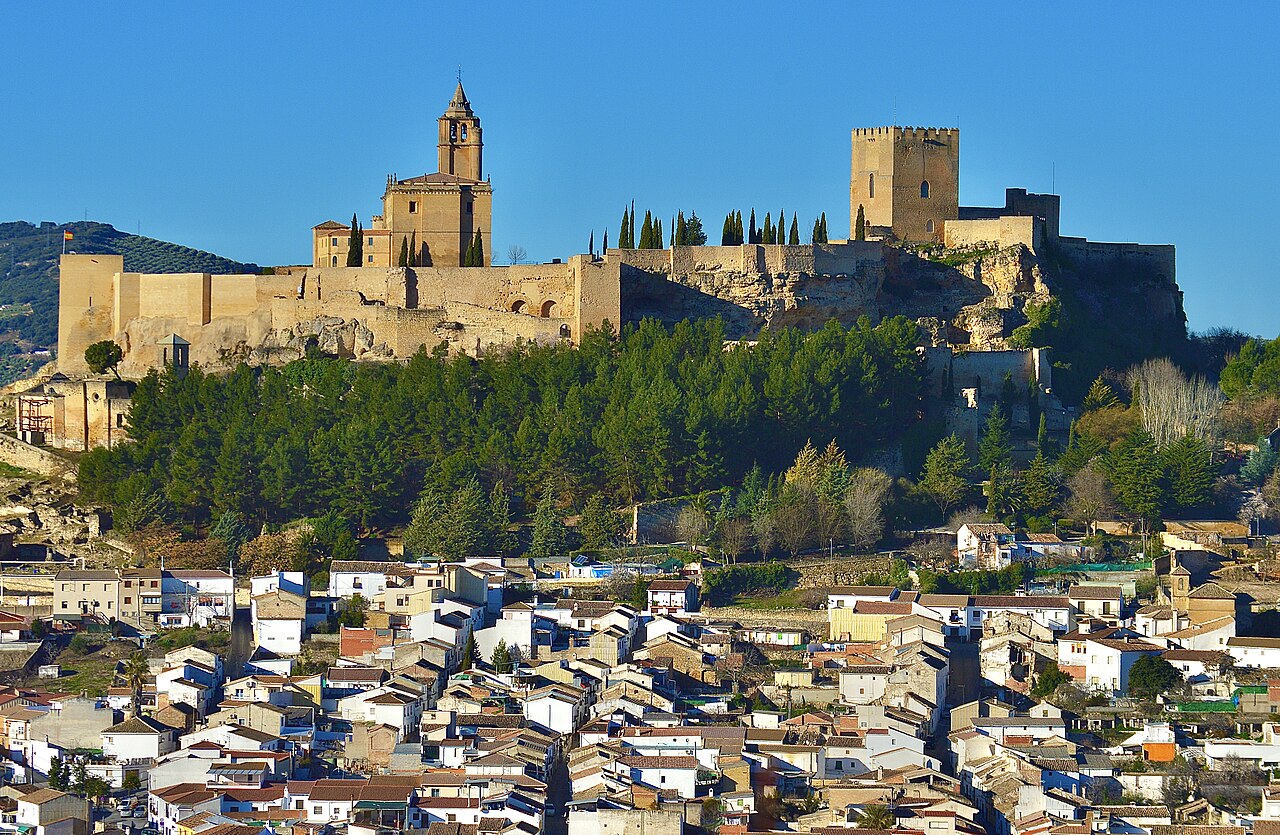
Montefrio Castle
Montefrio Castle stands as a significant late medieval fortress located near the highest point of Montefrío, Spain. Its strategic position midway between the Sierra de Priego and Sierra Parapanda mountain ranges allowed it to command the expansive valley below, making it a vital stronghold during the turbulent period of the 15th century. Originally constructed by the Moors, the castle played a crucial role as one of the chief frontier fortresses guarding the region.
Historical context and strategic importance
The castle's origins trace back to the Moorish occupation of the Iberian Peninsula, a time when fortifications were essential for controlling territory and defending against Christian reconquest efforts. Montefrio Castle's elevated location provided extensive views across the valley, enabling early detection of advancing forces. This vantage point made it a key defensive installation along the fluctuating frontier between Muslim and Christian lands during the Reconquista.
In the 15th century, as the Christian kingdoms intensified their campaigns to reclaim territory, Montefrio Castle's role became even more pronounced. The fortress was subjected to military action and eventually captured by Catholic forces, who undertook significant rebuilding efforts in 1507 to reinforce and adapt the structure to new defensive needs.
Architectural features and layout
Though now in ruins, the castle's remains reveal characteristics typical of Moorish military architecture blended with later Christian modifications. The original construction likely featured robust stone walls with defensive battlements and towers positioned to maximize surveillance and protection. The castle's design took advantage of the natural topography, incorporating steep slopes and rocky outcrops to enhance its defensibility.
The 1507 reconstruction by the Catholic conquerors introduced elements reflecting evolving military architecture of the early 16th century. These may have included reinforced walls, updated gatehouses, and possibly adaptations to accommodate artillery, reflecting the transition from medieval to early modern fortification techniques.
Defensive structures
Key defensive features of Montefrio Castle included a series of curtain walls encircling the main enclosure, punctuated by towers that provided flanking fire along the walls. The castle's elevated position functioned as a natural defense, with steep approaches limiting enemy access. Although much of the masonry has deteriorated, remnants of these walls and towers can still be discerned, illustrating the castle's formidable nature.
Role in regional history
Montefrio Castle's significance extends beyond its military function; it was a symbol of control over the surrounding territory and a focal point in the cultural and political shifts of the period. The castle witnessed the transition from Moorish to Christian rule, reflecting broader changes in governance, religion, and society in Andalusia during the late medieval era.
After its reconstruction in the early 16th century, the fortress gradually lost military importance as the frontier stabilized and new forms of warfare emerged. Over time, the castle fell into disuse and decay, leaving the ruins visible today as a testament to its historical legacy.
Visiting Montefrio Castle today
Visitors to Montefrio can explore the castle ruins, which offer panoramic views of the valley and surrounding mountain ranges. The site provides insight into the complex history of the region and the architectural evolution from Moorish to Christian military design. While only partial walls and foundations remain, the castle's commanding location and historical significance make it a noteworthy destination for those interested in medieval fortifications and Andalusian history.
Frequently asked questions (FAQ)
- When was Montefrio Castle originally built and by whom?
- Montefrio Castle was originally built in the 15th century by the Moors as a frontier fortress during the Reconquista period in Spain.
- What is the current condition of Montefrio Castle?
- The castle is currently in ruins, with only partial walls and foundations remaining, reflecting its long history and periods of conflict.
- Can visitors access Montefrio Castle today?
- Yes, visitors can explore the ruins of Montefrio Castle, which offer panoramic views of the surrounding valley and mountain ranges.
- What architectural features are notable at Montefrio Castle?
- Notable features include the remains of stone curtain walls, defensive towers, and the castle's strategic hilltop location that enhanced its defense.
- Why was Montefrio Castle rebuilt in 1507?
- The castle was rebuilt by Catholic conquerors in 1507 to strengthen its defenses following its capture during the Christian reconquest of the region.
Information
Loading map...
Visitor reviews
No reviews yet. Been here? Write the first review and help other travelers!
Write the first reviewVisited this castle? Share your experience
Your review helps other travelers and adds first-hand knowledge to our encyclopedia.