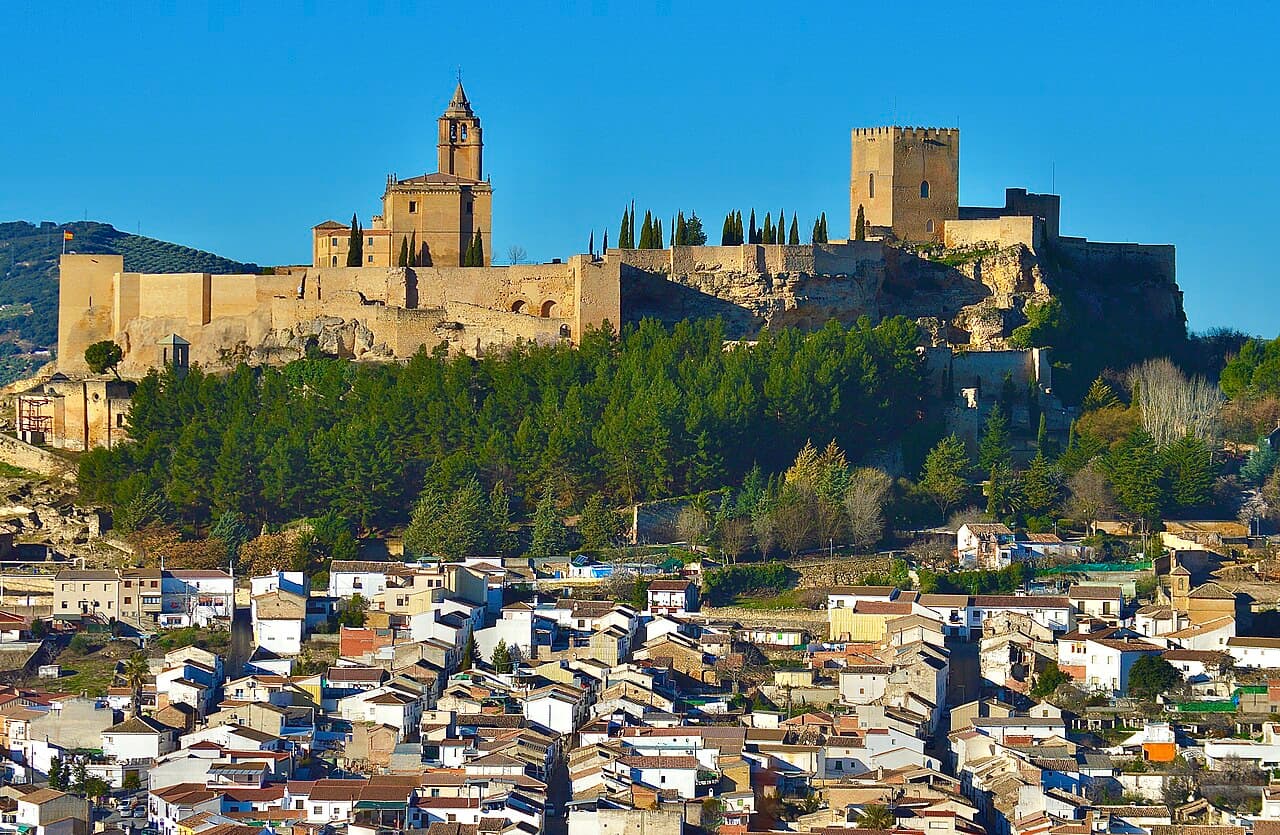
Alcalá la Real Castle
Alcalá la Real Castle, also known as the Fortaleza de La Mota, is a significant hill castle located in the city of Alcalá la Real in the province of Jaén, Spain. Situated at an elevation of 1,029 metres (3,376 feet), this fortress was a crucial military stronghold during the High Medieval period, particularly in the 13th and 14th centuries. Its strategic position made it the last major defensive bastion before reaching Granada when advancing from Jaén and Córdoba, marking it as a key objective during the Reconquista.
Historical background and military importance
The origins of Alcalá la Real Castle date back to the early 13th century, although some parts of the structure are older, reflecting a complex history of occupation and conflict between Christian and Muslim forces. In 1213, King Alfonso VIII of Castile first conquered the Almohad Muslim rulers in the region, marking an important milestone in Christian expansion. However, the fortress soon reverted to Muslim control, illustrating the turbulent nature of the Reconquista in southern Spain.
The castle's definitive Christian conquest occurred in 1341 under the reign of Alfonso XI, who forced the capitulation of the city after a prolonged siege. Following this victory, Alfonso XI ordered the destruction of the Mezquita Mayor (Grand Mosque) within the fortress and commissioned the construction of the first Iglesia Abacial (abbatial church) in its place, designed in the Gothic architectural style. This transformation signified the consolidation of Christian authority and the religious reorientation of the site.
During the latter half of the 15th century, Alcalá la Real's political and military significance grew substantially. It played a pivotal role in the final stages of the Reconquista, especially during the 12-year war led by the Catholic Monarchs to conquer the Nasrid Kingdom of Granada. The town was honored with the title of "a very noble and very loyal town. Key, guardian and defender of the Kings of Castile," highlighting its strategic importance as a frontier fortress.
Architectural features and structural evolution
The castle complex is a vast defensive enclosure that incorporates multiple architectural styles and phases of construction. Its fortifications include thick walls, battlements, towers, and gates designed to withstand sieges and attacks. The fortress's layout takes advantage of the hilltop location, providing commanding views of the surrounding landscape and enabling early detection of approaching enemies.
The abbatial church of Santa María la Mayor stands out as a significant architectural element within the castle. Originally built in the Gothic style after the Christian conquest, it was later modified with Renaissance and Baroque elements during the 16th and 17th centuries. This church exemplifies the religious and cultural transformation of the site, reflecting changing artistic trends over time.
Other notable features include the remains of residential quarters, military barracks, and storage areas, which illustrate the castle's dual function as both a fortress and a community center. The extensive use of stone masonry and the integration of defensive and religious structures demonstrate the castle's complex role in medieval society.
Decline and preservation
The 18th century marked the beginning of Alcalá la Real Castle's decline as the population gradually moved away from the medieval enclosure to the newly developed plains of Alcalá la Real. This shift was driven by urban expansion, new agricultural opportunities, and the construction of convents, churches, and commercial areas in the lower town.
In 1812, the castle suffered significant damage when Napoleonic troops set fire to the area during the Peninsular War, leading to the destruction of many structures. Following this event, the fortress was largely abandoned, and its condition deteriorated over the subsequent centuries.
Despite this, some parts of the castle, including the abbatial church of Santa María la Mayor, have been preserved as important historical monuments. The site was declared a Bien de Interés Cultural in 1993, recognizing its cultural and heritage value and ensuring legal protection for its conservation.
Visitor experience and cultural significance
Today, Alcalá la Real Castle is a prominent tourist attraction and a symbol of the region's medieval past. Visitors can explore the extensive fortress walls, towers, and the abbatial church, gaining insight into the military architecture and religious history of the period. The castle's elevated position offers panoramic views of the surrounding landscape, enhancing its appeal for history enthusiasts and photographers alike.
The site hosts cultural events and educational programs that highlight its role in the Reconquista and its architectural evolution. Efforts to maintain and restore the castle continue, aiming to preserve this important monument for future generations.
Frequently asked questions (FAQ)
- How do I get to Alcalá la Real Castle?
- Alcalá la Real Castle is located in the city of Alcalá la Real in Jaén, Spain. It is accessible by car and local buses from nearby cities like Jaén and Córdoba. The castle is situated on a hilltop, so be prepared for a moderate uphill walk to reach the entrance.
- What is the historical significance of Alcalá la Real Castle?
- Alcalá la Real Castle was a key defensive fortress during the Reconquista, serving as the last major bastion before Granada. It witnessed important battles and changes of control between Christian and Muslim forces in the 13th and 14th centuries.
- Can I visit the abbatial church of Santa María la Mayor inside the castle?
- Yes, the abbatial church of Santa María la Mayor is one of the main attractions within the castle complex. It showcases Gothic and Renaissance architectural elements and is open to visitors interested in religious history and medieval architecture.
- When is the best time to visit Alcalá la Real Castle?
- The best time to visit Alcalá la Real Castle is during the spring and autumn months when the weather is mild and comfortable for exploring the hilltop fortress. Summers can be hot, and winters may be chilly due to the elevation.
- Are there guided tours available at Alcalá la Real Castle?
- Guided tours are often available at Alcalá la Real Castle, providing detailed historical and architectural information. Visitors can check with the local tourist office or the castle's management for tour schedules and languages offered.
Photo gallery

Information
Current owner
Municipality
Loading map...
Visitor reviews
No reviews yet. Been here? Write the first review and help other travelers!
Write the first reviewVisited this castle? Share your experience
Your review helps other travelers and adds first-hand knowledge to our encyclopedia.


