Mont Orgueil — Jersey castle

Mont Orgueil

Mont Orgueil castle in Jersey
High Medieval (11th–13th c.)
Well Preserved

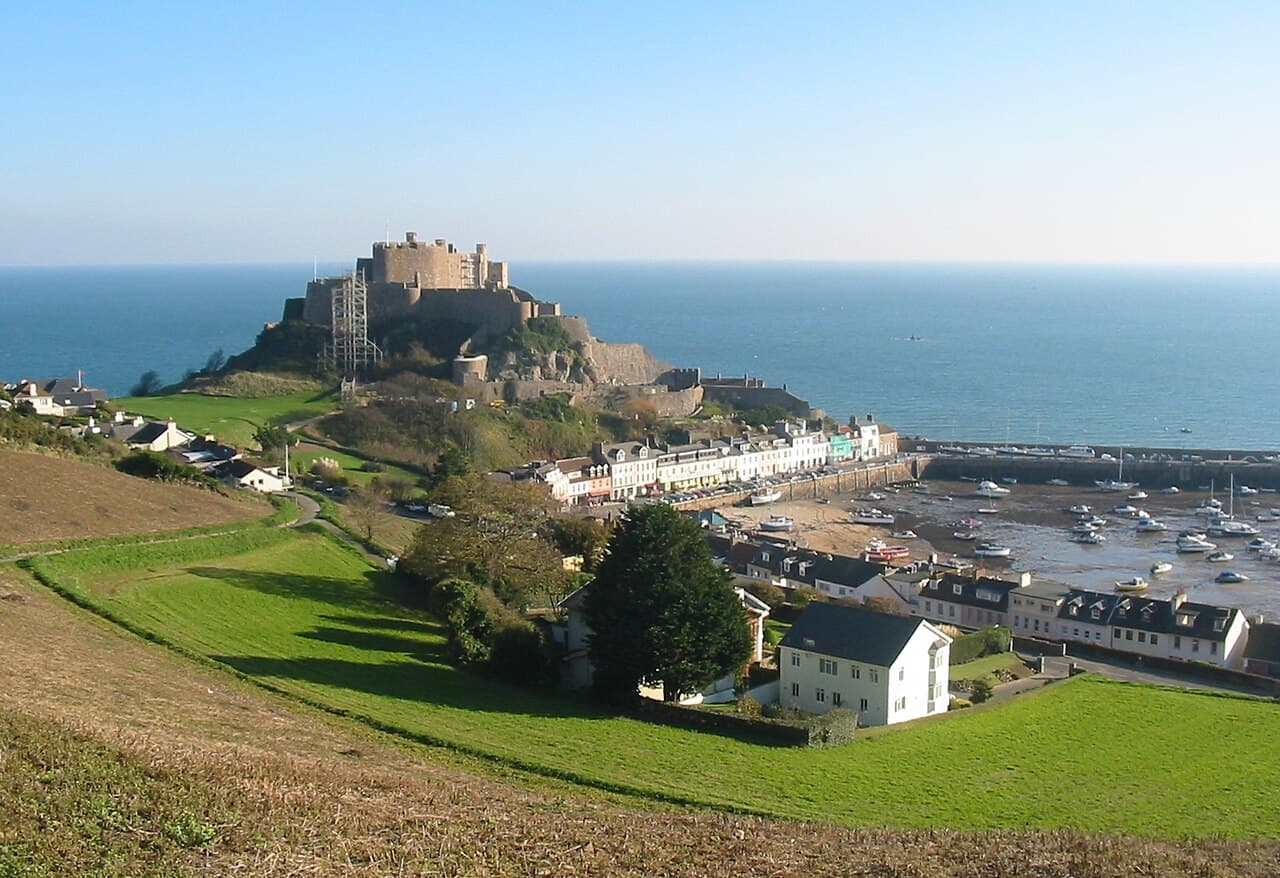
Mont Orgueil, also known as Gorey Castle in English and "lé Vièr Châté" in Jèrriais, is a prominent hill castle located on the east coast of Jersey, overlooking the harbour of Gorey. This imposing fortress has dominated the landscape since the 13th century, serving as the island's primary defensive structure and seat of royal authority throughout the High Medieval period.

The castle's name, meaning "Mount Pride" in French, was first recorded in an ordnance survey of 1462 during a period of French occupation in the Late Middle Ages. Mont Orgueil's strategic location provided a commanding view over the eastern approaches to Jersey, making it a critical military stronghold against potential invaders from the continent.

Architectural features and defensive design

Mont Orgueil exemplifies the characteristics of a hill castle, constructed on elevated terrain to maximize natural defensive advantages. Its design incorporates massive curtain walls, towers, and gatehouses that reflect the military architectural principles of the 13th century. The castle's complex includes multiple courtyards, battlements, and arrow slits designed for archers, providing layered defense mechanisms.

The castle's oldest sections date back to the early 13th century, with subsequent expansions and modifications carried out over the centuries to adapt to evolving military technologies and threats. Notably, the castle features a robust keep or donjon, which served as the last line of defense and residence for the castle's lord or governor.

Historical significance and role in jersey

Throughout the medieval period, Mont Orgueil was the principal fortress on Jersey, symbolizing the island's connection to the English crown. It was the administrative center and a military bastion safeguarding the island from French incursions and piracy. The castle's strategic importance diminished after the construction of Elizabeth Castle in 1594, which was built on a tidal island closer to the main town of Saint Helier.

Mont Orgueil witnessed numerous historical events, including sieges and occupation during the turbulent periods of Anglo-French conflicts. Its robust fortifications allowed it to withstand attacks and maintain English control over Jersey. The castle also functioned as a prison and a residence for governors and military officers over the centuries.

Preservation and current status

Today, Mont Orgueil is classified as a Grade I listed building and is well preserved, offering visitors a comprehensive glimpse into medieval military architecture. The castle has undergone various restoration efforts to maintain its structural integrity and historical authenticity.

Visitors to Mont Orgueil can explore its extensive courtyards, towers, chapels, and dungeons, gaining insight into the daily life of its medieval inhabitants and the castle's defensive capabilities. Its commanding position overlooking Gorey harbour continues to attract tourists and history enthusiasts alike.

Cultural impact and tourism

Mont Orgueil remains one of Jersey's most significant cultural landmarks, drawing visitors interested in medieval history and castle architecture. Its enduring presence on the island's landscape makes it a symbol of Jersey's heritage and resilience.

The castle hosts educational programs, guided tours, and special events that highlight its historical and architectural importance. Its accessibility and well-maintained facilities make it a key attraction in Jersey's tourism sector.

Frequently asked questions (FAQ)

How do I get to Mont Orgueil Castle?
You can reach Mont Orgueil Castle by taking a bus to Gorey, which is the nearest village. The castle is a short walk from the bus stop, and there are also parking facilities available if you prefer to drive.
What is the historical significance of Mont Orgueil Castle?
Mont Orgueil Castle, built in the 13th century, served as a defensive stronghold for Jersey during various conflicts, including the English Civil War. It symbolizes the island's rich heritage and its strategic importance in maritime history.
When was Mont Orgueil Castle built?
Mont Orgueil Castle was constructed in 1204, making it one of the oldest fortifications in Jersey. It has undergone various modifications and expansions over the centuries to adapt to changing military needs.
Can I visit Mont Orgueil Castle year-round?
Yes, Mont Orgueil Castle is open to visitors throughout the year, although hours may vary by season. It’s advisable to check the official website for specific opening times and any holiday closures.
Why is Mont Orgueil Castle a popular tourist attraction?
Mont Orgueil Castle is popular due to its stunning views of the coast and the picturesque village of Gorey. Additionally, the castle's fascinating history and well-preserved architecture provide an engaging experience for visitors of all ages.
Is it possible to access all areas of Mont Orgueil Castle?
While many areas of Mont Orgueil Castle are accessible, some parts may have restricted access due to safety concerns. However, there are plenty of viewpoints and exhibition areas that allow visitors to explore the castle's rich history.
What are the ticket prices for Mont Orgueil Castle?
Ticket prices for Mont Orgueil Castle vary, with discounts available for children, seniors, and families. It is best to check the official website for the most current pricing and any special offers.
What is the best time to visit Mont Orgueil Castle?
The best time to visit Mont Orgueil Castle is during the spring and early autumn when the weather is mild and the gardens are in full bloom. These seasons also tend to have fewer crowds, allowing for a more enjoyable experience.
Are there any nearby attractions to Mont Orgueil Castle?
Yes, nearby attractions include the charming village of Gorey, with its shops and cafes, as well as the beautiful beaches along the east coast of Jersey. Visitors can also explore other historical sites and nature trails in the vicinity.

Photo gallery

Mont Orgueil
Click to view

Photo by No machine-readable author provided. Man vyi assumed (based on copyright claims).•Public domain

1 photo • Click any image to view in full screen

Information

Hill Castle

Loading map...

Visitor reviews

No reviews yet. Been here? Write the first review and help other travelers!

Write the first review

Visited this castle? Share your experience

Your review helps other travelers and adds first-hand knowledge to our encyclopedia.

Write a review

(5/5)

0/2000 characters

Your review will be visible after admin approval

Nearby castles

0 km

Mont Orgueil Castle

Gorey, United Kingdom

Mont Orgueil Castle, prominently situated overlooking the harbor of Gorey on the east coast of the island of Jersey, is a magnificent example of a high medieval bastioned fortress. Its strategic location has made it a key defensive stronghold guarding the island from potential invaders since its initial construction in the early 13th century. The castle’s imposing silhouette dominates the landscape, offering commanding views across the sea and the surrounding countryside. Early construction and medieval significance The origins of Mont Orgueil Castle date back to the year 1204, when it was built to replace an earlier wooden fortification. The castle was constructed during the high medieval period to defend Jersey against French invasion following the loss of Normandy by the English crown. Its initial design focused on robust defensive features typical of the era, including thick stone curtain walls, battlements, and a strong gatehouse. Over the next two centuries, the castle underwent significant expansions and reinforcements. Between 1204 and 1450, Mont Orgueil evolved into a complex bastioned fortress, incorporating angled bastions designed to improve defense against artillery and siege tactics that were developing at the time. This adaptation reflects the castle’s continuous military importance throughout the middle ages. Architectural features and defensive design The castle’s layout is characterized by a series of curtain walls enclosing multiple courtyards and defensive bastions. The bastions are prominent features, projecting outward from the walls to allow defenders to cover adjacent walls with crossfire. The gatehouse is heavily fortified, featuring a portcullis and murder holes to repel attackers. Inside the castle, visitors can find well-preserved towers, including the keep, which served as the last line of defense and the lord’s residence. The castle also contains armories, dungeons, and various living quarters that illustrate the daily life of its medieval inhabitants. The battlements provide panoramic views and were essential for archers and artillery placement. Historical role and military engagements Throughout its history, Mont Orgueil Castle played a crucial role in the defense of Jersey against both French and later English threats. It was the island’s primary fortress until the construction of Elizabeth Castle in the 16th century. Mont Orgueil withstood numerous sieges and attacks, notably during the Hundred Years' War and the English Civil War. The castle’s robust fortifications allowed it to serve not only as a military bastion but also as a symbol of English authority on the island. Its position enabled control over maritime traffic and provided a secure refuge for the local population during times of conflict. Restoration and current status Today, Mont Orgueil Castle is well preserved and has undergone extensive restoration to maintain its structural integrity and historical authenticity. It is managed as a heritage site and is open to the public, offering guided tours, exhibitions, and educational programs that highlight its architectural and historical significance. The castle remains one of Jersey’s most iconic landmarks, attracting visitors interested in medieval military architecture and the island’s rich history. Its combination of natural defensive advantages and architectural sophistication makes it a prime example of a bastioned fortress from the high medieval period. Visitor experience and accessibility Visitors to Mont Orgueil Castle can explore its extensive grounds, including the courtyards, towers, and battlements. The site offers panoramic views over Gorey harbor and the surrounding coastline. Interpretive signage and guided tours provide detailed insights into the castle’s construction, history, and role in Jersey’s defense. The castle is accessible year-round, with facilities to accommodate a wide range of visitors. Its location near Gorey village makes it easily reachable by car or public transport, and nearby amenities support tourism activities.

High Medieval (11th–13th c.)
Details
6.6 km

Fort Regent

St Helier, United Kingdom

Fort Regent is a prominent historic fortress located on the island of Jersey in the United Kingdom of Great Britain and Northern Ireland. Constructed during the Napoleonic Wars, this fortification was designed to protect the island from potential French invasion. The building of the fort began on 7 November 1806, marked by the laying of the foundation stone by George Don, the Lieutenant Governor of Jersey at the time. The construction workforce included local laborers and soldiers from the Royal Engineers, with an average of 800 men engaged in the project. This large workforce allowed the fort to be completed within eight years, in 1814. Design and architectural features The design of Fort Regent is attributed primarily to Lieutenant-General John Humfrey, with contributions likely from Lieutenant-Colonel John Evelegh. The fort exemplifies early 19th-century military architecture, combining practical defensive elements common in the modern period. Its layout includes substantial curtain walls that form the main defensive barrier, surrounded by deep ditches and a glacis—a gently sloping embankment designed to expose attackers to defensive fire. Key defensive structures include bastions and redoubts, which provide elevated platforms for artillery and infantry defense. The fort also features redans or demi-bastions, projecting angular bastions that allow defenders to cover adjacent walls with enfilading fire. At the heart of the fort was a large parade ground, now covered and built upon, which historically served as a central gathering and drill area for troops. Historical significance and military use Named in honor of the Prince Regent, who later became King George IV, Fort Regent was a vital part of Jersey's coastal defenses during the early 19th century. Its strategic location on a hill overlooking the town of St Helier allowed for commanding views of the surrounding sea and land approaches. During the German occupation of the Channel Islands in World War II, the fort was adapted by German forces, who installed additional defensive structures including flak cannons and concrete bunkers. Some of these wartime additions remain visible today, providing a layered historical narrative of military use spanning over a century. Post-military adaptation and current status Following its military use, the fort was repurposed by the States of Jersey in December 1967 into a leisure center, transforming the space to serve the local community. This adaptation included covering the parade ground with a roof and converting parts of the fort for recreational activities. The site remains a well-preserved example of a modern period fortress, retaining many of its original defensive features alongside later modifications. Architectural and cultural importance Fort Regent stands as a significant example of early 19th-century fortress design in the Channel Islands. Its combination of bastions, curtain walls, and other defensive elements illustrates the military engineering principles of the Napoleonic era. The presence of German WWII fortifications adds to its historical complexity, making it a valuable cultural heritage site. Today, Fort Regent is accessible to visitors interested in military history and architecture, offering insight into the strategic defenses of Jersey across different eras. Its preservation allows for study and appreciation of the evolution of coastal fortifications from the early 1800s through the mid-20th century.

Modern (19th–20th c.)
Details
6.6 km
Fort Regent — Jersey castle

Fort Regent

St. Helier, Jersey

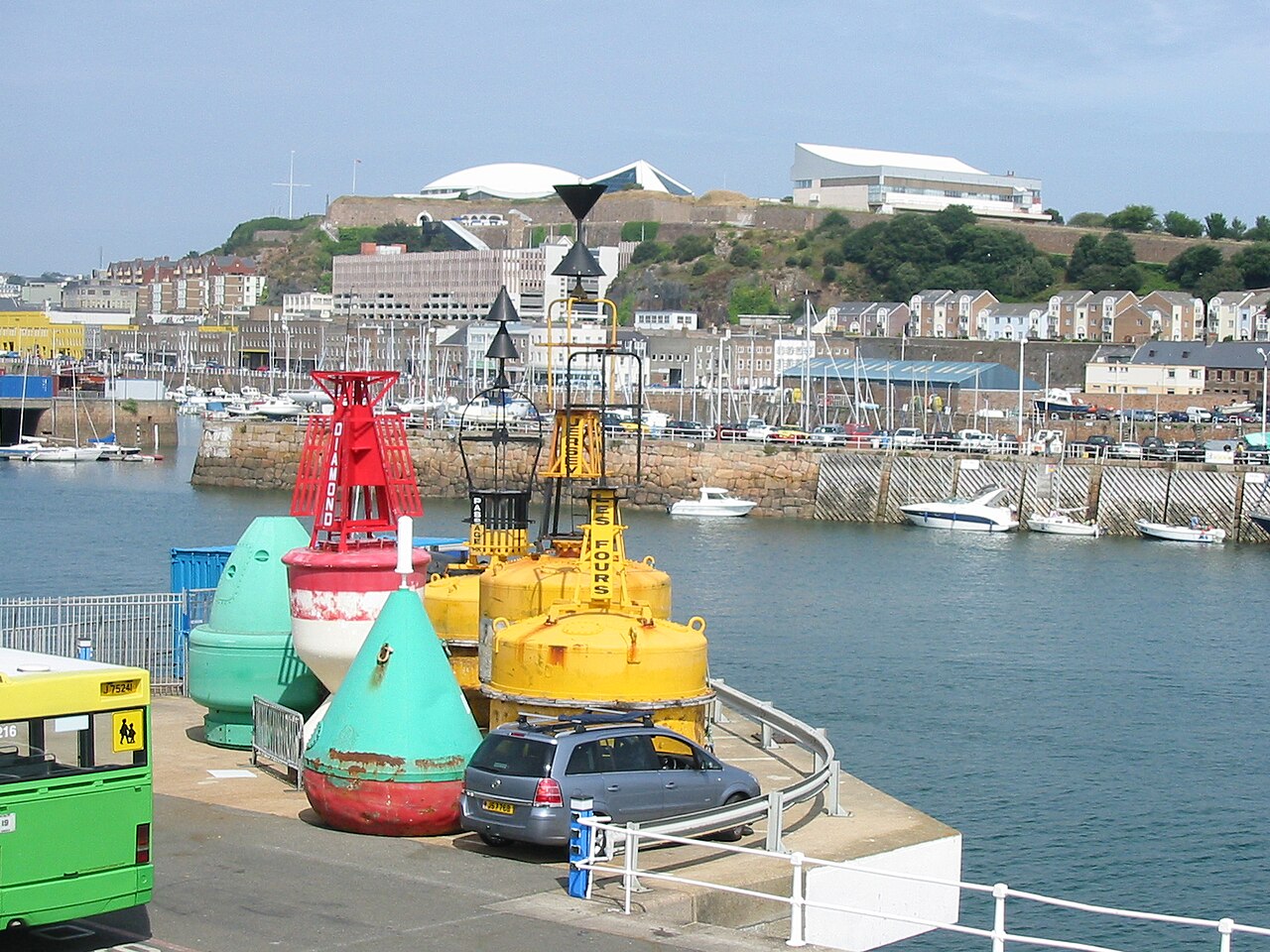
Fort Regent is a prominent 19th-century bastioned fortress located on Mont de la Ville (Town Hill) in St. Helier, Jersey. This imposing fortification was constructed as part of the British military's efforts to strengthen the island's defenses during the Napoleonic Wars, reflecting the strategic importance of Jersey in the English Channel. Overlooking the harbour and the historic Elizabeth Castle to the west, Fort Regent occupies a commanding position that allowed it to control access to the island and protect against potential naval attacks.The fort's design exemplifies the principles of bastioned fortress architecture prevalent in the 19th century. Its substantial curtain walls form a defensive perimeter, complemented by deep ditches and an angled glacis designed to deflect artillery fire. The fortress includes multiple bastions and redans (or demi-bastions), which provided overlapping fields of fire to cover all approaches. These features illustrate the adaptation of traditional fortification methods to the evolving military technology of the era.Historical context and constructionConstruction of Fort Regent began in the early 19th century, specifically during the period of heightened tension brought about by the Napoleonic Wars. The British government recognized Jersey's vulnerability due to its proximity to France and sought to establish a robust defensive position on Mont de la Ville. The fort was built to replace earlier, less effective fortifications and to serve as a central stronghold for the island's garrison.The site had previously been used for military purposes, but Fort Regent represented a significant upgrade in scale and sophistication. Its construction involved extensive earthworks to create the ditches and glacis, as well as the erection of thick stone walls capable of withstanding bombardment. The design incorporated a central parade ground, which served as a mustering and training area for troops stationed at the fort.Architectural features and layoutBastions and defensive structuresThe fortress is characterized by its bastions, which project outward from the main walls, allowing defenders to cover adjacent walls with gunfire. These bastions, along with redoubts and redans, create a layered defense system that was state-of-the-art for its time. The angled walls and earthworks were designed to absorb and deflect cannon fire, reducing damage to the main structures.Parade ground and internal buildingsAt the heart of Fort Regent lies the parade ground, a large open space that was originally used for military drills and ceremonies. Over time, this area has been built upon and is now covered with a roof, reflecting the site's adaptation for leisure and community use in the modern era. Surrounding the parade ground are various buildings that historically housed troops, stored munitions, and supported the fort's operational needs.Strategic significance and military useFort Regent played a crucial role in Jersey's defense during the 19th century, particularly in the context of the ongoing threat posed by France. Its elevated position on Mont de la Ville allowed for extensive surveillance of the surrounding waters and land approaches. The fort was equipped with artillery capable of engaging enemy ships attempting to enter the harbour.Throughout its active military use, Fort Regent served as a garrison for British troops and a key element in the island's coastal defense network. Its presence helped deter potential invasions and provided a secure base for military operations in the region.Transition to leisure centre and current statusIn the 20th century, Fort Regent's military importance declined, and the site was repurposed as a public leisure centre. This transformation involved the adaptation of the existing structures to accommodate recreational facilities while preserving the historic fabric of the fortress. Today, Fort Regent remains a well-preserved example of 19th-century bastioned fortress architecture and serves as a cultural and community landmark in St. Helier.The fort's extensive walls, bastions, and earthworks are accessible to visitors, offering panoramic views of the harbour and the surrounding landscape. The site provides a unique insight into Jersey's military history and the architectural responses to the challenges of coastal defense during the modern period.

Modern (19th–20th c.)
Details