Fort Regent
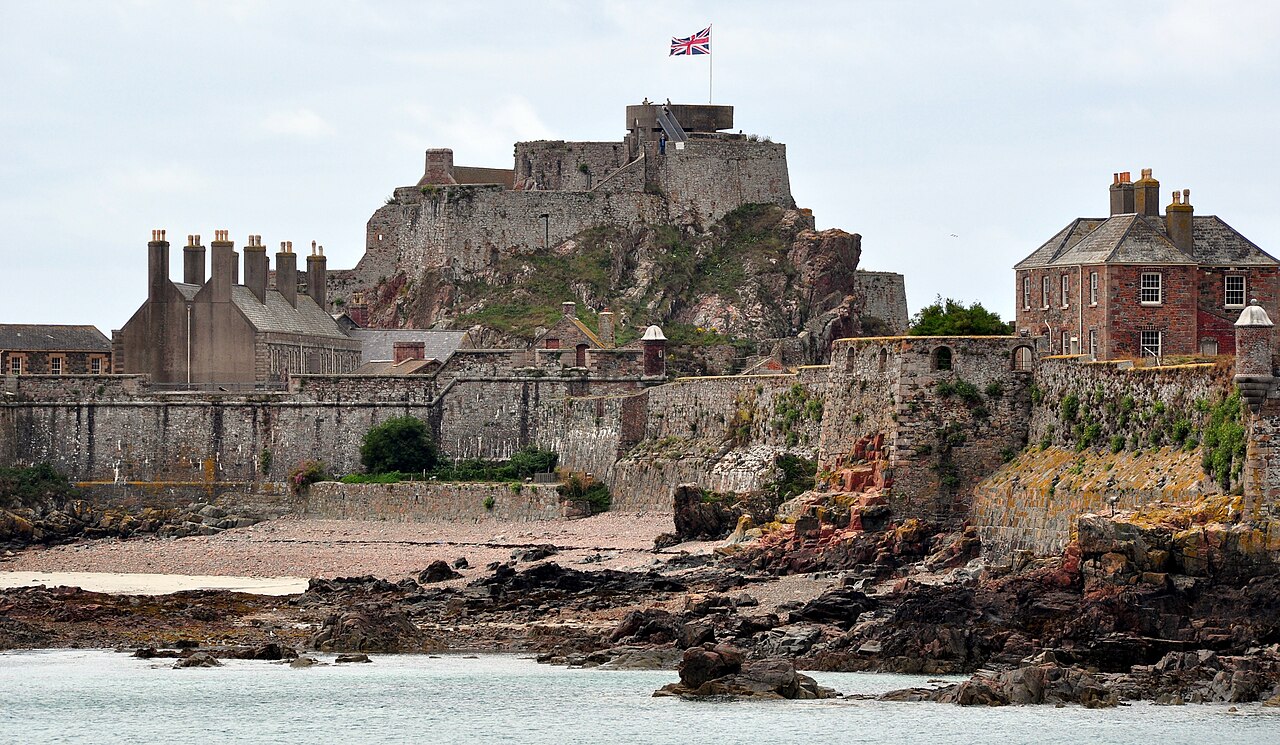
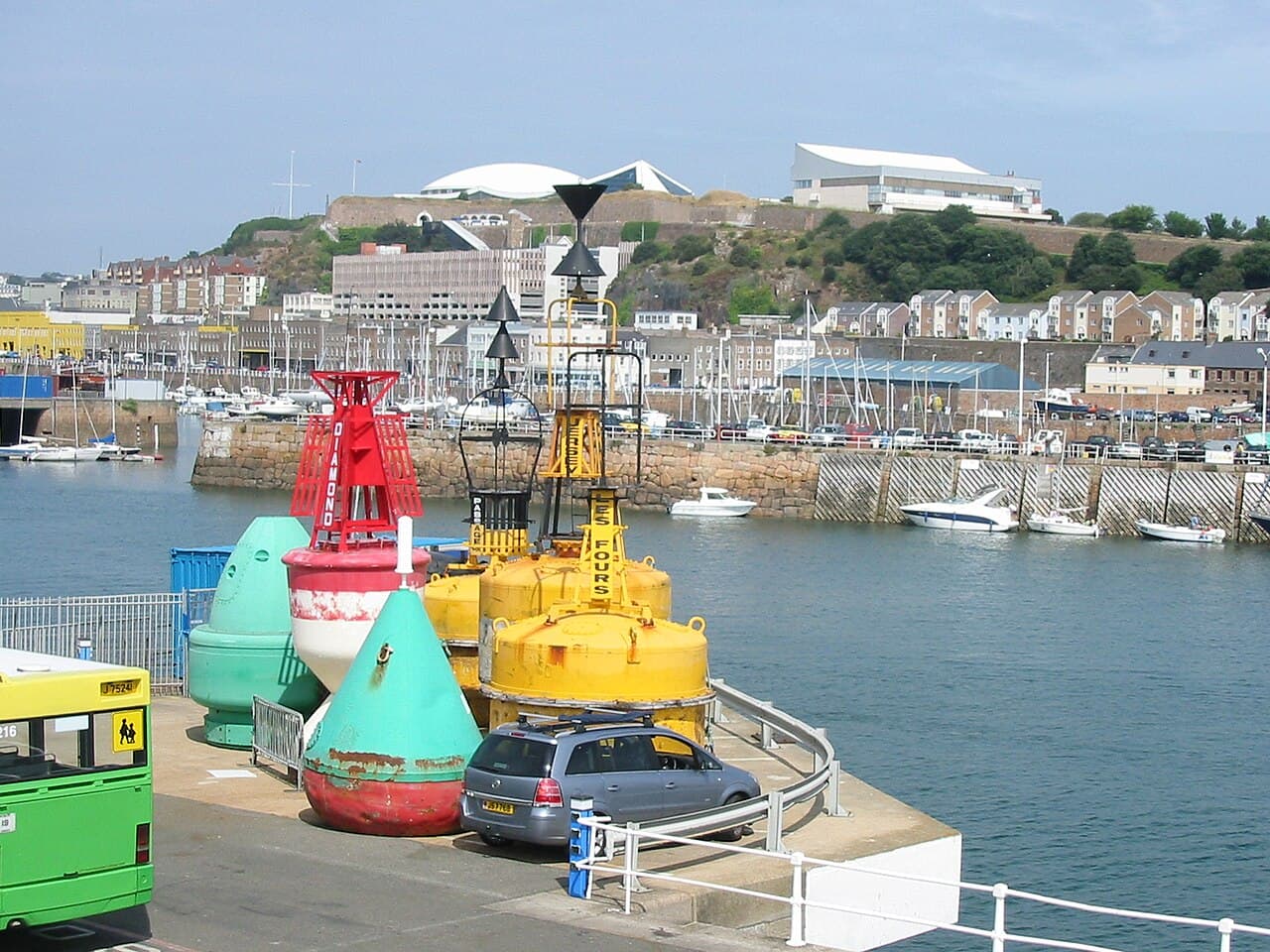
Fort Regent is a prominent 19th-century bastioned fortress located on Mont de la Ville (Town Hill) in St. Helier, Jersey. This imposing fortification was constructed as part of the British military's efforts to strengthen the island's defenses during the Napoleonic Wars, reflecting the strategic importance of Jersey in the English Channel. Overlooking the harbour and the historic Elizabeth Castle to the west, Fort Regent occupies a commanding position that allowed it to control access to the island and protect against potential naval attacks.
The fort's design exemplifies the principles of bastioned fortress architecture prevalent in the 19th century. Its substantial curtain walls form a defensive perimeter, complemented by deep ditches and an angled glacis designed to deflect artillery fire. The fortress includes multiple bastions and redans (or demi-bastions), which provided overlapping fields of fire to cover all approaches. These features illustrate the adaptation of traditional fortification methods to the evolving military technology of the era.
Historical context and construction
Construction of Fort Regent began in the early 19th century, specifically during the period of heightened tension brought about by the Napoleonic Wars. The British government recognized Jersey's vulnerability due to its proximity to France and sought to establish a robust defensive position on Mont de la Ville. The fort was built to replace earlier, less effective fortifications and to serve as a central stronghold for the island's garrison.
The site had previously been used for military purposes, but Fort Regent represented a significant upgrade in scale and sophistication. Its construction involved extensive earthworks to create the ditches and glacis, as well as the erection of thick stone walls capable of withstanding bombardment. The design incorporated a central parade ground, which served as a mustering and training area for troops stationed at the fort.
Architectural features and layout
Bastions and defensive structures
The fortress is characterized by its bastions, which project outward from the main walls, allowing defenders to cover adjacent walls with gunfire. These bastions, along with redoubts and redans, create a layered defense system that was state-of-the-art for its time. The angled walls and earthworks were designed to absorb and deflect cannon fire, reducing damage to the main structures.
Parade ground and internal buildings
At the heart of Fort Regent lies the parade ground, a large open space that was originally used for military drills and ceremonies. Over time, this area has been built upon and is now covered with a roof, reflecting the site's adaptation for leisure and community use in the modern era. Surrounding the parade ground are various buildings that historically housed troops, stored munitions, and supported the fort's operational needs.
Strategic significance and military use
Fort Regent played a crucial role in Jersey's defense during the 19th century, particularly in the context of the ongoing threat posed by France. Its elevated position on Mont de la Ville allowed for extensive surveillance of the surrounding waters and land approaches. The fort was equipped with artillery capable of engaging enemy ships attempting to enter the harbour.
Throughout its active military use, Fort Regent served as a garrison for British troops and a key element in the island's coastal defense network. Its presence helped deter potential invasions and provided a secure base for military operations in the region.
Transition to leisure centre and current status
In the 20th century, Fort Regent's military importance declined, and the site was repurposed as a public leisure centre. This transformation involved the adaptation of the existing structures to accommodate recreational facilities while preserving the historic fabric of the fortress. Today, Fort Regent remains a well-preserved example of 19th-century bastioned fortress architecture and serves as a cultural and community landmark in St. Helier.
The fort's extensive walls, bastions, and earthworks are accessible to visitors, offering panoramic views of the harbour and the surrounding landscape. The site provides a unique insight into Jersey's military history and the architectural responses to the challenges of coastal defense during the modern period.
Frequently asked questions (FAQ)
- How do I get to Fort Regent?
- Fort Regent is located in St. Helier, Jersey, and is easily accessible by public transport, with several bus routes servicing the area. If you are driving, there is limited parking available nearby, and walking paths lead directly to the castle from the town center.
- What is the historical significance of Fort Regent?
- Fort Regent was built in the 19th century to defend St. Helier from potential invasions, reflecting the military architecture of the period. It played a crucial role in Jersey’s defense strategy and is now a symbol of the island's rich history.
- When was Fort Regent built?
- Construction of Fort Regent began in 1806 and continued until the mid-19th century. It was completed in 1856 and served as a military fortification until it was repurposed for public use.
- Can I visit Fort Regent?
- Yes, Fort Regent is open to the public, offering a unique opportunity to explore its historic structure and enjoy panoramic views of St. Helier. There are various exhibitions and events hosted throughout the year, making it a great destination for visitors.
- Why is Fort Regent considered an architectural landmark?
- Fort Regent features a blend of military design and Victorian architecture, with its impressive stone walls and bastions. The fort's construction techniques and layout showcase the engineering skills of the time, making it a significant example of 19th-century fortifications.
- Is it possible to access Fort Regent with mobility aids?
- Yes, Fort Regent strives to be accessible to all visitors. There are designated pathways and ramps, although some areas may have limited access due to the historic structure. It is advisable to check ahead for specific accessibility information.
- What are the opening hours of Fort Regent?
- Fort Regent is generally open to visitors throughout the year, with varying hours depending on the season. It is best to check the official website for the most current opening times and any special events.
- What are the ticket prices for visiting Fort Regent?
- Entry to Fort Regent is free for visitors, which makes it an excellent attraction for those exploring St. Helier. However, certain exhibitions or events may require a ticket, so it is advisable to check in advance.
- When is the best time to visit Fort Regent?
- The best time to visit Fort Regent is during the spring and summer months when the weather is warmer, and outdoor events are more frequent. Visiting during these seasons allows you to enjoy the beautiful views and the surrounding gardens.
- Are there any nearby attractions to Fort Regent?
- Yes, Fort Regent is located close to several attractions, including the Jersey Museum and Art Gallery and the beautiful St. Helier beach. Exploring these nearby sites can enhance your visit and provide a fuller experience of Jersey's culture and history.
Photo gallery

Photo by No machine-readable author provided. Ellywa assumed (based on copyright claims).•CC BY 2.5
Information
Loading map...
Visitor reviews
No reviews yet. Been here? Write the first review and help other travelers!
Write the first reviewVisited this castle? Share your experience
Your review helps other travelers and adds first-hand knowledge to our encyclopedia.