Molina de Aragon Castle
Molina de Aragon Castle is a significant medieval fortress located in the town of Molina de Aragón, in the eastern part of the province of Guadalajara, Castile-La Mancha, Spain. This hill castle stands prominently on a commanding elevation overlooking the fertile valley and the nearby river Gallo, a strategic position that has attracted fortifications since Celtiberian times.
Early origins and Moorish construction
The site of Molina de Aragon Castle has been fortified since ancient times, initially by the Celtiberians, who recognized the importance of its elevated location for defense and control of the surrounding land. The current castle's earliest substantial construction dates back to the 10th and 11th centuries when it was built by the Moors during their rule of the Iberian Peninsula. At this stage, the fortress was smaller and less robust than its later medieval form, serving primarily as a military stronghold to oversee the territory.
The reconquest and medieval development
In 1129, during the period of the Reconquista, the castle was captured by King Alfonso I of Aragon, known as Alfonso the Battler. This conquest marked a turning point in the castle's history, as it became a focal point of territorial disputes between the kingdoms of Aragon and Castile. Eventually, the castle came under Castilian control, despite its location in a remote and sparsely populated highland region.
Molina de los Caballeros: autonomy and fortification
Throughout the 12th and 13th centuries, the town and castle enjoyed a degree of autonomy, known as Molina de los Caballeros. During this time, the fortifications were progressively strengthened to their present form. The castle was expanded with new walls and towers, enhancing its defensive capabilities and reflecting its dual role as both a military fortress and a noble residence.
14th-century conflicts and ownership changes
The 14th century saw further turmoil when the local Molinese population revolted to maintain their independence. As a result, the castle and town briefly came under the control of the kingdom of Aragon for six years. In 1375, the castle returned to Castilian possession, receiving the name Molina de Aragon that it retains today.
Architectural features and layout
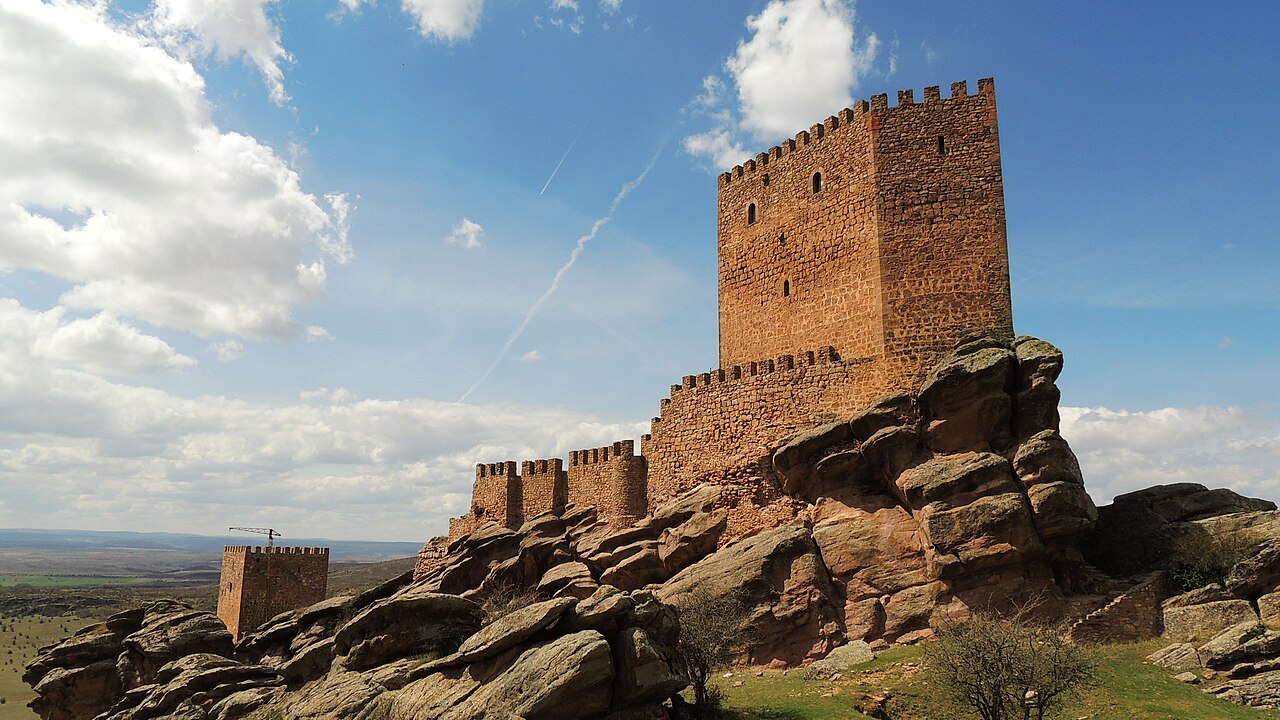
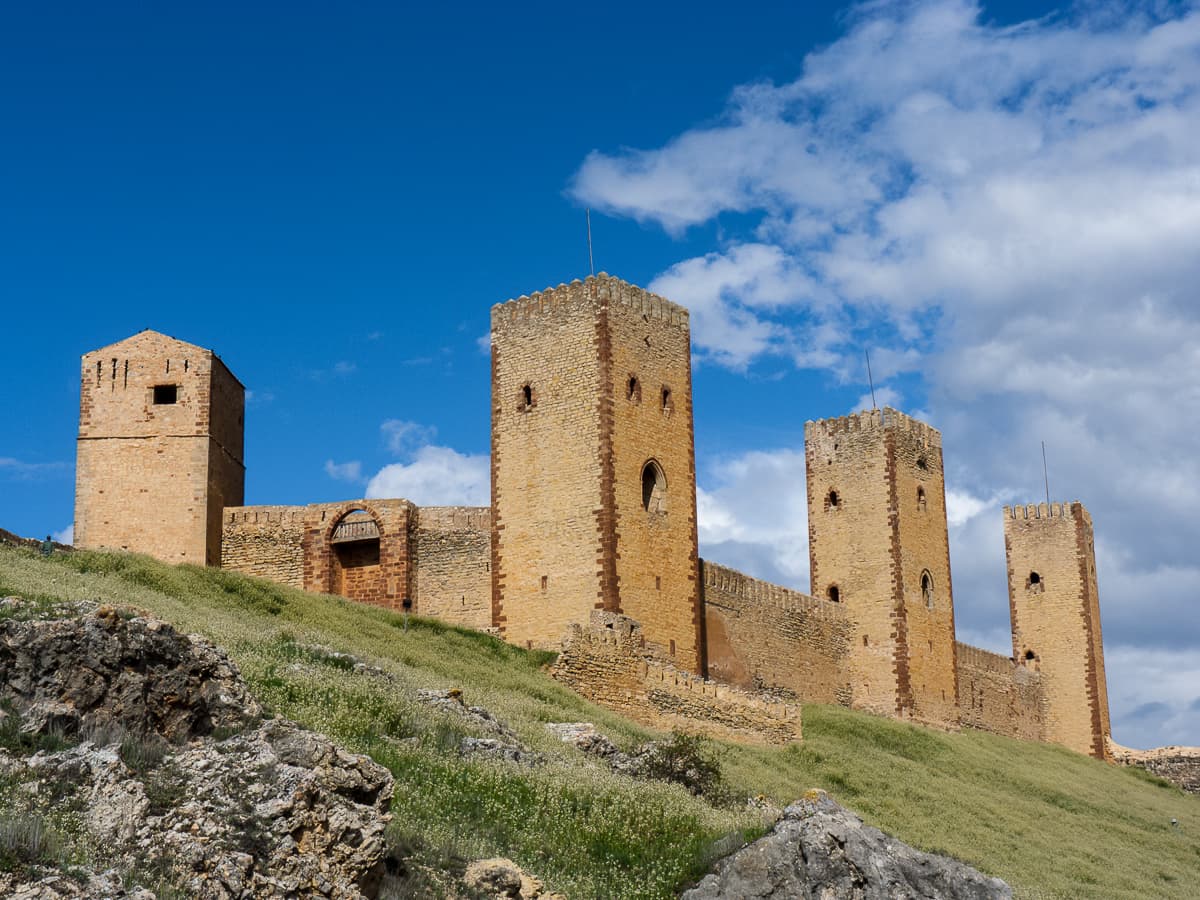
Molina de Aragon Castle is a typical example of an early medieval fortress with a complex layout designed for both defense and habitation. The inner fortress measures approximately 80 by 40 meters, indicating that it was not solely a military installation but also a residential complex. Within its walls, there were stables, a jail, a palace, kitchens, guardhouses, and various other military buildings.
The external fortifications and the tower of Aragon
Surrounding the inner fortress is an external line of walls featuring four gates and numerous defensive towers. This outer enclosure originally included a village, highlighting the castle's role as a community center as well as a stronghold. Higher up on the hill, separate from the main castle, stands the Tower of Aragon. This distinctive structure functioned as a watchtower and is considered a castle in its own right. It was connected to the main fortress by an underground zigzagging tunnel, the course of which remains visible today.
Historical significance and later history
The castle played an important role in regional defense and governance throughout the medieval period. It was the residence of the lords of the taifa of Molina during the Moorish era. Notably, the famous Castilian knight El Cid is recorded to have stayed at the castle during his exile from Castile.
In the 19th century, the castle and town experienced significant conflict. In 1810, the town was burned by French forces under General Roquet during the Napoleonic Wars. Later, in 1875, the castle served as a refuge for townspeople during attacks by the Carlist troops led by General Vallés. After these events, the castle was left empty and without any active function.
Preservation and cultural status
Today, Molina de Aragon Castle is well preserved and recognized as a cultural heritage site. It was declared a Bien de Interés Cultural in 1931, a designation that protects its historical and architectural value. Four of the six original towers of the inner fortress remain in good condition, allowing visitors to appreciate the castle's medieval military architecture.
The castle's combination of Moorish origins, medieval Christian modifications, and its role in regional history make it a compelling destination for those interested in Spanish history and castle architecture. Its strategic hilltop location offers panoramic views of the surrounding valley, emphasizing the military foresight of its builders.
Visiting Molina de Aragon Castle
Visitors to Molina de Aragon can explore the extensive fortifications, including the inner fortress with its towers and the external walls with their gates. The underground tunnel connecting the main castle to the Tower of Aragon adds an intriguing element to the site's defensive design. The castle's historical layers—from Celtiberian to Moorish to medieval Christian—are evident in its architecture and layout.
The castle stands as a testament to the turbulent history of the region, reflecting centuries of conflict, cultural exchange, and architectural evolution. Its preservation allows for an immersive experience into the military and residential life of a medieval fortress in Spain.
Frequently asked questions (FAQ)
- How do I get to Molina de Aragon Castle?
- Molina de Aragon Castle is located in the town of Molina de Aragón, easily accessible by car or public transport. If you're traveling from Madrid, you can take a train to the nearby town and then a short bus ride to reach the castle.
- What is the historical significance of Molina de Aragon Castle?
- Molina de Aragon Castle dates back to the 9th century and played a crucial role in the defense against Muslim invasions during the Reconquista. Its strategic location made it an important military stronghold in medieval Spain.
- When was Molina de Aragon Castle built?
- The castle was constructed in the late 9th century, showcasing a blend of Islamic and Christian architectural influences over the centuries. It underwent several renovations and expansions, particularly in the 15th century, reflecting its ongoing importance in the region.
- Can I take guided tours of Molina de Aragon Castle?
- Yes, guided tours are available for visitors, providing in-depth information about the castle's history and architecture. These tours typically run daily and can be booked in advance to ensure your spot.
- Why is Molina de Aragon Castle a popular tourist destination?
- The castle's stunning views of the surrounding landscape and its rich history attract many visitors. Additionally, its well-preserved structure offers a glimpse into medieval life, making it an appealing destination for history enthusiasts.
- Is it possible to visit Molina de Aragon Castle year-round?
- Yes, Molina de Aragon Castle is open to visitors throughout the year, but hours may vary by season. It's advisable to check the official website for the most current opening hours before your visit.
- What are the ticket prices for Molina de Aragon Castle?
- Ticket prices for Molina de Aragon Castle are generally affordable, with discounts available for students and seniors. Children under a certain age often enter for free, making it a great family-friendly attraction.
- What is the best time to visit Molina de Aragon Castle?
- The best time to visit Molina de Aragon Castle is during the spring and early fall when the weather is mild and pleasant. These seasons also offer beautiful scenery, enhancing your experience as you explore the castle grounds.
- Are there any nearby attractions to Molina de Aragon Castle?
- Yes, the area around Molina de Aragon offers several other attractions, including the picturesque town of Molina de Aragón itself, with its charming streets and local eateries. Additionally, the nearby natural parks provide opportunities for hiking and exploring the beautiful landscape.
Photo gallery

Photo by Turol Jones, un artista de cojones from Villanueva del Cascajal, República Independiente de Mi Casa•CC BY 2.0
Information
Address
Calle del Carmen, Molina de Aragón, Guadalajara, Spain
Loading map...
Visitor reviews
No reviews yet. Been here? Write the first review and help other travelers!
Write the first reviewVisited this castle? Share your experience
Your review helps other travelers and adds first-hand knowledge to our encyclopedia.