Mola Fortress
Mola Fortress, also known as the Isabela II Fortress, is a significant 19th-century bastioned fortress located on the Mola peninsula at the entrance to the port of Mahón on the island of Menorca, Spain. This fortress stands opposite the Castillo de San Felipe, which guards the port's entrance from the other side, together forming a strategic defense system for one of the Mediterranean's most important natural harbors.
The fortress derives its name from Queen Isabella II of Spain, who commissioned its construction in the mid-19th century as part of a broader effort to modernize Spain's coastal defenses. Construction began around the 1850s and continued through the latter half of the century, reflecting the military architectural advancements of the Modern period.
Strategic location and historical context
The Mola peninsula occupies the easternmost point of Spain and commands a commanding position over the port of Mahón, one of the largest natural harbors in the Mediterranean. This location made it a critical military and naval asset, especially during the 18th and 19th centuries when control of Mediterranean naval routes was vital.
The fortress was built to complement the defenses provided by the Castillo de San Felipe on the opposite side of the harbor entrance, creating a crossfire zone that could effectively prevent enemy ships from entering the port. This defensive arrangement was crucial during periods of conflict, including the Napoleonic Wars and later tensions involving British and Spanish forces.
Architectural design and features
Mola Fortress is a classic example of a bastioned fortress, a design that evolved from the trace italienne style of fortification. The fortress features extensive thick stone walls with angular bastions projecting outward to allow defensive artillery to cover all approaches without blind spots.
The design incorporates moats, ramparts, and casemates for artillery placements, as well as underground tunnels and magazines for ammunition storage. The fortress's layout is polygonal, maximizing defensive coverage and resilience against artillery bombardment, which had become increasingly powerful by the 19th century.
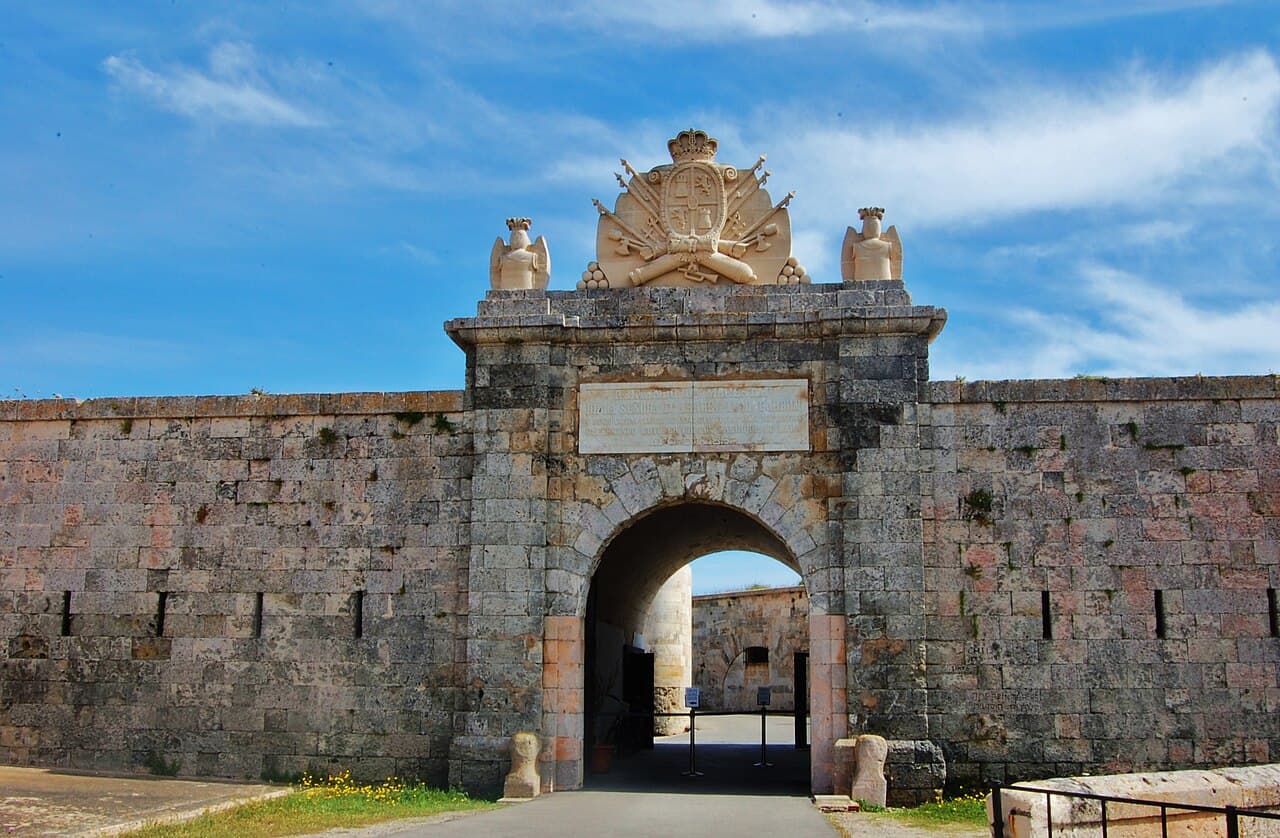
The fortress also includes gates protected by drawbridges and guardhouses, and internal courtyards that served as muster points and logistical centers for the garrison stationed there. The fortifications were constructed using local limestone, which provided both durability and camouflage against the rocky terrain.
Military significance and historical use
Throughout its history, Mola Fortress played a key role in the defense of Menorca and the broader Balearic Islands. It was part of Spain's efforts to maintain control over its Mediterranean territories amid frequent conflicts with Britain and France.
During the 19th century, the fortress was equipped with modern artillery and garrisoned by Spanish troops. It served as a deterrent against naval incursions and was involved in various military operations, although it saw limited direct combat due to the strategic balance it helped maintain.
In the 20th century, the fortress's military relevance declined with changes in warfare and technology, leading to its eventual decommissioning. However, it remains an important cultural and historical monument, representing Spain's military architecture and coastal defense strategy of the Modern period.
Current status and visitor experience
Today, Mola Fortress is well preserved and accessible to visitors interested in military history and architecture. The site offers extensive views over the port of Mahón and the surrounding sea, highlighting its strategic importance.
Visitors can explore the fortress's bastions, tunnels, and courtyards, gaining insight into 19th-century military engineering. Interpretive signage and guided tours provide historical context and explain the fortress's role in Spain's coastal defense system.
Its location near the easternmost point of Spain adds to its appeal as a destination for those interested in geography and history alike. The fortress is managed as a cultural heritage site, ensuring its preservation for future generations.
Frequently asked questions (FAQ)
- How do I get to Mola Fortress?
- Mola Fortress is located in Mahón, Spain, and can be easily accessed by car, public transport, or on foot from the city center. There are designated parking areas nearby for those driving. Public buses also run regularly to the fortress, making it convenient for visitors.
- What is the historical significance of Mola Fortress?
- Mola Fortress was built in the 19th century to defend the port of Mahón and is an important example of military architecture. It played a crucial role during various historical conflicts, particularly in the 19th century. Today, it stands as a testament to the island's military history and heritage.
- When was Mola Fortress constructed?
- Construction of Mola Fortress began in 1850 and was completed in 1875. The fortress was designed by the engineer Antonio López y López and showcases the military strategies of the time. Its construction reflects the geopolitical tensions in the Mediterranean during that era.
- Can I take guided tours of Mola Fortress?
- Yes, guided tours are available at Mola Fortress, offering visitors a deeper insight into its history and architecture. These tours are typically conducted in several languages and can be booked in advance through the fortress's official website. Self-guided tours with informational brochures are also an option for those who prefer to explore at their own pace.
- Why is Mola Fortress an architectural marvel?
- Mola Fortress is considered an architectural marvel due to its impressive design and strategic location overlooking the harbor. Built in a star shape, it features thick walls and bastions that illustrate advanced military engineering of the 19th century. The fortress also integrates beautifully into the surrounding landscape, showcasing both functionality and aesthetics.
- Is it possible to visit Mola Fortress year-round?
- Yes, Mola Fortress is open to visitors year-round, although opening hours may vary by season. It is advisable to check the official site for current visiting hours and any seasonal events. This allows visitors to enjoy the fortress's historical significance and stunning views at any time of the year.
- What are the ticket prices for Mola Fortress?
- Ticket prices for Mola Fortress are generally affordable, with discounts available for students, seniors, and children. A small fee is charged for guided tours, which enhances the overall experience. It is recommended to purchase tickets in advance, especially during peak tourist seasons.
- What is the best time to visit Mola Fortress?
- The best time to visit Mola Fortress is during the spring and fall months when the weather is mild, and the tourist crowds are smaller. Visiting during these seasons allows for a more enjoyable exploration of the fortress and its surroundings. Summer can be quite hot, so early morning visits are advisable for those traveling during this time.
- Are there any nearby attractions to Mola Fortress?
- Yes, there are several nearby attractions, including the beautiful port of Mahón and the historic town center, which is just a short distance away. Visitors can also explore the nearby beaches and enjoy local dining options. The area is rich in history, making it a perfect complement to a visit to Mola Fortress.
Photo gallery

Information
Current owner
Cultural heritage authority
Loading map...
Visitor reviews
No reviews yet. Been here? Write the first review and help other travelers!
Write the first reviewVisited this castle? Share your experience
Your review helps other travelers and adds first-hand knowledge to our encyclopedia.