Mojžíř Castle
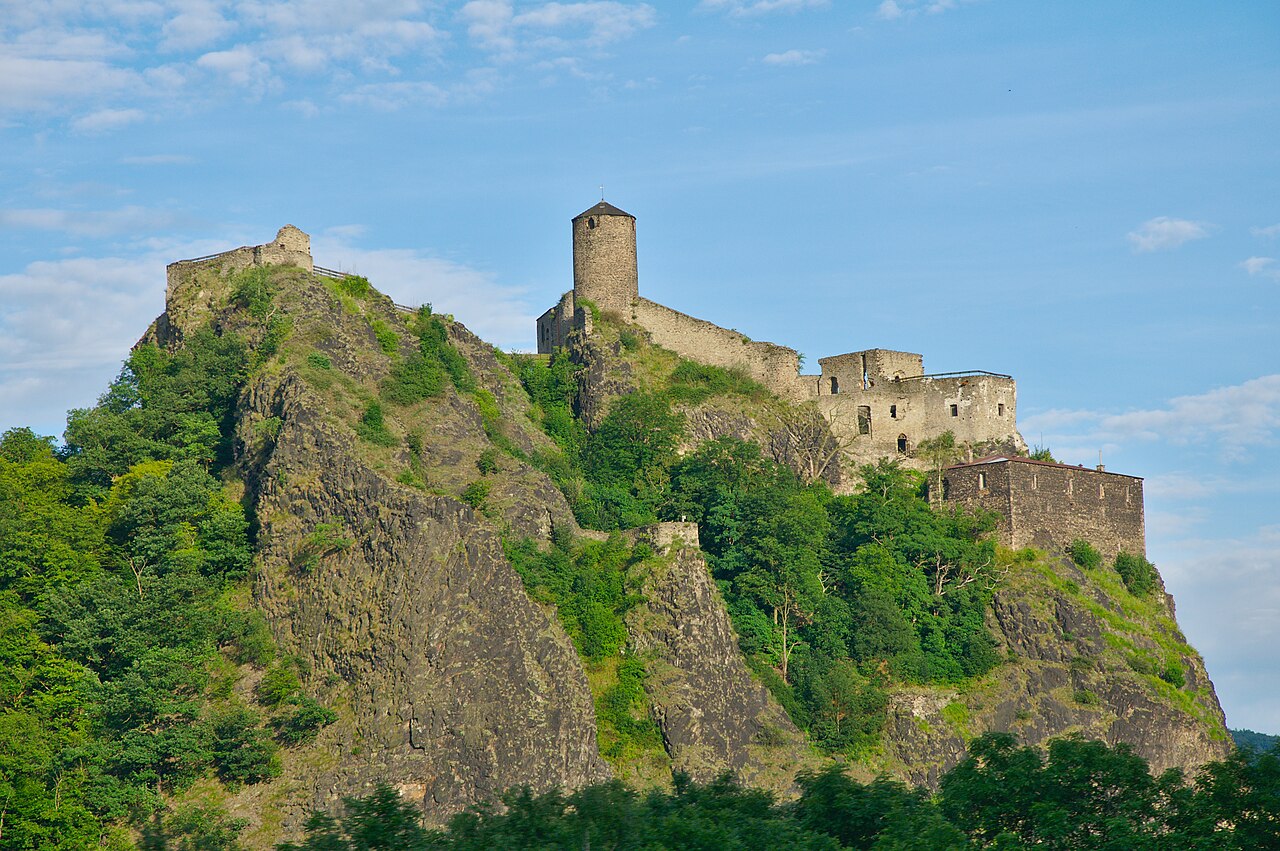
Mojžíř Castle stands as a medieval hill fortress ruin located above the district of Mojžíř in the municipality of Ústí nad Labem, Czechia. Constructed most likely in the latter half of the 13th century, this castle was established during a period of dynamic political changes in medieval Bohemia. The castle's strategic location on Strážný hill provided natural defensive advantages that were enhanced by man-made fortifications.
Historical context and ownership
The castle's origins trace back to the late 1200s, with archaeological evidence confirming its use into the early 14th century. While no direct medieval documents explicitly name Mojžíř Castle, its association with the region and timeline is well established. The castle likely served as a defensive or administrative stronghold during a time when noble families consolidated power in the area.
By the late 14th century, the nearby village of Mojžíř had become the center of an independent estate following the division of a larger domain. The noble family known as the Lords of Lungvic owned this estate, with the earliest recorded proprietor being Vygand of Lungvic in 1387. The Lungvic family maintained control until the early 15th century, with Děpolt of Lungvic noted as the last known owner in 1401.
Between 1401 and 1404, ownership transferred to Václav of Vartenberk, who incorporated Mojžíř into the Blansko estate. Following this acquisition, the castle was abandoned and fell into ruin, ceasing to function as a residence or military fortress. The castle's German name, Wessenstein, appears in some historical references but has been confused with another fortress near Dohna, complicating precise identification.
Architectural features and site layout
The remains of Mojžíř Castle reveal an oval-shaped layout that took full advantage of the natural topography. The eastern boundary was protected by a curved moat, an artificial ditch that may have been water-filled or dry, serving as a defensive barrier. This moat is a key feature dating back to the castle's original medieval construction phase.
The castle's core was situated on natural rock formations, which provided a solid foundation and minimized the need for extensive masonry. Few stone remnants survive, mostly fragments located in the eastern section of the core area, indicating limited stone construction. The builders utilized the terrain's natural defensive qualities, integrating rock outcrops into the fortress design.
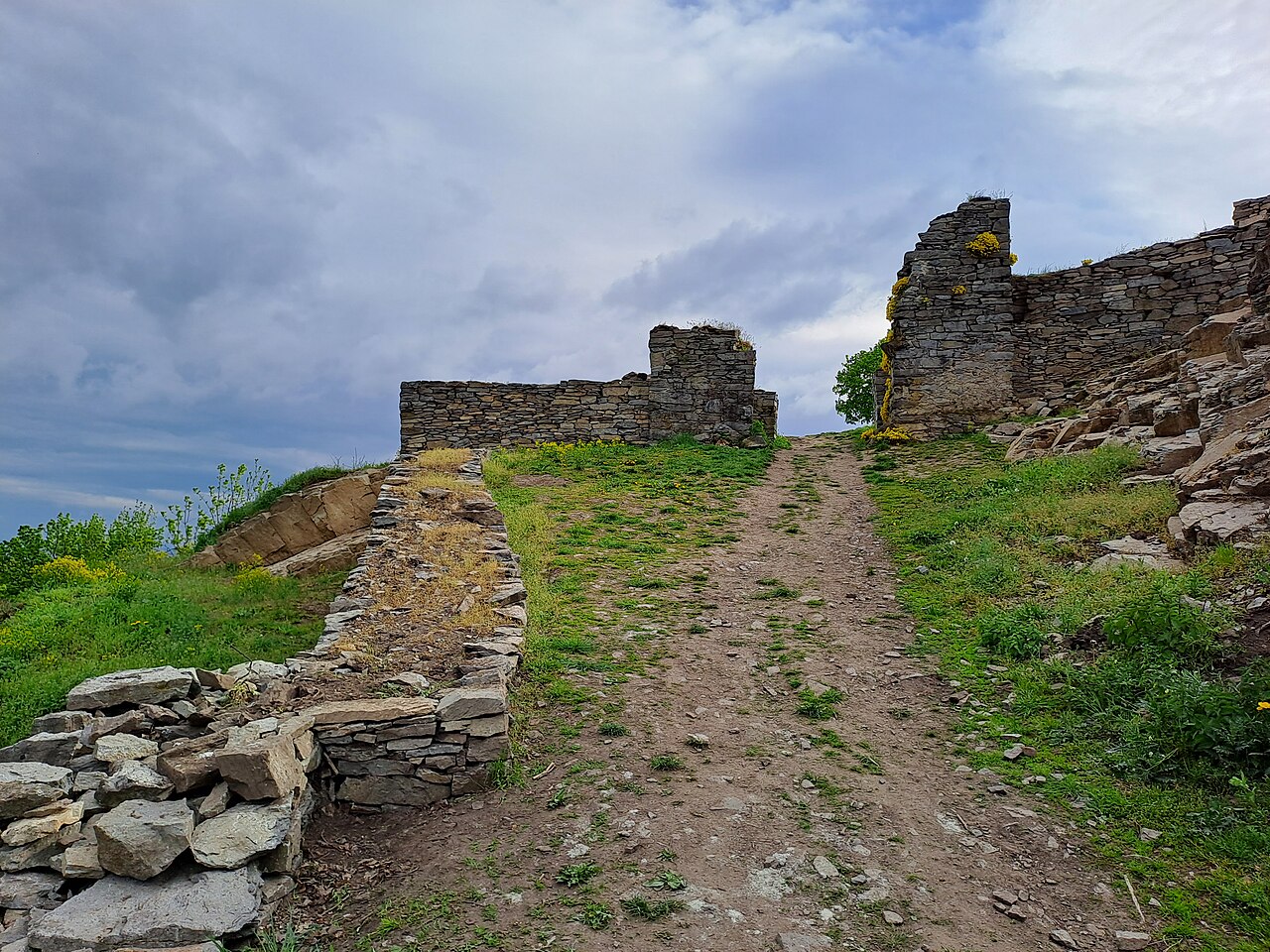
Additional traces include earthworks and terrain modifications consistent with former fortifications, such as subtle wall foundations and earth banks. These features outline the castle's original shape and suggest it was a relatively small-scale fortress. Some masonry fragments have been disturbed by unauthorized modern digs, which have impacted the site's archaeological integrity.
Access and preservation status
Today, Mojžíř Castle remains accessible by a path starting near the village church of Saints Simon and Jude in Mojžíř. This trail leads from a paved area into a field path ascending Strážný hill, where visitors can observe the remnants of the moat, rock outcrops, and wall segments on the slope. The site is primarily an archaeological ruin with modest architectural remains and the natural defensive landscape still visible.
The castle has not undergone significant restoration and is preserved mostly through its earthworks and surviving stone fragments. Its condition as a ruin offers insights into medieval hill castle construction methods that relied heavily on natural terrain features rather than large-scale masonry.
Historical significance and regional role
Mojžíř Castle's historical significance lies in its representation of small-scale medieval fortifications in Bohemia during the High to Late medieval periods. Although it never played a major role in documented military conflicts or royal events, it illustrates the typical pattern of noble estate centers that emerged in the region during the 13th and 14th centuries.
The castle's abandonment after integration into the Blansko estate reflects broader trends in medieval castle use, where smaller fortresses were often deserted in favor of more strategically advantageous or economically viable residences. Its survival as a ruin provides valuable archaeological and architectural data for understanding the evolution of hill castles in Czechia.
Frequently asked questions (FAQ)
- How do I reach Mojžíř Castle from Ústí nad Labem?
- Mojžíř Castle is accessible by a hiking trail starting near the village church of Saints Simon and Jude in Mojžíř, just outside Ústí nad Labem. The path ascends Strážný hill where the ruins are located.
- What remains can I expect to see at Mojžíř Castle?
- Visitors can see the oval-shaped layout of the castle, remnants of a curved moat, natural rock foundations, and scattered masonry fragments indicating the castle's former defensive structures.
- When was Mojžíř Castle built and abandoned?
- The castle was constructed in the late 13th century and was abandoned in the early 15th century after being incorporated into the Blansko estate.
- Is Mojžíř Castle suitable for family visits and easy hiking?
- The castle site is reachable by a moderately steep hiking trail on Strážný hill. While suitable for families accustomed to walking, visitors should wear appropriate footwear and be prepared for uneven terrain.
- Are there any guided tours or visitor facilities at Mojžíř Castle?
- There are no formal guided tours or visitor facilities at Mojžíř Castle. Visitors explore the ruins independently and should plan accordingly.
Information
Loading map...
Visitor reviews
No reviews yet. Been here? Write the first review and help other travelers!
Write the first reviewVisited this castle? Share your experience
Your review helps other travelers and adds first-hand knowledge to our encyclopedia.