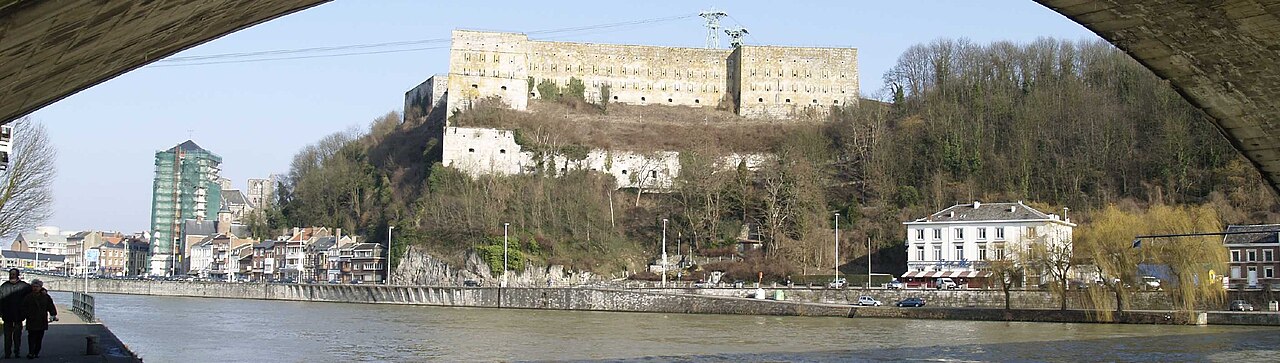
Moha Castle
Moha Castle, also known as Château Féodal de Moha, is a remarkable medieval fortress situated on a prominent rocky outcrop next to the village of Moha, within the province of Liège in the Wallonia region of Belgium. This hill castle commands a strategic position overlooking the confluence of two rivers, a natural defense that shaped its historical and military significance throughout the late medieval period. Although the exact date of its initial construction is uncertain, the first documented reference to the castle dates back to 1031, establishing its long-standing role as a feudal stronghold.
The earliest known lord was an Albert, referred to as the Lord of Moha, with the castle subsequently passing by marriage to Henry I, Count of Egisheim and Dagsburg, in 1050. The castle remained under the control of the Dagsburg family for several generations, during which time it was transformed into a formidable fortress. Its location near the border of the Principality of Liège made it a key military asset for the Lorraine possessions, particularly in controlling the nearby town of Huy.
Historical significance and feudal conflicts
Moha Castle's history is marked by complex feudal disputes and shifting allegiances. In 1212, the death of Albert II, Count of Dagsburg and the last Count of Moha without male heirs, triggered a succession crisis. Both Henry I, Duke of Brabant, and Louis II, Count of Loon, laid claim to the county due to familial ties. The Duke of Brabant's alliance with the King of France, a traditional adversary of the Prince-Bishopric of Liège, escalated tensions in the region.
In response, Prince-Bishop Hugues de Pierrepont forged alliances with Louis II, Count of Loon, the Count of Rochefort, and the citizens of Huy. Their coalition decisively defeated the Duke of Brabant's forces at the Battle of Steppes in 1213, securing Moha Castle for the Prince-Bishopric. By 1225, the castle was recognized as one of the twelve episcopal residences, underscoring its importance in regional governance and defense.
Role under the prince-bishops of liège
During the 14th century, the castle came under the control of the De la Marck family, who served as Prince-Bishops of Liège. Under their rule, Moha Castle was not only a military bastion but also a prison for noble captives. Its strategic position allowed the Prince-Bishops to exert control over the town of Huy by blockading its supply routes, which led to several attacks by the townspeople.
In 1376, the citizens of Huy, frustrated by the oppressive actions of the German garrison led by Jean d'Arckel, revolted and seized the castle. They destroyed much of the fortress, marking the beginning of its decline. Following this event, the castle's military significance waned, and the remains were repurposed as barracks.
Architectural features and archaeological remains
The castle's architecture reflects its evolution from a medieval stronghold to a ruin. Archaeological studies reveal that the site was originally leveled and expanded with fill to create a stable platform for construction around the late 10th or early 11th century. The earliest stone fortifications date from this period, signaling the transition from a simple settlement to a fortified castle.
Among the surviving structures was a chapel, which remained in use for religious purposes until its dismantling in 1826. This chapel's longevity highlights the site's sustained spiritual importance even after the castle's military function diminished.
The castle's walls were once considered nearly impregnable, forming part of a defensive network controlling the region. However, the 1376 destruction and subsequent quarrying for building materials severely reduced the structural remains. Excavations since the late 19th century have uncovered foundations and walls, which have been stabilized to preserve the site.
Natural features and modern use
A notable natural feature near the castle is an 18-meter-high rocky promontory north of the ruins, which forms part of the castle's defensive landscape. Today, this rock is popular for climbing, offering routes of moderate difficulty and adding recreational value to the historic site.
Currently, Moha Castle is freely accessible during working hours, inviting visitors to explore its evocative ruins and appreciate its historical and architectural legacy. The site is managed with ongoing conservation efforts led by local associations dedicated to preserving its cultural heritage.
Archaeological discoveries and prehistoric occupation
Extensive archaeological research has revealed that the site of Moha Castle was occupied long before the medieval fortress was established. Flint tools and pottery from the Early and Late Iron Ages indicate continuous human activity. Although Roman-era remains are sparse, traces from late antiquity suggest intermittent use of the site through various historical periods.
The castle's origins are traditionally linked to a figure named Mohelin d’Albore, purportedly a companion of Charles Martel in the late 7th century, who is said to have built an early fortress called Mohal. While this narrative is part of local legend, the concrete development of the stone castle likely occurred later, coinciding with the fragmentation of the Carolingian Empire and the rise of localized lordships.
Preservation and cultural significance
Following centuries of decline and partial destruction, the Belgian state acquired the site in 1889, recognizing its historical value. Since then, multiple conservation and excavation campaigns have been conducted, revealing the castle's layered history and helping to stabilize the ruins. The association "Les Amis du Château féodal de Moha," founded in 1992, continues to promote research, preservation, and public engagement with the site.
Moha Castle stands today not only as a testament to medieval military architecture and feudal history but also as a symbol of the region's enduring cultural heritage. Its ruins offer a tangible connection to the past, inviting visitors to explore the complex narratives of power, conflict, and community that shaped this corner of Belgium.
Frequently asked questions (FAQ)
- How do I get to Moha Castle?
- Moha Castle is located on Rue du Madot in Belgium, easily accessible by car and public transport. The nearest train station is a short distance away, with local buses providing direct routes to the castle.
- What is the historical significance of Moha Castle?
- Moha Castle dates back to the 12th century and played a crucial role in the defense of the region during various conflicts. Its architecture reflects the medieval styles of the time, making it an important landmark for history enthusiasts.
- When was Moha Castle built?
- Moha Castle was originally constructed in the 12th century, with various renovations and expansions occurring over the centuries. The castle has witnessed numerous historical events, contributing to its rich heritage.
- Can I take guided tours of Moha Castle?
- Yes, guided tours are available at Moha Castle, providing visitors with in-depth information about its history and architecture. It's recommended to book in advance, especially during peak tourist seasons.
- Why is Moha Castle an architectural gem?
- Moha Castle showcases a blend of medieval and Renaissance architectural styles, featuring impressive stonework and defensive structures. Its design not only served practical purposes but also reflects the artistic trends of its time.
- Is it possible to host events at Moha Castle?
- Yes, Moha Castle offers facilities for hosting events such as weddings, corporate gatherings, and private parties. The picturesque setting and historic ambiance make it a unique venue for special occasions.
- What are the opening hours for Moha Castle?
- Moha Castle is open to visitors from 10 AM to 5 PM, Tuesday through Sunday. It is closed on Mondays and certain public holidays, so it's best to check the official website for any updates on hours.
- What are the ticket prices for visiting Moha Castle?
- Ticket prices for Moha Castle are typically around €10 for adults, with discounts available for children and seniors. Group rates are also offered, making it an affordable option for family visits or school trips.
- When is the best time to visit Moha Castle?
- The best time to visit Moha Castle is during the spring and early autumn months when the weather is mild and the gardens are in full bloom. These seasons also tend to have fewer crowds, allowing for a more enjoyable experience.
- Are there nearby attractions to explore after visiting Moha Castle?
- Yes, after visiting Moha Castle, you can explore the charming village of Moha and its surrounding countryside. Nearby attractions include local museums, hiking trails, and historical sites that enrich your experience in the area.
Information
Website
Visit websiteSources & official resources
Verify the information above using these authoritative references.
Loading map...
Visitor reviews
No reviews yet. Been here? Write the first review and help other travelers!
Write the first reviewVisited this castle? Share your experience
Your review helps other travelers and adds first-hand knowledge to our encyclopedia.