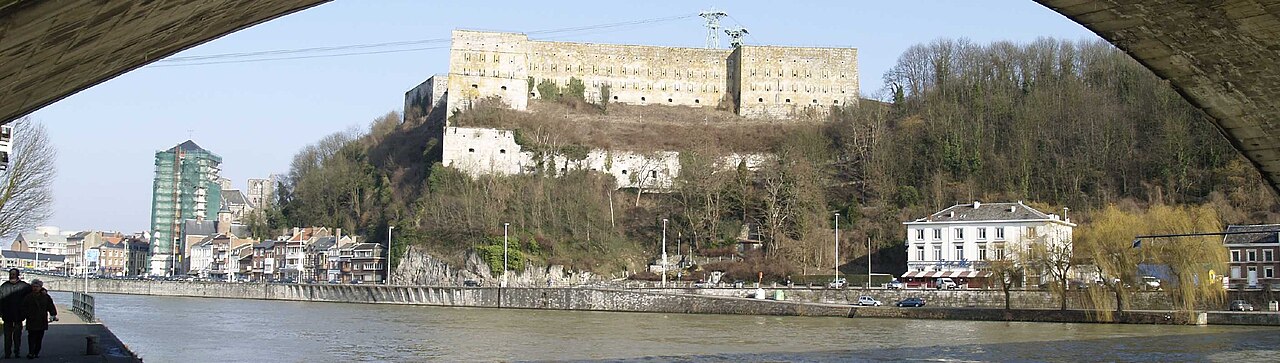
Beaufort Castle
Beaufort Castle, known locally as Château de Beaufort, is a high medieval fortress ruin perched on a rocky outcrop overlooking the southern bank of the Meuse river, west of the town of Huy in the Liège province of Belgium's Wallonia region. Constructed in the 12th century, this castle played a significant role in the regional power struggles of the Middle Ages, particularly between the Principality of Liège and the County of Namur.
Strategic location and early history
Beaufort Castle was originally built to serve as a strategic defensive stronghold for the Principality of Liège. Its position on a rocky promontory provided commanding views over the Meuse river valley, a vital trade and military route. This location enabled the castle's occupants to monitor and control movements along the river and to defend the principality's western border against incursions from the neighboring County of Namur.
During the 12th century, the Lords of Beaufort established their seat here. Through marriage alliances, notably with the family that controlled Vêves Castle, they expanded their influence in the region. The castle thus became not only a military fortification but also a symbol of feudal power and territorial control.
Political shifts and military conflicts
A significant turning point in Beaufort Castle's history occurred around 1271, when the Lord of Beaufort broke allegiance with the Principality of Liège and pledged loyalty to the Count of Namur. This shift transformed Beaufort Castle into a forward base of aggression against the town of Huy, which remained loyal to Liège and lay only about 5 kilometers away.
In the context of the War of the Cow (a regional conflict between Liège and Namur), the castle became a focal point of hostilities. In April 1276, the inhabitants of Huy laid siege to Beaufort Castle but failed to capture it. This event underscored the castle's formidable defensive capabilities and its importance in local warfare.
Ownership changed hands in 1330 when Jean II, Count of Namur, acquired Beaufort Castle and granted it to his brother Robert, further cementing its ties to the Namur nobility.
15th-century siege and ruin
By the 15th century, Beaufort Castle came under the control of Philip the Good, Duke of Burgundy, reflecting the shifting political landscape of the region as Burgundy expanded its influence. In 1430, during renewed conflicts, the castle was besieged by the inhabitants of Huy once again. This time, the siege was successful, and the castle was captured and subsequently razed to the ground.
The destruction left Beaufort Castle in ruins, and over the following centuries, the site was largely reclaimed by nature. The once formidable fortress became a romantic ruin, emblematic of the turbulent medieval history of the region.
Modern ownership and preservation
Before 1850, the site was purchased by the Duke of Beaufort-Spontin, a descendant of the noble family historically linked to the castle. The family retains ownership of the property to this day, preserving its legacy.
Currently, Beaufort Castle remains a private property and is accessible to the public only on select days in August. Visitors can explore the evocative ruins and enjoy panoramic views over the Meuse river valley, appreciating both the natural beauty and the historical significance of this medieval fortress.
Architectural features and layout
Although much of Beaufort Castle lies in ruin, the remnants reveal characteristics typical of high medieval fortifications. The castle was constructed primarily of stone, taking advantage of the natural rocky outcrop to enhance its defenses.
Key architectural elements included thick defensive walls, a fortified gatehouse, and towers positioned to provide overlapping fields of fire. The castle's elevated position and rugged terrain made direct assaults difficult, contributing to its resilience during multiple sieges.
While detailed records of the castle's internal layout are limited, it likely featured a central courtyard, residential quarters for the lord and his retinue, storage facilities, and battlements for archers and guards. The strategic use of the rock foundation integrated natural defenses into the castle's design, a common practice in medieval military architecture.
Cultural significance and tourism
Beaufort Castle holds cultural importance as a symbol of the feudal conflicts that shaped the region's history. Its ruins evoke the medieval era's complex political alliances and warfare, offering insight into the territorial struggles between principalities and counties in what is now Belgium.
Though access is limited, the castle attracts visitors interested in medieval history, architecture, and scenic landscapes. Its location near Huy makes it a notable point of interest for travelers exploring the Wallonia region's rich heritage.
Frequently asked questions (FAQ)
- How do I get to Beaufort Castle?
- Beaufort Castle is located in Huy, Belgium, and can be easily accessed by car or public transport. If you are traveling by train, the nearest station is Huy, from where you can take a short taxi ride or enjoy a scenic walk to the castle.
- What is the historical significance of Beaufort Castle?
- Beaufort Castle dates back to the 12th century and played a vital role in the medieval defense of the region. It has witnessed numerous historical events and battles, making it an important cultural landmark in Belgium.
- When was Beaufort Castle built?
- Construction of Beaufort Castle began in the early 12th century, with various modifications and expansions occurring over the centuries. Its architecture reflects the evolving styles of the medieval period, showcasing the castle's rich history.
- Can I visit Beaufort Castle with a guided tour?
- Yes, guided tours are available at Beaufort Castle, providing visitors with in-depth knowledge of its history and architecture. These tours are recommended for a comprehensive understanding of the castle's significance and its fascinating stories.
- Why is Beaufort Castle considered an architectural gem?
- Beaufort Castle features a unique blend of Romanesque and Gothic architectural styles, characterized by its imposing towers and intricate stonework. The castle's strategic location and design highlight its historical importance as a fortress, making it a must-see for architecture enthusiasts.
- Is it possible to access Beaufort Castle for people with disabilities?
- While Beaufort Castle has made efforts to improve accessibility, some areas may be challenging due to the historical structure. It is advisable to contact the castle administration in advance to inquire about specific accommodations available for visitors with disabilities.
- What are the opening hours of Beaufort Castle?
- Beaufort Castle is typically open to visitors from 10 AM to 6 PM during the peak season, with shorter hours in the off-season. It is best to check the official website or contact the castle directly for the most current information on opening hours.
- What are the ticket prices for visiting Beaufort Castle?
- Ticket prices for Beaufort Castle are generally affordable, with discounts available for students and seniors. Children under a certain age may enter for free, so it's a great destination for families looking to explore history without breaking the bank.
- When is the best time to visit Beaufort Castle?
- The best time to visit Beaufort Castle is during the spring and summer months when the weather is pleasant, and the gardens are in full bloom. Additionally, special events and festivals often take place during this time, enhancing your visit with unique experiences.
- Are there any nearby attractions to visit after Beaufort Castle?
- Yes, after visiting Beaufort Castle, you can explore the charming town of Huy, which offers beautiful streets, local markets, and the striking Collegiate Church of Notre-Dame. The nearby Meuse River also provides opportunities for scenic walks and boat rides, making it a perfect day trip.
Information
Address
Rue de la Poudrerie, Belgium
Loading map...
Visitor reviews
No reviews yet. Been here? Write the first review and help other travelers!
Write the first reviewVisited this castle? Share your experience
Your review helps other travelers and adds first-hand knowledge to our encyclopedia.