Castillo del Casón
The Castillo del Casón stands as an enduring symbol of the layered history of northwestern Spain, located within the municipality of Ortigueira. This hill castle occupies a strategic position on a prominent hill rising 291 meters above sea level, overlooking the vital ría de Ortigueira estuary. The castle's origins intertwine with the ancient castro culture, a hallmark of pre-Roman fortified settlements in the region, and later medieval military architecture, reflecting centuries of evolving defensive needs.
The site initially served as a fortified castro settlement, characteristic of the indigenous communities inhabiting the Iberian Peninsula before Roman conquest. These early inhabitants selected naturally defensible hilltops, often enhanced by man-made fortifications, to control territory and protect against rival groups. Archaeological evidence confirms that the medieval builders of Castillo del Casón repurposed and expanded these earlier fortifications, adapting the site into a more complex and robust medieval fortress.
Historical context and strategic importance
During the Middle Ages, the castle's location was critical for controlling maritime access and monitoring naval activity along the ría, an important estuary providing entry from the Atlantic Ocean. Although no specific historical records link the castle to particular rulers or notable battles, its design and position clearly indicate its function as a regional watchpoint and defensive stronghold.
The castle's presence illustrates the continuity of military occupation from the castro period through medieval times, showcasing the gradual evolution of fortification techniques. Its role was primarily to oversee and protect the surrounding lands and waterways, ensuring control over trade routes and deterring potential invaders or pirates.
Architectural features and defensive structures
Integration of natural terrain and man-made defenses
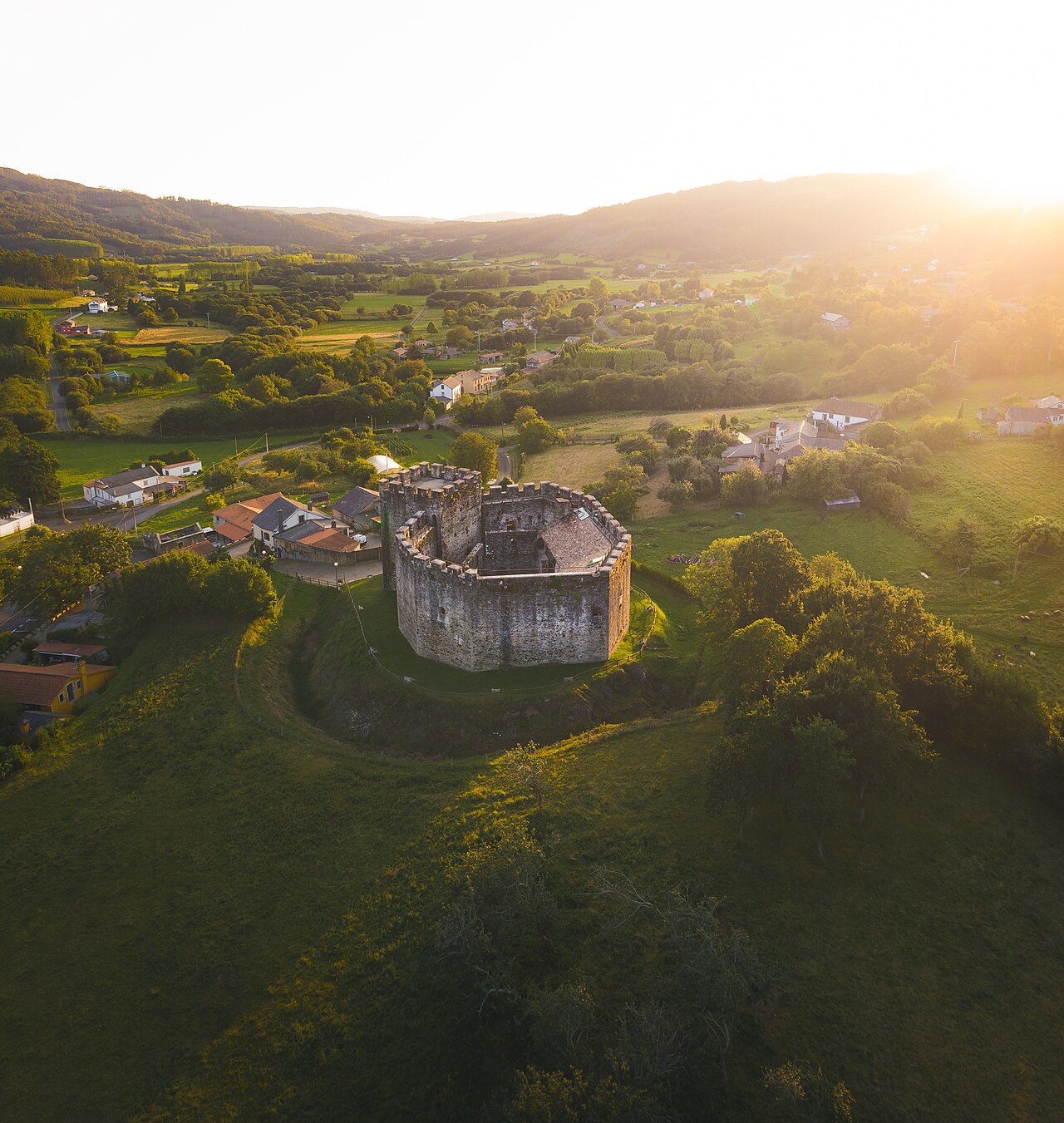
The Castillo del Casón takes full advantage of the natural topography, situated on a hill flanked by the Casón and Landoi streams. These waterways, together with the elevation, created formidable natural barriers that complemented the castle's man-made defenses.
Fortification elements
Archaeological excavations have revealed the remains of substantial defensive walls encircling the hilltop. These walls were constructed with durable stone and once coated with encalado, a lime-based whitewash that helped protect the masonry from weathering and possibly signified the castle's upkeep and prestige.
Surrounding the walls are several dry moats or ditches (fosos), designed to impede attackers and enhance the castle's defensibility. These moats, combined with the natural streams, created multiple layers of obstacles for any would-be assailants.
Towers and vantage points
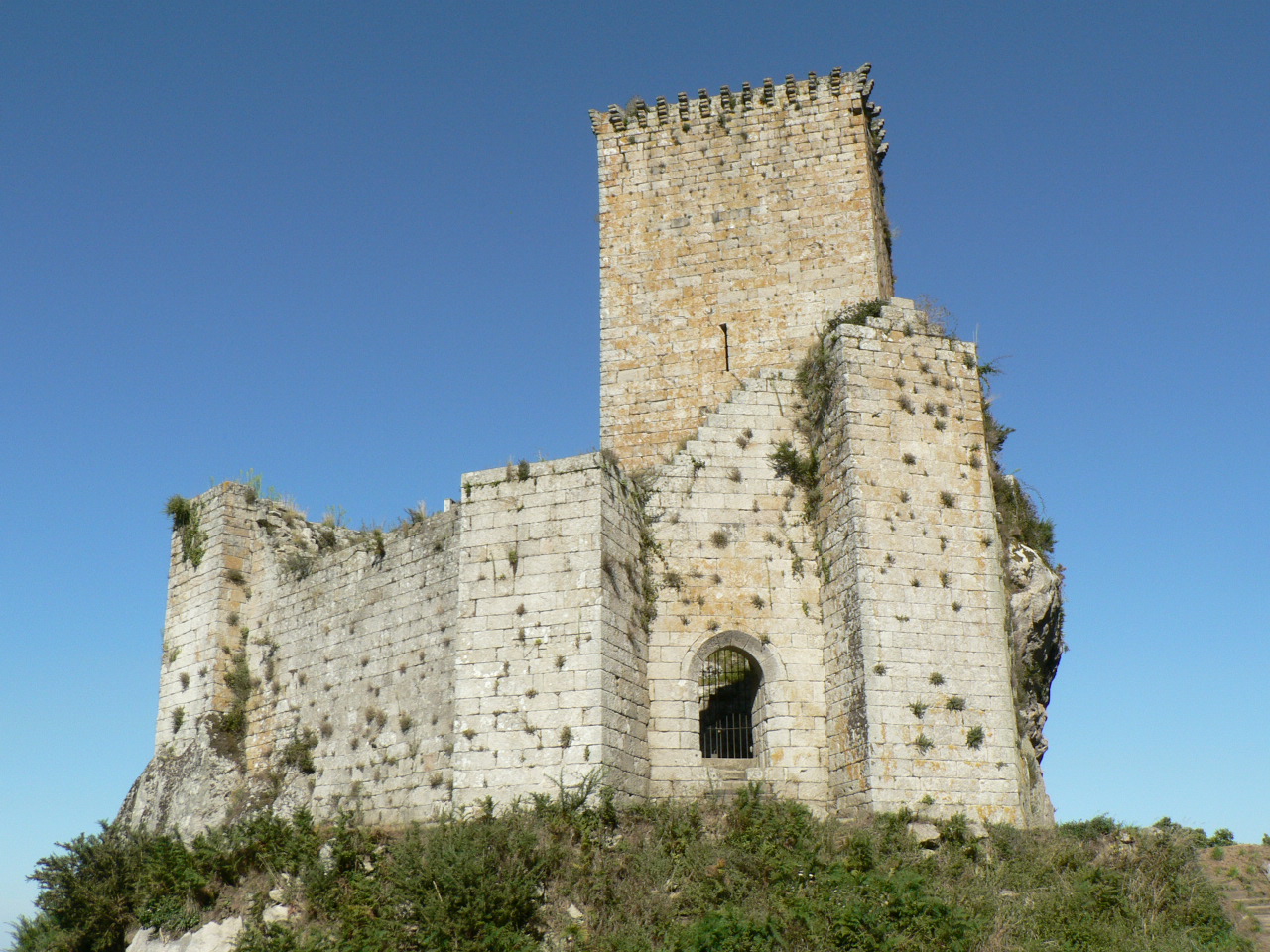
Two prominent towers (torreones) flank the fortress, serving as elevated observation posts. These towers provided guards with extensive views over the estuary and the surrounding landscape, allowing early detection of approaching threats. The towers' strategic placement underscores their importance in the castle's surveillance system.
Archaeological significance and preservation
Recent archaeological work at Castillo del Casón has been pivotal in uncovering the site's complex history. Excavations have helped clarify the castle's structural layout and its evolution from a castro settlement to a medieval fortress. The findings contribute valuable insights into regional defensive strategies and settlement patterns in northwestern Spain.
Today, the castle remains are classified as archaeological ruins, with visible remnants of walls, ditches, and towers. The site is an important cultural heritage landmark, offering a tangible connection to the area's ancient and medieval past.
Visiting Castillo del Casón
Visitors to the site can explore the ruins and appreciate the commanding views of the ría de Ortigueira and the surrounding Galician landscape. The castle's elevated position provides a unique perspective on the region's historical defensive network and natural environment.
While the castle is primarily an archaeological site, its accessibility and scenic location make it a valuable destination for those interested in medieval history, ancient fortifications, and Spanish heritage.
Frequently asked questions (FAQ)
- When was Castillo del Casón originally built?
- The castle was constructed during the medieval period on the foundations of an earlier pre-Roman castro settlement, reflecting a long history of occupation.
- What defensive features does Castillo del Casón have?
- It features substantial defensive walls coated with lime-based whitewash, dry moats surrounding the site, and two towers that provided elevated vantage points for surveillance.
- Can visitors access Castillo del Casón?
- Yes, visitors can explore the archaeological ruins and enjoy panoramic views of the ría de Ortigueira, though facilities are limited as it is primarily a historic site.
- Why is the castle's location significant?
- The castle overlooks the ría de Ortigueira, an important estuary used historically for maritime control and defense, making its hilltop position strategic for monitoring naval activity.
- What is the condition of Castillo del Casón today?
- The castle remains are archaeological ruins, with visible walls, ditches, and towers that illustrate its historical defensive role.
Information
Loading map...
Visitor reviews
No reviews yet. Been here? Write the first review and help other travelers!
Write the first reviewVisited this castle? Share your experience
Your review helps other travelers and adds first-hand knowledge to our encyclopedia.