Modrý Kamen Castle
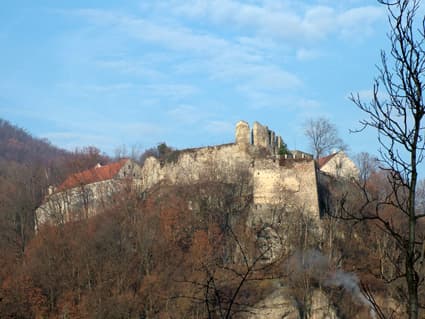
Modrý Kameň Castle stands prominently on a rocky hilltop above the town of Modrý Kameň in Slovakia, offering a compelling glimpse into the region's medieval and early modern history. Established in the 13th century, this hill castle was originally constructed by the ancestors of the Balassa noble family, whose influence shaped much of the castle's turbulent past. The castle's name, meaning 'Blue Rock,' reflects its dramatic natural setting, perched on a steep rock pinnacle that provided strategic defensive advantages.
The earliest historical records trace the castle's origins to the late 13th century, with a commemorative plaque suggesting a founding date of 1237. Initially owned by Peter Forró, the castle soon passed through the hands of the Hunt-Poznan clan before becoming a stronghold of the Balassa family. Their tenure was marked by conflict, including a notable siege in 1290 when the Balassas recaptured the castle from the sons of Casimir of the Hunt-Poznan family. The castle also briefly fell under the control of the powerful magnate Matúš Čák Trenčiansky before returning to Balassa hands.
Medieval origins and strategic significance
Constructed during the high medieval period, Modrý Kameň Castle exemplifies the typical defensive priorities of hill castles of this era. Its location atop a rocky outcrop provided commanding views of the surrounding landscape, essential for early warning and defense against invaders. The castle's thick stone walls and elevated position made it a formidable fortress during the medieval conflicts that shaped the region.
The castle's medieval architecture included key features such as battlements, a moat, and a fortified gatehouse, which were essential for withstanding sieges. The strategic importance of Modrý Kameň was underscored during the late 13th century conflicts when control of the castle was contested between noble families.
Turkish occupation and renaissance reconstruction
In the latter half of the 16th century, the castle faced significant challenges as the expanding Ottoman Empire advanced into Central Europe. Around 1576, Ottoman troops captured the castle after its guards fled, leading to a period of occupation that lasted until 1593. The Ottomans subsequently destroyed much of the fortress, marking a turning point in its history.
Following the Ottoman withdrawal, the castle was rebuilt between 1609 and 1612 under the direction of Sigismund Balassa. This reconstruction introduced Renaissance architectural elements and modernized the fortress with artillery platforms designed to accommodate cannons, reflecting the evolution of military technology and tactics. These enhancements aimed to bolster the castle's defenses against future sieges.
Despite these improvements, the castle remained vulnerable during the turbulent 17th century. It was besieged multiple times, including a royal siege in 1616 when Zalco Balassa's alliance with the Turks led to the castle's capture and his imprisonment. Further assaults by Ottoman forces in 1659 and rebel troops in 1683 inflicted severe damage, leaving the castle partially ruined and eventually abandoned.
Baroque transformation and later history
In the early 18th century, the Balassa family shifted their focus from the medieval fortress to a more comfortable residence by constructing a Baroque manor house on the lower castle courtyard. This manor incorporated stones from the ruined castle, blending the old with the new. The upper castle area was converted into a garden, a transformation that remains a protected cultural monument today.
The manor complex also features a chapel dedicated to Saint Anne, built in 1759, which adds a religious dimension to the estate. An archaeological find within the chapel—a bronze vessel containing a cattle heart—reveals the intertwining of local folk rituals and religious practices, likely intended to protect livestock during an 18th-century plague.
Ownership of the castle and manor passed through several noble families over the centuries, including the Forgáč and Almásy families. The latter sold the estate to the Czechoslovak state in 1923. Since 1991, the site has housed the Museum of Puppets and Toys, the only one of its kind in Slovakia, featuring exhibitions such as 'From the Life of Dwarfs' and a unique display of historical dental technology.
Architectural remains and cultural significance
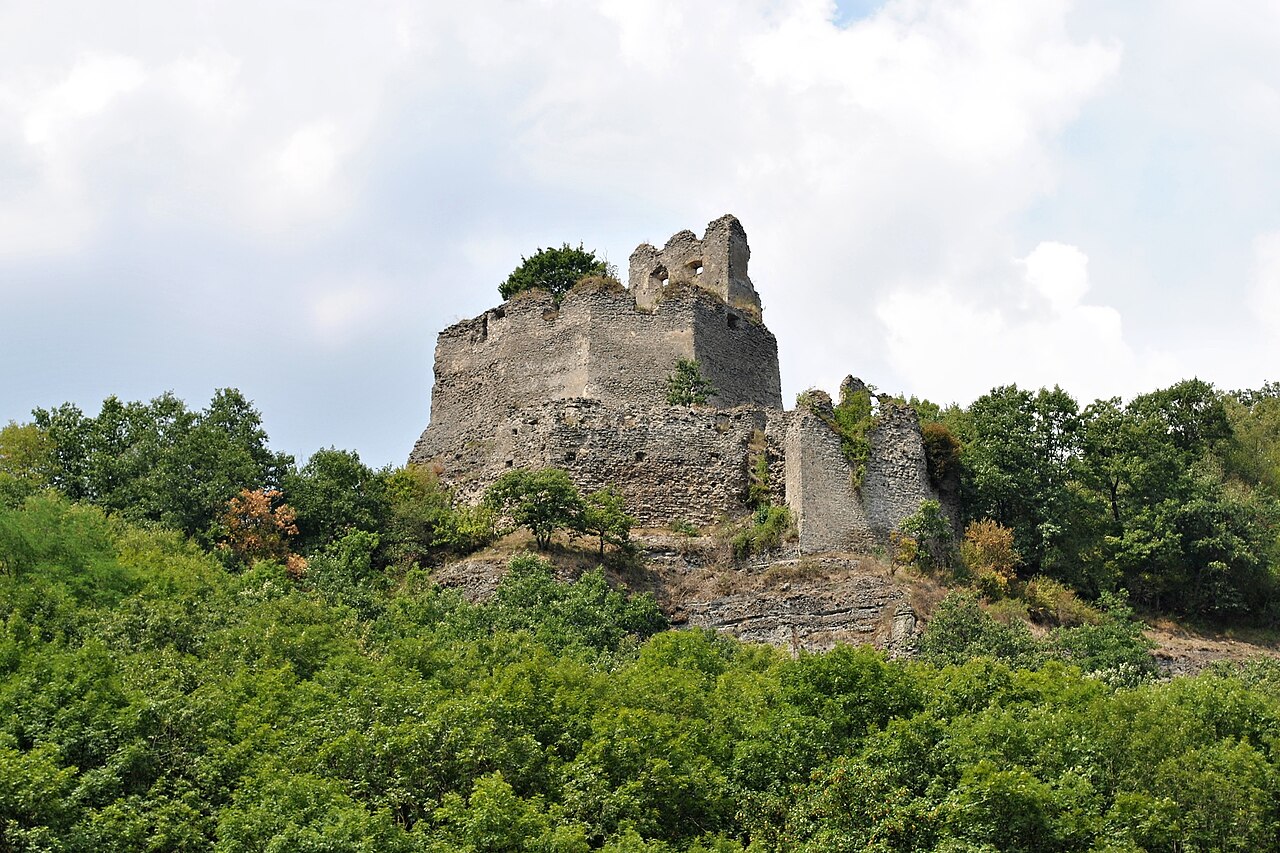
Today, visitors to Modrý Kameň Castle can explore the ruins of its Gothic-Renaissance structures, including remnants of the thick defensive walls, the moat, and the bridge that once spanned it. The Baroque manor and chapel remain well-preserved, offering insight into the estate's evolution from a medieval fortress to a noble residence.
The castle's layout illustrates the adaptation of medieval military architecture to changing warfare demands, particularly during the Renaissance reconstruction with artillery platforms. The surrounding gardens and protected cultural monuments highlight the site's ongoing historical and cultural importance.
Modrý Kameň Castle stands as a testament to the region's complex history, reflecting the shifts in power, architectural styles, and cultural practices over several centuries. Its combination of medieval fortifications, Renaissance military innovations, and Baroque residential elegance makes it a unique heritage site in Slovakia.
Visitor experience and museum
The castle complex today serves as a vibrant cultural center, hosting various events and festivals that celebrate local traditions and history. The Museum of Puppets and Toys offers a distinctive attraction, drawing visitors interested in folk art and childhood heritage. Additionally, the museum's dental technology exhibition provides a rare glimpse into Central European medical history.
Visitors can explore the castle ruins, the Baroque manor, the chapel, and the gardens, all while learning about the castle's storied past through informative displays and guided tours. The site is accessible year-round, making it a valuable destination for history enthusiasts and tourists alike.
Frequently asked questions (FAQ)
- How do I get to Modrý Kameň Castle?
- Modrý Kameň Castle is located in the town of Modrý Kameň in the Banská Bystrica Region of Slovakia. It is accessible by car and local bus services from nearby cities. The castle is situated on a hill above the town, with walking paths leading up to the site.
- What are the opening hours of Modrý Kameň Castle?
- The castle is open daily from 10:00 to 16:00. Visitors are advised to check for any seasonal changes or special closures before planning their visit.
- What can I see at the Museum of Puppets and Toys?
- The Museum of Puppets and Toys at Modrý Kameň Castle features a unique collection of puppetry artifacts and toys, including the permanent exhibition 'From the Life of Dwarfs.' It also houses a rare historical exhibition of dental technology, notable in Central Europe.
- Is Modrý Kameň Castle wheelchair accessible?
- While the Baroque manor and museum facilities offer some accessibility, the castle ruins themselves are on uneven terrain and rocky slopes, which may limit access for visitors with mobility challenges.
- When was Modrý Kameň Castle built and by whom?
- The castle was built in the 13th century by the ancestors of the Balassa noble family. Its earliest documented mention dates back to 1290, with a commemorative plaque indicating a founding year of 1237.
- Are there any special events held at Modrý Kameň Castle?
- Yes, the castle hosts several cultural events and festivals throughout the year, celebrating local history, puppetry, and traditional crafts, providing visitors with engaging experiences beyond the exhibitions.

Information
Opening hours
10:00-16:00, daily
Ticket prices
€5 adult, €3 child
Current owner
Slovak National Museum
Website
Visit websiteSources & official resources
Verify the information above using these authoritative references.
Loading map...
Visitor reviews
No reviews yet. Been here? Write the first review and help other travelers!
Write the first reviewVisited this castle? Share your experience
Your review helps other travelers and adds first-hand knowledge to our encyclopedia.