Cabrad Castle Ruins
Cabrad Castle, located near the village of Čabradský Vrbovok in Slovakia, is a significant example of high medieval hill castle architecture. First mentioned in 1276, the castle, also historically known as Litava Castle, was strategically positioned atop the Litava Valley overlooking the Litava River. This commanding location allowed it to control and protect important trade routes leading to the flourishing central Slovakian mining towns during the medieval period.
The castle was originally constructed in the 13th century as part of a network of fortifications designed to safeguard the region’s economic arteries. Its initial owners included the Ders of Hunt-Poznan family, recorded in the area from 1256. By the mid-14th century, around 1342, Cabrad underwent significant expansion to enhance its defensive capabilities and residential comfort, reflecting the evolving military and domestic needs of its noble occupants.
Historical development and ownership
Throughout its history, Cabrad Castle changed hands multiple times, reflecting the turbulent political landscape of medieval Hungary and Slovakia. In the 14th century, it became the residence of the influential noble Mathias Csák. The castle’s fortifications were further strengthened during this period, preparing it for the conflicts that would follow.
In the 15th century, the castle was seized by Jan Jiskra of Brandys, a commander of Hussite forces, illustrating its strategic importance in regional power struggles. In 1462, the renowned Hungarian king Matthias Corvinus claimed the castle, underscoring its value as a military asset.
The early 16th century marked a period of significant refurbishment under the ownership of Cardinal Tamás Bakócz, one of Hungary’s wealthiest and most powerful clerics. Around 1520, Bakócz invested heavily in expanding and modernizing the castle, enhancing its fortifications and residential quarters. After his death, the castle passed to his nephew, Péter Bakócz, and subsequently to his sister and brother-in-law.
In 1547, the castle was briefly occupied by the bandit knight Melichar Balassa, who was expelled by royal forces a year later. The latter half of the 16th century saw increasing threats from the Ottoman Empire, prompting extensive fortification works led by the Italian military architect G. Ferrari. These enhancements played a crucial role in repelling Ottoman sieges in 1585 and 1602.
In recognition of his military service against the Ottomans, King Ferdinand II granted the castle in 1622 to the noble Péter Koháry. The 17th century was relatively peaceful for Cabrad, though the strategic importance of the trade routes it guarded diminished. The Koháry family maintained the castle as a residence until the mid-18th century, after which it was used only as a summer home.
The castle’s decline culminated in 1812 when Ferencz József Koháry de Csábrág deliberately set it ablaze to prevent its occupation by bandits. Since then, Cabrad has remained a ruin, slowly reclaimed by the surrounding forests and protected as part of the Čabraď National Nature Reserve established in 1967.
Architectural features and fortifications
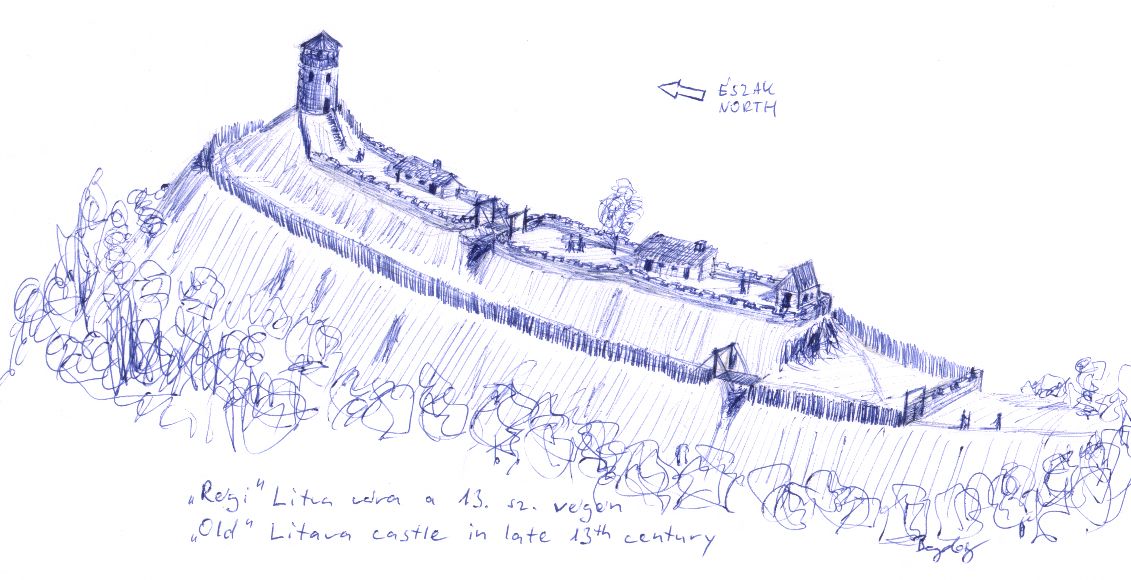
Cabrad Castle is a classic example of a hill castle utilizing natural topography for defense. It occupies a plateau nearly encircled by a bend in the Litava River, providing a natural moat on three sides. The upper castle formed the core of the complex, featuring a central tower, a large inner courtyard, and three palace buildings arranged to meet both defensive and residential needs.
The main entrance was located on the northern side, dominated by a substantial three-story gatehouse likely equipped with a drawbridge and a vaulted cellar beneath it. This design combined strong defensive capabilities with practical storage space. The western defenses included bastions and smaller fortified outworks called bastilles, providing layered protection against attackers.
On the eastern side, a residential building housed the castle garrison, ensuring a rapid military response to threats. The southwestern corner featured another bastion reinforced by a gate, while the southern face contained the principal gateway with a tower and an advanced outwork featuring embrasures for defensive firing positions. A second drawbridge here enhanced the security of the main access point.
The castle’s defenses were notably strengthened in the late 16th century under the direction of the Italian engineer Francesco do Pozzo. His work on the bastions and walls significantly contributed to the castle’s resilience during Ottoman sieges. Additional structures, such as a granary built in the 19th century, supported the castle’s economic functions but have since fallen into ruin.
Conservation and visitor experience
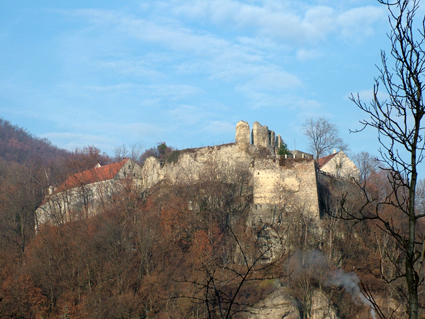
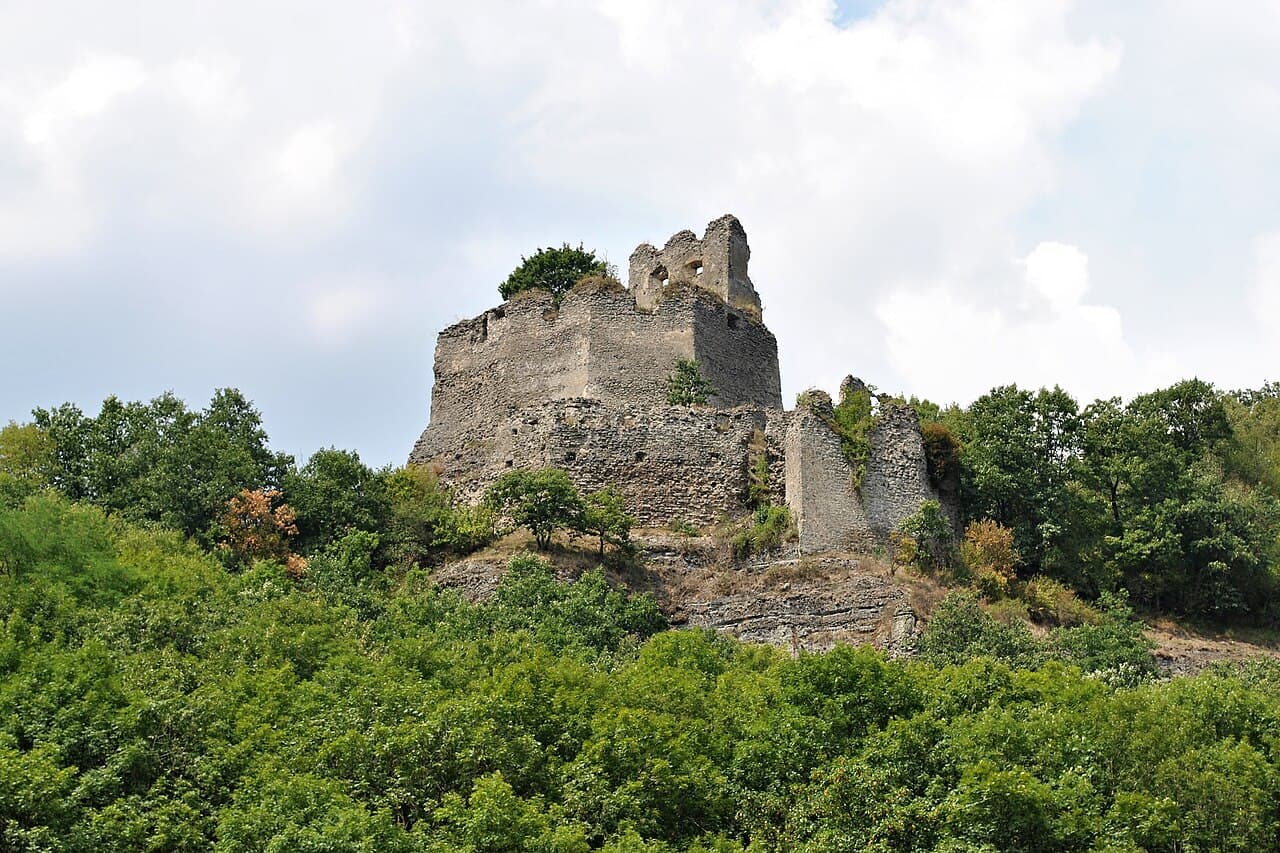
Today, Cabrad Castle stands as a partially preserved ruin, with many of its original structures reduced to fragments. Conservation efforts initiated in the late 20th century have focused on stabilizing the remaining walls and fortifications to prevent further decay. The site is accessible to visitors via marked hiking trails from nearby villages, offering a glimpse into medieval military architecture and the region’s rich history.
The castle’s location within the Čabraď National Nature Reserve adds ecological value to the visit, as the surrounding forested hills are home to diverse flora and fauna, including a notable reptile population. Interpretive signage and guided tours provide historical context, enhancing the educational experience for tourists and history enthusiasts alike.
Accessibility and visitor tips
- Visitors should wear sturdy footwear due to uneven terrain and partial ruins.
- The best times to visit are late spring to early autumn when weather conditions are favorable for hiking.
- Guided tours are available seasonally, offering in-depth historical insights.
- Photography is encouraged, but care should be taken to respect the fragile ruins and natural environment.
Cabrad Castle remains a compelling destination for those interested in medieval fortifications, Hungarian-Slovak history, and natural beauty. Its blend of historical significance and scenic surroundings makes it a unique cultural landmark in Slovakia.
Frequently asked questions (FAQ)
- How do I get to Cabrad Castle Ruins?
- Cabrad Castle Ruins are located in Čabradský Vrbovok, Slovakia, and can be reached by car or public transport. The nearest major city is Banská Bystrica, from where you can take a bus or drive. There are signs directing visitors from the main roads to the castle site.
- What is the historical significance of Cabrad Castle Ruins?
- Cabrad Castle, believed to have been built in the 13th century, played a strategic role in the region's defense. It served as a residence for various noble families and witnessed significant historical events over the centuries. Today, it stands as a testament to medieval architecture and history in Slovakia.
- When was Cabrad Castle originally built?
- Cabrad Castle was originally constructed in the 13th century, with its foundation likely laid around the year 1260. Over the years, it underwent several modifications and expansions, reflecting the architectural styles of different eras. The ruins that remain today offer a glimpse into its storied past.
- Can I enter the ruins of Cabrad Castle?
- Yes, visitors are allowed to explore the ruins of Cabrad Castle. While there are some safety precautions in place, you can wander through the site and enjoy the views of the surrounding landscape. It's advisable to wear sturdy shoes due to uneven terrain.
- Why is Cabrad Castle a popular destination for visitors?
- Cabrad Castle is popular for its rich history, stunning views, and unique architecture. Visitors appreciate the serene environment and the opportunity to explore a well-preserved ruin. The castle's historical significance and picturesque setting make it a favorite among history enthusiasts and photographers.
- Is it possible to visit Cabrad Castle year-round?
- Yes, Cabrad Castle is accessible to visitors year-round, although the experience may vary with the seasons. The best time to visit is during spring and autumn when the weather is pleasant, and the surrounding nature is particularly beautiful. Winter visits can be magical, but snow may affect access.
- What are the opening hours for Cabrad Castle Ruins?
- Cabrad Castle Ruins are generally open to visitors from dawn until dusk, allowing for ample time to explore. However, it is recommended to check local listings or contact tourist information for any seasonal changes to opening hours. Ensure to plan your visit accordingly to enjoy the site fully.
- Are there any ticket prices for visiting Cabrad Castle?
- Visiting Cabrad Castle Ruins is free of charge, making it an accessible destination for all. However, some guided tours may have a fee, which can enhance your experience by providing deeper insights into the castle's history. Always verify any costs associated with special events or guided visits before planning your trip.
- What nearby attractions can I visit while in the area?
- While visiting Cabrad Castle, you can also explore the charming village of Čabradský Vrbovok and its surroundings. Nearby attractions include hiking trails and other historical sites such as the nearby Hronsek Wooden Church, a UNESCO World Heritage Site. The rich natural environment offers opportunities for outdoor activities as well.
Photo gallery

Information
Website
Visit websiteSources & official resources
Verify the information above using these authoritative references.
Loading map...
Visitor reviews
No reviews yet. Been here? Write the first review and help other travelers!
Write the first reviewVisited this castle? Share your experience
Your review helps other travelers and adds first-hand knowledge to our encyclopedia.