Modinakhe fortress — Georgia castle

Modinakhe fortress

Modinakhe fortress in Sachkhere, Georgia
Sachkhere, Imereti, Georgia
Ruins

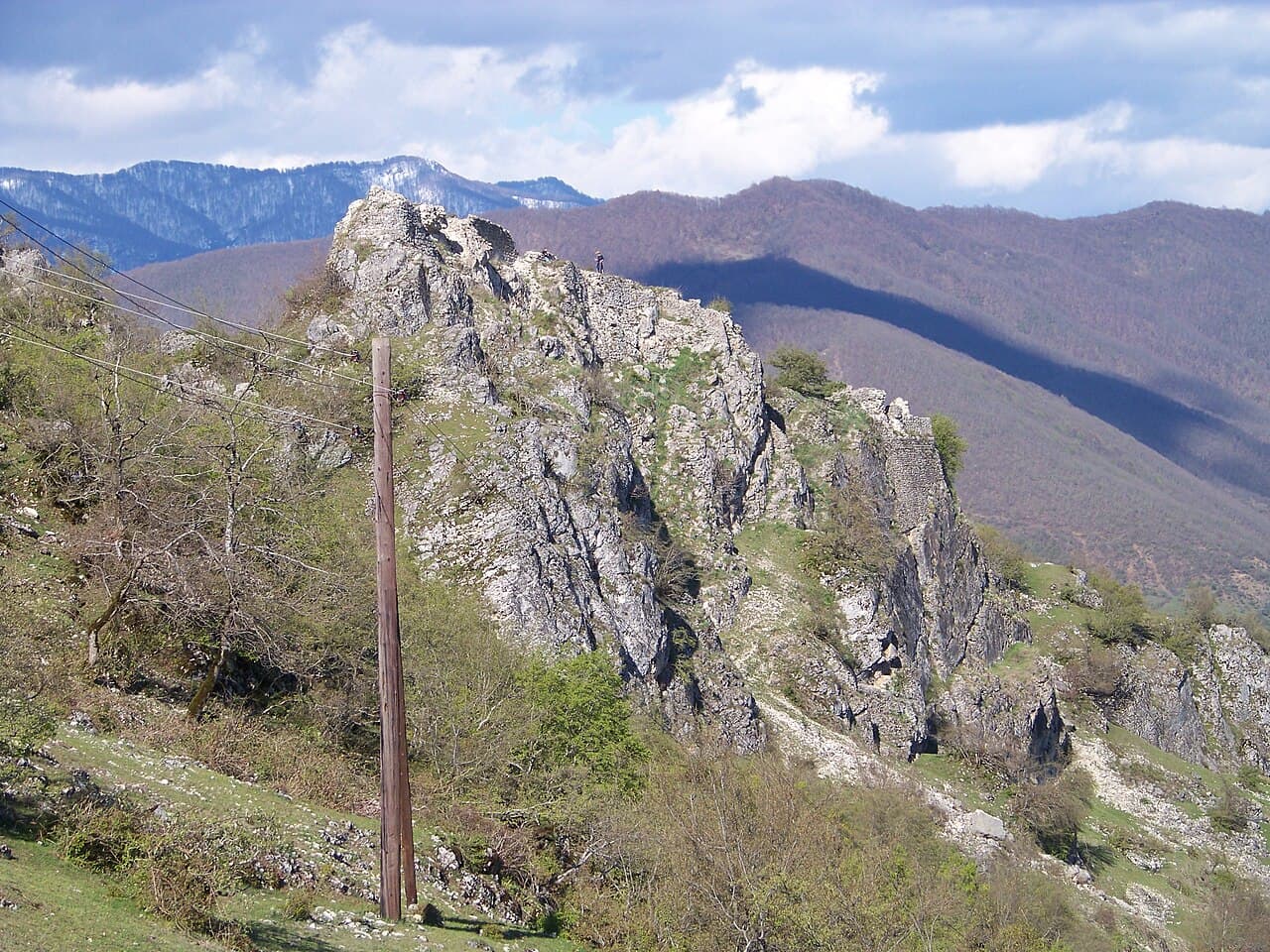
Modinakhe fortress is a historic Georgian stronghold located on a commanding mountain overlooking the city of Sachkhere in the Imereti region of western Georgia. The fortress stands as a significant example of medieval military architecture in the region, though today it remains largely in ruins. Its strategic position on a steep mountain provided formidable natural defenses, making it a crucial fortification for controlling the surrounding territory.

Historical background and significance

The origins of Modinakhe fortress date back to the medieval period, although precise construction dates are uncertain. It was part of the defensive network protecting the Imereti kingdom, which was a prominent Georgian realm during the Middle Ages. The fortress played a pivotal role in regional conflicts and served as a refuge during invasions. Throughout its history, Modinakhe witnessed various sieges and battles, reflecting the turbulent political landscape of Georgia in medieval times.

Architectural features and layout

Perched atop a steep mountain, the fortress's design takes full advantage of the natural terrain. The ruins reveal remnants of thick defensive walls built from local stone, which once enclosed the fortress complex. Although much of the structure has collapsed, traces of towers and battlements remain visible, indicating the fortress's defensive capabilities. The layout likely included a central courtyard, residential quarters, and storage facilities, typical of Georgian fortresses of the era.

Defensive elements

The fortress's position on a high mountain provided a natural vantage point for surveillance and defense. The thick stone walls were supplemented by towers at strategic points to cover approaches and provide firing positions for defenders. The steep slopes surrounding the fortress acted as natural barriers against attackers, reducing the need for extensive artificial fortifications on certain sides.

Current condition and archaeological importance

Today, Modinakhe fortress is classified as ruins, with many of its original structures deteriorated or collapsed due to centuries of exposure and lack of restoration. Despite this, the site remains an important archaeological location that offers insights into medieval Georgian military architecture and regional history. Ongoing studies and preservation efforts aim to protect what remains and increase public awareness of the fortress's cultural heritage.

Visiting Modinakhe fortress

Visitors to Modinakhe fortress can explore the rugged mountain terrain and enjoy panoramic views of the surrounding Imereti landscape. Access involves a hike up the mountain, which requires appropriate footwear and physical readiness. The site does not have extensive visitor facilities or guided tours, so visitors should prepare accordingly. The fortress's dramatic setting and historical ambiance make it a compelling destination for those interested in Georgian history and medieval fortifications.

Frequently asked questions (FAQ)

How do I get to Modinakhe fortress?
To reach Modinakhe fortress, you can take a car or public transport from Sachkhere, which is the nearest town. The fortress is located on a hill, so expect a short hike to reach the entrance, offering stunning views of the surrounding landscape.
What is the historical significance of Modinakhe fortress?
Modinakhe fortress dates back to the medieval period and played a crucial role in the defense of the region against invasions. It is significant for its well-preserved structures that showcase the architectural styles of its time, making it a valuable site for historical research.
When was Modinakhe fortress built?
The exact date of construction for Modinakhe fortress is not definitively known, but it is believed to have been built in the 10th century. This timing places it in a period of significant development for fortifications in Georgia.
Can I visit Modinakhe fortress year-round?
Yes, Modinakhe fortress is open to visitors throughout the year. However, the best time to visit is during the spring and early autumn when the weather is mild and the views are particularly breathtaking.
Why is Modinakhe fortress a popular tourist attraction?
Modinakhe fortress attracts visitors due to its rich history, stunning architecture, and picturesque location. The fortress not only offers insights into Georgia's medieval past but also provides excellent hiking opportunities and panoramic views of the surrounding area.
Is it possible to access Modinakhe fortress with a wheelchair?
Unfortunately, accessibility to Modinakhe fortress can be challenging for individuals using wheelchairs due to its location on a hill and uneven terrain. Visitors should be prepared for some physical activity, as access involves hiking up to the fortress itself.
What are the opening hours for Modinakhe fortress?
Modinakhe fortress is typically open to visitors from 9 AM to 6 PM. It is advisable to check ahead for any seasonal changes or special events that might affect these hours.
Are there any ticket prices to visit Modinakhe fortress?
Visiting Modinakhe fortress is usually free of charge, making it an accessible destination for all travelers. However, donations for the upkeep and preservation of the site are often appreciated.
What nearby attractions can I explore while visiting Modinakhe fortress?
While visiting Modinakhe fortress, you can also explore the town of Sachkhere, which offers charming local culture and history. Additionally, nearby attractions include the ancient churches and other historical sites that reflect the rich heritage of the region.

Photo gallery

Modinakhe fortress
Click to view

Photo by Jaba1977•Attribution

1 photo • Click any image to view in full screen

Information

Archaeological Site / Ruins

Loading map...

Visitor reviews

No reviews yet. Been here? Write the first review and help other travelers!

Write the first review

Visited this castle? Share your experience

Your review helps other travelers and adds first-hand knowledge to our encyclopedia.
Write a review

(5/5)

0/2000 characters

Your review will be visible after admin approval

Nearby castles

39.4 km
Surami Castle — Georgia castle

Surami Castle

Surami, Georgia

Surami Castle stands prominently in the town of Surami, located within the Khashuri municipality in Georgia's Shida Kartli region. This medieval bastioned fortress occupies a commanding position atop a large rock at the heart of the town, strategically overseeing the entrance to the Borjomi Gorge and controlling the vital road connecting eastern and western Georgia. Historical background and strategic importance The origins of Surami Castle date back to the 12th or 13th century, a period when the town was heavily fortified to protect this crucial transit corridor. From the 1170s until the late 14th century, the fortress served as a hereditary fiefdom of the Eristavis (dukes) of Kartli, a noble dynasty that played a significant role in the region's governance and defense. This era marked the castle's prominence as a military and administrative center. Following this period, Surami experienced decline but retained its importance as a trading post and military stronghold. The fortress underwent significant reconstruction during the 16th and 17th centuries, reflecting ongoing strategic needs amid regional conflicts involving Persian and Ottoman forces. Architectural features and fortifications Surami Castle exemplifies a bastioned fortress design adapted to its rugged terrain. Built on a large rock outcrop, the castle's walls and defensive structures were constructed to maximize natural elevation advantages. The fortress includes thick stone walls, battlements, and towers positioned to provide overlapping fields of fire and surveillance over the surrounding landscape. The castle's layout reflects typical medieval Georgian military architecture, with a compact plan focused on defense and control of the key mountain pass. The use of bastions allowed defenders to cover approaches effectively, while the elevated position made it difficult for attackers to mount successful sieges. Military engagements and historical events Surami Castle's military significance is highlighted by its involvement in several notable conflicts. In 1625, during the period of Iranian Safavid dominance, the fortress was captured and rebuilt by Prince Giorgi Saakadze, a prominent Georgian military commander and politician. This reconstruction reinforced its defensive capabilities amid ongoing regional power struggles. By 1692, the castle had fallen under Ottoman control, reflecting the shifting balance of power in the Caucasus. After the Ottomans were expelled, Surami became a key base for Georgian rebels resisting Iranian Safavid rule. During the 1742-1745 rebellion against the Safavid Empire, Surami Castle was the principal bastion of Prince Givi Amilakhvari. The fortress endured a prolonged siege by the Persian army led by Nader Shah, with Georgian allies Teimuraz II of Kakheti and his son Erekle II commanding the besieging forces. Despite repeated attempts, including two efforts to blow up the castle walls, the fortress held firm until Amilakhvari was persuaded to surrender. Following the surrender, Nader Shah ordered the castle's demolition. Nevertheless, the fortress was soon rebuilt by Georgians and remained in use until 1782. It played a role in the Russo-Turkish War of 1768–1774, serving as a base for Russo-Georgian troops conducting operations against Ottoman forces. Surami Castle continued to function as a military post after the Russian annexation of Georgia in 1801, but over the course of the 19th century, its military importance diminished, and the fortress gradually fell into ruin. Later history and current status By the mid-18th century, Surami was a diverse settlement with approximately 200 households comprising Georgians, Armenians, and Jews, according to historical accounts by Prince Vakhushti. The town retained its status as a lively trading post and became known for its mountain climate. Today, Surami Castle remains a notable historical monument, freely accessible to visitors. While it is relatively small, the fortress offers insight into the region's medieval military architecture and turbulent history. Its position atop a rocky outcrop provides commanding views of the surrounding landscape and the Borjomi Gorge. Architectural significance and heritage value Surami Castle is a representative example of a high medieval bastioned fortress adapted to the challenging terrain of the Caucasus Mountains. Its design showcases the strategic use of natural topography combined with fortified stone construction to create a defensible position controlling vital routes. The castle's repeated reconstruction and use across centuries reflect the geopolitical importance of the region and the persistent conflicts involving Georgian, Persian, Ottoman, and Russian powers. As such, Surami Castle holds significant cultural and historical value as a symbol of Georgian resilience and military heritage.

High Medieval (11th–13th c.)
Details
40.5 km

Abisi Castle

Abisi, Georgia

Abisi Castle is located north of the village of Abisi in the Kareli municipality within the Shida Kartli region of Georgia. This castle stands as a notable example of mid-18th century Georgian fortification architecture, constructed in 1754 by the order of Zaal Makhviladze, as indicated by an inscription on a stone embedded in the structure. Despite its relatively recent origin compared to medieval castles, Abisi Castle reflects the continuation of defensive architecture traditions in Georgia during the post-Renaissance period. Architectural design and features The original structure of Abisi Castle was a compact square tower house fortified with round towers at each of its four corners. This design was typical of Georgian tower houses, combining residential and defensive functions. The corner towers provided vantage points for surveillance and defense, enhancing the castle's ability to withstand attacks. Subsequent modifications altered the castle's layout significantly. A square tower was added to the northern facade, expanding the castle's footprint and providing additional space for occupants or defensive purposes. On the southern side, a church was constructed, integrating religious functions within the castle complex. These additions transformed the castle's shape into a rectangular form with two prominent towers projecting from the longer sides, giving it a distinctive silhouette uncommon among Georgian fortifications. Historical context and usage While detailed historical records about Abisi Castle are scarce, the construction date and patron suggest it was built during a period of local noble authority and regional conflicts in Georgia. The castle likely served both as a fortified residence for the Makhviladze family and as a local stronghold to assert control over the surrounding territory. In recent years, the castle fell into ruin, reflecting the broader challenges of preserving historic structures in rural Georgia. Around 2016-2017, a significant restoration effort was undertaken. However, this restoration involved the use of modern materials, such as concrete blocks for the surrounding walls, which contrasts with the original stone construction and has been criticized for its aesthetic impact. Modern restoration and current status The restoration project also included the construction of a new religious building immediately south of the castle. This development indicates the castle's conversion into a religious site, now functioning as a nunnery. The adaptation of the castle for religious use has altered its original defensive and residential character but has ensured the site's continued relevance and maintenance. Currently, Abisi Castle is not open to public visits, limiting access to the site for tourists and researchers. The combination of modern restoration and restricted access means that detailed study and appreciation of the castle's historical architecture remain limited. Architectural significance and challenges Abisi Castle represents a transitional form of Georgian castle architecture, combining traditional tower house elements with later additions reflecting changing needs and functions. Its post-Renaissance construction date places it among the later examples of fortified residences in Georgia, illustrating the persistence of feudal architectural forms well into the 18th century. The castle's restoration highlights the challenges of preserving historic buildings in rural areas, where modern interventions can sometimes detract from historical authenticity. The use of concrete blocks for the enclosing wall and the addition of new religious structures have altered the site's original appearance, raising questions about conservation approaches. Location and regional context Situated in the Kareli municipality, Abisi Castle is part of the Shida Kartli region, an area rich in Georgian history and cultural heritage. The region contains numerous historic fortifications and religious sites, reflecting its strategic importance through centuries of Georgian history. The castle's proximity to the village of Abisi underscores its role in local governance and defense during its active period. Today, the castle contributes to the cultural landscape of Shida Kartli, even as it serves a new religious function.

Post-Renaissance (17th–18th c.)
Details
42.5 km

Khashuri Tower

Khashuri, Georgia

Khashuri Tower is a historic circular watchtower located in the heart of Khashuri town, within the Shida Kartli region of Georgia. This tower is a notable example of 18th-century defensive architecture in the region, reflecting the military and strategic needs of its time. The tower's circular form is characteristic of watchtowers designed to provide a wide field of vision for surveillance and early warning purposes. Constructed during the post-Renaissance period, specifically in the 18th century, it served as a lookout point to protect the town and surrounding areas from potential invasions or raids. Architectural features and construction The Khashuri Tower is built primarily from stone, a common material in Georgian fortifications, chosen for its durability and defensive strength. Its circular shape not only enhanced its defensive capabilities by eliminating blind spots but also helped it withstand attacks more effectively than angular structures. The tower's walls are thick, designed to resist siege weaponry and provide shelter for guards stationed within. Although detailed architectural plans or records are scarce, the tower likely included narrow windows or arrow slits, typical of watchtowers, allowing defenders to observe and fire upon approaching enemies while remaining protected. Historical context and significance During the 18th century, the region of Shida Kartli, including Khashuri, was subject to various military pressures due to its strategic location in the South Caucasus. The construction of watchtowers like Khashuri Tower was part of a broader defensive network intended to safeguard local populations and trade routes against incursions by rival factions and invading forces. While specific historical events associated with Khashuri Tower are not well documented, its existence underscores the importance of regional defense strategies in Georgian history during this period. The tower would have been manned by local militia or guards tasked with early detection of threats, contributing to the security and stability of the town. Current condition and access Today, Khashuri Tower remains a prominent landmark in the town center, although it is privately owned and not open to public visits. Its preservation status is partially maintained, but the tower is not fully restored or adapted for tourism. Despite limited access, the tower continues to attract interest from historians, architecture enthusiasts, and visitors intrigued by Georgia's rich heritage of fortifications. Its modest size and simple design reflect the practical military architecture of its time rather than grandiose castle construction. Role in Georgian architectural heritage Khashuri Tower represents an important example of post-Renaissance military architecture in Georgia, illustrating how local defensive structures adapted to the geopolitical realities of the 18th century. It complements other regional fortifications that together narrate the story of Georgian resilience and strategic ingenuity. While it may not possess the scale or fame of larger castles or citadels, Khashuri Tower's survival offers valuable insight into the smaller-scale fortifications that played a crucial role in community defense and control of key transit points.

Post-Renaissance (17th–18th c.)
Details

