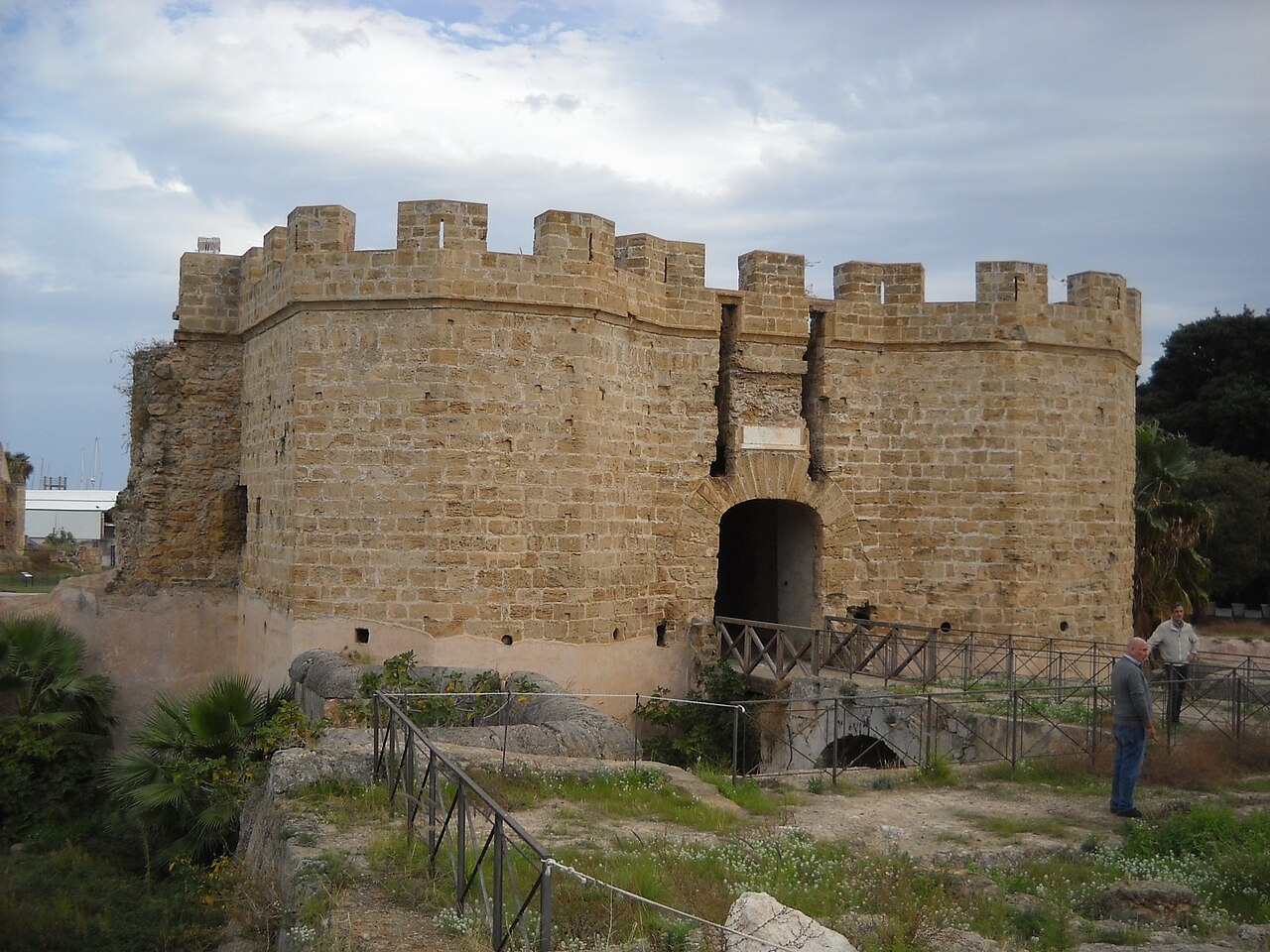
Misilmeri Castle
Misilmeri Castle, also known locally as Castello di Misilmeri or Il Castello dell'Emiro, is a significant medieval fortress located in the town of Misilmeri, within the province of Palermo on the island of Sicily, Italy. The castle's origins date back to around 1000 AD, during the period of Arab rule in Sicily, and it stands as a testament to the island's complex history of conquest and cultural fusion.
Origins and early history
The town of Misilmeri itself was founded during the Arab occupation of Sicily and was originally named Manzil al-Amir, which likely translates to "House of the Emir." This name reflects the castle's initial function as a fortified residence or administrative center under the emirate. The site probably hosted a large agricultural estate protected by defensive walls and a tower, serving both as a residence and a stronghold.
The castle's foundation is traditionally attributed to Emir Jafar II, who ruled from 998 to 1019. This early fortification would have been constructed using typical Arab military architectural techniques, focusing on strategic location and defensive capability.
Norman conquest and medieval developments
In 1069, the Norman King Roger I of Sicily defeated the Muslim forces in the area, marking a significant turning point for Misilmeri Castle. The Normans often adapted existing Arab fortifications, enhancing them with their own architectural styles and military innovations. The first documented mention of the castle appears in 1150, by the Muslim geographer and scholar Muhammad al-Idrisi, who was active at the court of Norman King Roger II. This reference confirms the castle's continued importance during the Norman period.
Throughout the High Medieval period, the castle underwent various modifications and expansions, reflecting the changing needs of its occupants and the evolving military technologies of the time.
Ownership and expansions in the late medieval period
By 1374, the castle was owned by Manfredi III Chiaramonte, a prominent nobleman who significantly enlarged and fortified the castle. His enhancements likely included strengthening the curtain walls, adding towers, and improving the residential quarters to reflect the castle's dual role as a fortress and noble residence.
In 1392, the castle was granted to William Raymond III Moncada, and by 1398 it passed to Gispert Talamanca, indicating the castle's continued strategic and noble significance during this period.
In 1487, Guglielmo Ajutamicristo became the lord of Misilmeri Castle, and later in 1539, the castle and its estate were purchased by Francesco del Bosco. These successive owners maintained the castle as a noble residence, though its military importance gradually diminished with the advent of new warfare technologies.
Architectural features and style
Misilmeri Castle exemplifies a blend of Arab military architecture and later Norman medieval fortification styles. The original structure likely included a fortified enclosure with a defensive wall and a tower, typical of Arab castles designed for both defense and administration.
The Norman enhancements introduced stone curtain walls, battlements, and possibly a keep or donjon, reflecting the European medieval castle design. The expansions under Manfredi III Chiaramonte would have reinforced these features, adapting the castle to the military needs of the late medieval period.
Although now in ruins, the castle's remnants reveal the typical layout of a hill castle, strategically positioned to control the surrounding territory and trade routes. The site includes remains of walls, towers, and residential buildings, offering insights into its historical defensive and domestic functions.
Decline and current condition
Following the Renaissance period, Misilmeri Castle gradually fell into disuse as military technology and political circumstances evolved. The castle lost its strategic importance and was eventually abandoned.
Locals repurposed the castle as a quarry, using its stones for building materials in the surrounding area, which contributed to its current ruined state. Despite this, the castle remains a valuable cultural and historical monument.
In 2009, the castle underwent restoration efforts aimed at stabilizing the ruins and preserving the site for visitors. However, some critics have noted that the restoration included plastering that may detract from the castle's authentic medieval appearance.
Today, Misilmeri Castle is freely accessible to the public, offering visitors a glimpse into Sicily's layered history through its architectural remains and scenic location.
Historical significance and cultural heritage
Misilmeri Castle holds a unique place in Sicilian history as a symbol of the island's Arab-Norman heritage. It illustrates the cultural and political transitions from Arab emirates to Norman rule, reflecting the fusion of architectural styles and military strategies.
The castle's connection to prominent historical figures, such as Emir Jafar II, King Roger I, and the noble families of Chiaramonte, Moncada, and Ajutamicristo, underscores its role in the region's medieval power dynamics.
As a heritage site, Misilmeri Castle contributes to the understanding of Sicilian medieval fortifications and the broader Mediterranean history of conquest and cultural exchange.
Visiting Misilmeri Castle
Visitors to Misilmeri Castle can explore the ruins at their own pace, appreciating the strategic hilltop position and panoramic views of the surrounding Sicilian landscape. The site is open year-round and does not charge an entrance fee, making it an accessible destination for history enthusiasts and tourists alike.
While the castle lacks extensive visitor facilities, its atmospheric ruins provide a compelling experience for those interested in medieval architecture and Sicilian history.
Frequently asked questions (FAQ)
- How do I get to Misilmeri Castle?
- Misilmeri Castle is located in the quaint town of Misilmeri, just a short drive from Palermo. Visitors can reach the castle by car, public transportation, or guided tours that often include transportation from major Sicilian cities.
- What is the historical significance of Misilmeri Castle?
- Misilmeri Castle dates back to the 12th century and played an important role in the defense strategies of the region during the medieval period. It reflects the rich history of Sicilian nobility and their architectural advancements, making it a significant cultural landmark.
- When was Misilmeri Castle built?
- The castle was constructed in the 12th century under the rule of the Norman kings of Sicily. Over the centuries, it has undergone various renovations and restorations, preserving its historical essence while adapting to changing needs.
- Can I visit Misilmeri Castle year-round?
- Yes, Misilmeri Castle is open to visitors throughout the year, although it's advisable to check for any special closures during holidays or events. The best time to visit is during spring and fall when the weather is pleasant for exploring the grounds.
- Why is Misilmeri Castle considered an architectural gem?
- Misilmeri Castle showcases a blend of Norman and Arab architectural styles, reflecting the diverse cultural influences that have shaped Sicily's history. Its imposing structure, with its towers and fortifications, offers a glimpse into the past and the strategic importance of the site.
- Is it possible to access all areas of the castle?
- While many areas of Misilmeri Castle are accessible to visitors, some sections may have restricted access due to preservation efforts. Guided tours are available, providing insights into both the accessible areas and the history of the castle.
- What are the opening hours for Misilmeri Castle?
- Misilmeri Castle typically opens at 9:00 AM and closes at 6:00 PM, with extended hours during the summer months. It is recommended to verify the current opening hours closer to your visit for any changes.
- What are the ticket prices for visiting Misilmeri Castle?
- Tickets for Misilmeri Castle are reasonably priced, with discounts often available for students and seniors. Prices can vary depending on the season, so checking the official website before your visit is advisable.
- Are there any nearby attractions to visit after Misilmeri Castle?
- Yes, the area around Misilmeri boasts several attractions, including beautiful churches, local museums, and scenic parks. Visitors can also explore the nearby city of Palermo, known for its rich history and vibrant culture, making it a great addition to your itinerary.
Information
Address
Strada Provinciale 38, Italy
Loading map...
Visitor reviews
No reviews yet. Been here? Write the first review and help other travelers!
Write the first reviewVisited this castle? Share your experience
Your review helps other travelers and adds first-hand knowledge to our encyclopedia.