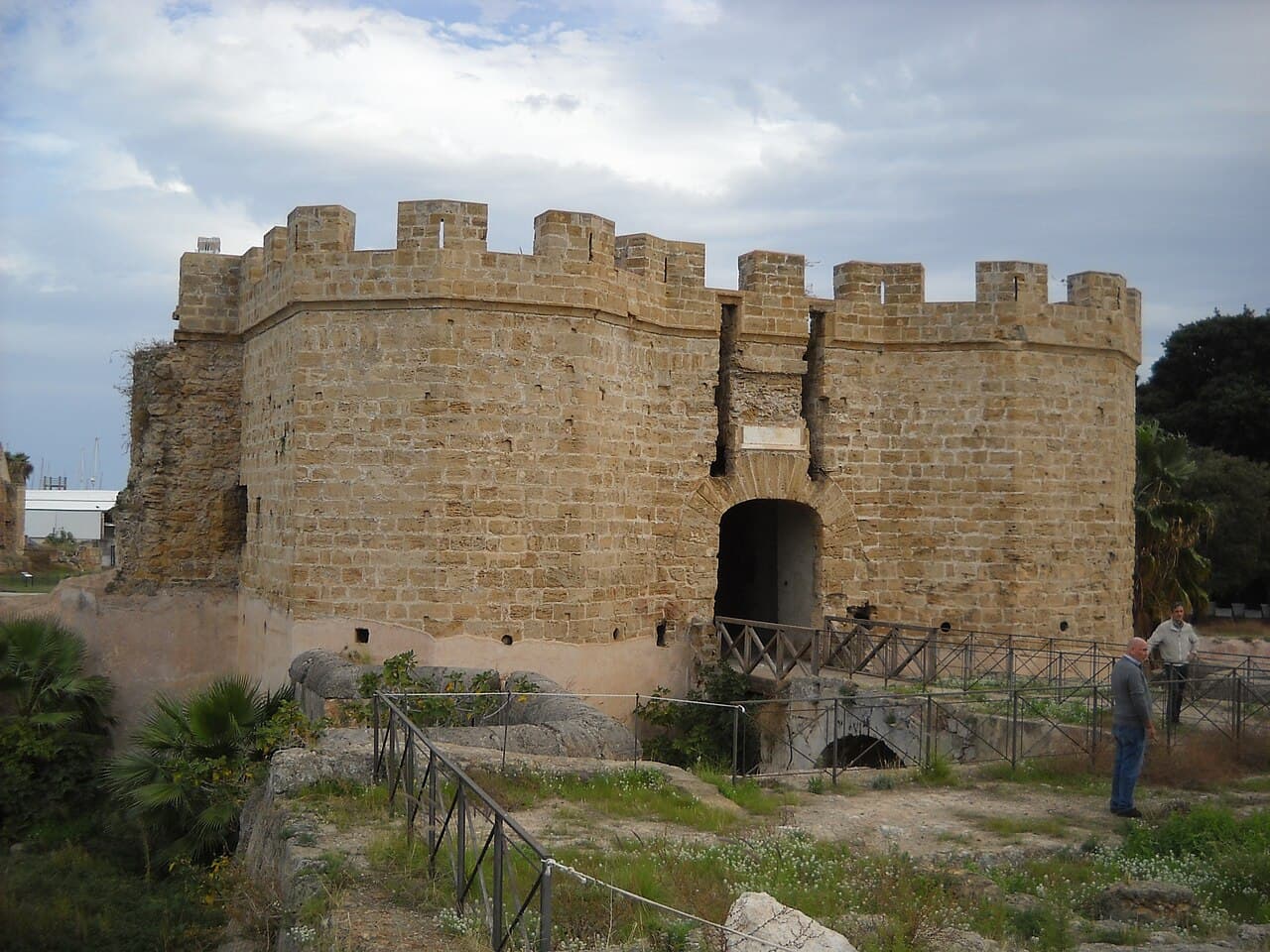
Castellammare Castle
Castellammare Castle, also known locally as Castello a mare, is a significant historic fortress located in the city of Palermo, within the province of Palermo on the island of Sicily, Italy. This castle stands at the northern entrance of La Cala, the ancient harbor of Palermo, marking its strategic importance as a maritime defense structure over many centuries.
The origins of Castellammare Castle trace back to the 9th century, with probable Arab-Norman roots, although it was first documented at the end of the 12th century under the name Castrum Maris. Its location on the seafront allowed it to serve as a vital fortification guarding the harbor and the city from naval threats. The castle's early function was primarily military, housing a garrison by the 13th century to protect Palermo's important port.
Architectural evolution and late medieval fortifications
The castle underwent significant development during the 15th century, when it was physically connected to the city's defensive walls, enhancing Palermo's overall fortification system. The most notable architectural addition from this period is the present gate building, constructed in 1496 during the reign of Ferdinand II of Aragon. This gate served as a formidable entrance and symbol of royal authority.
Throughout the 16th century, Castellammare Castle was further strengthened with the addition of fortified bastions that incorporated earlier structures, reflecting advancements in military architecture influenced by the Renaissance era’s star-shaped defensive designs. These bastions were designed to withstand artillery attacks and improve the castle's defensive capabilities against increasingly sophisticated siege technologies.
Historical significance and uses
In 1517, under the order of Ettore Pignatelli, the Viceroy of Sicily, the castle became the seat of government, a role it held until 1553. This period marked a shift from purely military use to administrative importance. That same year, the court of the Holy Inquisition was relocated from the Palazzo dei Normanni (the Royal Palace of Palermo) to Castellammare Castle, where it remained active until 1601 before moving to the Steri palace. This association with the Inquisition adds a layer of complex historical and cultural significance to the castle.
The castle suffered severe damage in 1593 due to an explosion in a gunpowder magazine, which impacted its structural integrity. Later, following the 1860 capitulation of the Bourbon army during the unification of Italy, parts of the castle were demolished. Despite this, it continued to serve as barracks for the Royal Italian Army, maintaining its military function well into the modern era.
20th-century destruction and preservation efforts
Between 1922 and 1924, the castle faced further destruction when much of it was demolished using dynamite to facilitate the expansion of Palermo's port facilities and the construction of a new pier. This demolition was met with public protests, highlighting the castle's cultural importance. Only a few elements survived, including a tower, the chapel entrance, and the gate building.
During World War II, the site endured additional damage from Allied bombings. The surviving tower was partially destroyed, and the chapel entrance was dismantled during rubble clearance, leaving only fragments of the original structure. Today, what remains includes part of a tower, the gate building, and two bastions, which stand as enduring reminders of the castle's historical and architectural legacy.
Current status and archaeological significance
Currently, Castellammare Castle is situated within an industrial area of Palermo's port. It is the centerpiece of an archaeological park that opened in 2009, designed to preserve and showcase the castle's historical remains and educate visitors about its rich past. Unfortunately, the park has experienced periods of closure, limiting public access to this important cultural site.
The castle's remains include a Norman keep, a fortified gate, and the remnants of a sophisticated Renaissance star-shaped defense system. These features illustrate the castle's architectural evolution from medieval fortification to a Renaissance military bastion, reflecting broader trends in European castle construction and military strategy.
Architectural features
- Norman keep: The central stronghold of the castle, dating back to early medieval times, serving as a last line of defense and residence for commanders.
- Fortified gate: The main entrance built in 1496, showcasing late medieval military architecture with robust defensive elements.
- Star-shaped bastions: Renaissance-era additions designed to counteract artillery threats, demonstrating advanced military engineering.
Historical context and cultural heritage
Castellammare Castle's history is intertwined with the complex political and military developments of Sicily, from Arab-Norman rule through Spanish domination and the Italian unification. Its role as a military fortress, government seat, and Inquisition court reflects the multifaceted nature of Sicilian history.
Despite extensive damage and partial demolition, the castle remains a vital cultural landmark, symbolizing Palermo's maritime heritage and medieval past. Efforts to preserve and interpret the site contribute to understanding Sicily's architectural and historical landscape.
Visiting information
The archaeological park offers visitors a chance to explore the castle's surviving structures and learn about its history through interpretive displays. While access has been inconsistent, the site remains an important destination for those interested in medieval and Renaissance military architecture and Sicilian history.
Visitors should check current opening hours and accessibility before planning a visit, as the park's status may vary. The castle's location near Palermo's port also provides opportunities to explore the surrounding historic harbor area.
Frequently asked questions (FAQ)
- What is the historical significance of Castellammare Castle?
- Castellammare Castle served as a key maritime fortress guarding Palermo's ancient port, was the seat of government in the early 16th century, and housed the court of the Holy Inquisition until 1601.
- Can I visit Castellammare Castle today?
- Yes, the castle is part of an archaeological park that opened in 2009. However, visiting hours can be irregular, so it is advisable to check locally before planning a visit.
- What architectural styles are visible at Castellammare Castle?
- The castle features a mix of Arab-Norman origins, late medieval fortifications, and Renaissance star-shaped bastions, reflecting its long history and evolving military architecture.
- Why was much of Castellammare Castle demolished in the 20th century?
- Much of the castle was demolished between 1922 and 1924 to allow expansion of Palermo's port facilities and construction of a pier, despite protests from the public.
- Is Castellammare Castle accessible for visitors with mobility issues?
- Due to its partial preservation and location within an archaeological park, accessibility may be limited. Visitors with mobility concerns should inquire locally about available accommodations.
Photo gallery

Information
Opening hours
Check locally for current opening times
Ticket prices
Free
Current owner
Municipality of Palermo
Address
Via Filippo Patti, Palermo, Italy
Loading map...
Visitor reviews
No reviews yet. Been here? Write the first review and help other travelers!
Write the first reviewVisited this castle? Share your experience
Your review helps other travelers and adds first-hand knowledge to our encyclopedia.


