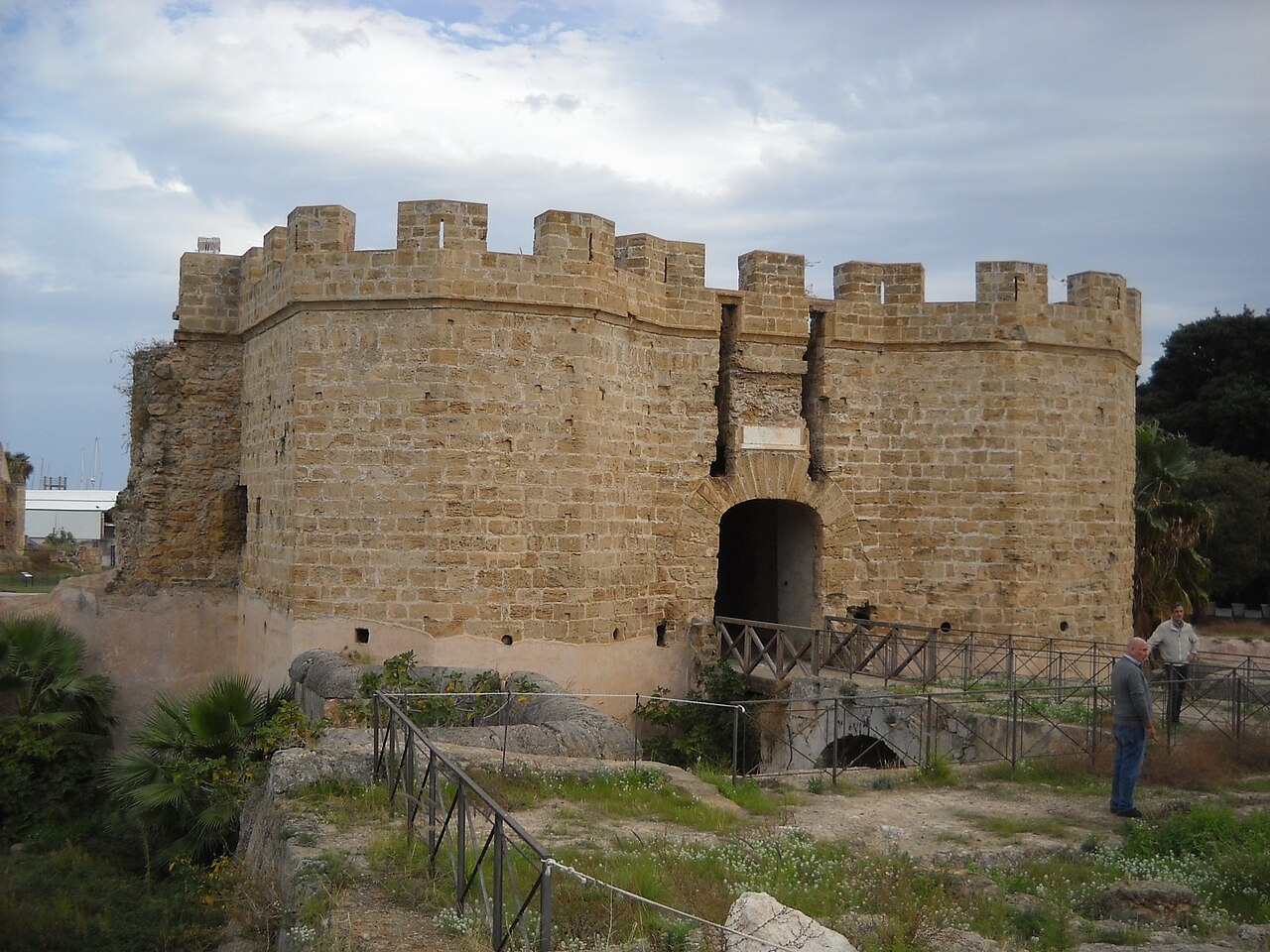
Maredolce Castle
Maredolce Castle stands as a unique historical monument in Palermo, Italy, reflecting a complex layering of cultural influences from the Islamic emirates to the Norman kingdom. Its exact origins remain debated among scholars, with some attributing its foundation to the emir Ja'far al-Kalbi (998-1019), suggesting it was built upon an earlier structure. Others argue that the castle's core dates back to the Norman era, particularly under the rule of the Hauteville dynasty, who shaped much of Sicily's medieval landscape. This blend of influences is evident in the castle's layout and surviving architectural elements.
Historical context and early development
The first documentary evidence of Maredolce Castle and its surrounding park appears in the Chronicon sive Annales by Romuald Guarna and in a 12th-century poem by the Muslim poet Abd ar-Rahman al-Itrabanishi. These sources place the castle within a vibrant cultural and political milieu during the transition from Islamic to Norman control of Sicily.
In 1071, during the Norman conquest of Palermo, the area encompassing the castle was seized by Count Roger I. Within a few decades, it evolved into one of the Solatii Regii—royal retreats built along Palermo's royal parks. The castle became a favored residence of King Roger II, the first King of Sicily, who reigned from 1130 to 1154. Under his patronage, the castle was integrated into a fortified complex at the foot of Monte Grifone.
Architectural features and layout
Maredolce Castle is characterized by a quadrangular plan, enclosing a large central courtyard that would have served both functional and ceremonial purposes. The complex originally included a palatine chapel dedicated to Saints Philip and James, highlighting its role as a royal residence with religious significance.
One of the castle's most remarkable features was its setting within the Favara Park, dominated by an artificial lake created by damming the source of Monte Grifone. This lake included a 2-hectare artificial island at its center, demonstrating advanced hydraulic engineering and landscape design of the period. The lake and park served as a leisure and hunting ground for the Norman court.
The castle complex also contained a ḥammām (Islamic bath), indicative of the cultural synthesis between Norman and Islamic architectural traditions. The surrounding walls likely enclosed the palace, baths, and lake, forming a fortified royal estate.
Later history and transformations
In 1328, the castle and its park were granted by King Frederick III to the Teutonic Order, whose headquarters was at the nearby Basilica della Magione. During this period, the castle was repurposed as a hospital, reflecting a shift from royal residence to institutional use.
The 15th century saw the castle pass into the hands of the noble Beccadelli di Bologna family. In the 17th century, ownership transferred to Duke Francesco Agraz. Under the Agraz family, the castle fell into significant neglect, earning the local nickname Castellaccio ("bad castle"), a testament to its deteriorated state.
By the late 20th century, the castle was in a precarious condition. The Sicilian Region acquired the property through expropriation in 1992, initiating restoration efforts in 2007. Despite these efforts, as of 2016, parts of the surrounding area remained unlawfully occupied, and the castle's fragile condition has delayed its inclusion in the UNESCO World Heritage Site designation for the Arab-Norman Palermo and the Cathedral Churches of Cefalù and Monreale.
Significance and cultural heritage
Maredolce Castle exemplifies the cultural convergence that defines much of Sicily's medieval history. Its Islamic origins combined with Norman royal architecture make it a rare example of cross-cultural synthesis in Mediterranean castle design. The integration of a palatine chapel, ḥammām, and an elaborate artificial lake within a fortified complex reflects the sophisticated tastes and political ambitions of the Norman kings of Sicily.
Today, the castle is a focal point for heritage preservation efforts in Palermo. Its restoration aims to stabilize the structure and recover the historical landscape of the Favara Park. Once fully restored and accessible, Maredolce Castle will offer visitors insight into the dynamic history of Sicily during the High Middle Ages and the legacy of its multicultural rulers.
Architectural details of the palatine chapel
The palatine chapel within the castle is dedicated to Saints Philip and James and showcases elements typical of Norman religious architecture, possibly influenced by earlier Byzantine and Islamic styles. Its presence underscores the castle's dual function as a royal residence and a place of worship.
Hydraulic engineering and landscape design
The creation of the artificial lake through damming the Monte Grifone source was a significant engineering achievement of its time. The lake not only provided a scenic setting but also served practical purposes for the castle's inhabitants and the royal court's leisure activities.
Current condition and restoration challenges
Despite restoration efforts initiated in the early 21st century, Maredolce Castle remains in a partially preserved state. Challenges include illegal occupation of adjacent lands and the fragile condition of original structures. These factors have complicated efforts to fully integrate the castle into Palermo's recognized heritage sites.
Frequently asked questions (FAQ)
- What is the best time to visit Maredolce Castle?
- The best time to visit Maredolce Castle is during the spring and autumn months when the weather in Palermo is mild and pleasant, making outdoor exploration of the castle and Favara Park comfortable.
- Is Maredolce Castle accessible to visitors year-round?
- Maredolce Castle is generally open to visitors year-round, but it is advisable to check local opening hours and any restrictions due to ongoing restoration work before planning your visit.
- Can I visit the palatine chapel inside Maredolce Castle?
- Yes, visitors can see the palatine chapel dedicated to Saints Philip and James, which is one of the castle's notable architectural features reflecting its royal and religious significance.
- Why is Maredolce Castle not included in the UNESCO World Heritage Site?
- Maredolce Castle has not yet been included in the UNESCO World Heritage Site due to its precarious condition and issues with unauthorized occupation of nearby areas, which have delayed its full restoration and official recognition.
- Are there guided tours available at Maredolce Castle?
- Guided tours may be available at Maredolce Castle, often organized by local cultural associations or the Sicilian Region. It is recommended to inquire locally for current tour offerings and schedules.
Information
Current owner
Sicilian Region
Loading map...
Visitor reviews
No reviews yet. Been here? Write the first review and help other travelers!
Write the first reviewVisited this castle? Share your experience
Your review helps other travelers and adds first-hand knowledge to our encyclopedia.