Mingarry Castle Ruins
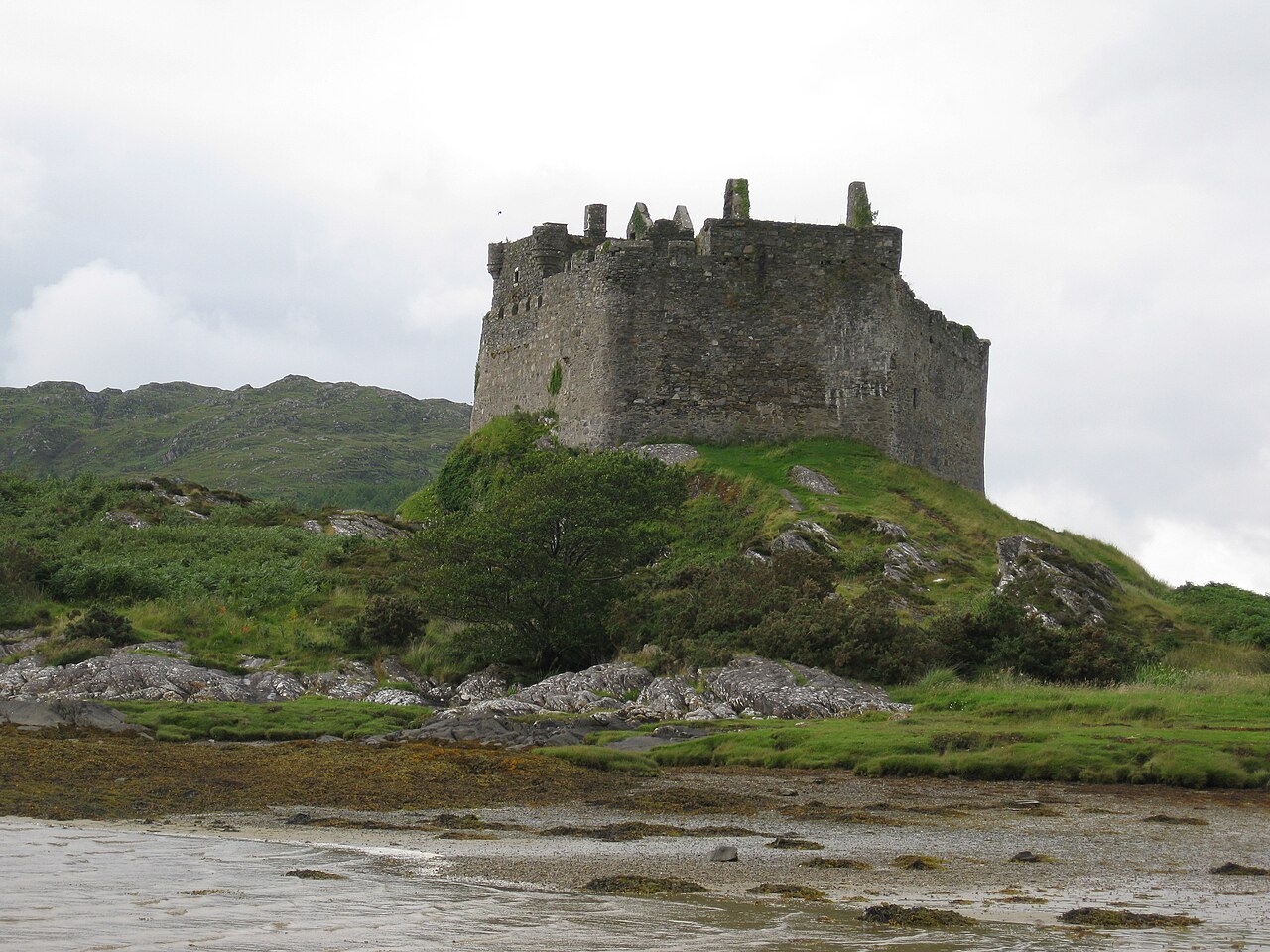
Mingarry Castle is a remarkable example of a high medieval hill castle located on a rocky promontory in the Highland region of Scotland. Constructed originally in the 13th century, this fortress played a critical role in controlling access to the Sound of Mull, a key maritime route. Its strategic position made it a coveted stronghold among powerful Scottish clans and royal forces alike throughout the Middle Ages and into the early modern period.
The castle's history is deeply intertwined with the fortunes of the Clan MacDonald of Ardnamurchan, who are credited with its initial construction. Over the centuries, Mingarry Castle witnessed numerous sieges, battles, and changes of ownership, reflecting the turbulent nature of Scottish clan politics and the broader conflicts affecting the British Isles.
Historical significance and clan conflicts
The earliest records of Mingarry Castle date back to the late 15th century, notably during the reign of King James IV of Scotland, who used the castle as a strategic base in his efforts to subdue the rebellious Clan Donald. The castle's location enabled control over maritime communication and served as a gateway to the western seaways, making it vital for military and political dominance in the region.
Throughout the 16th century, Mingarry Castle was a focal point of conflict between rival clans. In 1515, the Clan MacDonald of Lochalsh launched an unsuccessful siege, but by 1517, they had successfully captured the fortress. These events caused significant damage, which was promptly repaired, underscoring the castle's ongoing strategic importance.
One of the most intriguing episodes in the castle's history occurred in 1588, when the Clan MacLean of Duart laid siege to Mingarry. This siege was notable for the involvement of soldiers from the Spanish Armada ship San Juan de Sicilia, which had taken refuge on the nearby Isle of Mull. The MacLeans, bolstered by these foreign troops, attempted to wrest control from the MacIains but were repelled after a three-day siege.
Ownership later shifted to the Clan Campbell and the Earls of Argyll by the early 17th century, reflecting the shifting power dynamics in the Highlands. The castle also played a role during the English Civil War, when the Royalist commander Alasdair Colkitto MacDonald captured it in 1644 before it was retaken by Covenanter forces three years later.
Architectural features and layout
Mingarry Castle's structure is adapted to its hilltop promontory setting, with an irregular hexagonal plan approximately 20 by 18 meters. The castle's defensive walls are constructed predominantly from sandstone rubble sourced locally, with ashlar masonry employed for the more visible and critical structural elements.
The curtain walls reach heights of about 8.5 meters and are up to 1.8 meters thick on the seaward side, providing formidable resistance against attacks from the sea. On the landward side, where the approach was most vulnerable, the walls are significantly thicker and higher, nearly doubling in size to counter threats from hostile forces.
A prominent feature is the deep and wide ditch cutting across the landward neck of the promontory, measuring approximately three meters deep and over seven meters wide. Originally, this ditch was spanned by a drawbridge, allowing controlled access and enhancing the castle's defensive capabilities. In the 18th century, this was replaced by a fixed stone bridge, signaling a shift toward more permanent access solutions.
The castle also features a secondary, narrow sea-facing entrance accessed by a stairway carved directly into the rock. This gate is flanked by two projecting watchtowers at the southwest and southeast corners, added in the late 16th century to strengthen defenses against musket fire and seaborne assaults. These towers, along with raised battlements on the curtain walls, exemplify adaptations to evolving military technology.
Internal structures and domestic buildings
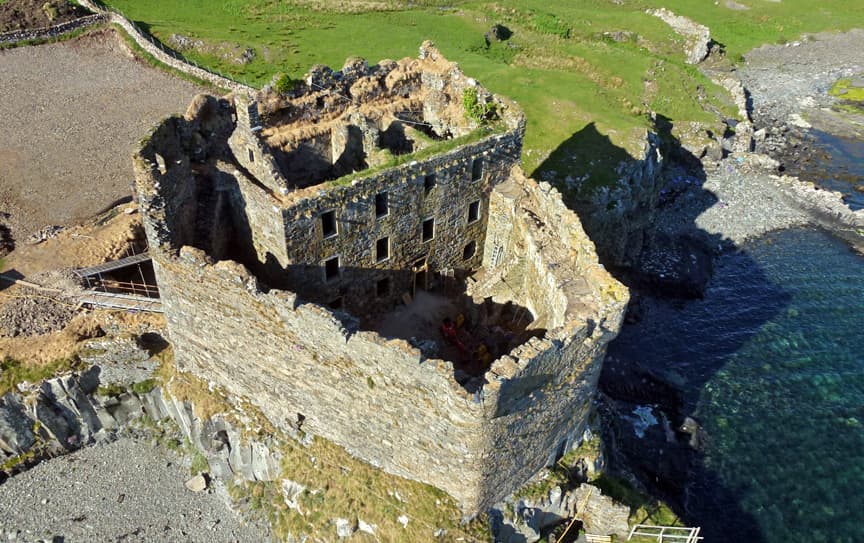
Within the courtyard, the remains of several buildings illustrate the castle's domestic and administrative functions. A three-storey building against the northern curtain wall dates from the early 18th century, replacing an earlier hall. Each floor contained two rooms of varying sizes, likely serving different purposes from living quarters to administrative offices.
On the western side, a two-storey structure believed to have been the kitchen reflects changes in domestic arrangements during this period. Opposite it, fragments of a later single-storey building on the southeast side suggest continued adaptation of the castle's internal layout.
Access to the wall walk—the defensive walkway atop the curtain walls—was provided by a partially preserved stone staircase in the northwest corner of the courtyard, enabling defenders to patrol and defend the fortress effectively.
Later history and preservation efforts
Following its active military use, Mingarry Castle saw significant alterations in the 18th century, particularly under the ownership of Alexander Campbell of Lochnell. These changes reflected evolving architectural styles and domestic needs rather than purely defensive concerns.
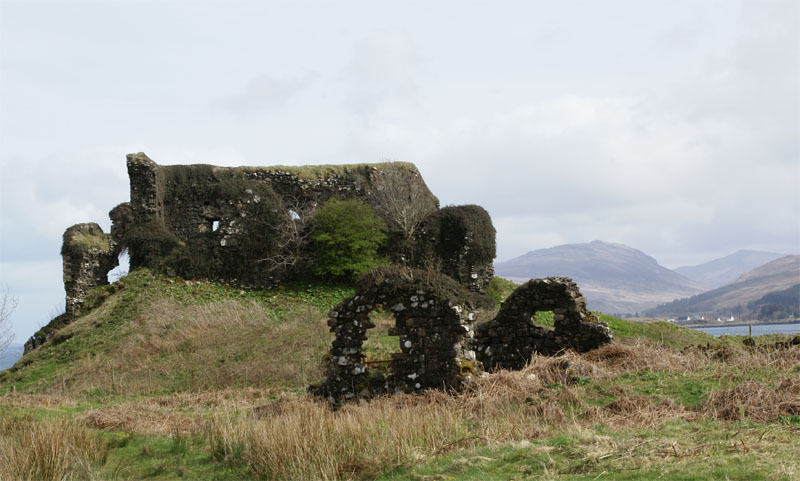
During the Jacobite rising of 1745, the castle was occupied by English troops, underscoring its continued strategic relevance even into the 18th century. After this period, the castle gradually fell into disuse and was eventually abandoned in the mid-19th century, leading to its current ruined state.
Modern preservation efforts began in 2013 with the establishment of a trust dedicated to stabilizing and restoring Mingarry Castle. Archaeological excavations have revealed important insights into the castle's construction phases and historical usage. Restoration work focuses on reinforcing vulnerable sections, particularly the seaward walls exposed to harsh marine weather, while ensuring that the site remains accessible for educational and cultural purposes.
Cultural and heritage significance
Mingarry Castle is recognized as a scheduled monument and a category A listed building, reflecting its national importance as a heritage site. Its rich history encapsulates the complex interplay of clan rivalry, royal authority, and military innovation in Scotland from the medieval period through the early modern era.
The castle's architectural evolution provides valuable insights into defensive strategies and domestic life in a coastal Highland fortress. Its dramatic location overlooking the sea and rugged landscape adds to its cultural allure, making it a significant landmark for both historians and visitors interested in Scottish heritage.
Visiting mingarry castle
While Mingarry Castle remains a ruin, ongoing conservation efforts have made it safer and more accessible to visitors. Its remote location near the village of Kilchoan offers a unique experience of Scotland's wild coastal scenery combined with a tangible connection to the country's turbulent past. Visitors can explore the castle's curtain walls, watchtowers, and internal ruins while enjoying panoramic views of the surrounding sea and landscape.
Frequently asked questions (FAQ)
- How do I get to Mingarry Castle Ruins?
- Mingarry Castle Ruins is located in the Highland region of the United Kingdom. The best way to reach the castle is by car, with ample parking available nearby. Public transportation options may be limited, so planning ahead is recommended.
- What is the historical significance of Mingarry Castle?
- Mingarry Castle, dating back to the 13th century, is an important historical site that reflects the feudal history of Scotland. It was once a stronghold of the MacDonald clan, playing a crucial role in the region's medieval power struggles. Today, it stands as a testament to Scotland's rich heritage.
- When was Mingarry Castle built?
- Mingarry Castle was constructed in the early 1200s, during a time of significant political turmoil in Scotland. The castle served as a defensive fortress and residence for local chieftains. Its ruins offer a glimpse into the architectural styles of the medieval period.
- Can I access the ruins of Mingarry Castle?
- Yes, visitors can access the ruins of Mingarry Castle. While the site is mostly in ruins, it is open to the public for exploration. Please be cautious as the terrain may be uneven and some structures could be unstable.
- Why is Mingarry Castle a popular tourist destination?
- Mingarry Castle is popular among tourists due to its stunning location and rich history. The dramatic ruins set against the backdrop of the Highlands attract history enthusiasts and photographers alike. Additionally, the site offers a peaceful escape into Scotland's natural beauty.
- Is it possible to visit Mingarry Castle year-round?
- Yes, Mingarry Castle is open to visitors year-round. However, accessibility may vary depending on weather conditions, especially during the winter months. It's advisable to check local conditions before planning your visit.
- What are the opening hours for Mingarry Castle?
- Mingarry Castle is typically open from dawn until dusk, allowing visitors to enjoy the site at various times throughout the day. It’s best to check for any seasonal variations in hours before your visit. There are no formal guided tours, so you can explore at your own pace.
- Are there any nearby attractions to visit?
- Yes, there are several nearby attractions, including the scenic Loch Shiel and the historic village of Acharacle. The area is rich in natural beauty, making it perfect for outdoor activities like hiking and photography. Don't miss the chance to explore the other historical sites in the region as well.
- What are the ticket prices for visiting the castle?
- There is no admission fee to visit Mingarry Castle Ruins, making it an affordable destination. Visitors are encouraged to support local businesses in the area as they explore the castle and its surroundings. Donations for preservation efforts are always appreciated.
Photo gallery

Information
Website
Visit websiteSources & official resources
Verify the information above using these authoritative references.
Loading map...
Visitor reviews
No reviews yet. Been here? Write the first review and help other travelers!
Write the first reviewVisited this castle? Share your experience
Your review helps other travelers and adds first-hand knowledge to our encyclopedia.