Castle Tioram
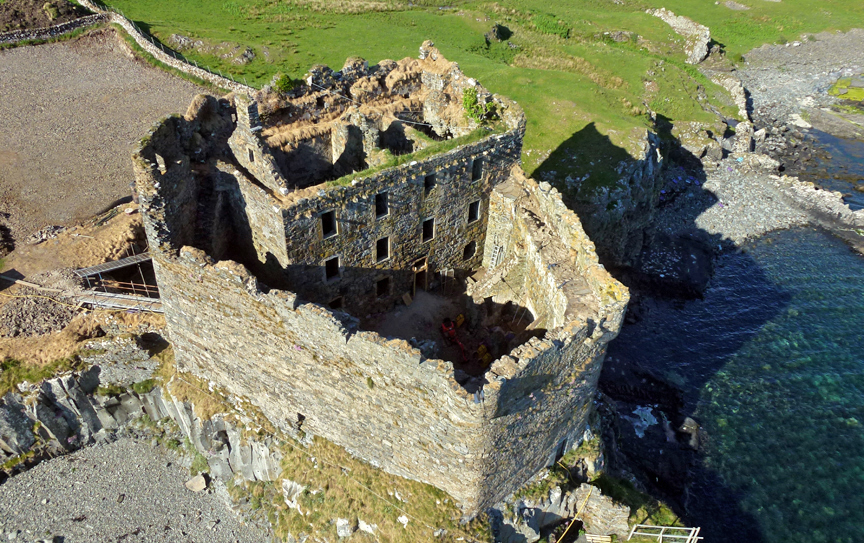
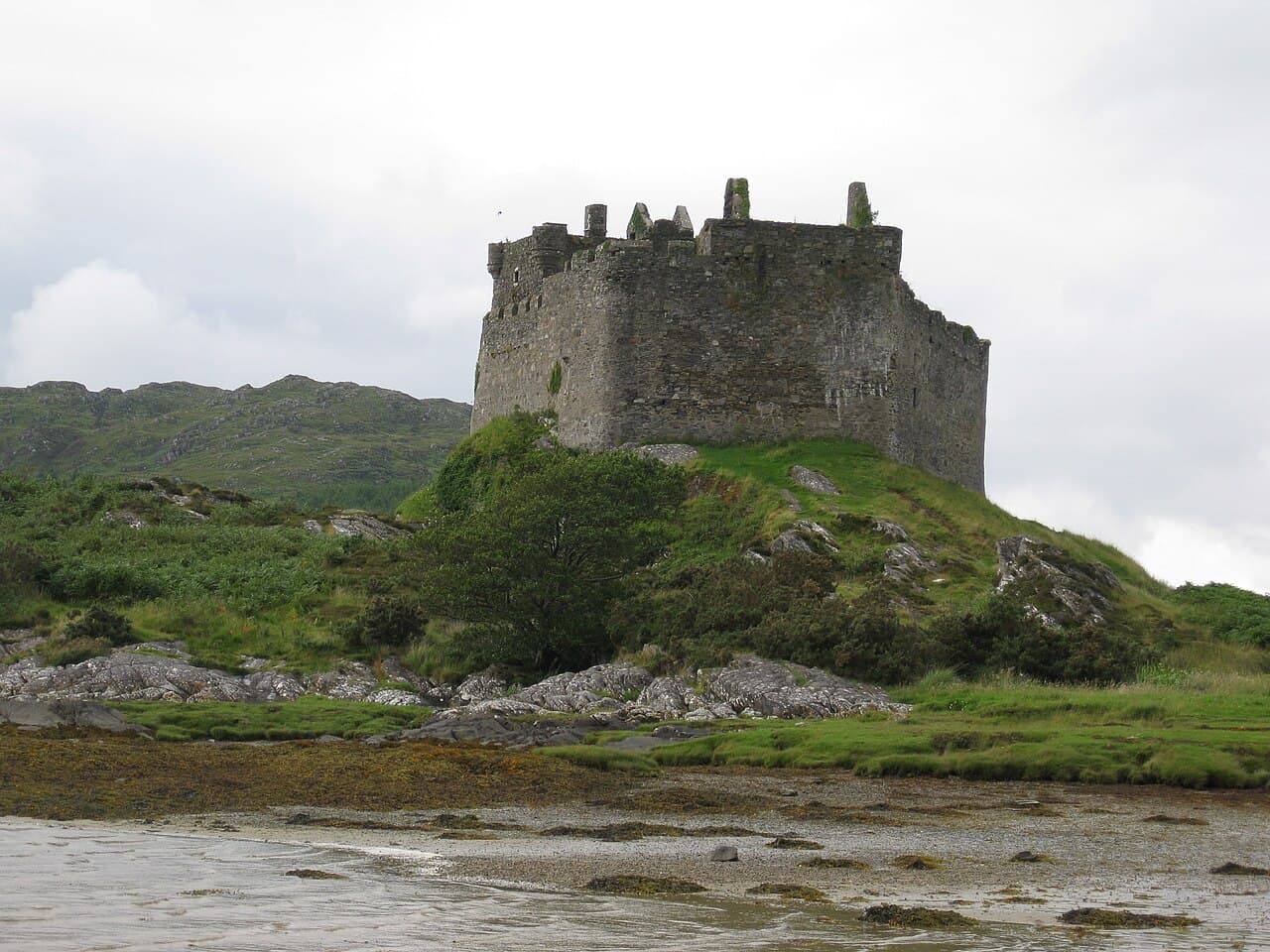
Castle Tioram is a remarkable ruined hill castle situated on the tidal island of Eilean Tioram in Loch Moidart, within the scenic region of Lochaber in the Scottish Highlands. This fortress, steeped in centuries of history, served as the traditional seat of the Clan MacDonald of Clanranald, a prominent branch of the powerful Clan Donald. Its strategic location on a tidal island gave it natural defensive advantages, controlling access to important waterways such as Loch Shiel and Loch Moidart. The castle's origins date back to the High Medieval period, with the earliest parts of the curtain wall believed to have been constructed in the 13th century.
Early history and clan significance
The history of Castle Tioram is deeply intertwined with the Gaelic-speaking peoples of the western Highlands. The site is traditionally linked to Somerled, a 12th-century Norse-Gaelic leader whose descendants established powerful regional dynasties. The castle's foundation is associated with Áine Nic Ruaidhrí, granddaughter of the regional ruler Ailéan mac Ruaidhrí. Eilean Tioram itself is first mentioned in a 13th-century charter involving Cairistíona Nic Ruaidhrí, highlighting the longstanding connection of the Clann Ruaidhrí to the site. Initially, the castle served as a principal stronghold of this clan, controlling the surrounding lands and waterways.
From the later medieval period onward, Castle Tioram became the ancestral home of the Clanranald branch of Clan Donald. Over successive generations, it housed fourteen successive Clanranald chiefs, symbolizing their authority and governance over the western Highlands. The castle was not only a military fortress but also a center of clan administration and social life.
Architectural features and construction
The castle's layout is notable for its adaptation to the tidal island landscape. The main defensive feature is a pentagonal curtain wall constructed primarily from locally quarried Moine schist, laid in irregular courses bonded with lime mortar. This curtain wall, dating from the 13th century, follows the natural contours of the island and includes distinctive rounded corners and a barrel-vaulted entrance, typical of 13th-century coastal fortifications in western Scotland.
The curtain wall rests directly on the bedrock without separate foundations, demonstrating the builders' skill in integrating the structure with the natural terrain. Some sections of the wall incorporate non-local stone such as slate, likely used for drainage or lining, indicating a selective and functional use of materials. Horizontal layering visible in parts of the masonry suggests seasonal construction pauses, providing insight into medieval building practices.
An unusual angled section on the south-west curtain wall is believed to be a later repair following partial collapse, reflecting the castle's long history of maintenance. Within the eastern curtain wall, a rectangular opening once provided access to wooden platforms and steps around the tides, later blocked off and repurposed for a bakehouse built against the interior wall.
The tower house and internal buildings were constructed between the 15th and 17th centuries, forming the core of the castle's living and defensive quarters. These structures, though now in very poor condition, include remnants of residential chambers, halls, and service areas. The fabric of these buildings reveals the evolution of the castle from a primarily defensive stronghold to a clan residence with complex domestic functions.
Historical events and decline
Castle Tioram played a significant role during the turbulent Jacobite era. In the late 17th century, the castle was seized by government forces after Clan Chief Allan Macdonald of Clanranald aligned with the exiled Jacobite court in France despite his earlier oath to the British Crown. The government garrison occupied the castle until the Jacobite Uprising of 1715, when Allan briefly recaptured it and deliberately set it on fire to prevent its use by Hanoverian forces.
Following this event, the castle was largely abandoned as a residence. However, historical accounts suggest limited uses afterward, including storage of firearms during the 1745 Jacobite Uprising and involvement in the dramatic kidnapping of Lady Grange, a notable episode in Highland history. Despite these occasional uses, the castle remained unoccupied and gradually fell into ruin.
Modern preservation and accessibility
In the late 20th century, efforts to restore and repurpose Castle Tioram were proposed, including plans for a clan centre and residential apartments. While local authorities initially approved these plans, they were ultimately rejected by Historic Scotland due to the castle's status as a Scheduled Monument and concerns over preserving its historic integrity.
Safety concerns led to the closure of the castle to the public in 1998. A significant partial collapse of the north-west curtain wall occurred in 2000 but was subsequently stabilized. Condition assessments conducted in 2014 indicated that the structure had not deteriorated significantly since the repairs. The castle remains closed to interior access due to the risk of falling masonry, though it can be reached on foot via the tidal causeway at low tide.
Extensive archival documentation, including detailed architectural drawings and photographs, is maintained by Historic Environment Scotland, ensuring that the castle's history and structure are preserved for future study and conservation efforts.
Architectural legacy and cultural significance
Castle Tioram stands as a testament to medieval Scottish military architecture adapted to a unique coastal environment. Its combination of a 13th-century curtain wall with later tower house additions illustrates the evolution of fortification styles and clan residences over several centuries. The castle's strategic location and association with prominent Gaelic clans highlight its importance in the social and political landscape of the Highlands.
Today, despite its ruined state, the castle remains a powerful symbol of Highland heritage and clan identity. Its dramatic setting on a tidal island and the visible layers of construction and repair offer valuable insights into the challenges of medieval castle building in Scotland's rugged coastal regions.
Frequently asked questions (FAQ)
- How do I reach Castle Tioram?
- Castle Tioram is located on the tidal island of Eilean Tioram and can be reached on foot via a natural causeway at low tide. Visitors should check tide times carefully to ensure safe crossing.
- What is the historical significance of Castle Tioram?
- Castle Tioram was the traditional seat of Clan MacDonald of Clanranald and played a key role in controlling access to Loch Shiel and Loch Moidart. It witnessed important events during the Jacobite uprisings.
- Is Castle Tioram open to visitors?
- The castle is currently closed to the public due to safety concerns from unstable masonry. Visitors can view the ruins from outside but cannot access the interior.
- When was Castle Tioram built?
- The curtain wall of Castle Tioram dates to the 13th century, with tower and interior buildings added between the 15th and 17th centuries.
- Why was Castle Tioram deliberately set on fire?
- During the Jacobite Uprising of 1715, Clan Chief Allan Macdonald recaptured Castle Tioram and set it ablaze to prevent its use by Hanoverian forces.
Photo gallery

Information
Website
Visit websiteSources & official resources
Verify the information above using these authoritative references.
Loading map...
Visitor reviews
No reviews yet. Been here? Write the first review and help other travelers!
Write the first reviewVisited this castle? Share your experience
Your review helps other travelers and adds first-hand knowledge to our encyclopedia.