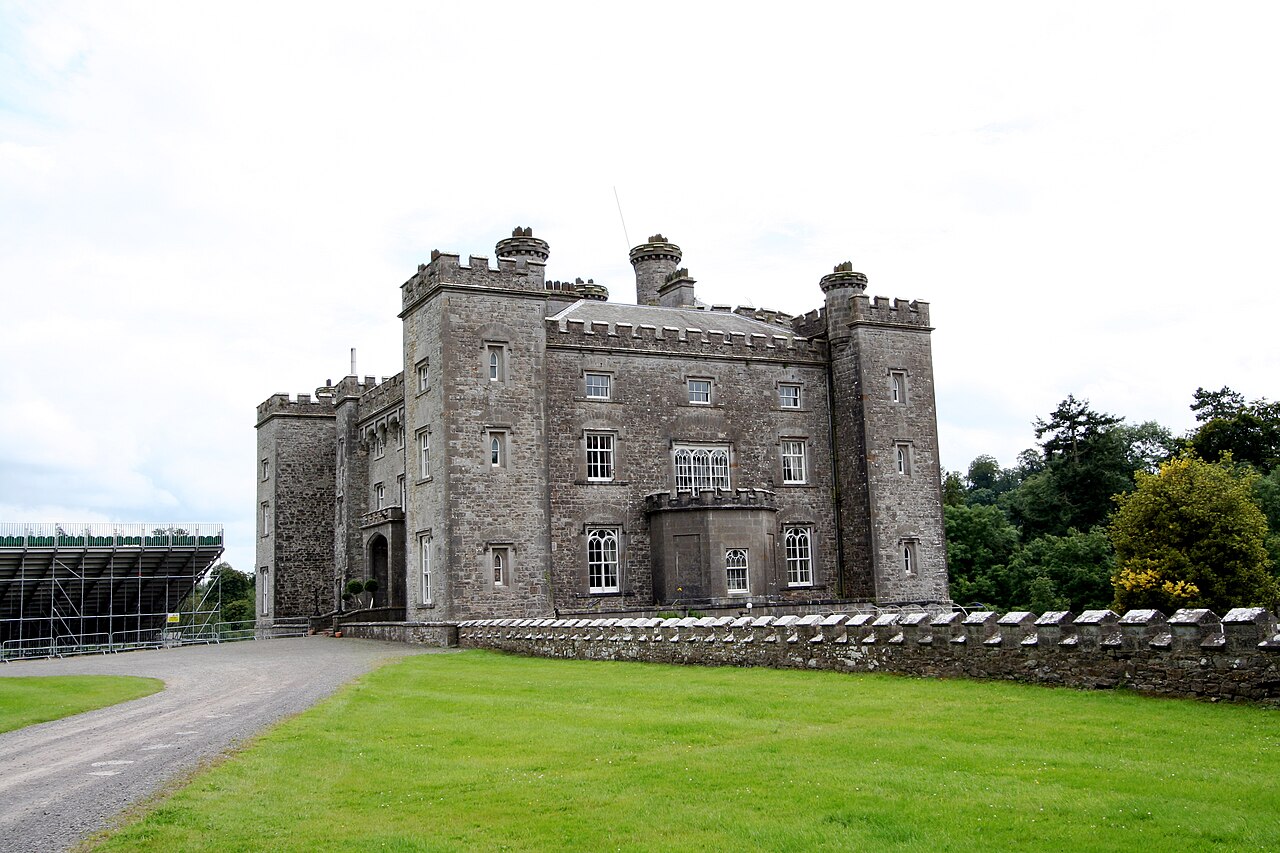
Slane Castle
Slane Castle stands as a remarkable example of an 18th-century hill castle located in the village of Slane, Northern Ireland. Overlooking the scenic River Boyne, the castle is situated in a region steeped in ancient history, close to significant Neolithic sites such as Newgrange and the historic battlefield of the Battle of the Boyne.
The castle’s lands originally belonged to the Fleming family, a Catholic lineage that supported the Jacobite cause during the late 17th century. Following the defeat of the Jacobites by William of Orange at the Battle of the Boyne in 1690, the Flemings lost possession of the estate. In 1701, the castle was constructed by William Burton Conyngham and his nephew, the 1st Marquess Conyngham, on these confiscated lands. The Conynghams were Protestant Scots who had settled in Ireland during the early 17th-century Plantation of Ulster. Around this time, they shifted their primary residence from County Donegal to the Slane estate, which remains their family seat over 300 years later.
Architectural evolution and significant renovations
The present form of Slane Castle largely reflects the extensive rebuilding undertaken in 1785. This reconstruction was guided by some of the era's most prominent architects, including James Gandon, James Wyatt, and Francis Johnston. Their combined efforts resulted in a castle that blends classical and gothic architectural elements, with Johnston notably designing the adjacent gothic-style Mill Hill gates located just east of the main building.
Slane Castle is positioned on a natural slope, creating a dramatic amphitheatre-like setting overlooking the river. This topography has made it an ideal venue for large outdoor events, including concerts attracting tens of thousands of visitors since the early 1980s.
In 1991, a significant fire damaged the castle’s eastern wing facing the River Boyne. Restoration efforts spanned nearly a decade, culminating in the castle’s reopening around 2001. The restoration carefully preserved the castle’s historical integrity while repairing the fire damage.
Medieval and mythological heritage on the grounds
Besides the castle itself, the estate encompasses important medieval and mythological sites. Among these are the ruins of St. Erc’s Hermitage, a 15th-century multi-storey chapel situated between the castle and the village church. This religious structure played a vital role in the spiritual life of the area during the late medieval period.
Approximately 500 meters west of the hermitage lies an ancient well, historically linked to the Irish god Dian Cecht, the mythological healer of the Tuatha Dé Danann, a supernatural race in Irish lore. Over time, the well was Christianized and is now known as Our Lady’s Well, symbolizing the cultural transition from paganism to Christianity.
Historical artifacts and cultural significance
In 2003, a cannon was recovered from the nearby River Boyne, connecting the site to its military history and the turbulent events that shaped the Boyne valley. This artifact underscores Slane Castle’s strategic importance and its role in Ireland’s complex historical narrative.
Since 1981, the castle grounds have hosted large-scale outdoor concerts initiated by the 8th Marquess Conyngham. These events leverage the castle’s natural amphitheatre setting, drawing audiences of up to 80,000 people and contributing to the site’s contemporary cultural relevance.
Architectural features and layout
The castle’s architecture reflects the late 18th-century period with design influences from its renowned architects. The main building exhibits a harmonious blend of classical proportions and gothic details, while the Mill Hill gates stand as a notable gothic feature marking the eastern approach. The castle’s positioning on a hill provides commanding views of the surrounding landscape, including the River Boyne and nearby historical landmarks.
The eastern wing, restored after the 1991 fire, maintains the castle’s historical character with careful attention to period details. The castle’s extensive grounds include formal gardens and parkland, enhancing its status as a significant heritage estate.
Visitor experience and cultural events
Today, Slane Castle is not only a private residence but also a cultural landmark. Its use as a concert venue has made it a prominent location in Ireland’s music scene, hosting internationally renowned artists. Visitors to the castle can appreciate its rich history, architectural grandeur, and the surrounding archaeological and mythological sites that enrich the estate’s narrative.
The proximity to ancient sites like Newgrange and the Battle of the Boyne battlefield offers additional layers of historical interest, making Slane Castle a focal point for those interested in Ireland’s deep past and cultural heritage.
Frequently asked questions (FAQ)
- How do I get to Slane Castle?
- Slane Castle is located in County Meath, Ireland, easily accessible by car from Dublin, which is about an hour's drive away. Public transport options include local bus services, but having a car is recommended for convenience and exploring the beautiful surrounding countryside.
- What is the historical significance of Slane Castle?
- Slane Castle has a rich history dating back to the 18th century and has been the seat of the Conyngham family for generations. It is renowned for hosting significant events, including concerts and royal gatherings, and has played a pivotal role in Irish heritage, adding to its cultural importance.
- When was Slane Castle built?
- Slane Castle was originally built in 1785, designed in a neoclassical style by the architect James Gandon. Over the years, it has undergone various renovations and expansions, reflecting the architectural trends of the time while maintaining its historical charm.
- Can I visit Slane Castle?
- Yes, Slane Castle is open to visitors, but it is advisable to check the official website for current opening hours and any special events that may affect accessibility. Guided tours are often available, providing insights into the castle's history and architecture.
- Why is Slane Castle a popular tourist destination?
- Slane Castle attracts visitors due to its stunning architecture, rich history, and picturesque surroundings. Additionally, the castle hosts various cultural events and concerts, making it a vibrant part of the local community and a must-visit location for those exploring Ireland.
- Is it possible to hold events at Slane Castle?
- Yes, Slane Castle offers facilities for weddings, corporate events, and other private functions. The castle's unique setting and beautiful grounds provide a memorable backdrop for any occasion, making it a popular choice for special events.
- What are the best times to visit Slane Castle?
- The best times to visit Slane Castle are during the late spring and summer months when the weather is generally milder and the gardens are in full bloom. However, the castle's events calendar may also influence your visit, so checking for scheduled concerts or festivals can enhance your experience.
- What are the ticket prices for visiting Slane Castle?
- Ticket prices for Slane Castle vary depending on the type of tour and any special events taking place. It is recommended to check the official website for the most up-to-date pricing and any available discounts for groups or families.
- What are the opening hours for Slane Castle?
- Slane Castle's opening hours can vary throughout the year, typically being open from late spring to early autumn. For the most accurate and current information, visitors should refer to the official website prior to their visit.
- Are there any nearby attractions to explore while visiting Slane Castle?
- Yes, visitors to Slane Castle can enjoy nearby attractions such as the historic Hill of Slane, the Boyne Valley, and Newgrange, a UNESCO World Heritage site. These sites offer additional insights into Ireland's ancient history and stunning landscapes, making for a full day of exploration.
Information
Website
Visit websiteSources & official resources
Verify the information above using these authoritative references.
Loading map...
Visitor reviews
No reviews yet. Been here? Write the first review and help other travelers!
Write the first reviewVisited this castle? Share your experience
Your review helps other travelers and adds first-hand knowledge to our encyclopedia.