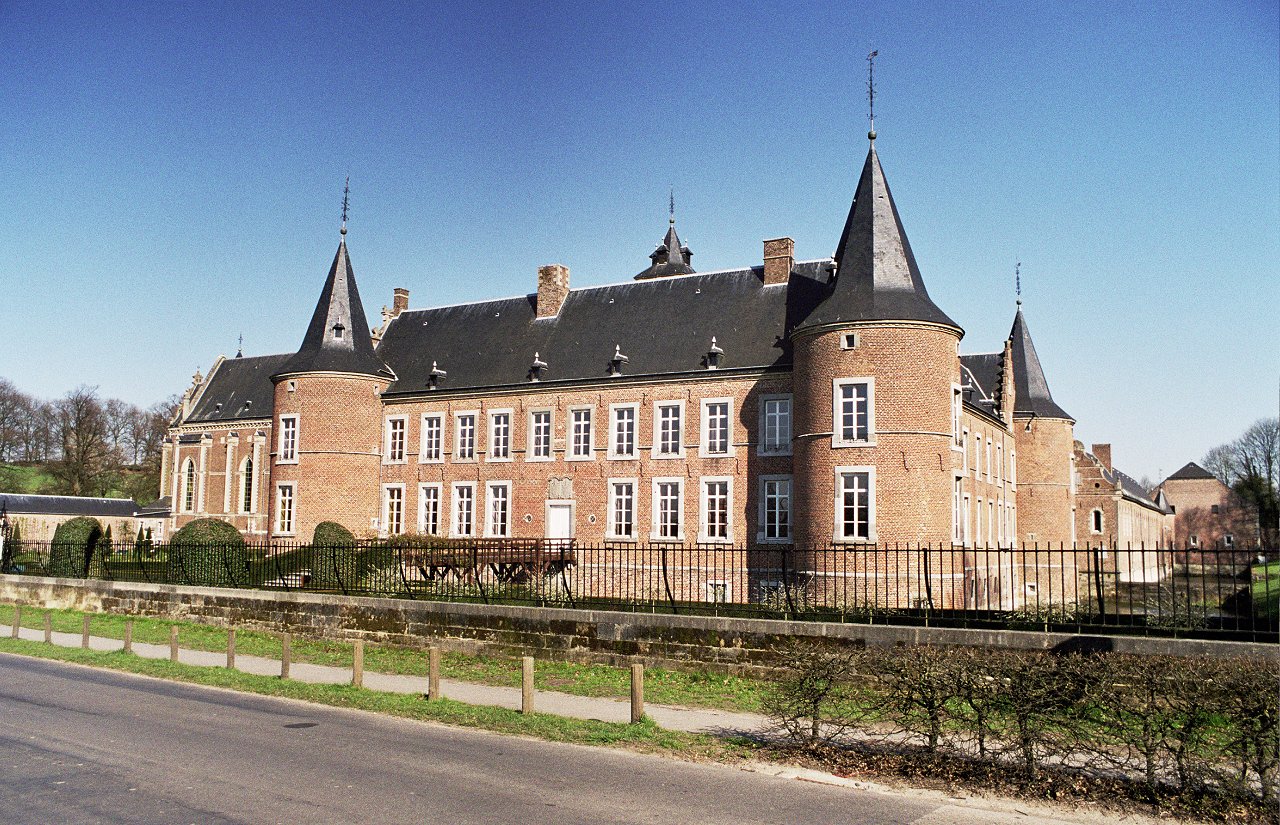
Millen Castle
Millen Castle, also known locally as Waterburcht Millen, is a historic water castle situated in the village of Millen, within the province of Limburg in the Flemish region of Belgium. This castle is an important example of a fortified residence that evolved over centuries, reflecting architectural and historical changes from the Late Medieval period through the Post-Renaissance era.
The earliest records of Millen Castle date back to 1365. Originally, the site featured a square keep that predates the castle itself. By the mid-14th century, this keep had developed into a square water castle, surrounded by a moat and fortified with a projecting gate tower and circular flanking towers on two of its corners. These defensive features were typical of medieval water castles designed to protect against siege warfare and to control the surrounding lands.
Medieval origins and fortifications
The castle’s medieval fortifications were significant for the region. In 1489, Millen Castle was the site of a notable siege when it was attacked and taken by enemy forces. At this time, the castle was owned by Arnold van Barlo, a vassal serving the Prince-Bishop of Liège. The siege caused extensive damage to the castle’s defenses and residential quarters, necessitating later repairs and modifications.
Transformation in the Renaissance period
By the late 16th century, the castle had fallen into disrepair. In 1591, ownership passed to the Fléron family, who undertook significant renovations to transform the fortress into a more comfortable manor house. This renovation was carried out in the style of the Mosan Renaissance, a regional architectural style characterized by the use of brick and natural stone, ornamental gables, and elegant proportions that blended defensive features with residential comfort.
The Fléron family’s work included the adaptation of the castle’s medieval structures into a manor that balanced fortification with the needs of noble living. This period marked the transition of Millen Castle from a primarily defensive stronghold to a stately residence reflecting the tastes and social status of its owners.
Decline and partial ruin
After the 18th century, Millen Castle ceased to be permanently inhabited, leading to gradual neglect. The lack of continuous maintenance caused parts of the castle to deteriorate significantly. In 1774, the residential wing collapsed, marking a major loss in the castle’s structural integrity.
By the early 19th century, the castle was largely in ruins. Several parts were demolished, and the surviving east and west wings were repurposed as farm buildings. This agricultural use further altered the castle’s original layout and appearance, reflecting a common fate for many European castles that lost their strategic and residential functions.
Modern preservation and restoration efforts
Recognizing the historical value of Millen Castle, the municipality of Millen acquired the remains in 1972 to prevent further degradation. During the 1990s, extensive restoration work was undertaken to stabilize the ruins and restore key architectural elements. These efforts have preserved the castle as a cultural heritage site and a point of interest in the region.
Today, Millen Castle serves as one of four visitor centers in a network of bicycle and car itineraries themed around castles and fortifications in the Eu-region Meuse-Rhine. Although the visitor center facilities are modest, the castle itself has been restored with attention to historical accuracy and architectural style, allowing visitors to appreciate its medieval and Renaissance features.
Architectural features and significance
The castle’s defining characteristic is its status as a water castle, with remnants of the moat and defensive towers still visible. The square keep remains a focal point, illustrating the medieval origins of the site. The blend of medieval fortifications and Mosan Renaissance manor elements offers insight into the architectural evolution from fortress to residence.
Millen Castle’s history of siege, reconstruction, and adaptive reuse reflects broader patterns in European castle development, where military necessity gave way to residential comfort and later agricultural use before modern heritage conservation efforts.
Visiting Millen Castle
Visitors to Millen Castle can explore the restored ruins and learn about its layered history through informational displays. The castle’s location in Limburg makes it accessible for day trips focused on historical and architectural tourism. The site is part of a larger cultural route that connects several castles and fortifications, offering a comprehensive experience of the region’s medieval and Renaissance heritage.
Frequently asked questions (FAQ)
- What is the historical significance of Millen Castle?
- Millen Castle is significant for its medieval origins as a water castle and its transformation during the Mosan Renaissance period, reflecting regional architectural evolution.
- Can I visit Millen Castle today?
- Yes, Millen Castle is open to visitors as part of a cultural itinerary in the Eu-region Meuse-Rhine, featuring restored ruins and a modest visitor center.
- When was Millen Castle originally built?
- The castle's origins date back to at least 1365, with the square keep predating the main structure and forming the core of the medieval water castle.
- What architectural styles are present at Millen Castle?
- Millen Castle combines medieval defensive features with Mosan Renaissance manor elements, resulting in a mixed architectural style.
- Who owns Millen Castle currently?
- The castle is currently owned and managed by the Municipality of Millen, which acquired it in 1972 to preserve the site.
Information
Current owner
Municipality of Millen
Address
Kattestraat 22, Belgium
Loading map...
Visitor reviews
No reviews yet. Been here? Write the first review and help other travelers!
Write the first reviewVisited this castle? Share your experience
Your review helps other travelers and adds first-hand knowledge to our encyclopedia.