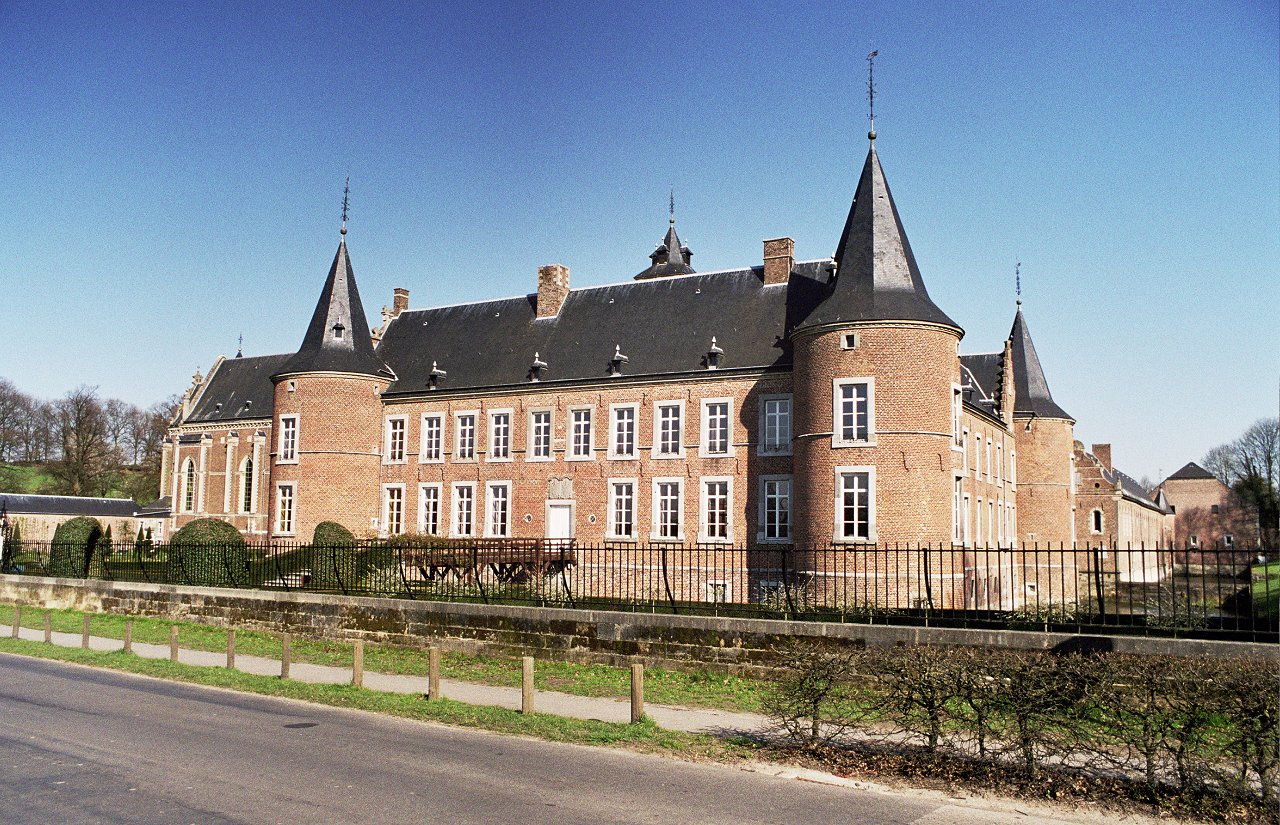
's Herenelderen Castle

's Herenelderen Castle in Tongeren, Belgium
Tongeren, Limburg, Belgium
Renaissance (15th–17th c.)
Well Preserved

's Herenelderen Castle is a notable historic estate located near Tongeren, Belgium, showcasing architectural evolution from the late Gothic period through the Renaissance and into the Baroque and Louis XVI styles. The castle's layered construction reflects centuries of adaptation, making it a valuable example of changing architectural tastes and noble residence design in the region.

Architectural history and development

The core of 's Herenelderen Castle is its oldest section located in the northwest corner, which dates back to the 16th century. This part is built in the late Gothic style, characterized by pointed arches, detailed stonework, and vertical emphasis typical of the period. This section represents the castle's medieval origins before later expansions and stylistic changes.

During the 16th century Renaissance period, the castle underwent significant rebuilding, with the main building being reconstructed in phases that incorporated Renaissance architectural principles, such as symmetry and classical proportions, although the late Gothic elements remain visible.

Baroque additions and 17th-century expansions

At the end of the 17th century, two additional building parts were constructed using brick and designed in the Baroque style. These sections contrast with the older Gothic part through their more ornate decorations, dynamic shapes, and emphasis on grandeur and movement. The Baroque influence reflects the tastes of the nobility during this period and their desire to modernize and display wealth.

18th-century courtyard transformation

In the late 18th century, the castle's courtyard was redesigned in the Louis XVI style, which is known for its neoclassical elements, geometric clarity, and restrained decoration. This renovation aligned the castle with contemporary French architectural trends, emphasizing elegance and refinement in outdoor spaces.

Structural layout and features

The castle is composed of three floors, integrating the various architectural styles harmoniously. The combination of brick construction and stonework, along with the evolving stylistic details, creates a unique architectural ensemble. The castle's layout and design reflect its function as a noble residence rather than a purely defensive fortress, typical for Renaissance and later periods.

Location and cultural significance

Situated near Tongeren, one of Belgium's oldest towns, 's Herenelderen Castle contributes to the region's rich historical landscape. The castle stands as a testament to the architectural and social changes that occurred from the late Middle Ages through the early modern period in Belgium. It remains an important cultural heritage site that illustrates the transition from medieval fortifications to more comfortable and stylistically diverse noble homes.

Preservation and current status

Today, the castle is well preserved, maintaining its historical architectural elements from the Gothic, Renaissance, Baroque, and Louis XVI periods. Its preservation allows visitors and scholars to study the layered history and architectural evolution of noble residences in Belgium. The castle's condition and ongoing maintenance highlight the importance of heritage conservation in the region.

Frequently asked questions (FAQ)

How do I get to 's Herenelderen Castle?
's Herenelderen Castle is located in Tongeren, Belgium, and is easily accessible by car or public transport. If you are driving, there is parking available nearby. For those using public transport, the nearest train station is Tongeren, from which you can take a short bus or taxi ride to the castle.
What is the historical significance of 's Herenelderen Castle?
's Herenelderen Castle has a rich history that dates back to the medieval period, playing an important role in the region's defense and nobility. It reflects the architectural styles of its time and has witnessed several historical events, making it a significant landmark in Tongeren. The castle is a testament to the area's cultural heritage and is often studied for its historical value.
When was 's Herenelderen Castle built?
The construction of 's Herenelderen Castle began in the 12th century, with various renovations and expansions taking place over the centuries. The castle showcases elements from different architectural styles, reflecting the changes in design preferences throughout its history. Its enduring presence highlights the castle's importance in local history.
Can I visit 's Herenelderen Castle?
Yes, 's Herenelderen Castle is open to the public for visits. Guests can explore the castle grounds and learn about its history through guided tours. It’s advisable to check the official website for specific visiting hours and any special events that may offer unique experiences.
Why is 's Herenelderen Castle a popular tourist attraction?
's Herenelderen Castle attracts visitors due to its stunning architecture and historical significance. The beautiful surroundings and well-preserved structures provide a glimpse into the past, making it a favorite for history enthusiasts and photographers alike. Additionally, the castle's proximity to Tongeren's other attractions enhances its appeal for tourists.
Is it possible to host events at 's Herenelderen Castle?
Yes, 's Herenelderen Castle offers facilities for hosting events, including weddings and corporate gatherings. The picturesque setting and historic ambiance make it an ideal location for memorable occasions. Interested parties should contact the castle's management for more details on availability and arrangements.
What are the opening hours for 's Herenelderen Castle?
Opening hours for 's Herenelderen Castle may vary throughout the year, so it is important to check their official website for the most current information. Generally, the castle is open to visitors during the daytime, with extended hours during peak tourist seasons. Planning your visit in advance will ensure you have the best experience.
What are the ticket prices for visiting 's Herenelderen Castle?
Ticket prices for 's Herenelderen Castle are generally affordable, with discounts available for students, seniors, and groups. Children under a certain age may enter for free. For the most accurate pricing and any special promotions, it's recommended to visit the castle's official website before your trip.
What are some nearby attractions to 's Herenelderen Castle?
Nearby attractions include the Roman Museum in Tongeren, showcasing the city’s rich Roman history, and the stunning Basilica of Our Lady. The castle is also close to various parks and walking trails, making it a great starting point for exploring the area. Visitors can enjoy a full day of culture and nature in this beautiful region of Belgium.

Information

Lowland Castle

Loading map...

Visitor reviews

No reviews yet. Been here? Write the first review and help other travelers!

Write the first review

Visited this castle? Share your experience

Your review helps other travelers and adds first-hand knowledge to our encyclopedia.

Write a review

(5/5)

0/2000 characters

Your review will be visible after admin approval

Nearby castles

2.8 km

Genoels-Elderen Castle

Riemst, Belgium

Genoels-Elderen Castle stands as a remarkable historic estate in the municipality of Riemst, Belgium. Its origins date back to the late 13th century, when the original stronghold was established by the nobleman Godenoel. This early fortress gave its name to the surrounding village of Genoelselderen. Over the centuries, the castle became closely associated with the Elderen family, a prominent noble lineage that held the estate until the early 18th century. Among its notable owners was Jean-Louis (Johan Lodewijk) d’Elderen, who served as the prince-bishop of Liège during the 17th century, linking the castle to significant regional religious and political authority. The original medieval castle was destroyed towards the end of the 18th century during the turmoil of the French Revolution. Despite this devastation, the medieval wine cellars survived, providing a tangible connection to the estate's early history and its longstanding tradition of viticulture. In 1859, a new castle was constructed on the same site by Count Guillaume de Borchgrave, incorporating architectural styles popular at the time, notably neoclassical and Louis-Philippe. This reconstruction revitalized the estate after a century of neglect and gave it the distinctive appearance it retains today. Architectural evolution and estate layout The present castle exhibits a U-shaped design with two projecting wings flanking a central section adorned with pediments at both ends. The core of the building dates from the first half of the 18th century and underwent restoration in the late 1700s before the major 1859 remodeling. This transformation blended neoclassical and Louis-Philippe styles, reflecting the architectural trends of the mid-19th century. Attached to the wings are various service buildings, including quarters for servants, barns, stables, and a coach house. These structures collectively enclose a French garden featuring two fountains topped with sculptures of the classical figures Apollo and Artemis. This garden adds an elegant decorative element inspired by ancient mythology. The castle grounds extend into an English-style landscaped park, which houses an 18th-century belvedere designed as a small temple in the Louis XVI style. Situated in the southern part of the park, this ornamental structure enhances the layered historical ambiance of the estate. Historical farmstead and viticultural heritage North of the main castle buildings lies the castle farmstead or kasteelhoeve, constructed in the Mosan Renaissance style. This farmstead predates the current castle, linking the estate to earlier regional architectural traditions and agricultural practices. The vineyards surrounding Genoels-Elderen Castle represent a significant aspect of the estate, covering approximately 22 hectares since planting began in 1991. These vineyards are divided into multiple plots, cultivating grape varieties such as Chardonnay, Pinot Noir, Pinot Blanc, Pinot Gris, and Auxerrois. The initial vineyard was established within the castle enclosure, with additional plots extending to south-facing hillsides and historic vineyard sites like the Wijngaardveld. This continuation of viticulture reflects the estate's deep-rooted connection to wine production, which dates back to medieval times. A notable surviving feature from the medieval period is the wine cellars, which have been expanded in modern times to support increased production. These cellars preserve a direct link to the castle's long-standing tradition of winemaking and serve as a foundational element of its historical landscape. Historical significance and cultural legacy The history of Genoels-Elderen Castle is intertwined with the political and religious history of the region, especially through its association with the Elderen family and the prince-bishopric of Liège. The castle's destruction during the French Revolution marks a significant turning point, reflecting wider European upheavals. Its 19th-century reconstruction demonstrates the resilience and adaptation of noble estates in Belgium during this period. The presence of a Gallo-Roman tumulus from the 1st century in the nearby Kiezelingenbos forest underscores the area's importance long before the medieval era, adding a prehistoric dimension to the site's heritage. Today, Genoels-Elderen Castle stands as a testament to centuries of architectural evolution, noble lineage, and agricultural tradition. Its blend of medieval remnants, 18th-century elements, and 19th-century neoclassical and Louis-Philippe architecture creates a unique historical ensemble. The expansive vineyards and preserved wine cellars continue to honor the estate's longstanding viticultural heritage, making it a significant cultural landmark in Belgium.

Post-Renaissance (17th–18th c.)
Details
3.4 km
Alden Biesen Castle — Belgium castle

Alden Biesen Castle

Rijkhoven, Belgium

Alden Biesen Castle stands as a remarkable example of a Renaissance moated castle in the Limburg region of Belgium. Originally founded as a commandery by the knights of the Teutonic Order in the 11th century, the current castle complex was constructed primarily between the 16th and 18th centuries. This historic site served as the headquarters of a bailiwick or province of the Teutonic Order, overseeing territories in the regions of the Maas and Rhine rivers. Historical origins and the Teutonic Order The commandery at Alden Biesen was established by the Teutonic Knights, a military and religious order active during the medieval period. While the original foundation dates back to the early medieval era, the castle that visitors see today reflects significant architectural developments from the Renaissance period. The commandery functioned as an administrative and religious center, playing a strategic role in the Order's activities in the Low Countries. Architectural evolution and features Renaissance construction and layout The castle’s construction spans over two centuries, beginning in the 16th century and continuing through the 18th century. The design embodies key elements of Renaissance architecture, including symmetrical layouts, classical proportions, and decorative details. Alden Biesen is characterized by its moat, which surrounds the main buildings, enhancing both defense and aesthetic appeal. Complex components: church, gardens, and fortifications Beyond the main castle structure, the complex includes a church integral to the religious mission of the Teutonic Order. The grounds also feature extensive gardens that complement the castle’s grandeur and provide a tranquil setting. The fortifications, including the moat and walls, reflect the castle’s dual function as a residence and a defensive stronghold. Destruction and restoration On 8 March 1971, Alden Biesen Castle suffered a devastating fire that severely damaged the historic buildings. Following this event, the castle was acquired by the government, which undertook a comprehensive restoration project to preserve its architectural heritage. The restoration aimed to maintain the castle’s Renaissance character while adapting it for modern uses. Current use and cultural significance Today, Alden Biesen Castle functions as a vibrant cultural centre and conference venue. It hosts a variety of events, including festivals such as the Scottish weekend and the International Story Festival. These events celebrate cultural heritage and attract visitors from across Belgium and beyond. The castle’s well-preserved architecture and scenic setting make it a popular destination for tourists interested in history, architecture, and cultural activities. Visitor experience and accessibility Visitors to Alden Biesen can explore the castle’s elegant halls, the serene gardens, and the historic church. The site offers a unique opportunity to experience a Renaissance castle that has been carefully restored and adapted for contemporary use. Its location in Limburg makes it accessible for day trips from nearby cities and a significant landmark in the region’s cultural landscape. Architectural highlights Moated defensive structure providing both protection and aesthetic appeal Renaissance design elements including symmetrical layouts and classical details Historic church integral to the Teutonic Order’s religious functions Extensive gardens offering a picturesque environment Historical importance Alden Biesen’s role as the headquarters of a Teutonic Order province underscores its strategic and administrative significance in the medieval period. The castle exemplifies the transition from medieval fortress to Renaissance residence, reflecting broader architectural and social changes in Europe. Preservation and heritage status The restoration after the 1971 fire ensured that Alden Biesen Castle remains a well-preserved monument of Renaissance architecture. Managed by the government, the site is protected as a cultural heritage landmark, contributing to Belgium’s rich historical tapestry. Its continued use as a cultural and conference center helps sustain its maintenance and public engagement.

Renaissance (15th–17th c.)
Details
4.1 km

Mulken Tower

Mulken, Belgium

Mulken Tower, also known locally as Toren van Mulken, is a historic fortified keep located in the village of Mulken, just west of Tongeren, in the province of Limburg within the Flemish region of Belgium. This medieval structure represents a rare surviving example of a fortified tower from the late medieval period, specifically dating back to the 14th century. Architectural features and design The tower is an octagonal keep, a distinctive design choice that sets it apart from the more common square or circular keeps of the era. The keep was originally part of a larger fortified complex that included a bailey and a farmstead, typical of medieval rural fortifications that served both defensive and agricultural functions. The foundation of the keep is partially subterranean and constructed of rough silex blocks, a durable flint stone that provided a strong base for the structure. This foundation corresponds with a circular cellar inside the tower, which would have been used for storage and possibly as a secure refuge during attacks. The original entrance to the keep was located on the first floor, accessible by a removable wooden staircase. This design was a common defensive feature, allowing inhabitants to control access and retreat easily in case of siege. The first floor served as the reception and kitchen area, indicating the tower's role not only as a military structure but also as a residence. Historical context and significance While detailed historical records about Mulken Tower are scarce, the tower's architectural features place it firmly within the late medieval period. The 14th century was a time of frequent regional conflicts and feudal disputes in the Low Countries, making fortified keeps like Mulken Tower essential for local lords to assert control and protect their estates. There are unverified claims that the tower might date back to the 11th century, but the prevailing scholarly consensus supports a 14th-century origin based on construction techniques and stylistic elements. The tower is sometimes referred to as the Templar Tower, though there is no documented evidence linking it to the Knights Templar or other military orders. Current state and access Today, only the ruined keep remains of the original castle complex. The surrounding bailey and farm buildings have disappeared or been integrated into modern agricultural use. The tower is situated on the grounds of a working farm, which is private property, and public access is prohibited to protect the site and respect the owners' privacy. Despite its ruinous state, Mulken Tower remains an important architectural relic that offers insight into the defensive strategies and rural life of medieval Limburg. Its octagonal form and robust construction make it a notable example of fortified keeps in the region. Architectural and cultural importance Mulken Tower's design reflects the transitional nature of medieval fortifications, combining defensive features with residential functions. The use of silex blocks and the subterranean cellar demonstrate practical adaptations to local materials and terrain. The tower's survival, albeit as a ruin, contributes to the understanding of medieval settlement patterns in Limburg and the broader Flemish region. It also highlights the role of smaller noble estates in the feudal system, which often relied on fortified keeps rather than large castles. Preservation challenges Being on private farmland, the tower faces challenges related to conservation and public engagement. Limited access restricts opportunities for detailed archaeological study and tourism development, but it also helps preserve the site from vandalism and overexposure. Potential for future research Further archaeological investigation and historical research could shed light on the tower's origins, ownership, and role in regional history. Clarifying the reasons behind its nickname, the "Templar Tower," and uncovering any connections to medieval military orders would enrich its historical narrative.

Late Medieval (14th–15th c.)
Details