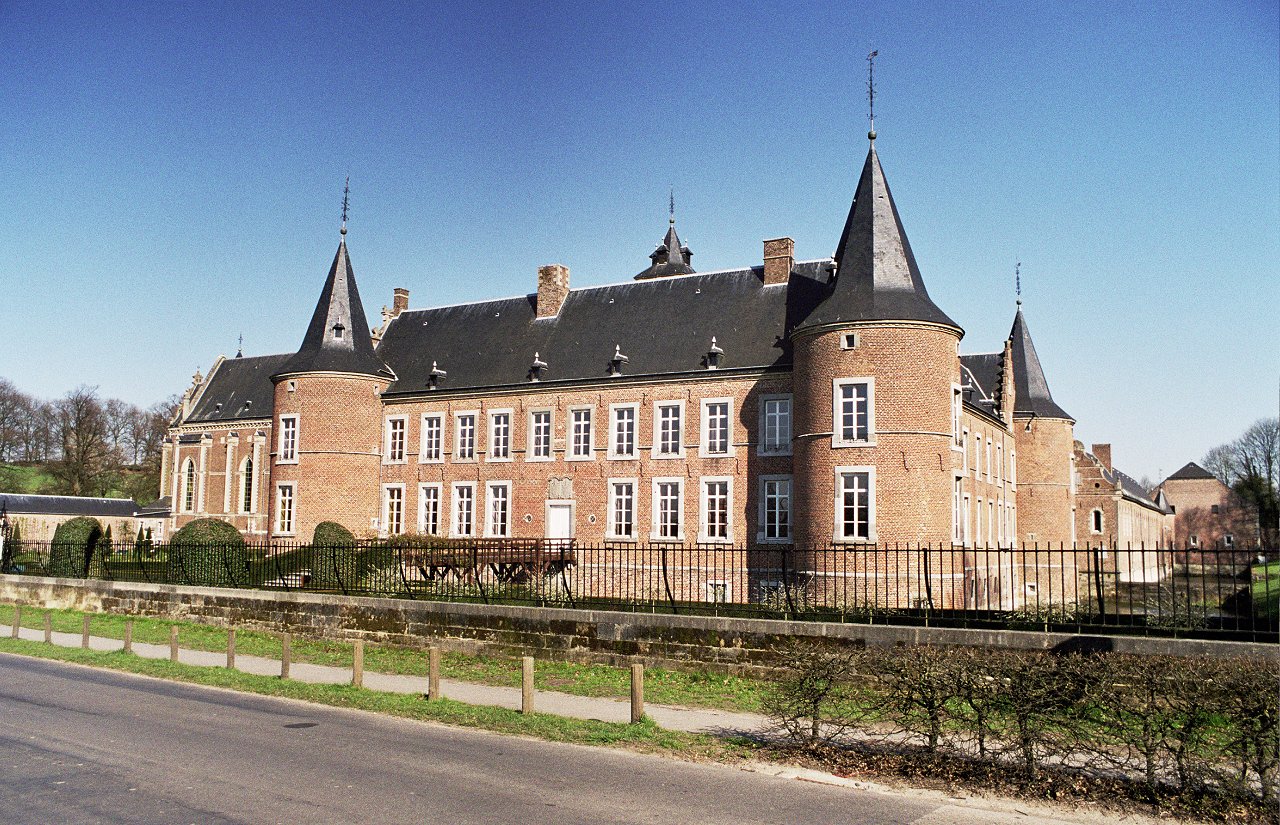
Genoels-Elderen Castle
Genoels-Elderen Castle stands as a remarkable historic estate in the municipality of Riemst, Belgium. Its origins date back to the late 13th century, when the original stronghold was established by the nobleman Godenoel. This early fortress gave its name to the surrounding village of Genoelselderen. Over the centuries, the castle became closely associated with the Elderen family, a prominent noble lineage that held the estate until the early 18th century. Among its notable owners was Jean-Louis (Johan Lodewijk) d’Elderen, who served as the prince-bishop of Liège during the 17th century, linking the castle to significant regional religious and political authority.
The original medieval castle was destroyed towards the end of the 18th century during the turmoil of the French Revolution. Despite this devastation, the medieval wine cellars survived, providing a tangible connection to the estate's early history and its longstanding tradition of viticulture. In 1859, a new castle was constructed on the same site by Count Guillaume de Borchgrave, incorporating architectural styles popular at the time, notably neoclassical and Louis-Philippe. This reconstruction revitalized the estate after a century of neglect and gave it the distinctive appearance it retains today.
Architectural evolution and estate layout
The present castle exhibits a U-shaped design with two projecting wings flanking a central section adorned with pediments at both ends. The core of the building dates from the first half of the 18th century and underwent restoration in the late 1700s before the major 1859 remodeling. This transformation blended neoclassical and Louis-Philippe styles, reflecting the architectural trends of the mid-19th century.
Attached to the wings are various service buildings, including quarters for servants, barns, stables, and a coach house. These structures collectively enclose a French garden featuring two fountains topped with sculptures of the classical figures Apollo and Artemis. This garden adds an elegant decorative element inspired by ancient mythology.
The castle grounds extend into an English-style landscaped park, which houses an 18th-century belvedere designed as a small temple in the Louis XVI style. Situated in the southern part of the park, this ornamental structure enhances the layered historical ambiance of the estate.
Historical farmstead and viticultural heritage
North of the main castle buildings lies the castle farmstead or kasteelhoeve, constructed in the Mosan Renaissance style. This farmstead predates the current castle, linking the estate to earlier regional architectural traditions and agricultural practices.
The vineyards surrounding Genoels-Elderen Castle represent a significant aspect of the estate, covering approximately 22 hectares since planting began in 1991. These vineyards are divided into multiple plots, cultivating grape varieties such as Chardonnay, Pinot Noir, Pinot Blanc, Pinot Gris, and Auxerrois. The initial vineyard was established within the castle enclosure, with additional plots extending to south-facing hillsides and historic vineyard sites like the Wijngaardveld. This continuation of viticulture reflects the estate's deep-rooted connection to wine production, which dates back to medieval times.
A notable surviving feature from the medieval period is the wine cellars, which have been expanded in modern times to support increased production. These cellars preserve a direct link to the castle's long-standing tradition of winemaking and serve as a foundational element of its historical landscape.
Historical significance and cultural legacy
The history of Genoels-Elderen Castle is intertwined with the political and religious history of the region, especially through its association with the Elderen family and the prince-bishopric of Liège. The castle's destruction during the French Revolution marks a significant turning point, reflecting wider European upheavals. Its 19th-century reconstruction demonstrates the resilience and adaptation of noble estates in Belgium during this period.
The presence of a Gallo-Roman tumulus from the 1st century in the nearby Kiezelingenbos forest underscores the area's importance long before the medieval era, adding a prehistoric dimension to the site's heritage.
Today, Genoels-Elderen Castle stands as a testament to centuries of architectural evolution, noble lineage, and agricultural tradition. Its blend of medieval remnants, 18th-century elements, and 19th-century neoclassical and Louis-Philippe architecture creates a unique historical ensemble. The expansive vineyards and preserved wine cellars continue to honor the estate's longstanding viticultural heritage, making it a significant cultural landmark in Belgium.
Frequently asked questions (FAQ)
- What is the historical significance of Genoels-Elderen Castle?
- Genoels-Elderen Castle, dating back to the 12th century, is a significant landmark in Belgium known for its rich history and architectural beauty. It has served various functions over the centuries, including as a noble residence and a strategic fortification during conflicts.
- When was Genoels-Elderen Castle built?
- The construction of Genoels-Elderen Castle began in the 12th century, making it one of the oldest castles in the region. Its architectural style reflects the medieval era, and it has undergone several renovations throughout its history.
- What are the opening hours for Genoels-Elderen Castle?
- Genoels-Elderen Castle is typically open to visitors from April to October, with specific hours varying by month. It is advisable to check the official website for the most current opening hours and any seasonal variations.
- Can I visit Genoels-Elderen Castle year-round?
- While the main visiting season is from April to October, special events may allow access outside these months. It’s best to consult the castle's official website for information on winter openings and special tours.
- Is Genoels-Elderen Castle accessible to visitors with mobility challenges?
- Genoels-Elderen Castle offers limited accessibility for visitors with mobility challenges due to its historical architecture and uneven paths. It is recommended to contact the castle in advance to inquire about specific accommodations and assistance options.
- When is the best time to visit Genoels-Elderen Castle?
- The best time to visit is during the spring and summer months when the gardens are in full bloom, and the weather is pleasant for outdoor exploration. Additionally, many events and guided tours are offered during this time, enhancing the visitor experience.
- What are the ticket prices for visiting Genoels-Elderen Castle?
- Ticket prices for Genoels-Elderen Castle can vary based on the season and special events. Typically, discounts are available for children, students, and seniors, so it's advisable to check the official website for the latest pricing information.
- Are there any nearby attractions to visit after Genoels-Elderen Castle?
- Yes, visitors can explore various nearby attractions, including the charming town of Riemst and the scenic vineyards in the region. The area is also home to other historical sites and natural parks, making it a great destination for a full day of exploration.
Information
Website
Visit websiteSources & official resources
Verify the information above using these authoritative references.
Loading map...
Visitor reviews
No reviews yet. Been here? Write the first review and help other travelers!
Write the first reviewVisited this castle? Share your experience
Your review helps other travelers and adds first-hand knowledge to our encyclopedia.