Middachten Castle

Middachten Castle: renaissance estate in De Steeg, Netherlands
De Steeg, Gelderland, Netherlands
Renaissance (15th–17th c.)
Well Preserved

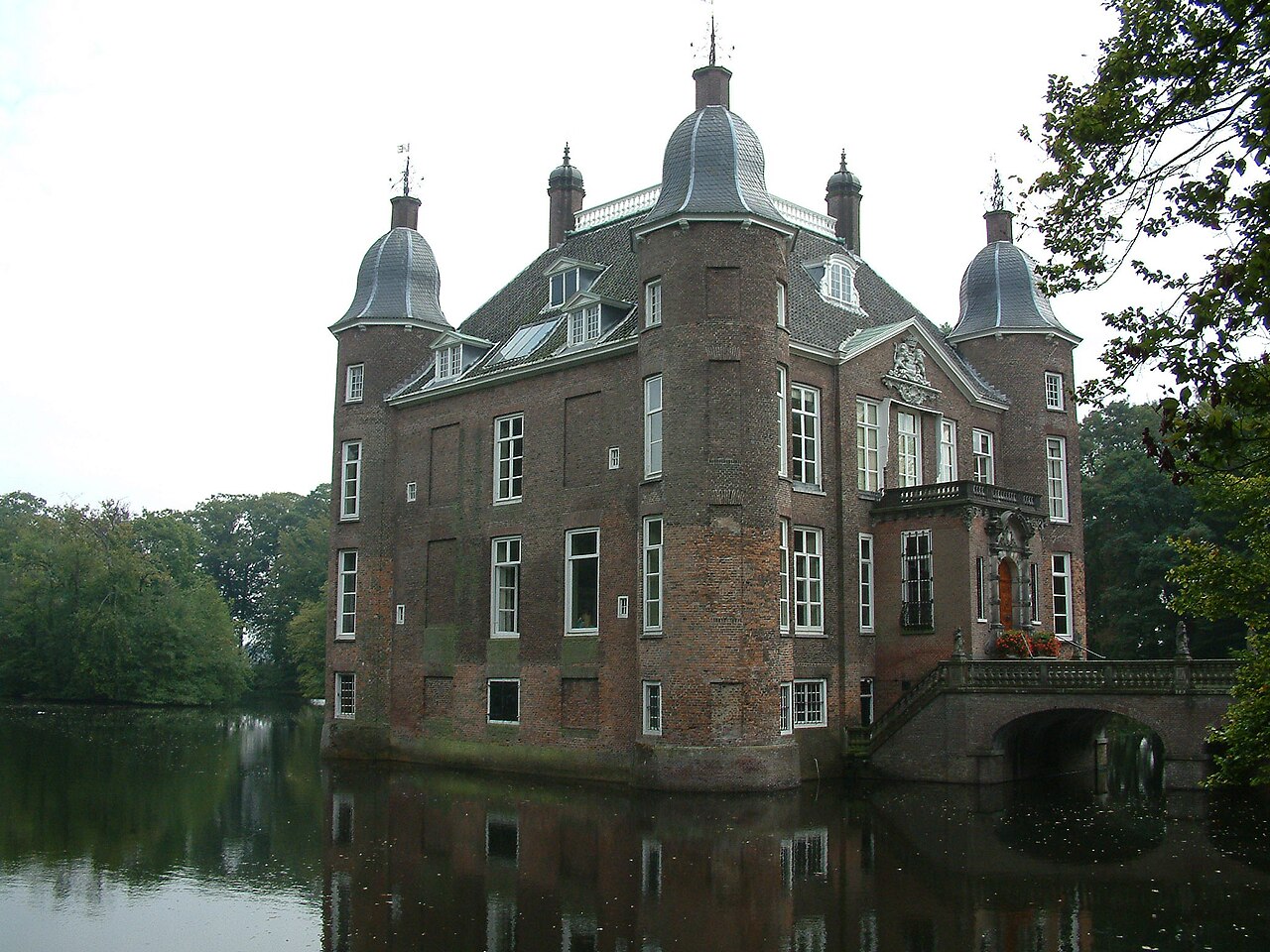
Middachten Castle stands as a significant Renaissance castle located in De Steeg, Netherlands. Its origins trace back to the late 12th century, with the first recorded mention in 1190 when it was owned by Jacobus de Mithdac. The castle's history is marked by a series of ownership changes, destruction, and rebuilding phases that reflect the turbulent medieval and early modern periods of Dutch history.

The early history and medieval transformations

In the early 14th century, the castle's ownership transferred from Everardus van Steenre to Reinald, count of Gelre. Subsequently, in 1357, Everardus regained the castle as a loan, initiating a long tenure by the family until 1625. Throughout the medieval period, Middachten Castle experienced multiple episodes of destruction and reconstruction, a common fate for fortifications in the region due to ongoing conflicts.

Destruction and rebirth in the late 17th century

The castle suffered significant damage during the conflicts of the late 17th century. In 1673, following the conquest of the city of Bonn by Stadtholder William III, the retreating French troops destroyed the castle. This event marked a turning point, leading to a comprehensive rebuilding effort.

The reconstruction took place between 1693 and 1698, commissioned by Godard van Reede and his wife Ursula van Raesfelt. The design drew inspiration from the Het Loo Palace in Apeldoorn, a prominent example of Dutch Baroque architecture. The architects responsible for this project were Jacobus Roman (1640-1716) and Steven Vennecool (1657-1719), both renowned for their contributions to Dutch architectural heritage.

Gardens and landscape evolution

Following the castle's reconstruction, a formal garden was established between 1700 and 1725, modeled after the gardens of Versailles. This garden featured the characteristic symmetry and geometric patterns of French formal garden design, emphasizing order and control over nature.

In the late 18th century, reflecting changing tastes, the gardens were transformed into the British landscape style, favoring naturalistic layouts with sweeping lawns and informal plantings. Around 1900, the gardens were partially restored to their original French style by Hugo Poortman, a student of the famed French garden designer Édouard André. This restoration was commissioned by Count and Countess Bentinck-Van Heeckeren of Wassenaer, aiming to revive the castle's historic landscape character.

Architectural features and estate buildings

Middachten Castle exemplifies a Renaissance architectural style infused with Baroque influences from its late 17th-century reconstruction. The castle complex includes symmetrical façades, steeply pitched roofs, and ornate gables characteristic of the period. The layout reflects the influence of Het Loo Palace, with an emphasis on axial planning and formal approaches.

The castle was historically part of an extensive estate, with several ancillary buildings such as farmhouses and service structures. These outbuildings are identifiable by their distinctive red and white coloring, a traditional marking associated with the castle's estate. For example, the Post office in De Steeg retains this color scheme, reflecting its historical connection to the castle.

Current status and cultural significance

Today, Middachten Castle remains a well-preserved example of a Dutch Renaissance estate with a rich layered history. Although the original estate lands have been reduced, the castle and its gardens continue to attract visitors interested in Dutch architectural heritage and garden history. The castle's blend of architectural styles and garden designs illustrates the evolution of aristocratic tastes from the medieval period through the Renaissance and into the modern era.

The castle is privately owned and not generally open to the public, but it is often featured in cultural heritage discussions and regional tourism. Its gardens, especially after the early 20th-century restoration, offer insights into historic landscape design trends in the Netherlands.

Frequently asked questions (FAQ)

What is the historical significance of Middachten Castle?
Middachten Castle, dating back to the 14th century, is a prime example of Dutch Renaissance architecture and has been owned by the same family for generations. The castle played a vital role in the local history and has witnessed various historical events, making it an important cultural landmark in the region.
When was Middachten Castle built?
Middachten Castle was originally constructed in the 14th century, with its current architectural style being developed primarily in the 17th century. The castle has undergone several renovations and expansions over the centuries, reflecting the changing tastes and needs of its inhabitants.
Can I visit Middachten Castle?
Yes, Middachten Castle is open to the public, allowing visitors to explore its beautiful gardens and various historical exhibits. Guided tours are available, providing insights into the castle's rich history and architecture.
What are the opening hours for Middachten Castle?
Middachten Castle typically opens its doors to visitors from April to October, with specific hours varying by day. It is advisable to check the official website for the most current visiting hours before planning your trip.
Is it possible to host events at Middachten Castle?
Yes, Middachten Castle offers event spaces for various occasions, including weddings and corporate events. The picturesque setting and historical ambiance make it a unique venue for special celebrations.
What are the ticket prices for visiting Middachten Castle?
Ticket prices for Middachten Castle vary depending on age and type of visitor, with discounts often available for children and seniors. It is recommended to check the official website for the latest pricing information and any special offers.
When is the best time to visit Middachten Castle?
The best time to visit Middachten Castle is during the spring and summer months when the gardens are in full bloom and outdoor activities are plentiful. Additionally, the castle hosts various events throughout the year, enhancing the visitor experience.
Are there any nearby attractions to visit while at Middachten Castle?
Yes, there are several nearby attractions, including the stunning Veluwezoom National Park and various charming villages in the area. Exploring these sites can complement your visit to Middachten Castle and provide a fuller experience of the Dutch countryside.
Is Middachten Castle accessible for visitors with disabilities?
Middachten Castle strives to be accessible to all visitors, with facilities in place to assist those with mobility challenges. It is recommended to contact the castle in advance to inquire about specific accessibility options available during your visit.

Information

Lowland Castle

Sources & official resources

Verify the information above using these authoritative references.

Loading map...

Visitor reviews

No reviews yet. Been here? Write the first review and help other travelers!

Write the first review

Visited this castle? Share your experience

Your review helps other travelers and adds first-hand knowledge to our encyclopedia.

Write a review

(5/5)

0/2000 characters

Your review will be visible after admin approval

Nearby castles

6.5 km

Guelders Tower

Zutphensestraatweg 10, Netherlands

Guelders Tower, known locally as Gelderse Toren, is a historic fortified tower situated on the west bank of the IJssel river, between the villages of Dieren and Brummen in the province of Gelderland, Netherlands. This site has held strategic importance since the High Medieval period, serving as a watchtower and defensive stronghold overseeing river traffic and regional borders. Early history and medieval origins The earliest known fortification at this location was a watchtower owned by the Counts of Zutphen, first documented in 1179. While no visual records or detailed descriptions of this original structure survive, archaeological evidence confirms that the foundations of the current tower date back to the 13th century. This places the tower firmly within the High Medieval era, a time when such riverine fortifications were crucial for controlling trade routes and asserting territorial claims. Reconstruction under Charles II of Egmond In 1535, the original tower was demolished and replaced by a new construction commissioned by Charles II of Egmond, the Duke of Guelders. This reconstruction was built directly on the medieval foundations, reflecting the continuing military and political significance of the site. Upon completion, Charles II granted the tower to his illegitimate son, Charles of Guelders the Youngest, indicating the tower's role not only as a defensive structure but also as a noble residence. Military conflicts and ownership changes During the turbulent Thirty Years' War period, the tower was attacked in February 1624 by Spanish troops led by Count Hendrik van den Bergh. Notably, van den Bergh was a Dutch nobleman and nephew of Prince Maurice of Orange, illustrating the complex allegiances during this era. The tower's strategic position made it a target in the regional conflicts involving the Dutch Republic and Spanish forces. Following this period, the tower passed through several noble families by inheritance, including the Van Delen, Van Nagell, Van Broeckhuysen, and Van Rhemen tot Rhemenshuizen families. These transitions reflect the tower's continued importance as a noble estate rather than solely a military fortification. 19th-century restoration and Gothic Revival transformation By 1868, the tower had fallen into significant disrepair. Its owner at the time, Alexander Baron van Rhemen tot Rhemenshuizen, decided to demolish the structure from the first floor upwards. The tower was then rebuilt in the Gothic Revival style, a 19th-century architectural movement that sought to revive medieval Gothic elements such as pointed arches, decorative tracery, and steep gables. The exterior of the rebuilt tower was plastered to conceal the differences between the original medieval stonework and the new construction materials. This restoration reflects the era's romanticized view of medieval architecture and the desire to preserve historic landmarks while adapting them for contemporary use. Architectural features and current status The Guelders Tower today stands as a Gothic Revival structure built upon 13th-century foundations. Its location on the IJssel riverbank continues to highlight its original strategic purpose. The tower features characteristic Gothic Revival elements externally, although the interior remains private and inaccessible to the public. Currently, the tower is private property and serves as a residence. Due to its private ownership, it is not open for public tours or visits. Despite this, the Guelders Tower remains an important cultural and historical monument within Gelderland, representing centuries of regional history from medieval fortification to noble residence and 19th-century architectural revival. Significance in regional history and heritage Guelders Tower exemplifies the evolution of medieval military architecture adapted over centuries to changing political and social contexts. Its survival through conflict, inheritance, and restoration illustrates the layered history of the Gelderland region. The tower's association with notable figures such as Charles II of Egmond and Count Hendrik van den Bergh adds to its historical interest. As a physical reminder of the High Medieval period and subsequent architectural trends, the tower offers insights into the defensive strategies along the IJssel river and the noble lineages that shaped the area's history.

High Medieval (11th–13th c.)
Details
7 km
Biljoen Castle — Netherlands castle

Biljoen Castle

Velp, Netherlands

Biljoen Castle is a remarkable example of a Renaissance-era noble residence located near Velp, nestled between the Veluwe forest and the IJssel river in the province of Gelderland, Netherlands. The castle's origins trace back to a large farmstead known as Broekerhof, first recorded in 1076. Over the centuries, the estate evolved from a tax collection site under the ownership of the Sint-Pieter Chapter in Utrecht into a fortified noble residence that reflects the architectural and historical developments of the region. The transformation of the estate into a castle began in 1530 when Charles, Duke of Guelders, converted the farmstead into a defensive stronghold. The construction included the erection of four equal corner towers, a defining feature that remains central to the castle's silhouette. These towers exemplify the military architectural style of the period, designed to provide comprehensive defensive coverage. While the towers date clearly from this initial castle phase, the rest of the building's original elements are less certain due to later modifications and reconstructions. Historical evolution and ownership The estate's history is marked by a sequence of ownership changes reflecting the political and social shifts in the region. After its initial establishment as a castle by Charles, Duke of Guelders, financial difficulties forced him to sell the property in 1535. It was acquired by Roelof van Lennep, a general under the Duke, whose family maintained possession through several generations. The Van Lennep family contributed to the castle's development during the 16th century, with notable owners including Carl van Lennep, mayor of Arnhem, and his son Roelof. In 1661, the castle passed to the baronial Van Spaen family, who were instrumental in shaping its current appearance. Alexander van Spaen (1619–1692) undertook significant rebuilding efforts, transforming the castle into a more refined residence while preserving the four corner towers. This period saw the castle evolve from a primarily defensive structure into a stately home reflecting Renaissance ideals of symmetry and proportion. Architectural features and style Biljoen Castle is characterized by its symmetrical layout centered around the four equal corner towers, which are emblematic of its Renaissance heritage. The towers are robust and square, designed for defense but also contributing to the castle's imposing aesthetic. The main building between the towers has undergone various renovations, blending original Renaissance elements with later stylistic additions. The castle's walls are constructed from local brick and stone, typical of Dutch Renaissance architecture, incorporating ornamental details such as decorative gables and window frames. Inside, the castle features richly decorated interiors, including ornamental plasterwork and ceiling paintings that were restored following damage during the late 18th century. 18th-century renovations and restorations During the 18th century, the Van Spaen family further remodeled Biljoen Castle, enhancing its residential comfort and aesthetic appeal. These renovations included the addition of refined interior decorations and structural improvements that aligned with contemporary tastes. The castle’s interiors were notably damaged when French troops were quartered there in 1795, and subsequent plundering led to the loss of much original decor. The restoration efforts after this period focused on recovering the castle’s grandeur, with particular attention to ornamental plaster and ceiling paintings that reflect the artistic styles of the time. These restorations have preserved the castle's historical ambiance, allowing visitors to appreciate its layered history. Notable historical events and later ownership Biljoen Castle has witnessed significant historical events, including its use by French troops during the revolutionary wars in the late 18th century. The occupation led to considerable damage, but the castle's resilience and the dedication of its owners ensured its survival and restoration. In the 19th century, the castle gained prominence when Anna Pavlovna of Russia, queen consort of the Netherlands, was allowed temporary residence there by Baron Van Hardenbroek in 1849. This royal connection highlights the castle’s status as a prestigious noble estate. The castle remained in private hands, passing to the family Lüps in 1872, who maintained it until 2008. Throughout its history, Biljoen Castle has balanced its roles as a defensive structure, noble residence, and cultural landmark. The estate and surroundings The castle is set within the expansive Biljoen estate, which includes landscaped gardens and parkland that enhance its picturesque setting. The estate's location between the Veluwe, a large forested area, and the IJssel river contributes to its strategic and scenic value. The surrounding landscape has influenced the castle’s design, with features such as moats and defensive walls adapted to the terrain. Today, Biljoen Castle stands as a well-preserved example of Dutch Renaissance architecture, offering insights into the region’s feudal past and noble heritage. Its combination of military and residential architectural elements makes it a significant cultural and historical monument in Gelderland. Visiting Biljoen castle While Biljoen Castle is primarily a private residence, its historical significance and architectural beauty attract interest from historians, architects, and visitors. The castle exemplifies the evolution of noble residences in the Netherlands from the medieval period through the Renaissance and into modern times. Visitors interested in Dutch castle architecture and history will find Biljoen Castle a fascinating case study of adaptation and preservation. Its four corner towers, Renaissance style, and rich history provide a compelling narrative of noble life and military architecture in Gelderland.

Renaissance (15th–17th c.)
Details
7.3 km
Castle Rosendael's Trick Fountains — Netherlands castle

Castle Rosendael's Trick Fountains

Rozendaal, Netherlands

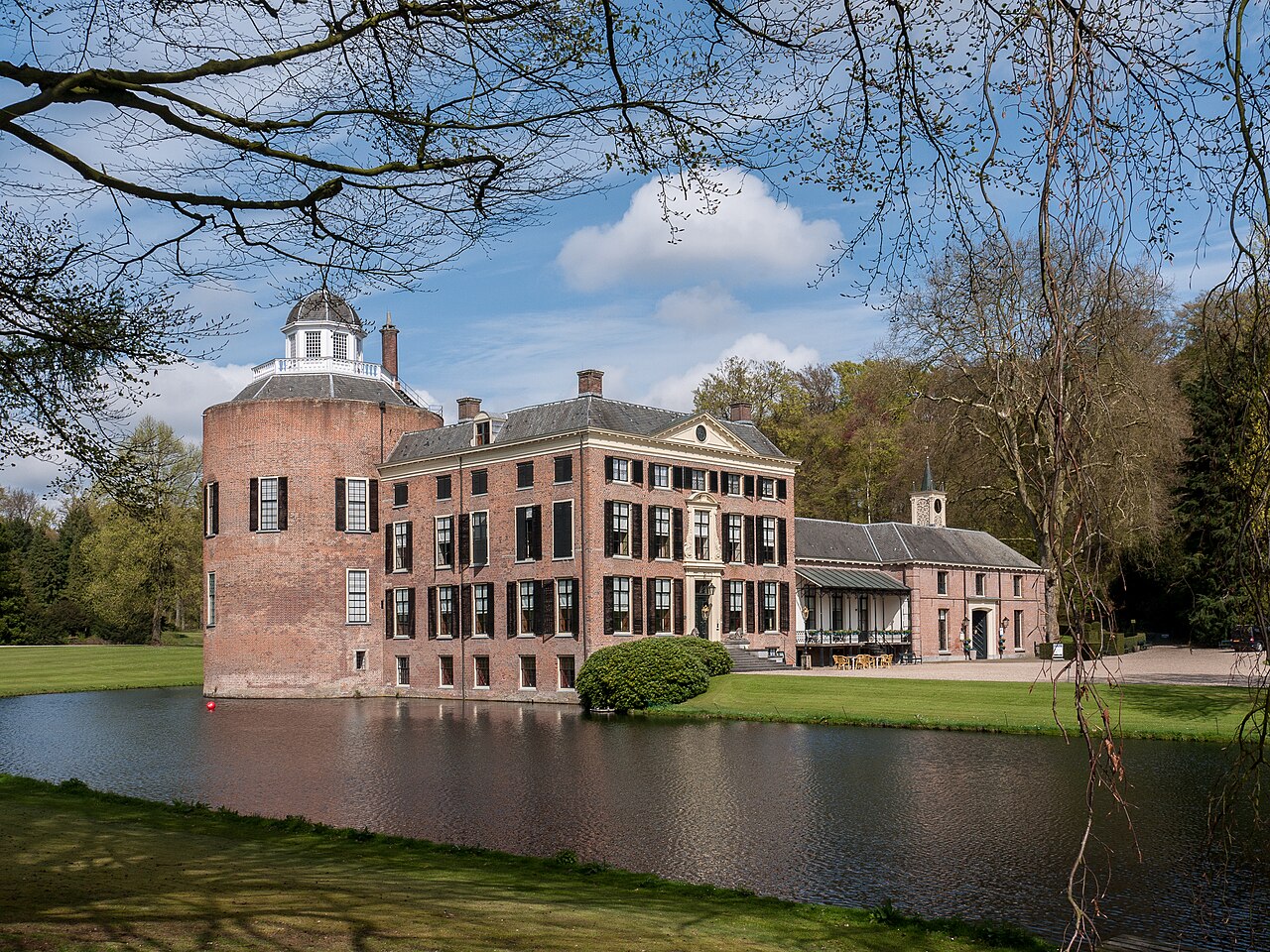
Castle Rosendael stands as a remarkable testament to Dutch medieval and early modern aristocratic life, nestled in the scenic region of Gelderland, Netherlands. Known primarily for its well-preserved late-medieval donjon and the enchanting trick fountains in its gardens, the castle offers visitors a unique blend of history, architecture, and landscape design. The castle's origins date back to around 1300, when it became the property of the counts and later dukes of Gelre, a significant noble family in the region. Over centuries, the castle evolved from a formidable fortress into a graceful country estate surrounded by elaborately designed gardens. The medieval origins and architectural significance The castle's most striking medieval feature is its round donjon, a massive defensive tower with walls up to four meters thick. This donjon, the tallest of its kind in the Netherlands, originally soared to twice its current height, serving as the last refuge during sieges. It was part of a larger complex that included a forecourt and a main fortress, reflecting typical late-medieval military architecture. The donjon's survival provides invaluable insight into the defensive strategies and residential arrangements of the Gelre dukes, who regularly resided at Rosendael until the 16th century. The castle's strategic location on the edge of the Veluwe moraine offered natural defenses and scenic views, enhancing its appeal to the dukes. However, the castle's history is marked by significant political events, including the 1502 capture of Arnhem by Philip the Handsome, which led to Duke Charles of Gelre's humiliation and exile in an episode famously called "the prostration of Rosendael." This event precipitated the decline of the castle's status as a ducal residence and eventually led to its mortgage and sale in the early 16th century. Transformation into a country estate and garden masterpiece Following its transition from a ducal fortress to a noble residence, Rosendael underwent significant architectural and landscape changes. In 1616, the castle was remodeled, and later in the 18th century, the renowned French landscape architect Daniel Marot designed the gardens that would become famous for their playful and artistic features. Marot's work included the creation of the trick fountains, or De Bedriegertjes, which are cleverly concealed mini fountains embedded in the mosaic floors of the water gardens. These fountains surprise visitors by suddenly spraying water, embodying the whimsical spirit of Baroque garden design. Alongside the trick fountains, Marot also designed the shell gallery, a unique grotto decorated with shells, and a charming teahouse pavilion. These garden follies contribute to the estate's character, blending the austere medieval architecture with the elegance and leisure of an 18th-century country house. The addition of a square house in 1722 and later expansions, including a side wing and coach house in the 19th century, further transformed Rosendael into a stately home surrounded by beautifully landscaped grounds. Historical legacy and preservation efforts Throughout its history, Castle Rosendael witnessed numerous upheavals, including damage during wartime. Despite these challenges, the castle remained a private residence until the death of Baron van Pallandt in 1977. Subsequently, the castle underwent comprehensive restoration in the 1980s, ensuring the preservation of its architectural integrity and garden features for public enjoyment. Today, the castle is open to visitors who can explore the medieval donjon, admire the original interior furnishings, and stroll through the elaborate gardens featuring the famous trick fountains. The estate serves not only as a cultural heritage site but also as a vivid illustration of the evolution of Dutch noble residences from medieval fortresses to elegant country estates. Visitor experience and cultural significance Visitors to Castle Rosendael can immerse themselves in centuries of history, architecture, and landscape artistry. The trick fountains remain a highlight, delighting guests with their unexpected sprays of water, a playful reminder of the Baroque era's love for garden entertainments. The castle's well-preserved interior and furniture offer a glimpse into the lifestyle of the Gelre nobility, while the surrounding park invites leisurely exploration. Castle Rosendael's blend of medieval fortification and 18th-century garden design makes it a unique destination for those interested in Dutch history, castle architecture, and landscape heritage. Its survival through political turmoil and war, followed by dedicated restoration, underscores its importance as a symbol of regional identity and cultural continuity in Gelderland.

Late Medieval (14th–15th c.)
Details