Mezyad Fort
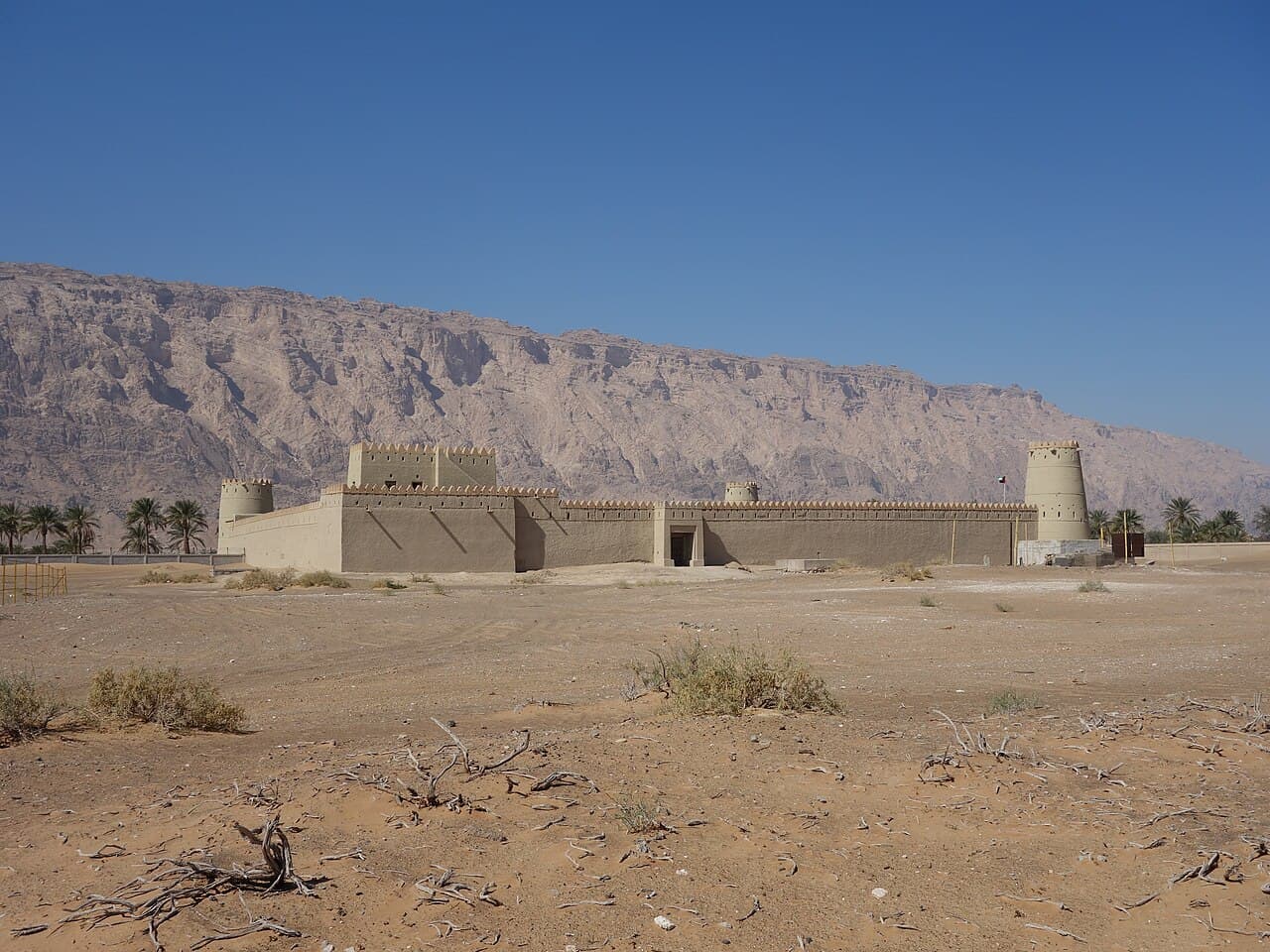
Mezyad Fort, also spelled Mazyad, is a significant 19th-century bastioned fortress located in the emirate of Abu Dhabi, United Arab Emirates. Nestled at the southwestern edge of the village of Mezyad, it lies directly beneath the imposing Jebel Hafeet mountain and is positioned just approximately 650 meters from the border with Oman. This strategic location highlights its historical role in border defense and regional control.
Historical context and strategic importance
The fort's origins trace back to the 19th century, a period marked by tribal conflicts and territorial disputes in the Arabian Peninsula. Although detailed historical records are limited, Mezyad Fort is believed to have been constructed to serve as a military outpost and a border guard station. Its proximity to the Oman border made it a vital point for monitoring cross-border movements and protecting the interests of the ruling families in the area.
During the 20th century, the fort's function evolved. It was reportedly used as a police station and a border post, reflecting the changing political landscape and the increasing need for formalized security in the region. In the 1950s, the fort was garrisoned by the Trucial Oman Scouts, a paramilitary force established by the British to maintain peace and order in the Trucial States, the precursor to the modern United Arab Emirates.
Architectural features and construction techniques
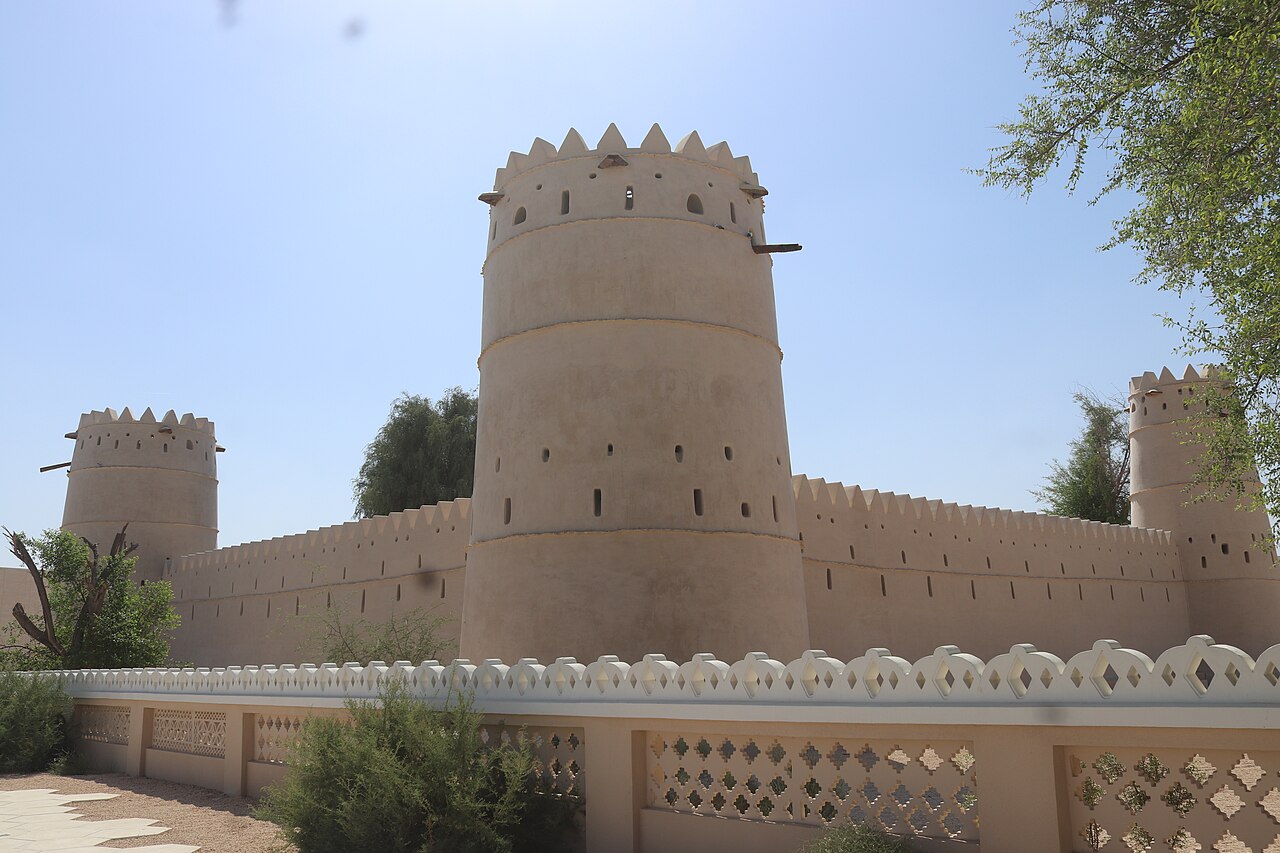
Mezyad Fort is a large square bastioned fortress characterized by its robust defensive design. It features round towers at three of its corners, a common architectural element intended to provide a wide field of fire and eliminate blind spots along the curtain walls. The fort's walls are constructed primarily from mud bricks and cob, traditional materials widely used in the region due to their insulating properties and local availability.
The fort's ceilings incorporate palm tree trunks, which serve as structural beams supporting the roofs. Decorative and functional details were crafted using gypsum, a soft mineral plaster that was applied to walls and ceilings to smooth surfaces and add ornamental touches. Inside, the curtain walls enclose numerous rooms that likely served as storage spaces, barracks, or administrative quarters.
Restoration and modern use
In the 1980s, Mezyad Fort underwent restoration to preserve its structural integrity and historical significance. Following this restoration, the fort became part of Shaikh Zayed Bin Sultan Al Nahyan’s farm, reflecting a shift from military to agricultural and heritage uses. The fort's courtyard was transformed into a date palm plantation, integrating the site into the local agricultural landscape and enhancing its cultural value.
Current status and accessibility
Today, Mezyad Fort is not generally open to the public. While some online sources suggest that visitors may gain access for free, this is only possible by prior appointment. However, information about whom to contact for such appointments is not readily available, limiting public access to the interior of the fort. The lack of easy access restricts firsthand exploration but underscores the fort's preserved state and ongoing significance as a heritage site.
Geographical and cultural significance
The fort's location near Jebel Hafeet places it within a landscape rich in archaeological and historical importance. The mountain itself is a prominent natural landmark in the region, known for its unique geology and ancient tombs. Mezyad Fort contributes to the cultural tapestry of the area, representing the architectural and defensive strategies of the 19th-century Arabian Peninsula societies.
Its construction using traditional materials and techniques offers insights into the vernacular architecture of the time, while its historical uses reflect the shifting political and social dynamics leading up to the formation of the modern United Arab Emirates.
Frequently asked questions (FAQ)
- How do I get to Mezyad Fort?
- Mezyad Fort is located just outside the town of Mezyad in the United Arab Emirates. Visitors can reach the fort by car or taxi, with ample parking available on-site. Public transport options may be limited, so it's advisable to plan your visit accordingly.
- What is the historical significance of Mezyad Fort?
- Mezyad Fort, built in the late 19th century, served as a defensive structure and a lookout point for the surrounding area. It played a crucial role in protecting the local population and trade routes, showcasing the strategic importance of the region during that time. The fort is a testament to the rich heritage and history of the UAE.
- When was Mezyad Fort built?
- Mezyad Fort was constructed in the late 1800s, around 1890, as part of the defensive architecture of the region. Its construction marked a significant period in Emirati history, reflecting the need for security and protection in a growing settlement. The fort has since been preserved as a historical site.
- Can I enter the fort and explore its interior?
- Yes, visitors are welcome to enter Mezyad Fort and explore its interior. There are informative displays and guides available to enhance your experience and provide insights into the fort's history. Make sure to respect the historical significance of the site during your visit.
- Why is Mezyad Fort a popular tourist attraction?
- Mezyad Fort attracts visitors due to its historical importance and unique architecture that reflects traditional Emirati design. The fort offers stunning views of the surrounding landscape, making it a great spot for photography and exploration. It serves as a cultural landmark that educates visitors about the region's heritage.
- Is it possible to visit Mezyad Fort year-round?
- Yes, Mezyad Fort is open to visitors throughout the year. However, the best time to visit is during the cooler months, from October to March, when temperatures are more pleasant for outdoor exploration. Always check for any special events or closures before planning your visit.
- What are the opening hours for Mezyad Fort?
- Mezyad Fort typically opens to the public from 9 AM to 5 PM, Saturday through Thursday. It may be closed on Fridays or during public holidays, so it's advisable to check in advance. Planning your visit within these hours will ensure you have ample time to explore the fort.
- Are there any ticket prices for visiting Mezyad Fort?
- Entry to Mezyad Fort is generally free of charge, making it an accessible destination for all visitors. However, certain guided tours or special exhibitions may have associated fees. Always verify current pricing and any available tours before your visit.
- What nearby attractions can I visit while at Mezyad Fort?
- While visiting Mezyad Fort, you can also explore the nearby Mezyad Heritage Village, which offers insights into traditional Emirati life. Additionally, the Al Ain Oasis and the Hili Archaeological Park are within a short drive, providing further opportunities to learn about the rich culture and history of the region.
Photo gallery

Information
Loading map...
Visitor reviews
No reviews yet. Been here? Write the first review and help other travelers!
Write the first reviewVisited this castle? Share your experience
Your review helps other travelers and adds first-hand knowledge to our encyclopedia.