Mezek Fortress
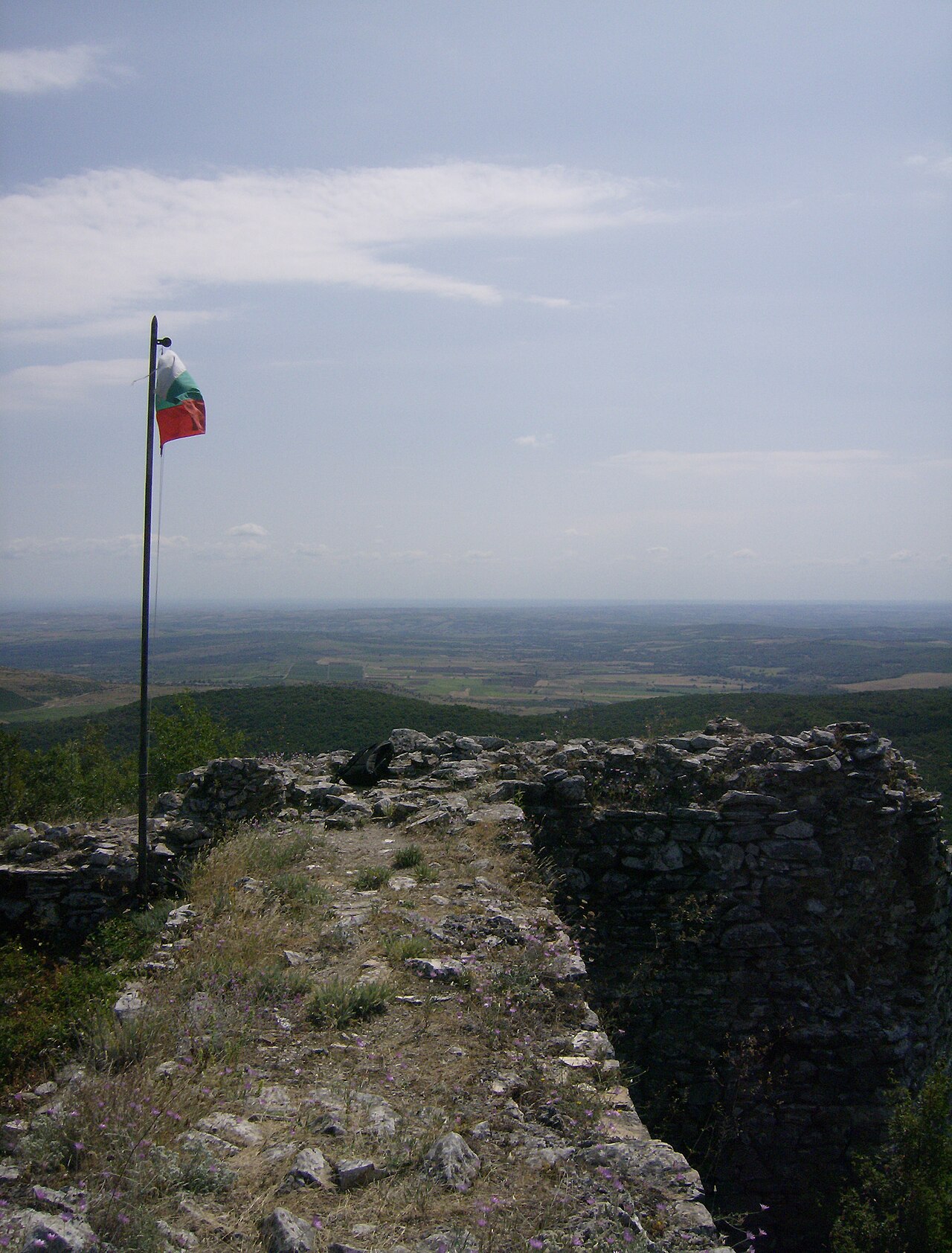
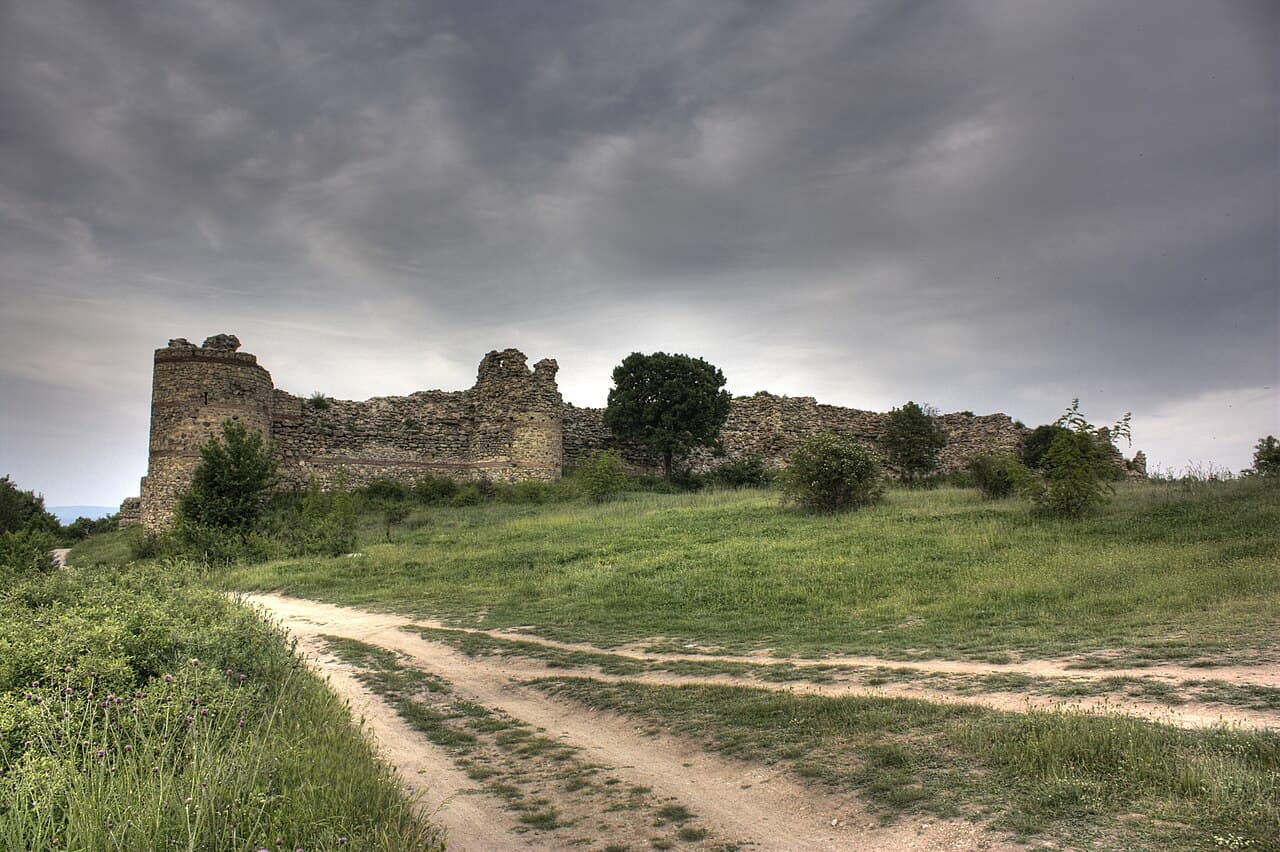
Mezek Fortress (Bulgarian: Мезешка крепост) stands as a significant medieval bastioned fortress located west of the modern village of Mezek in southeastern Bulgaria. Constructed during the 11th and 12th centuries, this fortress occupies an elongated terrace at the foothills of the northeastern ridge of the Rhodope Mountains, specifically the ridge known locally as Gorata or St Marina. It played a vital role as a border guard fortress, strategically defending the lands between the Maritsa and Arda rivers.
The fortress is historically identified with the medieval Neoutzikon (Неузетикон in Bulgarian, Νεούτζικον in Byzantine Greek), a site referenced in Byzantine chronicles. Throughout its history, the fortress was under the control of both the Byzantine Empire and the Bulgarian Empire until its conquest by the Ottoman Turks in the second half of the 14th century.
Architectural features and defensive design
Mezek Fortress is classified as a bastioned fortress, a type characterized by angular bastions projecting from the curtain walls, designed to cover adjacent walls with defensive fire. The fortress's walls are built primarily of stone, exhibiting a robust construction typical of the High Medieval period. The layout follows the natural contours of the terrace, maximizing defensive advantage by integrating the terrain into its fortifications.
The fortress's walls are punctuated with several bastions, which allowed defenders to repel attackers effectively. The bastions provided overlapping fields of fire, a defensive innovation that enhanced the fortress's resilience against siege warfare. The main entrance was fortified and likely equipped with a gatehouse and defensive towers, although specific details on the gate structures are limited due to partial preservation.
Internal structures and layout
Within the fortress, remnants of various internal buildings have been identified, including residential quarters, storage facilities, and possibly a chapel or church, which was common in medieval fortresses for the garrison's spiritual needs. The courtyard area served as a central space for military and logistical activities.
Historical context and significance
Mezek Fortress's strategic location at the borderlands between the Byzantine and Bulgarian Empires made it a key military outpost throughout the High Medieval era. Its position enabled control over important routes and served as a defensive barrier against incursions from rival powers.
The fortress witnessed numerous shifts in control, reflecting the turbulent political and military history of the region during the Middle Ages. Its eventual capture by the Ottoman Turks in the late 14th century marked a significant change in the area's governance and military architecture.
Preservation and cultural heritage
Today, Mezek Fortress is recognized as one of the best-preserved fortifications in the eastern Rhodope Mountains. It is included among the 100 Tourist Sites of Bulgaria by the Bulgarian Tourist Union, highlighting its cultural and historical importance.
Located approximately 600 meters east of the fortress is the Mezek Tomb, the largest Thracian beehive tomb in Bulgaria, which adds archaeological and historical interest to the site. The proximity of these two landmarks offers visitors a unique opportunity to explore both medieval and ancient Thracian heritage in one location.
Visitor experience and accessibility
The fortress is accessible to visitors interested in medieval military architecture and Bulgarian history. The site offers insight into the defensive strategies of the period and the complex historical interactions between empires in the Balkans. Efforts to maintain and preserve the fortress ensure that it remains a valuable educational and tourist resource.
Frequently asked questions (FAQ)
- What is the historical significance of Mezek Fortress?
- Mezek Fortress served as a strategic border guard fortress between the Byzantine and Bulgarian Empires during the 11th and 12th centuries, controlling key routes in the Rhodope Mountains region.
- Can visitors access Mezek Fortress today?
- Yes, Mezek Fortress is open to visitors and is one of the best-preserved medieval fortresses in the eastern Rhodope Mountains, offering insight into medieval military architecture.
- Where is Mezek Fortress located?
- The fortress is located west of the village of Mezek in southeastern Bulgaria, perched on an elongated terrace at the foothills of the northeastern Rhodope Mountains ridge.
- What architectural features characterize Mezek Fortress?
- Mezek Fortress is a bastioned fortress featuring stone walls with projecting bastions designed for overlapping defensive fire, typical of High Medieval military architecture.
- Is Mezek Fortress connected to other historical sites nearby?
- Yes, about 600 meters east of the fortress lies the Mezek Tomb, the largest Thracian beehive tomb in Bulgaria, enhancing the site's archaeological significance.
Photo gallery

Information
Loading map...
Visitor reviews
No reviews yet. Been here? Write the first review and help other travelers!
Write the first reviewVisited this castle? Share your experience
Your review helps other travelers and adds first-hand knowledge to our encyclopedia.