Meßkirch Castle

Meßkirch Castle: earliest Renaissance quadrangular castle north of the Alps
Meßkirch, Germany
Renaissance (15th–17th c.)
Well Preserved

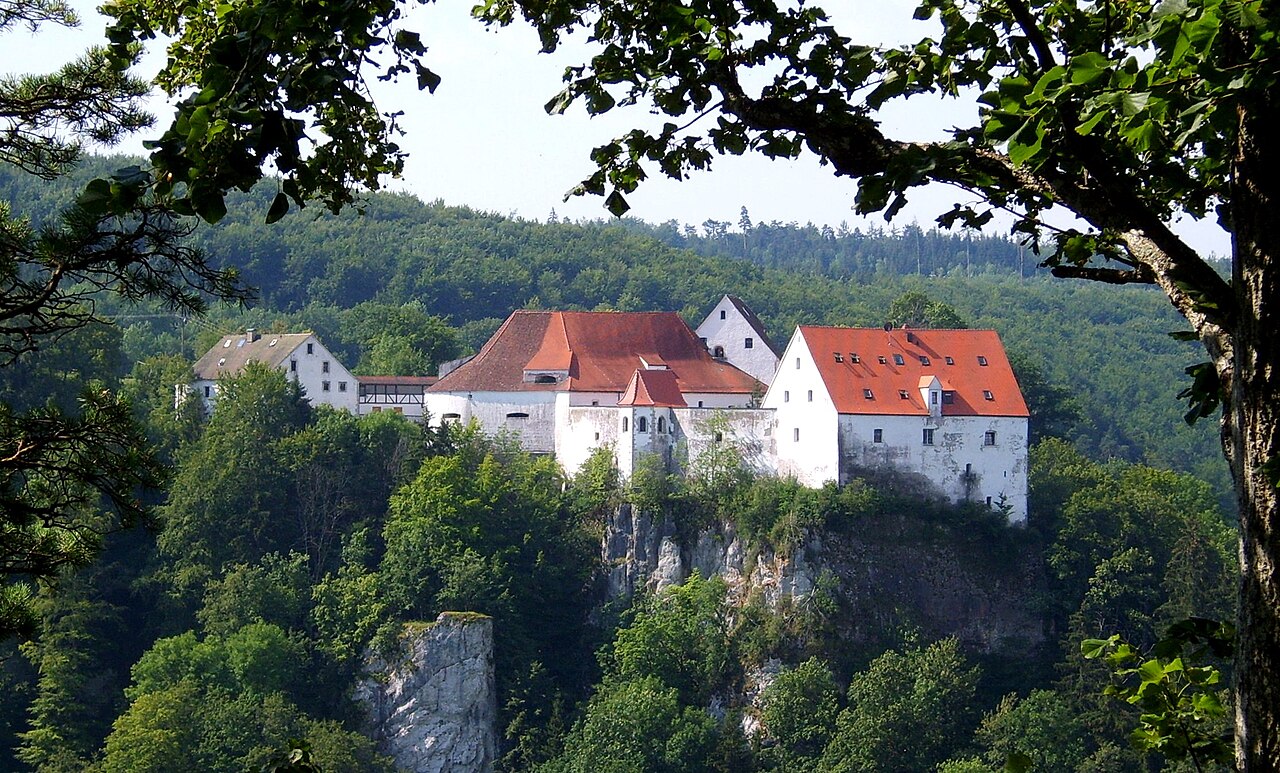
Meßkirch Castle, located in Meßkirch, Germany, stands as one of the earliest examples of Renaissance architecture north of the Alps. Constructed around 1577 by the Counts of Zimmern, it is renowned as the first quadrangular Renaissance structure in this region. This architectural milestone marked a significant departure from medieval fortress designs, embracing Renaissance ideals of symmetry, proportion, and classical detail.

Architectural significance and design

The castle's defining feature is its quadrangular layout, a design that symbolizes Renaissance principles of harmony and order. This layout consists of four wings enclosing a central courtyard, which was a novel concept in northern Europe at the time. The castle's exterior showcases Renaissance elements such as ornate window frames, decorative cornices, and symmetrical facades. Its construction utilized local materials, blending traditional German building techniques with Renaissance aesthetics.

The ceremonial hall and coffered ceiling

The centerpiece of Meßkirch Castle is its large ceremonial hall. This hall is distinguished by a magnificent coffered ceiling, a hallmark of Renaissance interior design that combines structural function with artistic beauty. The ceiling's intricate woodwork and painted panels reflect the craftsmanship of the period and create an impressive atmosphere for gatherings. Today, this hall serves as a venue for concerts, exhibitions, weddings, and conferences, maintaining its role as a social and cultural hub.

Historical context and the Counts of Zimmern

The castle was commissioned by the Counts of Zimmern, a noble family influential in the region during the 16th century. Their patronage of the arts and architecture was instrumental in bringing Renaissance styles to southern Germany. The castle not only functioned as a noble residence but also as a symbol of the Counts' status and cultural sophistication. Over the centuries, it has witnessed various historical events and changes in ownership, yet it retains much of its original Renaissance character.

Present-day uses and cultural activities

Today, Meßkirch Castle remains a vibrant cultural venue. The inner courtyard and adjoining gardens provide an evocative setting for summer concerts, theatre performances, classic car meetings, and markets. These events draw visitors from across the region, highlighting the castle's role as a community focal point. Additionally, the castle cellars offer a unique atmosphere for fringe theatre and cabaret, combining historical ambiance with contemporary entertainment.

Visitor experience and atmosphere

The castle's well-preserved Renaissance architecture, combined with its lively program of events, creates a distinctive visitor experience. Whether attending a formal concert in the ceremonial hall or enjoying an informal performance in the cellars, guests can appreciate the blend of history and modern cultural life. The gardens and courtyard also invite leisurely exploration, offering picturesque views and a sense of the castle's historical grandeur.

Frequently asked questions (FAQ)

What is the historical significance of Meßkirch Castle?
Meßkirch Castle, dating back to the 13th century, played an important role in the region's history, serving as a residence for the local nobility. Its strategic location offered protection and oversight of the surrounding lands, making it a key site during medieval conflicts.
When was Meßkirch Castle built?
Construction of Meßkirch Castle began in the early 13th century, with significant expansions and renovations occurring throughout the centuries. The castle reflects various architectural styles due to these modifications, showcasing its evolution through time.
Can I visit Meßkirch Castle?
Yes, Meßkirch Castle is open to visitors, offering guided tours that delve into its rich history and architectural features. Be sure to check the official website for any seasonal closures or special events that may affect visiting hours.
What are the opening hours for Meßkirch Castle?
Meßkirch Castle is typically open from Tuesday to Sunday, with varying hours depending on the season. During peak tourist season, the castle may have extended hours to accommodate more visitors.
Is it possible to access Meßkirch Castle with a wheelchair?
Yes, Meßkirch Castle has made efforts to improve accessibility for all visitors. While some areas may be challenging due to historical architecture, there are accessible paths and facilities to ensure a pleasant experience for those with mobility needs.
What are the ticket prices for Meßkirch Castle?
Ticket prices for Meßkirch Castle are generally affordable, with discounts available for students and seniors. Children under a certain age may enter for free, making it a great family outing.
When is the best time to visit Meßkirch Castle?
The best time to visit Meßkirch Castle is during the spring and early autumn months when the weather is mild, and the gardens are in bloom. Additionally, visiting during weekdays can help you avoid the larger weekend crowds.
Are there any nearby attractions to Meßkirch Castle?
Yes, Meßkirch is home to several nearby attractions, including the picturesque Lake Constance and charming old towns that offer unique local culture. Visitors can enjoy hiking trails and scenic views that enhance the overall experience of the area.

Information

Palace Castle

Sources & official resources

Verify the information above using these authoritative references.

Loading map...

Visitor reviews

No reviews yet. Been here? Write the first review and help other travelers!

Write the first review

Visited this castle? Share your experience

Your review helps other travelers and adds first-hand knowledge to our encyclopedia.
Write a review

(5/5)

0/2000 characters

Your review will be visible after admin approval

Nearby castles

10.8 km
Burg Altwildenstein — Germany castle

Burg Altwildenstein

Leibertingen, Germany

Burg Altwildenstein, also known as Vorderwilderstein, stands as a remarkable example of a high medieval spur castle constructed in the 12th century by the German nobility. Located near Leibertingen in the modern German state of Baden-Württemberg, this castle exemplifies the strategic use of natural topography in medieval fortification design. Perched atop a narrow rock pinnacle approximately 780 meters above sea level, the castle commands sweeping views over the Danube valley, underscoring its military and territorial significance during the Middle Ages. The origins of Burg Altwildenstein are closely associated with the free noble family von Wildenstein, who likely established it as their initial seat of power. While no contemporary documents precisely date the castle's founding, archaeological evidence such as pottery shards and masonry styles firmly place its construction in the early to mid-12th century. Historical records from between 1168 and 1174 mention two brothers from the Wildenstein lineage as lords of the area, suggesting their role in erecting this and other nearby cliff castles designed to control the rugged landscape. Architectural design and fortifications Burg Altwildenstein was ingeniously built on a 10-meter-high rocky spur at the end of a ridge, with natural defenses on its south and east sides formed by steep cliffs that functioned as a shield wall. The castle's compact layout was confined to a buildable area roughly 18 by 9 meters, reflecting the constraints imposed by the rugged terrain. Its primary structure was a substantial main residential tower, possibly serving as a keep, measuring approximately 14 meters in length and 8 meters in width, with an attached southern annex. The masonry exhibits a sophisticated combination of bossed ashlar blocks—stones intricately dressed with raised rectangular decorations—and rubble stone walls. Notably, seven courses of corner stones remain intact, including a prominently bossed corner stone facing south, highlighting the craftsmanship invested in the castle's construction. Evidence of a later remodeling phase is visible in the southern corner, where a newer stone facing overlays older masonry, indicating ongoing maintenance and adaptation during its occupation. Access to the castle was carefully controlled by a hollowed-out defensive ditch carved into the rock, separating it from the spur leading to the nearby Wildenstein fortress. A narrow rock ledge on the western edge provided the sole entrance, opening onto a terrace overlooking the steep valley drop to the northwest. This terrace likely hosted a lower or outer bailey, where supporting economic buildings and a small forecourt were situated. Although only fragments of retaining walls and a finely constructed ashlar wall remain today, these ruins hint at the castle's once-functional ancillary structures. Additional architectural features include a beam socket carved into the rock at the northeastern edge of the outer bailey, suggesting structural connections to the core castle. On the east side of the main tower, a coarse rubble-stone retaining wall approximately four meters tall and eight meters long provides essential support on the sloping terrain. The northwest corner of the keep reveals three courses of larger bossed stones with shallow bosses and finely cut edges, demonstrating the builders' attention to detail and defensive strength. Near the tower, a shallow elongated hollow carved into the rock may have housed a cellar or cistern. Traces of mortar mixed with brick dust found in the surrounding debris suggest the presence of waterproof masonry, likely intended for water storage, a critical feature for sustaining the castle during sieges or dry periods. These remains collectively illustrate a small but well-fortified medieval castle, expertly adapted to its steep and commanding landscape. Historical context and ownership changes Throughout the 13th century, Burg Altwildenstein underwent significant modifications, including an update to its main residential tower to enhance its defensive and residential qualities. Concurrently, a new fortress called Wildenstein was constructed nearby, eventually becoming the dominant stronghold in the region. This development shifted the strategic importance away from Burg Altwildenstein. In 1263, ownership of Burg Altwildenstein and its surrounding estates passed through marriage to Anselm IV of Justingen. Following this transfer, the castle was gradually abandoned as a residence. Archaeological evidence indicates that the castle fell out of use by around 1300 or possibly earlier, marking the end of its active role in regional defense and administration. Location and strategic significance Situated near the town of Leibertingen in the Swabian Jura region of southern Germany, Burg Altwildenstein occupies a commanding position on the edge of the Danube valley. The castle's location atop a high spur allowed it to control important medieval trade routes and monitor movement through the valley. Its proximity to other castles on steep cliffs in the area reflects a network of fortifications designed to secure territorial claims and provide mutual defense. The castle's natural defenses, including the steep cliffs on multiple sides and the hollowed defensive ditch, exemplify the medieval strategic use of terrain to compensate for limited manpower and resources. This approach was typical of hill castles in the region during the high medieval period, emphasizing strongholds that leveraged elevation and rugged landscapes for protection. Preservation and archaeological significance Today, Burg Altwildenstein remains a partially preserved ruin, with key structural elements such as the main tower's masonry, retaining walls, and defensive ditch still visible. The site offers valuable insights into 12th-century castle construction techniques, noble residence layouts, and medieval defensive strategies. Archaeological investigations have uncovered pottery fragments and masonry details that help date the castle and understand its phases of use and abandonment. The presence of waterproof mortar in the cistern area highlights the builders' technical knowledge, while the combination of bossed ashlar and rubble stonework reflects regional architectural styles of the period. As a cultural heritage site, Burg Altwildenstein attracts historians, archaeologists, and castle enthusiasts interested in the evolution of medieval fortifications in Germany. Its dramatic cliffside setting and well-preserved masonry make it a compelling example of a high medieval hill castle adapted to challenging terrain.

High Medieval (11th–13th c.)
Details
11.4 km

Bronnen Castle

Buchheim, Germany

Bronnen Castle stands prominently on a steep rock overlooking the Danube River in Buchheim, Germany. This high medieval hill castle was originally constructed in the 12th century, approximately between 1100 and 1150. Its strategic location on the rocky outcrop provided natural defenses and commanding views of the surrounding landscape, which was typical of castles built during this period to establish territorial control and surveillance. Medieval origins and strategic importance The castle's initial purpose was likely defensive, serving as a stronghold for local lords overseeing the Danube trade routes and regional power dynamics. The steep rock foundation made it difficult for invaders to mount successful assaults, enhancing its military value. Its construction during the high medieval period situates it among many fortifications built to secure territories amid the fragmented political landscape of the Holy Roman Empire. Architectural features and transformation While much of the original medieval structure has decayed over the centuries, significant remnants of the castle's stonework remain visible, indicating robust stone walls and defensive elements typical of the era. In the 18th century, the castle underwent a notable transformation when it was converted into a hunting lodge. This adaptation reflects changing uses of such fortifications as military threats diminished and aristocratic leisure pursuits became more prominent. The 1755 chapel As part of the 18th-century conversion, a new chapel was constructed in 1755, adding a religious and residential function to the site. This chapel represents the Baroque period influence on the castle complex, contrasting with the original medieval architecture. The addition of the chapel signifies the castle's shift from a purely defensive structure to a multifunctional estate. Current condition and accessibility Today, Bronnen Castle is in a partially preserved state, with visible ruins that hint at its former grandeur. The site is not open to the public, limiting direct access for visitors and researchers. Its preservation status reflects the challenges of maintaining such historic structures, especially those situated in difficult terrain. Historical context and significance Bronnen Castle's history encapsulates the evolution of medieval fortifications in southern Germany. Its initial role as a hill castle guarding the Danube corridor illustrates the military and economic importance of river routes during the Middle Ages. The later adaptation into a hunting lodge with a chapel highlights shifts in aristocratic lifestyle and architectural trends from the medieval to the early modern period. Despite its limited accessibility, Bronnen Castle remains a notable example of high medieval defensive architecture and the adaptive reuse of historic castles in Germany. Its commanding position over the Danube continues to mark it as a landmark in the region's cultural landscape.

High Medieval (11th–13th c.)
Details
11.5 km

Werenwag Castle

Beuron, Germany

Werenwag Castle stands as a significant medieval fortress located in Beuron, Germany. Constructed around the year 1100, it represents the architectural and historical developments of the high medieval period. The castle is situated on a strategic hilltop overlooking the surrounding landscape, a common feature of hill castles designed for defense and surveillance. Historical background and ownership The origins of Werenwag Castle trace back to the early 12th century, a time when the Holy Roman Empire saw the proliferation of fortified structures to secure territories and assert noble power. Throughout its history, the castle has been closely associated with the Fürstenberg family, one of the prominent noble families in the region. The family owned the castle from 1629 to 1721 and regained possession in 1830, maintaining ownership to the present day. This continuity of ownership has contributed to the castle's preservation and private use. Architectural features and style As a hill castle constructed in the high medieval period, Werenwag Castle exhibits typical defensive elements such as thick stone walls and elevated positioning. Although detailed architectural records are limited, the castle likely included a central keep or donjon, curtain walls, and possibly a moat or natural defensive barriers provided by the terrain. The castle's style predominantly reflects the functional and robust characteristics of medieval fortifications rather than elaborate decorative elements. Structural layout The castle's layout would have been designed to maximize defense and control over the surrounding area. The elevated location provided vantage points for early warning against approaching enemies. Internal structures such as living quarters, storage rooms, and halls would have been arranged within the protective walls, ensuring both security and habitation needs. Role in regional history Werenwag Castle played a role in the local power dynamics of southwestern Germany. Its ownership by the Fürstenberg family linked it to the broader political and social developments in the region. The castle served as a residence, administrative center, and military stronghold through various historical periods, adapting to the changing needs of its occupants. Current condition and use Today, Werenwag Castle remains in private use under the ownership of the Fürstenberg family. The castle is not generally open to the public, which has helped preserve its condition. While specific restoration efforts are not widely documented, the castle is considered well preserved given its age and continuous maintenance by its owners. Visiting and accessibility As a privately owned property, Werenwag Castle does not typically offer public tours or regular visiting hours. Visitors interested in the castle can view it from nearby vantage points in Beuron, appreciating its historical significance and picturesque setting within the Swabian Jura region. The area around the castle is known for natural beauty and hiking opportunities, making it a point of interest for history enthusiasts and nature lovers alike.

High Medieval (11th–13th c.)
Details

