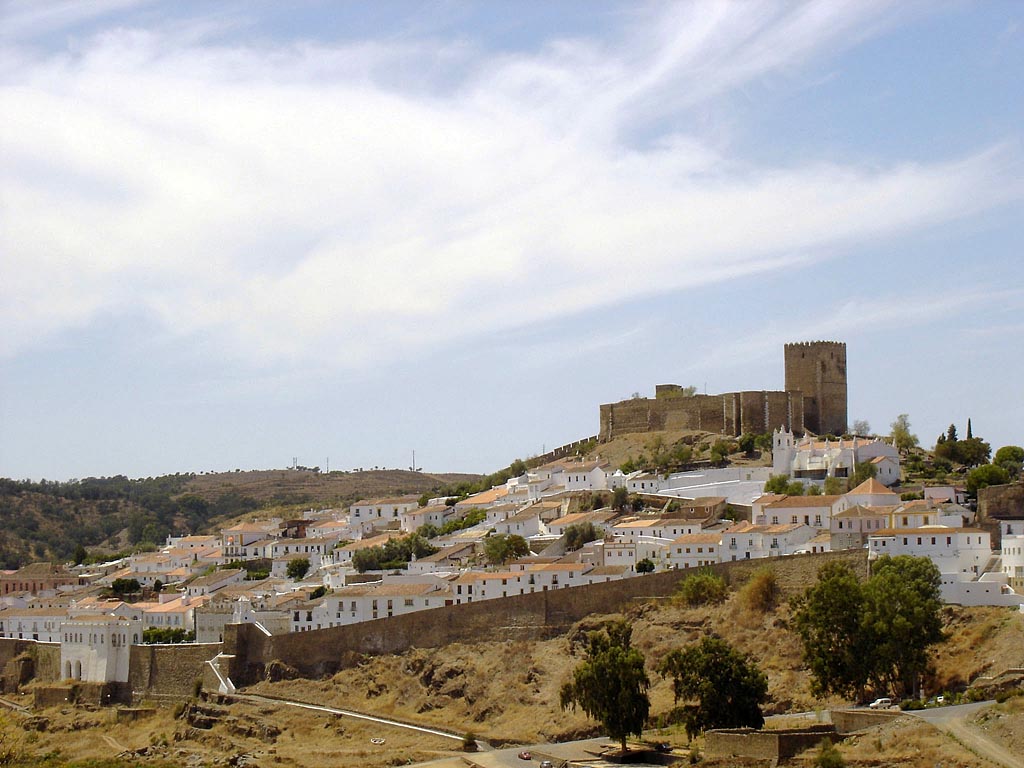
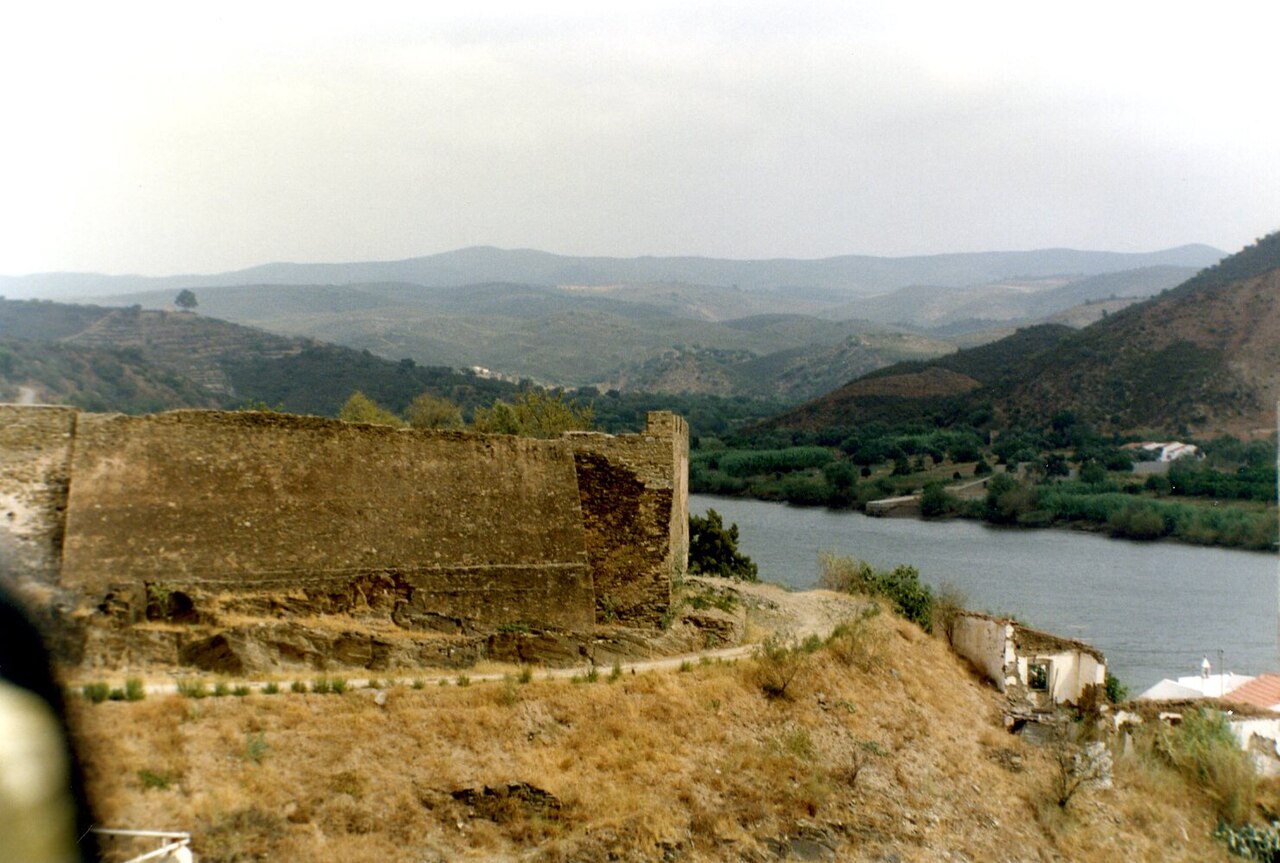
Mértola Castle, known locally as Castelo de Mértola, is a significant medieval fortress located in the village of Mértola in the Baixo Alentejo region of Portugal. The castle stands on a strategic rocky outcrop overlooking the confluence of the Guadiana and Oeiras rivers, providing commanding views and control over this important waterway. Its position atop the highest point in the village made it a key defensive structure throughout its history.
The origins of the site date back to Roman times, when the settlement was known as Myrtilis. During the 7th century, under Moorish control, the settlement was called Mirtolah. It is believed that the Moors constructed the first fortifications on this site, likely incorporating earlier Roman foundations. These early fortifications formed the basis for the castle that would evolve over the centuries.
Medieval history and ownership
The castle's documented history in the medieval period begins with its capture from the Moors in 1238 by King Sancho II of Portugal. Following the conquest, the castle was granted to the Order of Santiago, a military and religious order that played a prominent role in the Portuguese Reconquista. The Order maintained control of Mértola Castle for approximately one hundred years, overseeing its defenses and administration.
The castle's most notable architectural addition during this period was the construction of the keep in 1292, attributed to the reign of King João Fernandes. This keep is a central feature of the castle, symbolizing its military importance and serving as a last line of defense. The keep's robust design reflects the military architectural styles of the high medieval period.
Architectural features and layout
Mértola Castle has a roughly rectangular ground plan measuring approximately 40 by 20 meters. The castle is integrated into the medieval city walls of Mértola, forming part of the village's overall defensive system. The walls and battlements are constructed primarily of local stone, adapted to the contours of the rocky outcrop.
Within the bailey, centrally located, is a cistern that historically provided an essential water supply during sieges. The presence of this cistern highlights the castle's preparedness for prolonged defensive situations. The keep, accessible by stairs built into the walls, offers panoramic views of the surrounding landscape, including the Guadiana river valley and the village below.
Strategic significance and landscape
The castle's location was chosen for its strategic advantage, controlling the confluence of two important rivers. This position allowed for monitoring and defense against potential invaders approaching via waterways or land routes. The rocky outcrop on which the castle sits enhances its natural defenses, making it a formidable stronghold in the region.
The surrounding Guadiana river valley is a fertile and historically significant area, contributing to the settlement's importance as a trade and military hub. The village of Mértola itself retains a picturesque character, with narrow streets and traditional architecture that complement the castle's imposing presence.
Visiting mértola castle today
Mértola Castle is open to visitors during regular working hours, allowing access to both the castle grounds and the keep. Visitors can climb the keep via the wall stairs to enjoy expansive views of the landscape and river valley. The site offers a tangible connection to Portugal's medieval past and the complex history of the Alentejo region.
The village of Mértola, with its rich cultural heritage and scenic setting, provides additional attractions for visitors interested in history, architecture, and traditional Portuguese life. The castle remains a focal point for understanding the region's military and social history from the medieval period onward.
Frequently asked questions (FAQ)
- When was Mértola Castle built and who constructed the keep?
- Mértola Castle's keep was built in 1292 during the reign of King João Fernandes, following the castle's capture from the Moors in 1238.
- What is the architectural layout of Mértola Castle?
- The castle has a roughly rectangular ground plan measuring about 40 by 20 meters, integrated into the medieval city walls with a central cistern in the bailey.
- Can visitors climb the keep of Mértola Castle?
- Yes, visitors can climb the keep via stairs built into the walls, which offer splendid views of the Guadiana river valley and the surrounding landscape.
- What was the strategic importance of Mértola Castle's location?
- The castle overlooks the confluence of the Guadiana and Oeiras rivers, controlling important waterways and serving as a defensive stronghold on a rocky outcrop.
- Is Mértola Castle open to the public?
- Yes, the castle is freely accessible during working hours, allowing visitors to explore the grounds and the keep.
Information
Opening hours
Working hours
Address
Largo da Igreja, Portugal
Loading map...
Visitor reviews
No reviews yet. Been here? Write the first review and help other travelers!
Write the first reviewVisited this castle? Share your experience
Your review helps other travelers and adds first-hand knowledge to our encyclopedia.