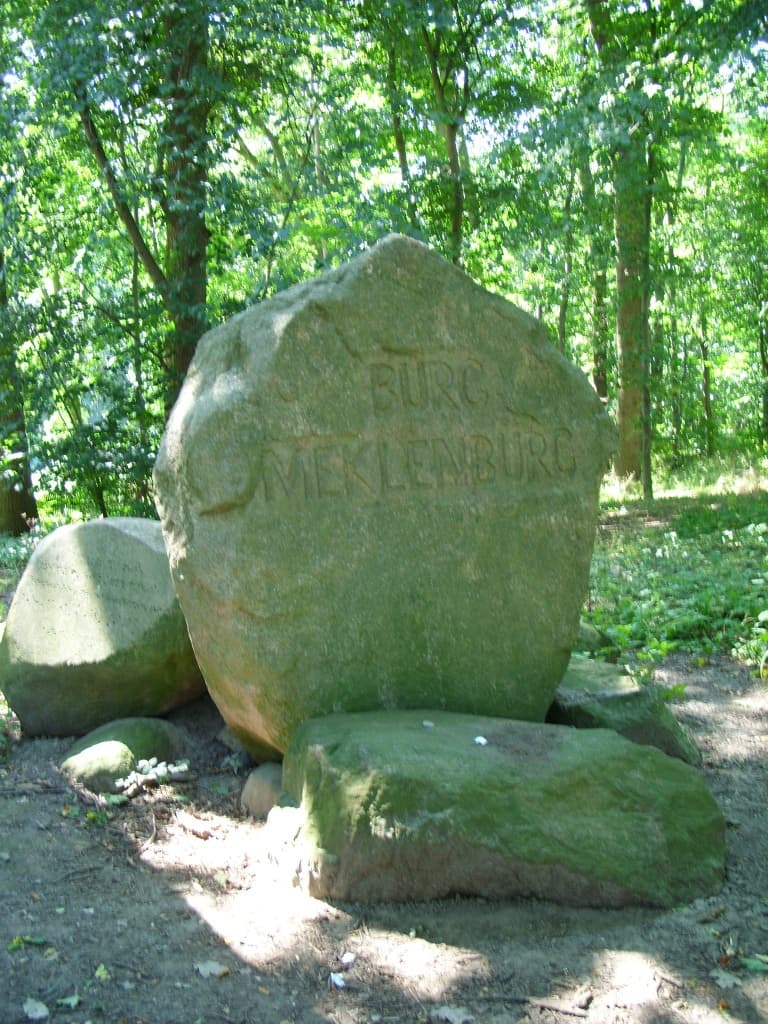
Mecklenburg Castle
Mecklenburg Castle was a significant medieval fortress and the residential center of the Nakonid and Nikloting dynasties, who ruled the Slavic Obotrite confederation. Situated just south of the modern village of Dorf Mecklenburg, approximately seven kilometres south of the Bay of Wismar in the German state of Mecklenburg-Vorpommern, the castle played a crucial role in the region's early medieval history.
Historical significance and dynastic residence
Serving as the political and military hub for the Obotrites, Mecklenburg Castle was the seat of power for the Nakonid dynasty, a prominent ruling family in the 10th and 11th centuries. Later, it became associated with the Nikloting dynasty, descendants of the Obotrite prince Niklot, who resisted German expansion during the 12th century. The castle's strategic location allowed control over trade routes and territorial defense in the Baltic region.
Location and archaeological remains
The castle was located near the present-day village of Dorf Mecklenburg, in close proximity to the Bay of Wismar, an important Baltic Sea inlet. Today, Mecklenburg Castle survives only as archaeological ruins, with the most visible remnants being parts of an earthen defensive wall. These earthworks reflect typical medieval fortification techniques used by Slavic tribes, emphasizing natural landscape features combined with man-made embankments for defense.
Connection to the trading emporium Reric
Some historians and archaeologists have linked Mecklenburg Castle to the medieval trading emporium known as Reric. Reric was a significant Slavic port and trading center during the early Middle Ages, facilitating commerce between Scandinavian, Slavic, and Germanic peoples. While the exact location of Reric remains debated, Mecklenburg's proximity to the Baltic coast and its historical role as a regional power base support this association.
Architectural features and fortifications
Although the castle itself no longer stands, the surviving earthen walls indicate that Mecklenburg was a fortified stronghold typical of Slavic hill forts or ringworks. These fortifications likely included wooden palisades atop the earth embankments, defensive ditches, and possibly watchtowers. Such fortifications were designed to provide protection against both military assaults and raids during the turbulent medieval period.
Construction techniques and materials
The castle's defensive structures primarily utilized earth and timber, common in early medieval Slavic fortifications. Stone construction was less prevalent in this region and period, making the remaining earthen walls valuable for understanding Slavic military architecture. The layout would have taken advantage of natural terrain features to enhance defense.
Legacy and cultural importance
Mecklenburg Castle holds an important place in the history of the Mecklenburg region and the broader Baltic area. As a former seat of Slavic power, it represents the early medieval political landscape before German expansion eastward. The castle's ruins and archaeological findings contribute to our understanding of Slavic fortification methods and regional dynamics during the 10th to 12th centuries.
Modern preservation and archaeological efforts
Today, the site of Mecklenburg Castle is classified as archaeological ruins, with ongoing interest from historians and archaeologists. Excavations and studies focus on uncovering more details about the castle's layout, construction, and its role in regional history. The site is accessible to visitors interested in early medieval history and Slavic heritage, though visible remains are limited to the earthworks.
Frequently asked questions (FAQ)
- How do I get to Mecklenburg Castle?
- Mecklenburg Castle is located in Dorf Mecklenburg, Germany, easily accessible by car or public transport. If arriving by train, the nearest station is in Schwerin, from which you can take a local bus or taxi to the castle.
- What is the historical significance of Mecklenburg Castle?
- Mecklenburg Castle dates back to the 10th century and played a pivotal role in the history of the region as a residence for the dukes of Mecklenburg. Its rich history includes numerous renovations and restorations that reflect the architectural styles of different eras.
- When was the castle built?
- The original structure of Mecklenburg Castle was constructed in the 10th century, with significant expansions and modifications occurring in the following centuries. The castle has undergone various renovations, particularly in the 19th century, which contributed to its current appearance.
- Can I take guided tours of Mecklenburg Castle?
- Yes, guided tours are available at Mecklenburg Castle, providing visitors with in-depth insights into its history and architecture. It is recommended to check the castle's official website for tour schedules and availability.
- Why is Mecklenburg Castle a popular tourist destination?
- Mecklenburg Castle is popular for its stunning architecture, picturesque surroundings, and rich historical significance. Visitors are drawn to its beautiful gardens and the chance to learn about the history of the region.
- Is it possible to host events at Mecklenburg Castle?
- Yes, Mecklenburg Castle offers facilities for hosting various events, including weddings and corporate functions. Interested parties should contact the castle's management for details on availability and booking procedures.
- What are the opening hours for Mecklenburg Castle?
- Mecklenburg Castle typically opens to the public from April to October, with varying hours depending on the day of the week. It is advisable to check the official website for the most current opening times before planning your visit.
- What are the ticket prices for visiting Mecklenburg Castle?
- Ticket prices for Mecklenburg Castle vary based on age and group size, with discounts often available for students and seniors. For the latest pricing information, visitors should consult the castle's official website or ticket office.
- What is the best time to visit Mecklenburg Castle?
- The best time to visit Mecklenburg Castle is during the spring and summer months when the weather is pleasant, and the gardens are in full bloom. This season also features special events and guided tours that enhance the visitor experience.
- Are there any nearby attractions to visit?
- Yes, nearby attractions include the beautiful Schwerin Castle and the picturesque Lake Schwerin, both of which provide additional opportunities for exploration and enjoyment. Visitors can easily plan a day trip that includes these highlights along with Mecklenburg Castle.
Photo gallery

Information
Current owner
Municipality
Loading map...
Visitor reviews
No reviews yet. Been here? Write the first review and help other travelers!
Write the first reviewVisited this castle? Share your experience
Your review helps other travelers and adds first-hand knowledge to our encyclopedia.



