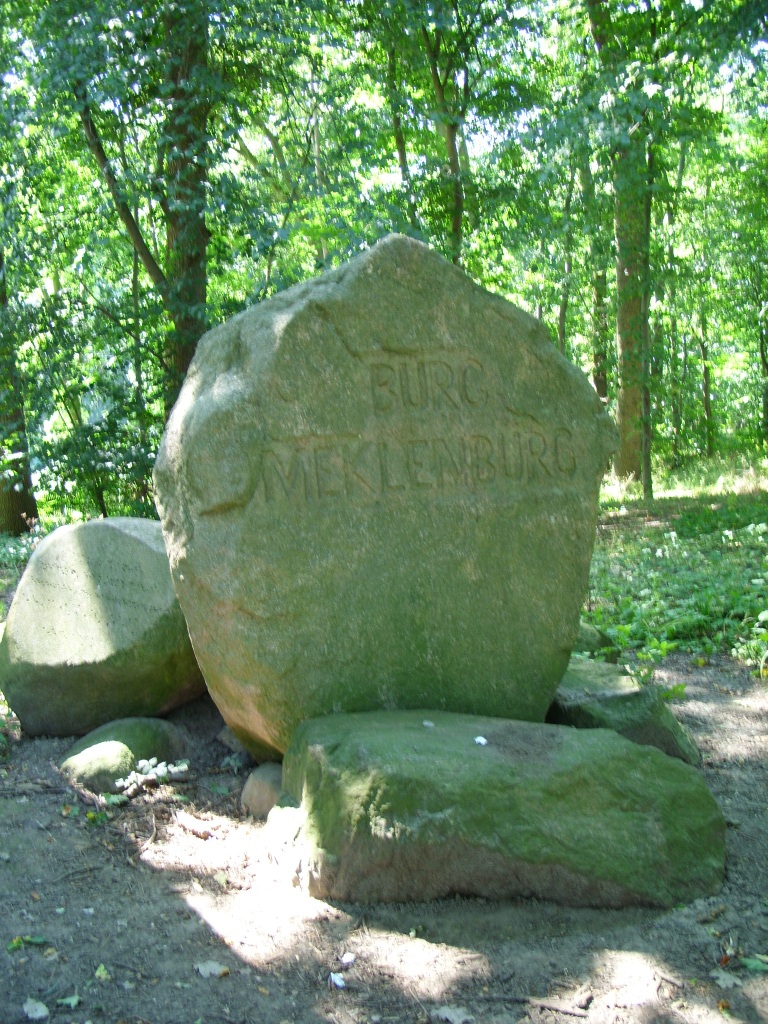
Burg Trechow
Burg Trechow stands as a remarkable testament to the layered history of medieval fortifications and noble residences in Mecklenburg, Germany. Originally founded in the 12th century by German settlers, this castle began as a lowland water castle strategically positioned on the southeast shore of the Trechower See. Its location leveraged the natural watery defenses typical of such castles, designed to protect the inhabitants from attack while controlling important local waterways.
The castle's initial construction utilized the abundant granite of the region, forming robust foundations that have endured through centuries. The original fortress was built to serve both defensive and residential functions, reflecting the dual needs of medieval noble families who required security and a symbol of status. Over time, Burg Trechow became associated with several prominent noble lineages, including the von Trechow, Maltzahn, Plüskow, and Oertzen families. Each contributed to the estate's evolving character and ownership history.
The medieval origins and strategic significance
Constructed during the High Medieval period, Burg Trechow exemplifies the typical characteristics of water castles in northern Germany, where moats and lakes were integral to defense. The castle's setting on the Trechower See allowed it to control access routes and provided a natural moat that enhanced its fortifications. This location was especially valuable during the turbulent centuries of the Middle Ages, when territorial conflicts and feudal disputes were common.
Despite the widespread destruction wrought by the Thirty Years’ War (1618-1648), Burg Trechow's medieval core remarkably survived with minimal damage. This resilience is notable, as many comparable knightly residences in Mecklenburg were severely damaged or destroyed during this period. The castle's ability to withstand such conflict underscores its solid construction and strategic importance.
Architectural evolution and 19th-century transformation
At the turn of the 19th century, Burg Trechow underwent significant architectural transformation. Between approximately 1800 and 1814, the medieval structures were largely replaced under the direction of Johann von Plükow, a stable master from Schwerin. This reconstruction marked a transition from a fortified water castle to a more comfortable and representative manor house, reflecting changing architectural tastes and social functions.
The new building was erected on the original granite foundations, preserving the historical footprint while introducing new stylistic elements. The manor house is a two-story structure featuring a harmonious blend of early Classical and residual Renaissance architectural motifs. Notably, the renovation removed the original stair tower and two of the three Renaissance volute gables, simplifying the silhouette and modernizing the appearance.
The roof was redesigned into a hipped style, characterized by slopes on all sides converging at the top, which was a popular feature in classical architecture for its aesthetic balance and practical weather resistance. The facade includes a central risalit, a projecting section that emphasizes the building’s symmetry and classical design influences, while still retaining subtle Renaissance details.
The garden-facing facade exemplifies the Classical aesthetic with its emphasis on symmetry, rectangular windows, and restrained decoration, reflecting early 19th-century tastes for simplicity and elegance. Above the main floors, a mezzanine level with round-arched windows adds architectural interest and light to the interior.
Historical ownership and 20th-century uses
Throughout its history, Burg Trechow passed through the hands of several noble families, each leaving their mark on the estate. From 1847 until 1945, the manor was owned by the von Plessen family, with Hennecke von Plessen being the last proprietor before World War II. The estate's noble lineage and continuity of ownership highlight its significance as a regional seat of power and culture.
Following World War II, the castle’s fortunes changed dramatically due to the political upheavals in Germany. Located in the Soviet occupation zone, the manor was repurposed multiple times: initially serving as a Russian military hospital and command center, then as a detention annex for Soviet internees. From 1946, it was adapted to provide housing for refugee families displaced by the war.
Between 1959 and 1989, Burg Trechow became a vibrant center of community life. It housed agricultural cooperative offices, local government functions, shops, medical facilities, a cinema, childcare services, cultural activities, a restaurant, and even served as a polling station. This period of communal use significantly altered the interior but also ensured the building remained in active use.
Unfortunately, the manor suffered considerable plundering during this time. Among the losses were a 1601 altar by Hans Gudewerdt the Elder, a cabinet by David Roentgen, and a 1590 painting by Daniel Seghers. These items represented important cultural and artistic heritage linked to the castle’s noble past.
Preservation and cultural significance today
In 2005, a descendant of the von Plessen family reclaimed ownership of Burg Trechow and part of the former estate, reconnecting the property with its historical lineage. Recognizing its rich history and architectural value, the castle was officially designated as a protected cultural monument in 2009.
Today, the castle’s structure remains a striking example of a 19th-century manor house built upon medieval granite foundations, embodying centuries of architectural evolution. Its location on the shore of the Trechower See continues to reflect its origins as a water castle, while the preserved architectural elements tell the story of changing styles from Renaissance to Classical.
Burg Trechow offers valuable insights into the region’s feudal past, noble family histories, and adaptive reuse through Germany’s complex 20th-century history. Its layered architecture and enduring presence on the Mecklenburg landscape make it a significant cultural and historical landmark.
Frequently asked questions (FAQ)
- When was Burg Trechow originally built?
- Burg Trechow was originally established in the 12th century as a water castle by medieval German settlers.
- What architectural styles are visible at Burg Trechow?
- The castle features a mix of Renaissance and early Classical architectural elements, with a 19th-century manor built on medieval granite foundations.
- Can visitors see the original medieval structures at Burg Trechow?
- While the original medieval structures were largely replaced around 1800-1814, the granite foundations and some architectural motifs from the Renaissance period remain visible.
- What is the current condition of Burg Trechow?
- Burg Trechow is well preserved as a manor house with its historic granite foundations and classical facade still intact.
- Who owns Burg Trechow today?
- Since 2005, Burg Trechow has been owned by a descendant of the von Plessen family, reflecting its historical lineage.
Information
Current owner
Private owner
Loading map...
Visitor reviews
No reviews yet. Been here? Write the first review and help other travelers!
Write the first reviewVisited this castle? Share your experience
Your review helps other travelers and adds first-hand knowledge to our encyclopedia.