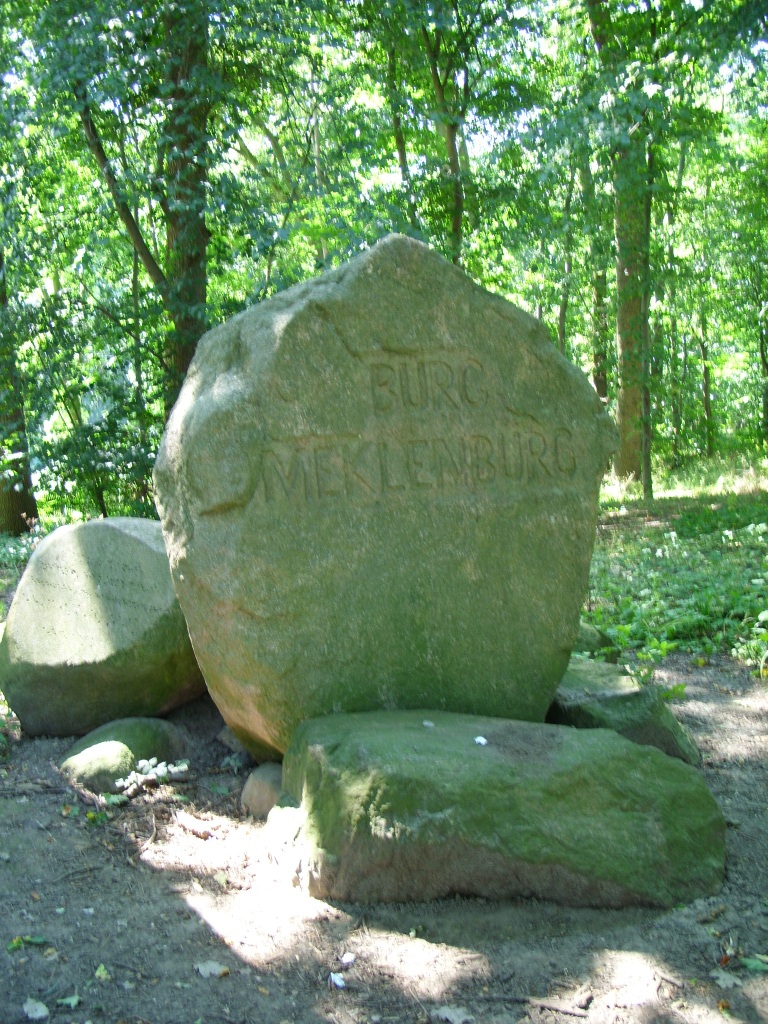
Burg Werle
Burg Werle is an early medieval hill castle located near the modern town of Kassow in the Mecklenburg-Vorpommern region of Germany. Founded around the year 600 AD by the Obotrites, a Slavic tribe that inhabited this part of northeastern Germany, the castle served as a fortified center and later as the residence of the princes of Werle. Its strategic position along the Warnow River made it a significant military and political stronghold during the turbulent period of German eastward expansion in the Middle Ages.
The origins and early history of Burg Werle
The foundation of Burg Werle dates back to the early medieval period, around 600 AD, when the Obotrites established it as a defensive site to control the surrounding territory. The castle was constructed as a typical hill castle, utilizing natural elevation to enhance its defensive capabilities. Throughout the 11th and 12th centuries, Burg Werle was a key fortress in the ongoing conflicts between the Slavic tribes and the expanding Germanic powers.
The fortress became the seat of the princes of Werle, a noble family that ruled the area. The castle's location near the Warnow River allowed it to control important trade and military routes, increasing its strategic value. The surrounding landscape, characterized by forests and waterways, provided natural defenses that complemented the man-made fortifications.
Significant events and military history
One of the most notable events in the castle's history occurred in 1160, when Duke Henry the Lion captured Burg Werle through a cunning stratagem. This event was pivotal in the power struggle between the German dukes and the Slavic princes. During this conflict, the Slavic prince Niklot was killed, marking a decisive moment in the German conquest of the region.
Following the capture, Niklot’s sons, Pribislaw I and Wartislaw, briefly regained control of the fortress. However, by 1163, they were forced to surrender it again. Wartislaw’s defense during a harsh winter campaign ended with his capture and execution by Henry the Lion, underscoring the brutal nature of the conflict. After a peace agreement, control of Burg Werle was permanently restored to Pribislaw I, who maintained the castle as a symbol of his authority.
The decline and legacy of the fortress
By the 13th century, Burg Werle had lost its military importance due to changes in political power and military technology. The fortress was eventually abandoned as a defensive structure. However, the name Werle continued as the designation for a seigniory, an administrative domain that persisted beyond the castle's active use.
The physical structures of the castle did not survive the centuries. No substantial architectural remains such as walls, towers, or gates are visible today. The site’s historical significance is commemorated by a man-made earthen mound constructed in 1856. This mound marks the approximate location of the original fortress and is topped by a large glacial erratic boulder weighing around six tons, serving as a symbolic monument.
Current state and archaeological significance
Today, Burg Werle exists primarily as an archaeological site with no visible medieval structures above ground. The mound and boulder on the right bank of the Warnow River near modern Werle are the only indicators of the castle’s former presence. The site reflects 19th-century efforts to memorialize the historical importance of the location rather than preserve original remains.
Despite the lack of surviving architecture, Burg Werle remains an important reference point for the study of early medieval Slavic fortifications and the complex history of German-Slavic interactions in northeastern Germany. The castle’s story illustrates the shifting power dynamics and cultural exchanges that shaped the region during the Middle Ages.
Frequently asked questions (FAQ)
- How do I get to Burg Werle?
- Burg Werle is located in Kassow, Germany, and can be reached by car or public transportation. The nearest train station is in nearby towns, from which you can take a taxi or a local bus to reach the castle.
- What is the historical significance of Burg Werle?
- Burg Werle is a medieval castle that dates back to the 13th century, playing a crucial role in the regional power dynamics during its time. It is an important example of German castle architecture and reflects the historical feudal system in the area.
- When was Burg Werle built?
- Burg Werle was constructed in the early 1200s, with its first documented mention occurring in 1256. Over the centuries, it has seen various renovations and restorations, which have contributed to its current architectural style.
- Can I visit Burg Werle year-round?
- Yes, Burg Werle is open to visitors throughout the year, although specific opening hours may vary by season. It's advisable to check their official website for the most current visiting hours and any special events.
- Why is Burg Werle a popular tourist attraction?
- Burg Werle attracts visitors due to its stunning architecture, rich history, and picturesque surroundings. Additionally, it often hosts events and exhibitions that provide deeper insights into the medieval era, making it a fascinating destination.
- Is it possible to access the castle with mobility issues?
- While Burg Werle strives to accommodate all visitors, some areas of the castle may be challenging for those with mobility issues due to its historical architecture. It is recommended to contact the castle management in advance to inquire about accessibility options.
- What are the ticket prices for visiting Burg Werle?
- Ticket prices for Burg Werle are generally affordable, with discounts available for children, students, and seniors. It’s best to check their official website for the latest pricing details and any special promotions.
- What is the best time to visit Burg Werle?
- The best time to visit Burg Werle is during the spring and early autumn when the weather is mild and the surrounding landscape is particularly beautiful. Additionally, many events and activities are scheduled during these seasons, enhancing the visitor experience.
- Are there any nearby attractions to visit along with Burg Werle?
- Yes, there are several nearby attractions, including scenic hiking trails, local museums, and charming villages. Exploring the surrounding area can provide a more comprehensive understanding of the region's culture and history.
Information
Loading map...
Visitor reviews
No reviews yet. Been here? Write the first review and help other travelers!
Write the first reviewVisited this castle? Share your experience
Your review helps other travelers and adds first-hand knowledge to our encyclopedia.