Maus Castle
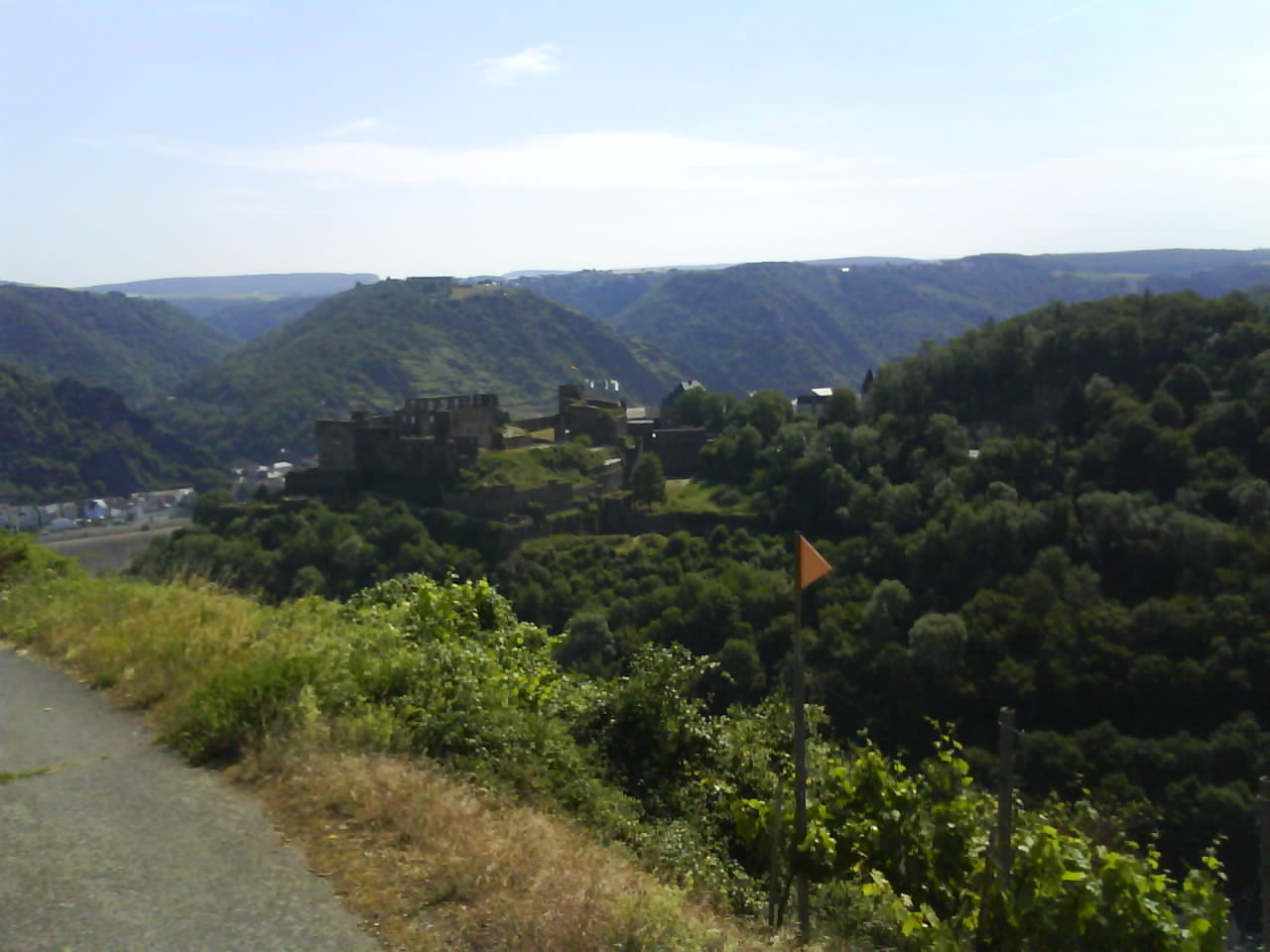
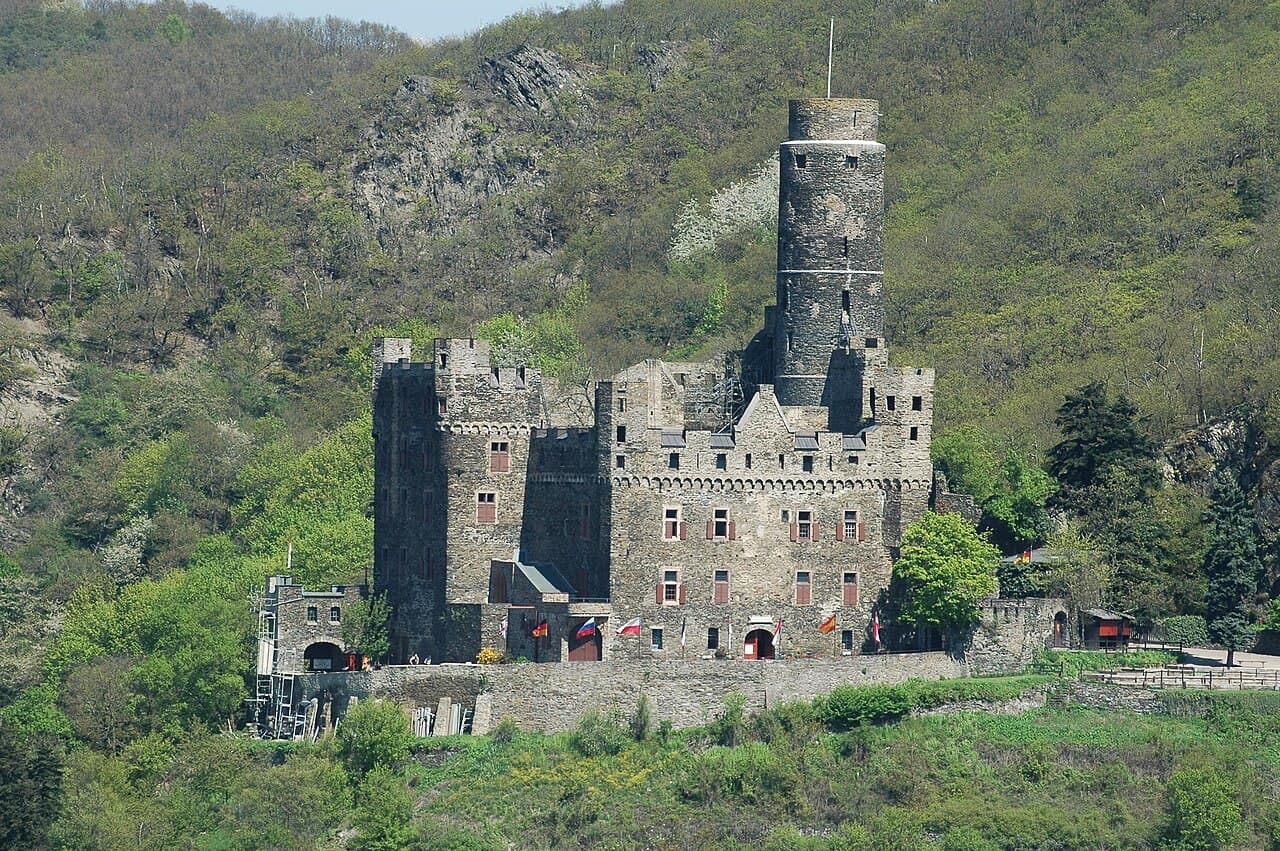
Maus Castle (German: Burg Maus, meaning "Mouse Castle") is a striking late medieval fortress perched on the east bank of the Rhine River in Sankt Goarshausen, Germany. It stands directly opposite Rheinfels Castle on the west bank and just north of its companion fortress, Burg Katz ("Cat Castle"). This strategic placement along the Rhine was critical for controlling river traffic and asserting territorial dominance in the Middle Ages.
The castle's evocative name derives from local folklore tied to the Counts of Katzenelnbogen, who built the neighboring Burg Katz and mocked the Electors of Trier during the castle's construction. According to legend, the Katzenelnbogen counts derisively called the new fortress the "mouse" that would be devoured by their "cat" castle, a playful rivalry immortalized in the castles' nicknames.
Historical context and construction
Construction of Maus Castle began in 1356 under the direction of Archbishop-Elector Bohemond II of Trier, with building work continuing for approximately 30 years under successive Electors of Trier. Its primary purpose was to enforce the recently acquired Rhine River toll rights of the Electorate of Trier and to secure the region against territorial claims by the Counts of Katzenelnbogen, who controlled the neighboring fortresses of Burg Katz and Burg Rheinfels.
Unlike many castles of the period, Maus Castle was never destroyed in warfare, although it did fall into disrepair during the 16th and 17th centuries. It served as one of the residences of the Elector of Trier in the late 14th century, reflecting its importance as both a military stronghold and a symbol of ecclesiastical power along the Rhine.
Architectural features and layout
Maus Castle is a fine example of a hill castle designed for defense and control of the river valley. The castle complex includes a round bergfried—a tall defensive tower—situated on the vulnerable uphill side to guard against attacks from higher ground. The castle's ward contains two residential buildings, which historically housed the Elector's retinue and administrative functions.
The castle's position on a rocky promontory overlooking the Rhine provided commanding views of the river and surrounding landscape. Thick curtain walls, battlements, and strategically placed towers enhanced its defensive capabilities, while its proximity to rival fortresses created a network of control points along this crucial stretch of the Rhine.
Restoration and modern use
After centuries of neglect, Maus Castle underwent a significant restoration between 1900 and 1906, led by architect Wilhelm Gärtner. The restoration focused on preserving historical details and stabilizing the structure, reviving the castle's medieval character.
The castle sustained damage during World War II from shelling but was subsequently repaired, ensuring its survival into the modern era. Today, Maus Castle is notable not only for its historical and architectural significance but also as a center for falconry. It hosts an aviary featuring falcons, owls, and eagles, with flight demonstrations held from late March to early October, attracting visitors interested in medieval heritage and wildlife.
Relationship with neighboring castles
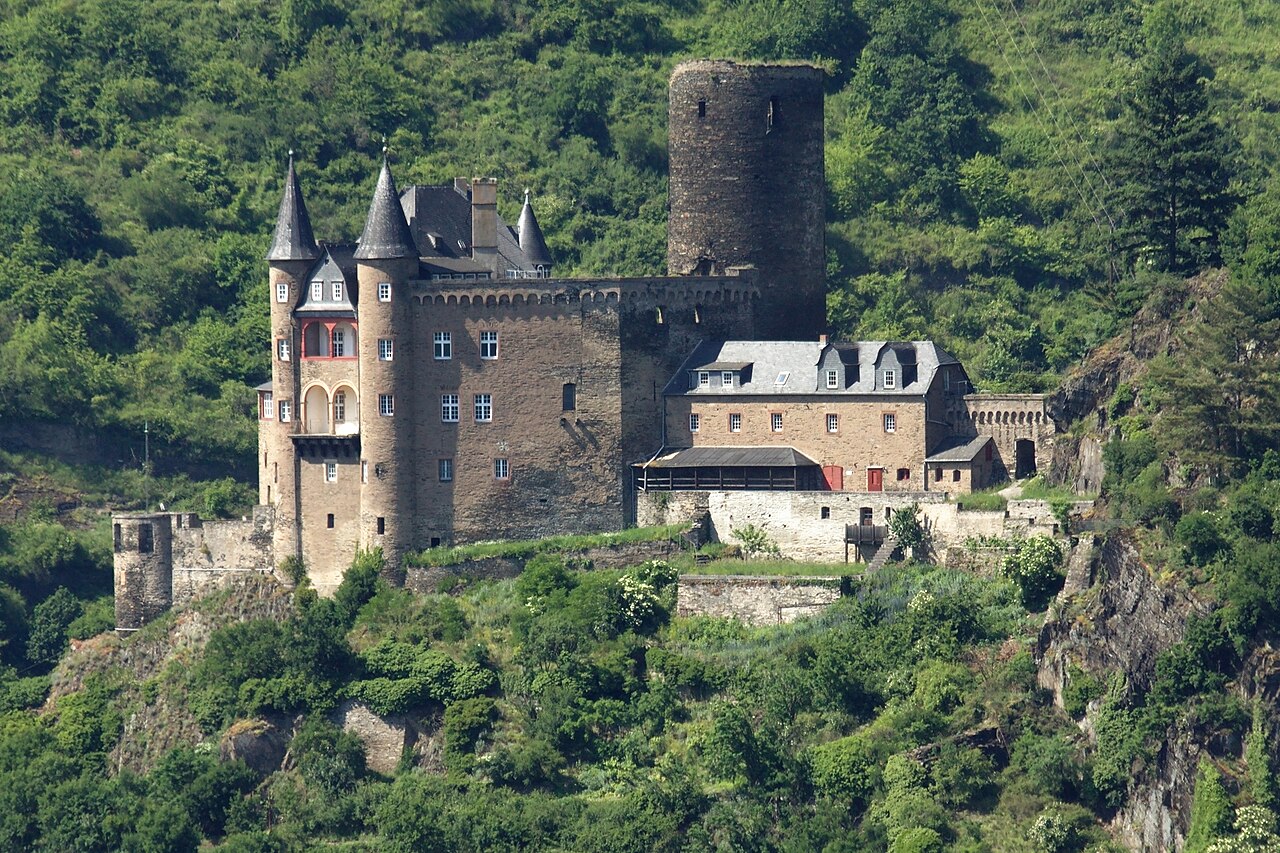
Maus Castle forms part of a remarkable trio of castles along the Rhine near Sankt Goarshausen. Burg Katz, built around 1371 by Count William II of Katzenelnbogen, sits just to the south on a ledge overlooking the river. Across the Rhine lies Rheinfels Castle, another imposing fortress controlling the opposite bank.
This cluster of castles illustrates the intense territorial and economic competition along the Rhine in the late medieval period. The Electorate of Trier and the Counts of Katzenelnbogen vied for control of toll rights and river traffic, with each castle serving as a military and administrative base to enforce their claims.
Visitor experience and significance
Today, visitors to Maus Castle can explore its well-preserved medieval architecture and enjoy the unique falconry displays that celebrate the castle's connection to birds of prey. The castle's dramatic location offers stunning views of the Rhine Gorge, a UNESCO World Heritage Site renowned for its natural beauty and historic landmarks.
While Burg Katz remains privately owned and is not open to the public, Maus Castle provides a rare opportunity to experience the medieval heritage of the Rhine Valley firsthand. Its combination of military history, architectural integrity, and living falconry traditions makes it a distinctive cultural attraction in the region.
Frequently asked questions (FAQ)
- How do I get to Maus Castle?
- Maus Castle is located in Sankt Goarshausen, Germany, and can be accessed by car or public transport. If traveling by train, the closest station is Sankt Goar, from which you can take a short hike or a local bus to reach the castle.
- What is the historical significance of Maus Castle?
- Maus Castle, also known as "Maus," was built in the 13th century and served as a defensive fortress along the Rhine River. It has a rich history, including its role in the power struggles of the region and its connection to the legends of the Rhine, making it a significant landmark in German heritage.
- When was Maus Castle built?
- Maus Castle was constructed around the year 1356. It was part of a network of fortifications along the Rhine, designed to protect trade routes and assert territorial control during medieval times.
- Can I visit Maus Castle?
- Yes, Maus Castle is open to visitors, and guided tours are available to explore its fascinating architecture and history. It's advisable to check the official website for specific visiting days and any special events that may be taking place.
- Why is Maus Castle a popular tourist attraction?
- Maus Castle is popular due to its picturesque location overlooking the Rhine River and its well-preserved medieval architecture. Visitors are drawn to its historical significance, stunning views, and the captivating stories associated with its past.
- Is it possible to organize a private event at Maus Castle?
- Yes, Maus Castle offers facilities for private events, including weddings and corporate gatherings. It’s recommended to contact the castle management in advance to discuss availability and arrangements.
- What are the opening hours for Maus Castle?
- Maus Castle typically opens to visitors from April to October, with varying hours depending on the season. Be sure to verify the current opening hours on their official website before planning your visit.
- What are the ticket prices for visiting Maus Castle?
- Ticket prices for Maus Castle vary depending on the type of tour and age of the visitor, with discounts available for children and groups. It's best to check the official website for the most up-to-date pricing information.
- What is the best time to visit Maus Castle?
- The best time to visit Maus Castle is during the spring and early autumn months when the weather is pleasant and the surrounding landscapes are in full bloom. Additionally, visiting during weekdays might help you avoid larger crowds commonly seen on weekends.
- Are there any nearby attractions to Maus Castle?
- Yes, there are several attractions near Maus Castle, including the picturesque town of Sankt Goar and the famous Lorelei rock formation. The Rhine Valley is also home to numerous vineyards and other castles, making it an ideal destination for a full day of exploration.

Information
Website
Visit websiteSources & official resources
Verify the information above using these authoritative references.
Loading map...
Visitor reviews
No reviews yet. Been here? Write the first review and help other travelers!
Write the first reviewVisited this castle? Share your experience
Your review helps other travelers and adds first-hand knowledge to our encyclopedia.