Matzen Castle
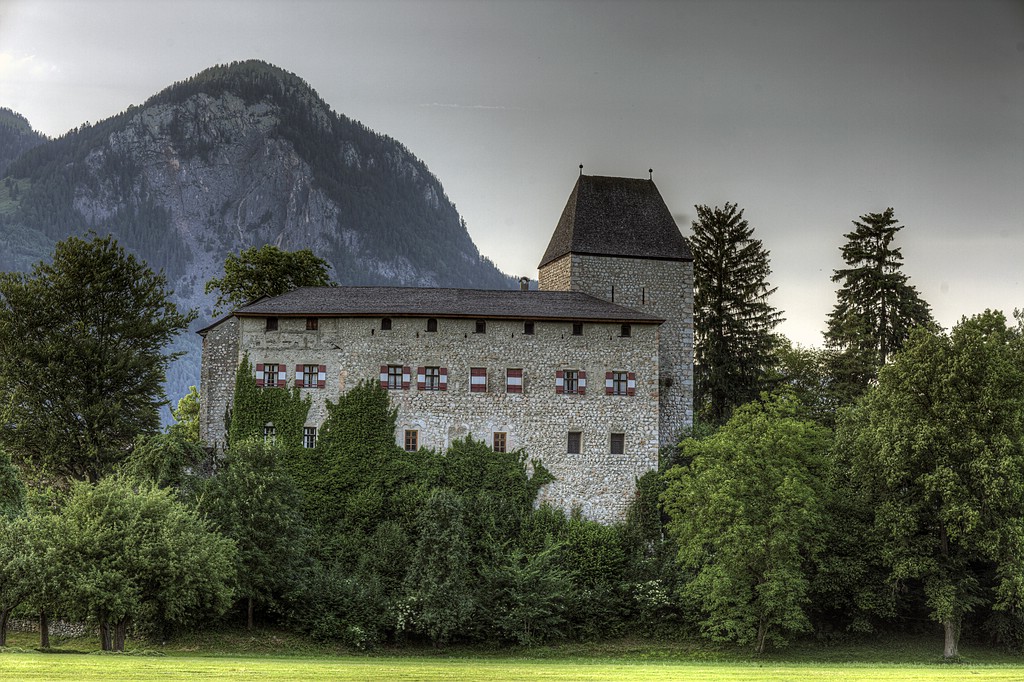
Matzen Castle, known locally as Schloss or Burg Matzen, is a remarkable hill castle situated in the municipality of Reith im Alpbachtal, south of Brixlegg in the province of Tyrol, Austria. Perched on a rocky outcrop overlooking the Inn River valley, the castle's strategic location was chosen to avoid flooding and to control an important transalpine route. The site has a history dating back to Roman times, when it was known as "Masciacum" and served as a fortified station along a Roman military road connecting the provinces of Raetia and Noricum. This early significance is evidenced by archaeological finds and the castle's enduring defensive position.
The castle itself was constructed in the 12th century and first documented in 1167 as a possession of the Knights of Freundsberg. This noble family played a pivotal role in the castle's early development, overseeing two phases of Romanesque construction and later Gothic modifications. The earliest chapel, consecrated in 1176 by Archbishop Conrad of Wittelsbach, established the castle's religious importance. Over the centuries, the castle witnessed numerous historical events, including a siege in 1410 by the forces of Duke Friedrich of Bavaria, confirmed by archaeological discoveries such as stone cannonballs.
Medieval origins and architectural evolution
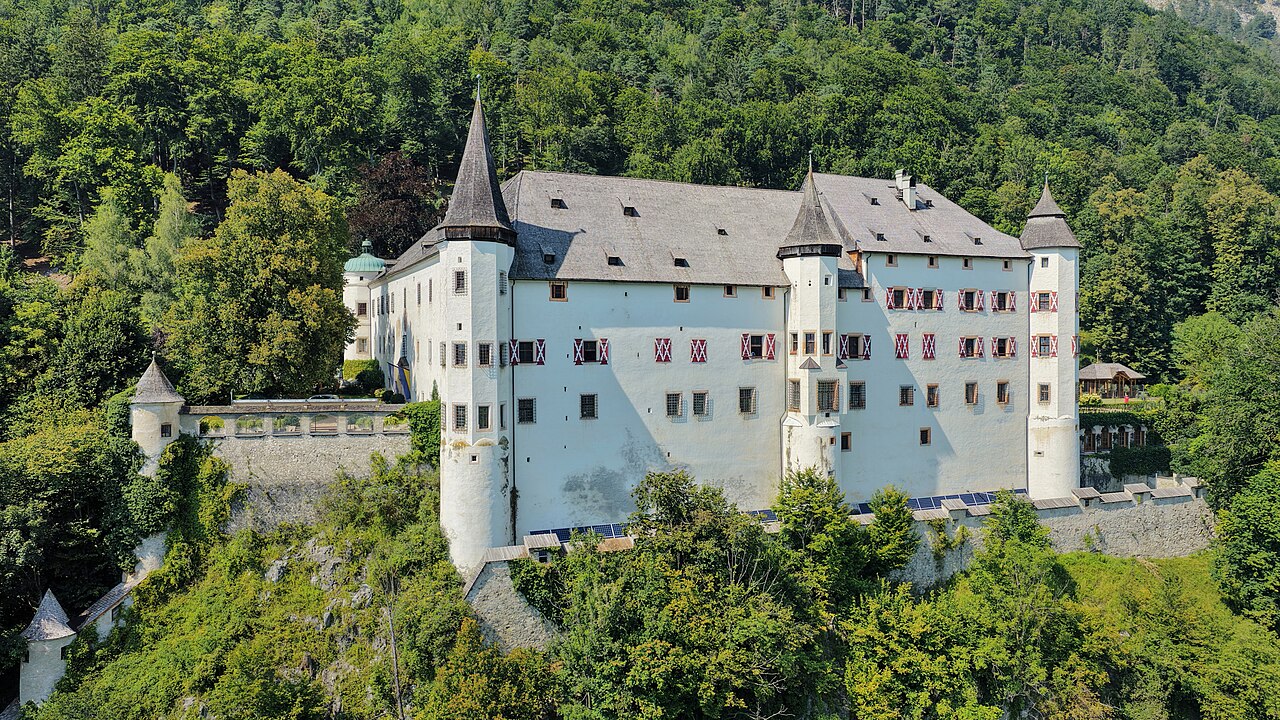
Matzen Castle's architecture reflects its long history and the changing needs of its occupants. Initially built as a fortified stronghold, it features a large central building arranged around a four-story courtyard surrounded by arcaded galleries with groined Gothic vaults supported by octagonal marble columns dating from the early 1500s. The castle's elongated wings extend north and south, connected by a shorter western wing, with a distinctive six-story round keep tower on the eastern end. This round tower is unusual for the region and likely has roots in the site's Roman past, symbolizing continuity of fortification on the site.
The castle underwent significant architectural transformations during the late medieval period. After 1468, new owners including Matthias Türndl expanded the castle in the Gothic style. Later, prominent families such as the Fiegers and the Fuggers remodeled the castle, shifting its function from purely military to a more comfortable residential palace. The Gothic chapel was rebuilt in the 17th century and fitted with a Baroque altar crafted by Matthias Pock between 1658 and 1684, illustrating the blend of styles over time.
Historical significance and ownership lineage
The castle's history is marked by a succession of owners who influenced its structure and status. The Knights of Freundsberg held the castle until 1468, after which it passed through several hands including the Fieger family from 1521 and the Von Pfeiffersberg family from 1734. The latter were absentee landlords who neglected the property, leading to its decline and partial ruin by the late 18th century. A devastating fire further damaged the castle during this period.
In 1873, the castle was purchased by Frances (Fanny) Reade of Mount Heaton-Grohmann, who undertook a comprehensive restoration. Her son, William Adolf Baillie Grohman, an author and sportsman, inherited the castle and hosted notable guests including American President Theodore Roosevelt. During the 20th century, the castle was used to safeguard cultural treasures during World War II and later passed to American architect Ernest J. Kump in 1957, who continued restoration efforts.
Architectural features and interior details
Matzen Castle's defensive features include steep, nearly vertical walls that are largely windowless on the lower floors, designed to withstand sieges. The upper walls are surrounded by machicolations, stone openings added during 19th-century restorations for defensive purposes. The castle was originally protected by a moat, now replaced by landscaped gardens.
The interior boasts a two-story Gothic chapel aligned east-west, with a significant Baroque altar. The Knight's Hall features a barrel-vaulted ceiling and a large fireplace, alongside wooden paneling and hunting trophies that reflect the castle's noble heritage. Restoration work in the 20th century uncovered medieval wall paintings, adding to the castle's artistic significance. Several Late Gothic door frames made from regional Hagauer marble have been preserved, showcasing the craftsmanship of the period.
Courtyard and ancillary buildings
The castle's courtyard is enclosed by galleries and features wooden walkways added in the 19th century. The lower courtyard includes a 16th-century economic building that served as a farmstead and now functions as the Gasthaus Matzen, a historic monument in its own right. Surrounding the castle is a large English-style garden spanning approximately 15 hectares, with artificial ponds, diverse tree species, and designated natural monuments.
Cultural legacy and modern use
Matzen Castle has a rich cultural legacy, having served as a filming location for Austrian cinema and music videos. Its preservation and adaptive reuse as a luxury hotel allow visitors to experience its historic ambiance firsthand, though access is limited to guests. The castle's blend of Romanesque, Gothic, and Baroque elements, combined with its continuous evolution from a military fortress to a noble residence, make it a significant heritage site in Tyrol.
The castle's restoration efforts have balanced modern amenities with historic preservation, ensuring that Matzen Castle remains a living monument to Austria's medieval past and architectural heritage. Its enduring presence on the Inn River valley landscape continues to attract historians, architects, and travelers interested in exploring the layers of European history embodied in its walls.
Frequently asked questions (FAQ)
- What is the historical significance of Matzen Castle?
- Matzen Castle is a remarkable example of medieval architecture and has a rich history dating back to the 12th century. It served as a residence for various noble families and played a crucial role in regional power dynamics throughout the centuries, making it an important landmark in Austrian history.
- When was Matzen Castle built?
- Matzen Castle was originally constructed in the 12th century, with various renovations and expansions occurring over the years. Its architecture reflects the changing styles and needs of its inhabitants, showcasing elements from different periods of history.
- Can I visit Matzen Castle year-round?
- Yes, Matzen Castle is open to visitors throughout the year, though specific opening hours may vary by season. It's advisable to check the official website or contact the castle for the most accurate visiting information before planning your trip.
- What are the opening hours for Matzen Castle?
- The opening hours for Matzen Castle can vary, typically being open from late morning to early evening. During peak tourist seasons, the castle may offer extended hours, so it’s recommended to verify the schedule before your visit.
- Is Matzen Castle accessible for visitors with mobility challenges?
- Matzen Castle strives to be inclusive and offers some accessibility features; however, due to its historical structure, certain areas may be challenging to navigate. It is best to contact the castle in advance to inquire about specific accessibility options and assistance available.
- What is the best time to visit Matzen Castle?
- The best time to visit Matzen Castle is during the late spring and early autumn months when the weather is pleasant and the surrounding landscape is particularly beautiful. Additionally, these seasons tend to be less crowded than the peak summer months, offering a more enjoyable experience.
- Are there any nearby attractions to Matzen Castle?
- Yes, there are several attractions near Matzen Castle, including the beautiful Alpbachtal valley, which is perfect for hiking and outdoor activities. Visitors can also explore charming villages, local markets, and other historical sites within a short distance of the castle.
- How much do tickets to Matzen Castle cost?
- Ticket prices for Matzen Castle are generally modest, allowing access to both the castle and its grounds. Discounts may be available for families, students, or groups, so it’s advisable to check the official site for the latest pricing information and any special offers.
Information
Sources & official resources
Verify the information above using these authoritative references.
Loading map...
Visitor reviews
No reviews yet. Been here? Write the first review and help other travelers!
Write the first reviewVisited this castle? Share your experience
Your review helps other travelers and adds first-hand knowledge to our encyclopedia.