Matsumae Castle
Matsumae Castle stands as the northernmost traditional Japanese castle, located in the town of Matsumae on the southwestern tip of Hokkaido. This castle holds a unique place in Japan's history as the only Edo-period castle in Hokkaido, serving as the chief residence of the Matsumae clan's han (estate). Originally constructed under the orders of the Tokugawa shogunate, the castle was a strategic defense point guarding against incursions from the indigenous Ainu people and foreign naval threats, emphasizing its military and political significance in northern Japan.
The castle's history dates back to 1606 when Matsumae Yoshihiro built the first fortification following shogunate directives to secure the northern frontier. This original structure was destroyed by fire in 1637 but was promptly rebuilt in 1639. The current castle complex, however, primarily dates from 1854, when Matsumae Takahiro was commanded by the Tokugawa government to reinforce the defenses amid growing concerns over foreign naval incursions during the late Edo period. The castle's location was critical, controlling the passage between Hokkaido and Honshu, Japan's two largest islands.
Historical significance and military role
Matsumae Castle played a pivotal role in Japan's northern defense strategy. The Matsumae clan was tasked with protecting the region from the Ainu and any foreign threats, making the castle a focal point for military and administrative control. During the Boshin War of 1868, the castle was attacked and defeated by forces loyal to the Tokugawa shogunate that had taken control of Goryokaku in Hakodate, marking the castle's involvement in the conflicts that led to the Meiji Restoration.
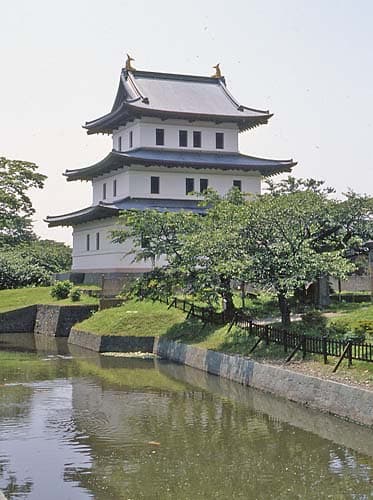
Following the Meiji Restoration, much of the castle was dismantled or destroyed, reflecting the decline of feudal structures in Japan. The tenshu (main keep) and a gatehouse were among the few original structures to survive initially. However, the main keep was lost to a devastating fire in 1949, which originated from a nearby town hall. It was subsequently rebuilt in 1959 as a concrete replica, preserving the castle's iconic silhouette and historical presence.
Architectural features and layout
The castle is classified as a lowland castle, constructed on flat terrain rather than a hill or mountain, which is relatively unusual for Japanese castles that often utilize elevated positions for defense. Its design reflects typical Edo-period architectural elements, including a tenshu (main tower) that originally stood approximately 30 meters tall, multiple baileys, defensive walls, and gates.
The castle's layout was strategically planned to maximize defense while serving as the administrative center of the Matsumae domain. The complex included moats, stone walls, and wooden structures designed to withstand sieges and provide a stronghold against both indigenous and foreign adversaries. The reconstruction efforts have aimed to maintain the historical accuracy of these features, though the current main keep is a modern concrete replica.
Surrounding park and cultural importance
Today, the site of Matsumae Castle is a public park known as Matsumae Park, which spans approximately 150,000 square meters. The park is renowned for its cherry blossoms, boasting around 8,000 cherry trees that attract over 200,000 visitors annually during the Matsumae Sakura Festival in spring. This festival is one of the highlights of the region, celebrating the cultural and natural heritage surrounding the castle.
The park and castle site serve as a cultural landmark, symbolizing the historical legacy of the Matsumae clan and Japan's northern frontier defense. The castle's preservation, despite the loss of original structures, continues to educate visitors on feudal Japan's military architecture and the complex history of Hokkaido's integration into the Japanese state.
Preservation and current status
Matsumae Castle is currently partially restored, with the main keep reconstructed in concrete and other parts of the castle grounds maintained as historical sites and parkland. The castle's designation as a National Treasure in 1941 underscores its cultural importance, although the fire in 1949 was a significant loss to Japan's architectural heritage.
Efforts to maintain and promote the castle focus on balancing historical preservation with public accessibility. The castle and park are open to visitors, offering insights into Edo-period castle design, the Matsumae clan's role, and the broader historical context of northern Japan's defense against external threats.
Visitor information and accessibility
Visitors to Matsumae Castle can explore the reconstructed tenshu, gatehouses, and surrounding parklands. The site offers educational exhibits about the castle's history, architecture, and the Matsumae clan's governance. The cherry blossom season is the most popular time to visit, providing a scenic and culturally immersive experience. The castle's location in Matsumae town is accessible by public transport and car, making it a key historical attraction in Hokkaido.
Frequently asked questions (FAQ)
- What is Matsumae Castle known for?
- Matsumae Castle, located in Matsumae, Japan, is renowned for being the northernmost castle in Japan and a symbol of the Matsumae clan's power during the Edo period. The castle features unique architecture that blends traditional Japanese styles with the local landscape, offering a picturesque view of the surrounding area and the Tsugaru Strait.
- When was Matsumae Castle built?
- Matsumae Castle was built in 1854 by Matsumae Yoshiyasu, the last feudal lord of the Matsumae clan, to protect the region from foreign invasions. It underwent several renovations and restorations, especially after being designated as a historical site, ensuring its preservation for future generations.
- How do I get to Matsumae Castle?
- Visitors can reach Matsumae Castle by taking a train to Matsumae Station and then a short bus ride or taxi to the castle. Alternatively, driving is an option, with parking available nearby, making the castle accessible for tourists.
- What are the opening hours for Matsumae Castle?
- Matsumae Castle is typically open to visitors from 9:00 AM to 5:00 PM, with extended hours during the peak tourist season. It is advisable to check the official website or local tourist information for any seasonal changes to the hours.
- Can I enter the castle grounds for free?
- While the castle grounds can be explored without an entrance fee, accessing the main keep and various exhibitions requires a ticket. The ticket prices are generally affordable, making it accessible for visitors of all ages.
- Is Matsumae Castle accessible for people with disabilities?
- Matsumae Castle has made efforts to enhance accessibility for visitors with disabilities, including ramps and designated pathways. However, due to the castle's historical nature, some areas may still present challenges, so it’s advisable to inquire about specific accessibility features upon arrival.
- When is the best time to visit Matsumae Castle?
- The best time to visit Matsumae Castle is during the cherry blossom season in early April, when the surrounding trees bloom, creating a stunning landscape. Additionally, autumn offers beautiful foliage, making both spring and fall ideal for photography and sightseeing.
- What nearby attractions can I visit while at Matsumae Castle?
- Nearby attractions include the Matsumae Historical Museum, which provides insight into the region's history, and the scenic Matsumae Park, perfect for leisurely walks. The area also boasts beautiful coastal views and other historical sites that enhance the visitor experience.
Photo gallery

Photo by en:User:Fg2•Public domain
Information
Website
Visit websiteSources & official resources
Verify the information above using these authoritative references.
Loading map...
Visitor reviews
No reviews yet. Been here? Write the first review and help other travelers!
Write the first reviewVisited this castle? Share your experience
Your review helps other travelers and adds first-hand knowledge to our encyclopedia.