Katsuyama-date — Japan castle

Katsuyama-date

Katsuyama-date castle ruins in hokkaido
Late Medieval (14th–15th c.)
Ruins

Katsuyama Date (勝山館) represents the archaeological remains of a fortified residence or castle located in Hiyama, Hokkaido, Japan. Constructed in the 15th century, it is attributed to Takeda Nobuhiro, a significant figure in the region's medieval history. The castle's strategic location and fortifications reflect the defensive needs during Japan's Late Medieval period.

Historical background and significance

The origins of Katsuyama Date are closely linked with the expansion of the Takeda clan into Hokkaido in the 15th century. Takeda Nobuhiro, credited with establishing the castle, played a key role in consolidating power in the region during a turbulent era marked by clan conflicts and territorial disputes. The castle served as a military stronghold and administrative center, overseeing local governance and defense.

Though much of the detailed historical record is limited, the castle's designation as a National Historic Site since 1977 underscores its cultural and historical importance. Furthermore, its inclusion in the Continued 100 Fine Castles of Japan in 2017 highlights its recognition as a site of heritage value within Japan's extensive castle history.

Architectural features and layout

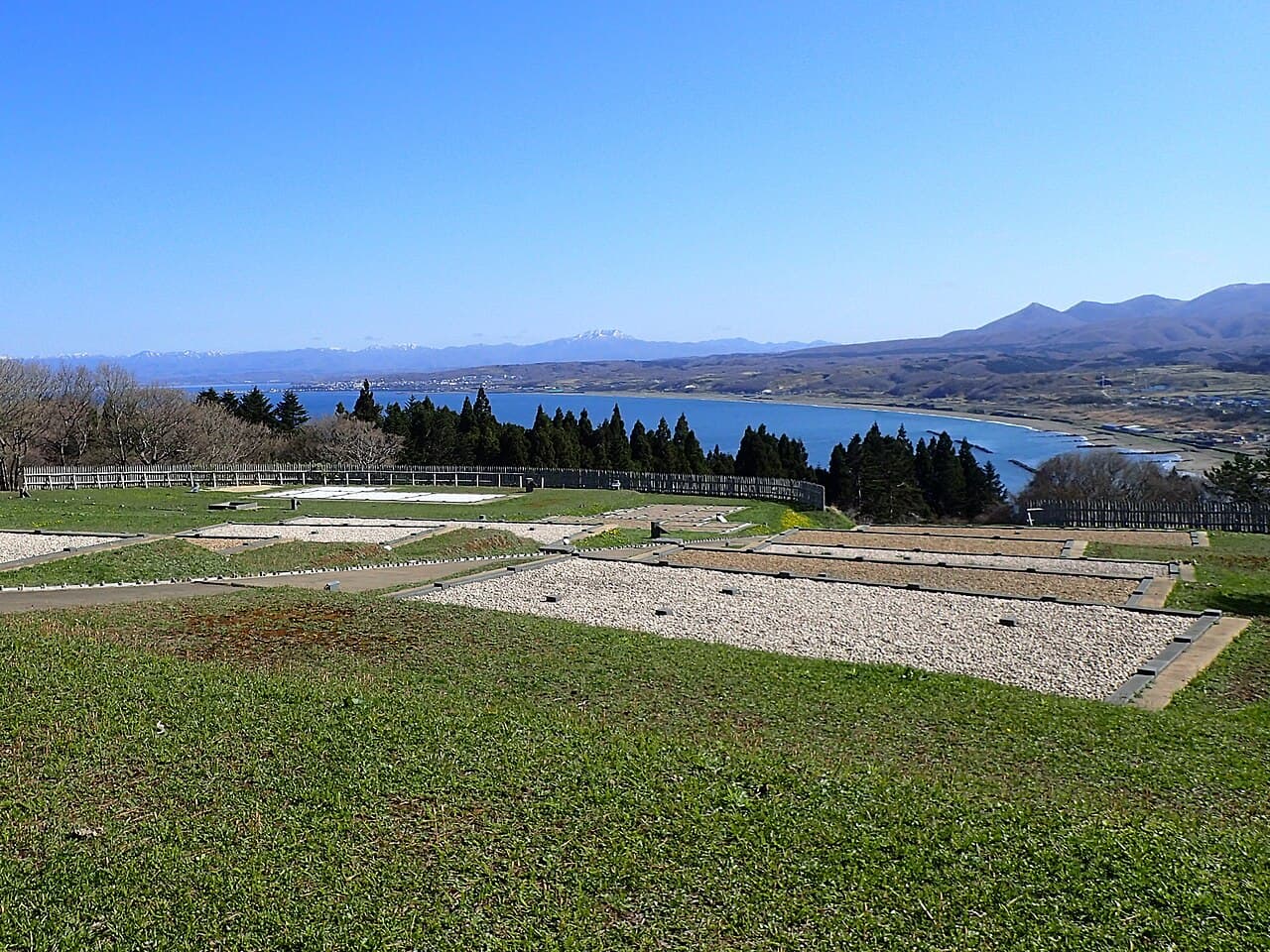
Today, Katsuyama Date exists primarily as ruins, with visible remnants including moats and earthen walls. These features suggest a defensive design typical of Japanese castles of the period, which often relied on natural terrain combined with man-made fortifications to protect against invaders.

The castle's layout likely included multiple baileys surrounded by moats, with raised earthen embankments serving as walls. The use of earthworks rather than stone walls is characteristic of many castles in northern Japan, where stone construction was less common due to geographic and material constraints.

Excavations and archaeological studies have provided insights into the castle's structure, revealing traces of residential and defensive buildings within the compound. However, no significant above-ground structures remain, reflecting the passage of time and historical conflicts that led to its decline.

Conservation and visitor experience

As an archaeological site, Katsuyama Date is protected under Japanese cultural heritage laws. Preservation efforts focus on maintaining the integrity of the earthworks and moats, preventing further erosion, and facilitating public education about the site's history.

The presence of an on-site guidance facility aids visitors in understanding the castle's historical context and architectural significance. Interpretive signage and displays help illustrate the castle's former layout and its role within the region.

Visitors can explore the grounds to observe the surviving earthworks and moat traces, offering a tangible connection to Japan's medieval past. The site is accessible year-round, though the best times to visit are during the milder seasons when weather conditions are favorable for outdoor exploration.

Cultural importance and recognition

Katsuyama Date holds a respected place among Japan's historic castles, despite its modest remains. Its recognition as a National Historic Site affirms its value as part of Japan's cultural heritage, reflecting the architectural and military practices of the Late Medieval period.

The castle's listing among the Continued 100 Fine Castles of Japan in 2017 further emphasizes its significance within the broader narrative of Japanese castle history. This designation draws attention to lesser-known sites that contribute to understanding Japan's feudal past.

Overall, Katsuyama Date offers insight into regional power dynamics, castle construction techniques, and the historical landscape of northern Japan during the 15th century.

Frequently asked questions (FAQ)

How do I get to Katsuyama-date Castle?
Katsuyama-date Castle is located in the Fukui Prefecture of Japan. You can reach it by taking a train to Katsuyama Station, followed by a short bus ride or a 20-minute walk to the castle grounds. Public transport is well-connected, making it accessible for visitors.
What is the historical significance of Katsuyama-date Castle?
Katsuyama-date Castle was built in the late 16th century and played a crucial role during the Sengoku period. It served as a stronghold for the Date clan, showcasing the feudal history of Japan. The castle is a symbol of local heritage and reflects the architectural style of that era.
When was Katsuyama-date Castle constructed?
The construction of Katsuyama-date Castle began in 1580 and was completed shortly thereafter. It was strategically built to oversee the surrounding region and protect the area from rival clans. The castle has undergone several renovations since its original construction.
Can I visit Katsuyama-date Castle year-round?
Yes, Katsuyama-date Castle is open to visitors year-round, allowing you to explore its rich history at any time. However, certain areas may be restricted during maintenance periods, so it's best to check ahead. Spring and autumn are particularly beautiful times to visit due to the seasonal foliage.
Why is the architecture of Katsuyama-date Castle notable?
The architecture of Katsuyama-date Castle is notable for its traditional Japanese style, featuring wooden structures and defensive features typical of the period. The castle's design reflects the military needs of the time, including high walls and strategic lookout points. Additionally, its scenic location adds to its architectural charm.
Is it possible to access the castle grounds with a wheelchair?
Yes, efforts have been made to improve accessibility at Katsuyama-date Castle for visitors with mobility challenges. While some areas may still present difficulties due to steep paths, there are accessible routes to the main attractions. It's advisable to check the latest accessibility information before your visit.
What are the opening hours for Katsuyama-date Castle?
Katsuyama-date Castle typically opens at 9:00 AM and closes at 5:00 PM, with extended hours during peak seasons. It's recommended to visit early in the day to avoid crowds and enjoy a more peaceful experience. Always check the castle's official website for any seasonal changes or special events.
Are there any nearby attractions to visit after Katsuyama-date Castle?
Yes, several attractions are located near Katsuyama-date Castle, including the Fukui Prefectural Dinosaur Museum and the scenic Eiheiji Temple. These sites provide additional insights into the region's culture and history. Combining your visit to the castle with these nearby attractions makes for a fulfilling day trip.
What are the ticket prices for Katsuyama-date Castle?
The entrance fee for Katsuyama-date Castle is quite reasonable, typically around 500 yen for adults and discounted rates for children and seniors. Special family tickets may also be available. Keep in mind that prices can vary for special exhibitions or events, so it's good to check in advance.

Photo gallery

Katsuyama-date
Click to view

Photo by On-neko•CC BY-SA 4.0

1 photo • Click any image to view in full screen

Information

Archaeological Site / Ruins

Loading map...

Visitor reviews

No reviews yet. Been here? Write the first review and help other travelers!

Write the first review

Visited this castle? Share your experience

Your review helps other travelers and adds first-hand knowledge to our encyclopedia.

Write a review

(5/5)

0/2000 characters

Your review will be visible after admin approval

Nearby castles

22 km

Tate Castle Ruins

Assabu, Japan

Tate Castle ruins are situated on a small hill in Assabu town, northwest of Hakodate city in Japan's northernmost island of Hokkaido. Surrounded by expansive fields, these ruins mark the site of a historically significant fortress that was the last stronghold of the Matsumae clan, the daimyo of the Matsumae Domain during the Edo period. This castle is notable for being considered the last Japanese-style castle constructed in Japan, reflecting architectural and cultural traditions that persisted into the early modern era.Historical background and significanceConstructed in the 17th century, Tate Castle played a pivotal role during the Edo period as the Matsumae clan's final bastion. The Matsumae were unique among daimyo for governing the northern frontier of Japan, overseeing relations with the indigenous Ainu people and defending against potential foreign incursions. The castle's strategic location on a hill provided a vantage point for surveillance and defense in the region.During the Meiji Restoration, a period of profound political upheaval and modernization in Japan, Tate Castle became a site of conflict. It was attacked by forces loyal to the old Shogunate, resisting the new imperial government. The siege lasted approximately 75 days after the castle's construction, marking a significant episode in the turbulent transition from feudal to modern Japan. Following this conflict, the castle was not rebuilt, leading to its current status as ruins.Architectural features and layoutWhile much of Tate Castle lies in ruins today, the site offers insights into traditional Japanese castle architecture adapted for Hokkaido's environment. The castle was built on a small hill, utilizing natural elevation for defense. The layout likely included typical features such as stone walls, moats, gates, and watchtowers, although detailed records and surviving structures are limited.The castle's design reflects the Japanese style prevalent during the Edo period, emphasizing wooden construction, layered defensive works, and integration with the surrounding landscape. The use of cherry trees planted around the site today evokes the cultural symbolism often associated with Japanese castles, blending natural beauty with historical legacy.Current condition and visitor experienceToday, Tate Castle exists as ruins with no significant reconstruction, preserving its historical authenticity. Visitors can access a parking area along the nearby road, and the grounds are adorned with cherry trees that bloom seasonally, enhancing the site's scenic appeal. A small museum near the site provides limited information about the castle's history and the Matsumae clan.The site hosts the annual Tatejo-ato Festival on the second Sunday in June, featuring reenactments of the Hakodate War staged for visitors. This event offers a cultural and historical experience, connecting visitors with the castle's past through live performances.Admission to the site is free, and parking is available at no charge, making Tate Castle ruins an accessible destination for those interested in Japanese history and castle architecture.Cultural and historical importanceTate Castle stands as a testament to the historical legacy of the Matsumae clan and the unique role they played in Japan's northern frontier during the Edo period. Its status as the last Japanese-style castle constructed underscores its architectural and cultural significance. The castle's involvement in the Meiji Restoration conflicts highlights its place in the broader narrative of Japan's transition from feudalism to modernity.Despite its ruined condition, Tate Castle remains a valuable cultural heritage site, offering insights into regional history, military architecture, and the complex dynamics of Japan's northern domains. The preservation of the site and the annual festival contribute to ongoing public engagement with this important chapter of Japanese history.

Post-Renaissance (17th–18th c.)
Details
29 km
Twelve Garrisons of Southern Hokkaido — Japan castle

Twelve Garrisons of Southern Hokkaido

, Japan

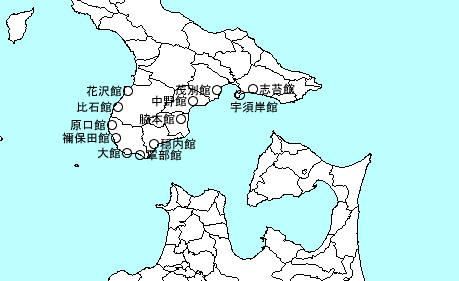
The Twelve Garrisons of Southern Hokkaido (Japanese: 道南十二館, "Twelve Garrisons of the Southern Circuit") refer to a series of fortified sites established by the Ando clan during the 15th and 16th centuries along the southern coastline of the Oshima Peninsula in what is now Hokkaido, Japan. These garrisons were strategically positioned facing the Tsugaru Strait, extending from the Shimosa Garrison in Hakodate to the Hanazawa Garrison in Kaminokuni. They served as important military and trading outposts during the Muromachi period, facilitating interactions between Japanese feudal lords and the indigenous Ainu people. Historical context and significance The establishment of the Twelve Garrisons is documented in the "Shinra no Kiroku", a historical record detailing the affairs of the Matsumae Domain. These fortified sites were part of the broader Japanese effort to assert control over the northern frontier and secure trade routes with the Ainu, who were the native inhabitants of Ezo (modern Hokkaido). The Ando clan, originally from northern Honshu, played a pivotal role in this expansion, using the garrisons as bases for both military defense and economic exchange. Architecture and layout As archaeological ruins today, the precise architectural details of the Twelve Garrisons vary, but they typically consisted of wooden palisades, earthen ramparts, and simple fortified enclosures. Unlike the large stone castles found in central Japan, these garrisons were adapted to the local environment and resources, emphasizing functionality over grandeur. Their locations along the coast allowed for control over maritime routes and quick access to fishing and trade. Defensive features The garrisons were designed with basic defensive features suitable for the period and region, including watchtowers for surveillance, moats or ditches to hinder attackers, and gatehouses controlling access. The emphasis was on rapid deployment of forces and protection against raids rather than prolonged sieges. Role in trade and cultural exchange The Twelve Garrisons were crucial nodes in the trade network between Japanese merchants and the Ainu people. They facilitated the exchange of goods such as fish, furs, and local crafts from the Ainu for Japanese rice, sake, and manufactured items. This interaction influenced cultural exchanges and contributed to the gradual integration of Hokkaido into the Japanese feudal system. Archaeological research and preservation Today, the Twelve Garrisons exist primarily as archaeological ruins. Excavations have revealed remnants of palisades, post holes, and artifacts that provide insight into the daily lives of their inhabitants. Preservation efforts focus on protecting these sites from natural degradation and promoting public awareness of their historical importance. The ruins offer valuable information on the frontier life of Japan during the Muromachi period and the complex relationships between the Japanese and the Ainu. Visitor information While many of the garrison sites are not developed as formal tourist destinations, some areas near Hakodate and Kaminokuni have markers and informational displays for visitors interested in Japan's northern history. Due to their ruinous condition, accessibility can be limited, and visitors are encouraged to respect the sites to preserve their archaeological value.

Details
41.3 km
Matsumae Castle — Japan castle

Matsumae Castle

Matsumae, Japan

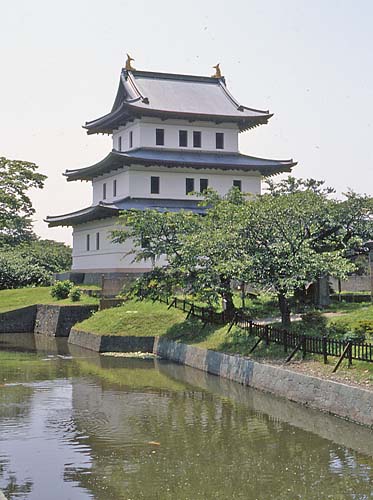
Matsumae Castle stands as the northernmost traditional Japanese castle, located in the town of Matsumae on the southwestern tip of Hokkaido. This castle holds a unique place in Japan's history as the only Edo-period castle in Hokkaido, serving as the chief residence of the Matsumae clan's han (estate). Originally constructed under the orders of the Tokugawa shogunate, the castle was a strategic defense point guarding against incursions from the indigenous Ainu people and foreign naval threats, emphasizing its military and political significance in northern Japan. The castle's history dates back to 1606 when Matsumae Yoshihiro built the first fortification following shogunate directives to secure the northern frontier. This original structure was destroyed by fire in 1637 but was promptly rebuilt in 1639. The current castle complex, however, primarily dates from 1854, when Matsumae Takahiro was commanded by the Tokugawa government to reinforce the defenses amid growing concerns over foreign naval incursions during the late Edo period. The castle's location was critical, controlling the passage between Hokkaido and Honshu, Japan's two largest islands. Historical significance and military role Matsumae Castle played a pivotal role in Japan's northern defense strategy. The Matsumae clan was tasked with protecting the region from the Ainu and any foreign threats, making the castle a focal point for military and administrative control. During the Boshin War of 1868, the castle was attacked and defeated by forces loyal to the Tokugawa shogunate that had taken control of Goryokaku in Hakodate, marking the castle's involvement in the conflicts that led to the Meiji Restoration. Following the Meiji Restoration, much of the castle was dismantled or destroyed, reflecting the decline of feudal structures in Japan. The tenshu (main keep) and a gatehouse were among the few original structures to survive initially. However, the main keep was lost to a devastating fire in 1949, which originated from a nearby town hall. It was subsequently rebuilt in 1959 as a concrete replica, preserving the castle's iconic silhouette and historical presence. Architectural features and layout The castle is classified as a lowland castle, constructed on flat terrain rather than a hill or mountain, which is relatively unusual for Japanese castles that often utilize elevated positions for defense. Its design reflects typical Edo-period architectural elements, including a tenshu (main tower) that originally stood approximately 30 meters tall, multiple baileys, defensive walls, and gates. The castle's layout was strategically planned to maximize defense while serving as the administrative center of the Matsumae domain. The complex included moats, stone walls, and wooden structures designed to withstand sieges and provide a stronghold against both indigenous and foreign adversaries. The reconstruction efforts have aimed to maintain the historical accuracy of these features, though the current main keep is a modern concrete replica. Surrounding park and cultural importance Today, the site of Matsumae Castle is a public park known as Matsumae Park, which spans approximately 150,000 square meters. The park is renowned for its cherry blossoms, boasting around 8,000 cherry trees that attract over 200,000 visitors annually during the Matsumae Sakura Festival in spring. This festival is one of the highlights of the region, celebrating the cultural and natural heritage surrounding the castle. The park and castle site serve as a cultural landmark, symbolizing the historical legacy of the Matsumae clan and Japan's northern frontier defense. The castle's preservation, despite the loss of original structures, continues to educate visitors on feudal Japan's military architecture and the complex history of Hokkaido's integration into the Japanese state. Preservation and current status Matsumae Castle is currently partially restored, with the main keep reconstructed in concrete and other parts of the castle grounds maintained as historical sites and parkland. The castle's designation as a National Treasure in 1941 underscores its cultural importance, although the fire in 1949 was a significant loss to Japan's architectural heritage. Efforts to maintain and promote the castle focus on balancing historical preservation with public accessibility. The castle and park are open to visitors, offering insights into Edo-period castle design, the Matsumae clan's role, and the broader historical context of northern Japan's defense against external threats. Visitor information and accessibility Visitors to Matsumae Castle can explore the reconstructed tenshu, gatehouses, and surrounding parklands. The site offers educational exhibits about the castle's history, architecture, and the Matsumae clan's governance. The cherry blossom season is the most popular time to visit, providing a scenic and culturally immersive experience. The castle's location in Matsumae town is accessible by public transport and car, making it a key historical attraction in Hokkaido.

Modern (19th–20th c.)
Details