Masada
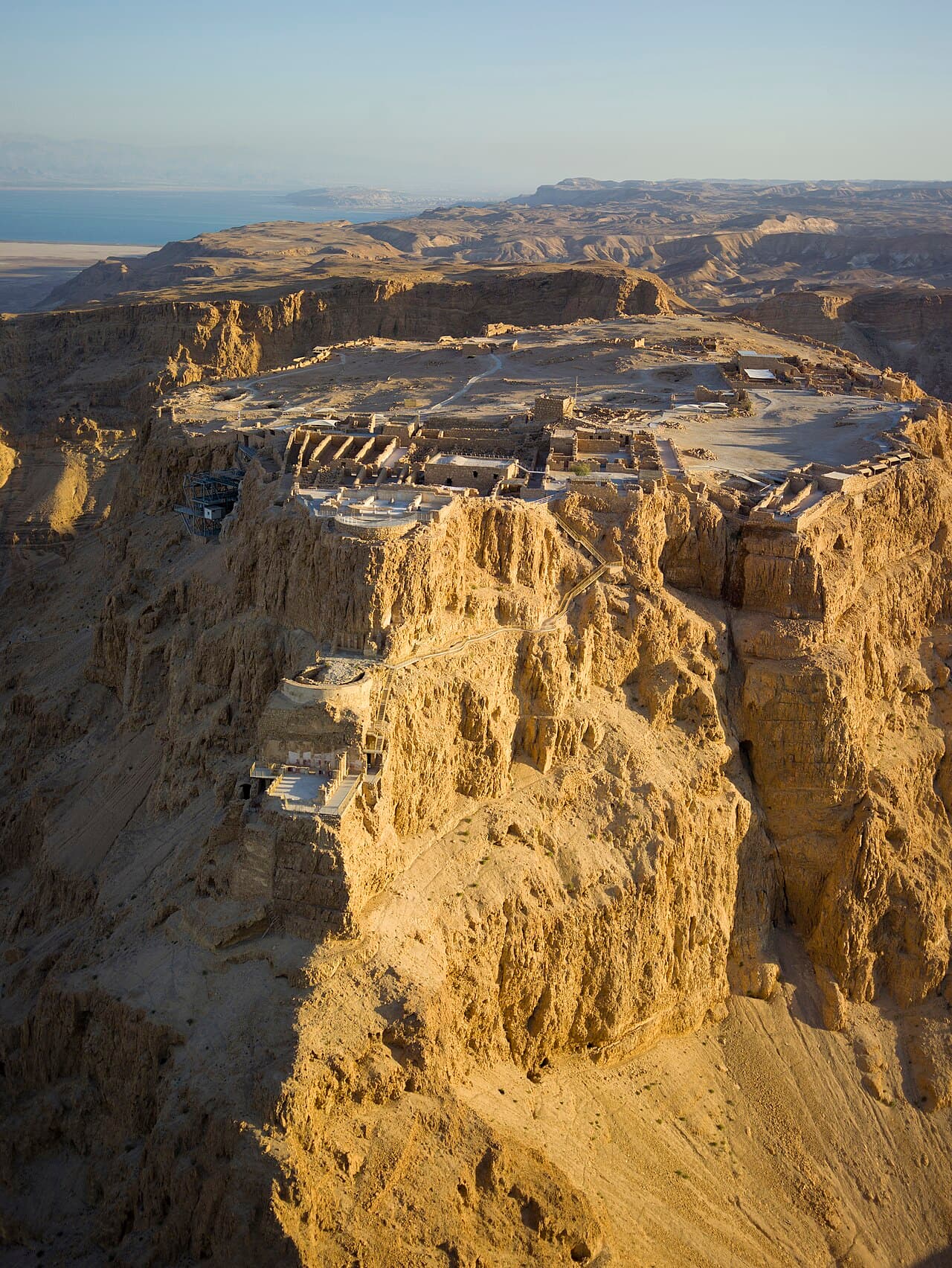
Masada is an ancient mountain-top fortress complex located in the Judaean Desert of southeastern Israel, overlooking the western shore of the Dead Sea. The site rises dramatically over 400 meters above the surrounding terrain, situated approximately 20 kilometers east of modern Arad. Its strategic position atop a natural plateau made it an ideal defensive stronghold in antiquity.
The fortress was originally constructed in the 1st century BC and is most famously associated with Herod the Great, the Roman-appointed King of Judaea from c. 37 to 4 BC. Early in his reign, Herod transformed Masada into a formidable desert refuge by enclosing the summit with a massive casemate wall punctuated by towers. He also developed an advanced water collection and storage system critical for survival in the arid environment, along with storerooms, bathhouses, and two palatial complexes. One palace was constructed on the western side of the plateau, while the other was built across three terraces on the northern cliff face. These palaces exemplify Herodian architecture and demonstrate sophisticated engineering and luxury in a remote desert setting.
The architectural features of Masada
Defensive structures and fortifications
The fortress's perimeter was secured by a thick casemate wall with strategically placed towers that provided vantage points for surveillance and defense. The natural steep cliffs surrounding the plateau served as formidable natural barriers, making direct assault difficult. The Romans later recognized Masada's defensibility during their siege in the 1st century AD.
Palatial complexes and facilities
Herod's palaces at Masada are among the finest surviving examples of his architectural style. The western palace featured multiple rooms arranged around courtyards, with intricate mosaics and frescoes decorating the interiors. The northern palace was terraced into the cliffside, with each level serving different functions, including residential quarters, reception halls, and private baths. These palaces incorporated advanced water heating systems, including hypocausts for underfloor heating, showcasing Roman technological influence.
Water management and storage
One of Masada's most remarkable features is its sophisticated water collection system. The plateau's natural topography was enhanced with channels and cisterns to capture and store rainwater, ensuring a reliable supply during sieges or droughts. This system supported the fortress's inhabitants and livestock, enabling extended resistance against attackers.
Historical significance and the Jewish-Roman conflict
Masada during the First Jewish–Roman War
Masada gained its enduring historical fame as the final stronghold of Jewish rebels during the First Jewish–Roman War (66–73 AD). After the fall of Jerusalem, a group known as the Sicarii, a radical faction of Jewish zealots led by Eleazar ben Ya'ir, took refuge at Masada. The site became a symbol of Jewish resistance against Roman domination.
The Roman siege and the mass suicide
The Roman Tenth Legion, commanded by Lucius Flavius Silva, laid siege to Masada by constructing a circumvallation wall and an immense siege ramp on the western side of the plateau. This ramp allowed Roman siege engines to breach the fortress's defenses. According to the historian Flavius Josephus, when the Romans finally entered in 73 or 74 AD, they discovered that nearly 1,000 defenders and their families had chosen mass suicide over capture. This dramatic event remains a subject of historical debate, but it has become a powerful narrative of resistance and martyrdom.
Archaeological discoveries and modern significance
Excavations by Yigael Yadin
In the 1960s, Israeli archaeologist Yigael Yadin led extensive excavations at Masada, uncovering remarkably preserved remains. These included the two Herodian palaces, storerooms containing remnants of food supplies, ritual mikvaot (Jewish ritual baths), a synagogue, columbaria for raising doves, and numerous pottery shards. Among the artifacts was an inscription bearing the name "ben Ya'ir," possibly linked to the fortress's last defenders. Additionally, a small Byzantine church was discovered, indicating the site's continued significance in later periods.
Roman siege works and preservation
The surrounding Roman siege works, including the circumvallation wall and the siege ramp, remain some of the best-preserved examples of Roman military engineering. These features contribute to Masada's importance as a cultural heritage site.
UNESCO World Heritage status and tourism
Today, Masada is designated a UNESCO World Heritage Site due to its outstanding historical, architectural, and archaeological value. It attracts approximately 750,000 visitors annually, who come to explore its ruins, learn about its dramatic history, and enjoy panoramic views of the Dead Sea and surrounding desert. The site features a visitor center, hiking trails, and a cable car for easier access to the summit.
Masada's legacy in Israeli culture
The story of Masada has played a significant role in modern Israeli identity, symbolizing courage, sacrifice, and the struggle for freedom. It has inspired numerous cultural works, educational programs, and commemorations. The fortress remains a potent reminder of the complex history of the region and the enduring human spirit in the face of adversity.
Frequently asked questions (FAQ)
- What is Masada and why is it historically significant?
- Masada is an ancient fortress located on a plateau in the Judean Desert, overlooking the Dead Sea. It is historically significant as a symbol of Jewish heroism, known for the dramatic stand of the Jewish zealots against Roman forces in 73-74 CE. The site has become a UNESCO World Heritage Site, attracting visitors who seek to understand its rich history and cultural importance.
- When is the best time to visit Masada?
- The best time to visit Masada is during the spring (March to May) and fall (September to November) when the weather is mild and comfortable for hiking and exploring. Summer can be extremely hot, with temperatures often exceeding 40°C (104°F), making outdoor activities challenging. Visiting early in the morning or later in the afternoon also helps avoid the heat.
- Can I access Masada by public transport?
- Yes, you can access Masada by public transport. Buses run regularly from major cities like Jerusalem and Tel Aviv to the Masada Visitor Center, making it easy for visitors to reach the site. Additionally, guided tours often include transportation, providing a hassle-free way to explore the area.
- What are the opening hours for Masada?
- Masada is typically open from sunrise to sunset, with specific opening hours varying by season. It is advisable to check the official website for the most current hours before your visit, as they can change for holidays or special events. Arriving early allows you to enjoy the breathtaking views at sunrise.
- Is it possible to hike to the top of Masada?
- Yes, it is possible to hike to the top of Masada via the Snake Path, which offers a challenging yet rewarding experience with stunning views. The hike takes approximately 30-60 minutes, depending on your fitness level. For those who prefer a more leisurely ascent, there is also a cable car that provides easy access to the summit.
- What are the ticket prices for Masada?
- Ticket prices for Masada vary for adults, children, and seniors, with discounts often available for students and groups. As of the latest information, adult tickets are generally around 28 NIS, while children may pay a reduced fee. It's best to check the official website for the most up-to-date pricing and any special promotions.
- What nearby attractions should I consider visiting?
- Nearby attractions include the Dead Sea, famous for its unique salt content and therapeutic properties, and the Ein Gedi Nature Reserve, known for its beautiful hikes and waterfalls. Additionally, the Qumran Caves, where the Dead Sea Scrolls were discovered, offer a fascinating glimpse into ancient history. These sites can easily be incorporated into your Masada itinerary for a full day of exploration.
- How do I get the most out of my visit to Masada?
- To get the most out of your visit to Masada, consider hiring a knowledgeable guide or joining a guided tour that includes historical insights and stories. Arriving early in the morning allows you to experience the sunrise and avoid the crowds. Don’t forget to bring water, wear comfortable shoes, and take your time to explore the ruins, as there are many fascinating structures and views to enjoy.
Photo gallery

Information
Loading map...
Visitor reviews
No reviews yet. Been here? Write the first review and help other travelers!
Write the first reviewVisited this castle? Share your experience
Your review helps other travelers and adds first-hand knowledge to our encyclopedia.