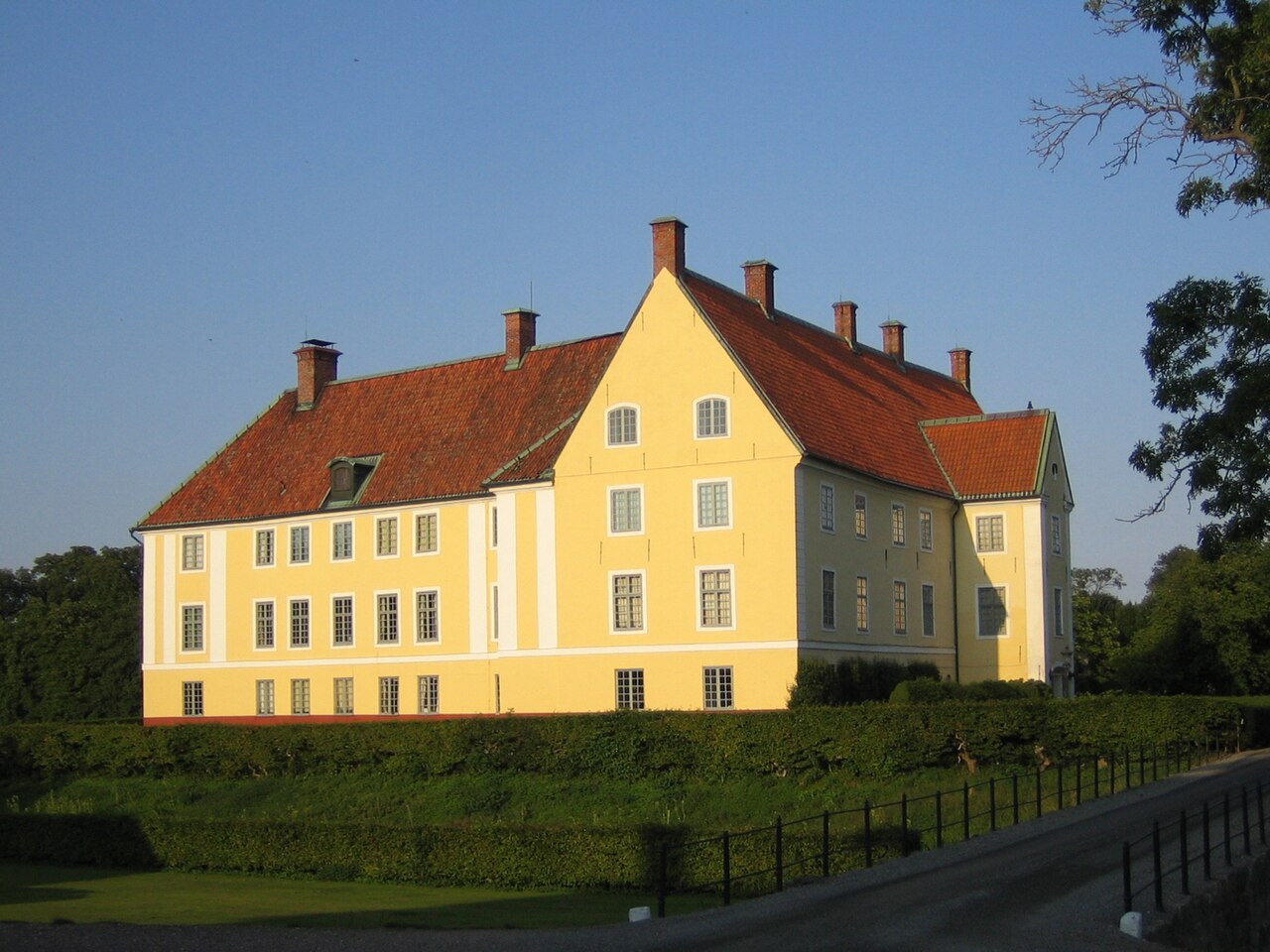
Marsvinsholm Castle
Marsvinsholm Castle is a notable Renaissance hill castle located in Ystad Municipality, Scania, in southern Sweden. It stands approximately 12 kilometres from the town of Ystad, offering a unique glimpse into Sweden's architectural and noble heritage. The castle's origins trace back to the early 12th century, when the estate was known by names such as Bosöe, Borsöe, and Bordsyö, reflecting its long-standing presence in the region.
Early history and ownership
By the mid-14th century, the estate was held by the Ulfeld family, a notable noble lineage. Ownership changed hands several times over the centuries, passing through prominent families including the Thott, von Königsmarck, de la Gardie, Sjöblad, Ruuth, Piper, Tornerhielm, and Wachtmeister. This succession of noble families reflects the castle's importance as a regional seat of power and influence.
Construction and architectural features
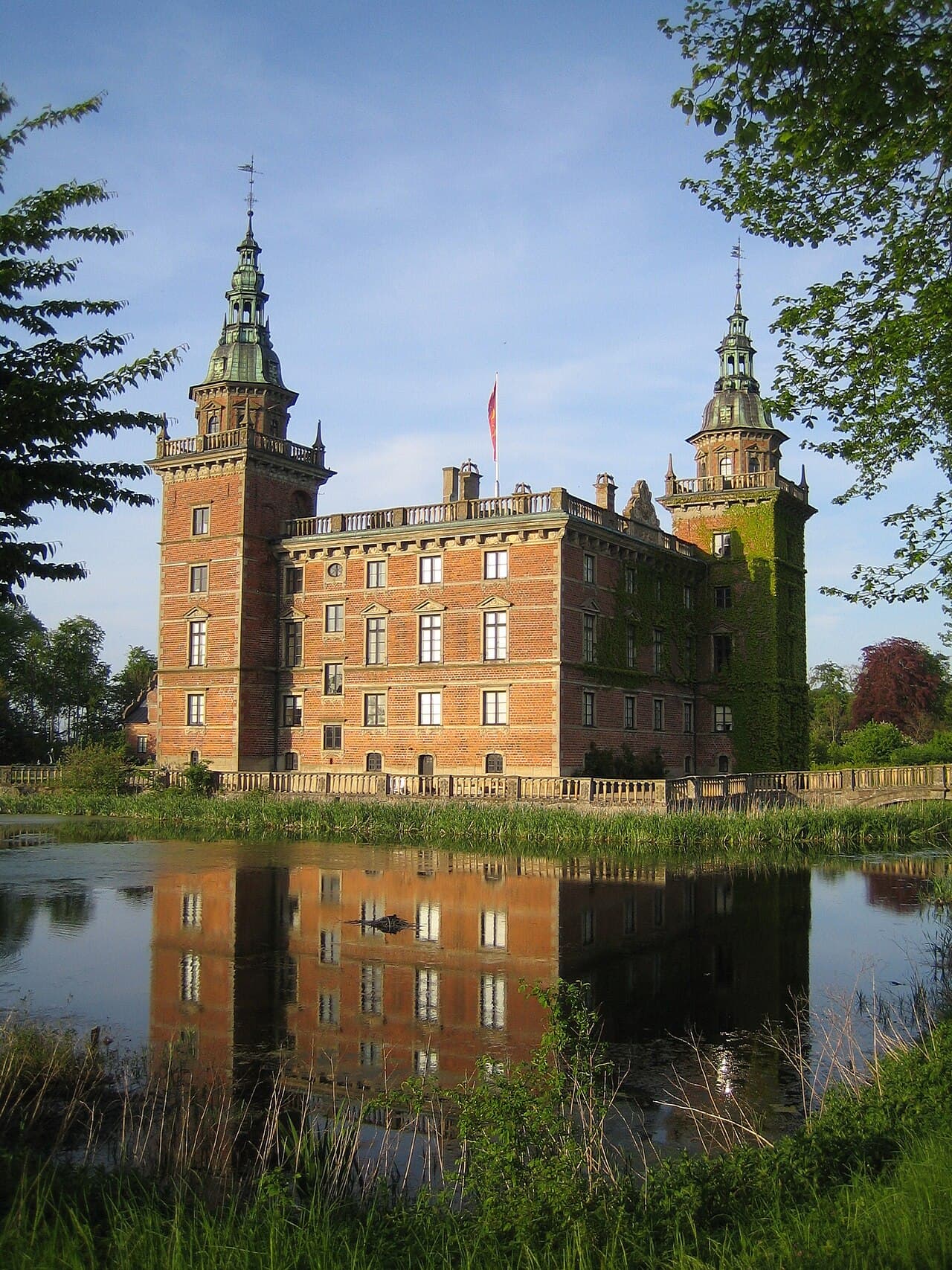
The castle as it stands today was constructed between 1644 and 1648 by Otto Marsvin, who acquired the estate around 1630 and renamed it after himself. The name Marsvinsholm derives from an Old Norse word for porpoise, linking the castle to maritime heritage. Originally, the castle was built on wooden poles in a small lake, a distinctive feature that underscores its defensive and aesthetic design.
The structure forms a square spanning four floors, with its northeast and southwest corners reinforced by five-story towers. These towers not only enhanced the castle's defensive capabilities but also contributed to its imposing silhouette. The castle's layout and construction techniques are characteristic of the Renaissance architectural style prevalent in northern Europe during the mid-17th century.
Renovations and restorations
Significant renovations were undertaken between 1782 and 1786 under Count Erik Ruuth, who modernized and expanded the castle's facilities. Later, in 1856-1857, Baron Jules Sjöblad carried out restorations that preserved much of the castle's Renaissance character while adapting it to contemporary needs.
Later ownership and current status
In 1854, Count Carl Wachtmeister sold the castle and its remaining lands to Baron Jules Stjernblad. The estate then passed to his daughter, Duchess Ida Eherensvärd, and subsequently to her children, who owned it until 1910. It was sold to Dame Johannes Jahennesen, and later inherited by his daughter Anna Margrethe and her husband Jörgen Wedelboe-Larsen. Their son sold the property in 1978 to Bengt Iacobaeus, and it remains in the family, currently owned by Tomas Iacobaeus.
Architectural significance and cultural heritage
Marsvinsholm Castle stands as an example of Renaissance architecture adapted to the Swedish landscape, combining defensive features with residential grandeur. The castle's square plan, multi-story towers, and construction on poles in a lake highlight innovative building techniques of the period. Its enduring presence and the lineage of noble owners contribute to its cultural and historical value in the region.
Structural elements and design
The castle's four-story main building is complemented by two prominent five-story towers at opposite corners, which were likely used for both defense and as status symbols. The original foundation on wooden poles in a lake is a rare feature that demonstrates adaptation to the local environment and defensive needs.
Landscape and surroundings
The castle is set within a landscape typical of southern Sweden, with water features that historically enhanced its defense and aesthetic appeal. Its proximity to Ystad places it within a region rich in history and medieval architecture.
Frequently asked questions (FAQ)
- What is the historical significance of Marsvinsholm Castle?
- Marsvinsholm Castle, built in the late 16th century, is a prime example of Renaissance architecture in Sweden. It has served as a noble residence for centuries and is steeped in local history, making it a fascinating site for visitors interested in Swedish heritage.
- When was Marsvinsholm Castle built?
- Marsvinsholm Castle was constructed between 1559 and 1568. It was commissioned by the nobleman Peder Pedersson, and its design reflects the architectural trends of the Renaissance period.
- Can I visit Marsvinsholm Castle?
- Yes, Marsvinsholm Castle is open to visitors during the summer months. Guided tours are available, allowing guests to explore the castle's rich history and beautiful grounds.
- What are the opening hours for Marsvinsholm Castle?
- The castle typically opens for visitors from May to September, with specific hours varying by day. It is advisable to check the official website for the most current opening times before your visit.
- Is it possible to access Marsvinsholm Castle with a disability?
- Yes, Marsvinsholm Castle strives to be accessible to all visitors. There are facilities and assistance available for individuals with mobility challenges, but it's recommended to contact the castle in advance to discuss specific needs.
- What is the best time to visit Marsvinsholm Castle?
- The best time to visit Marsvinsholm Castle is during the summer months, particularly in July and August, when the weather is pleasant and the gardens are in full bloom. These months also feature more guided tours and events.
- Are there nearby attractions to visit while at Marsvinsholm Castle?
- Yes, the castle is located near the beautiful coastal town of Ystad, which offers charming streets, historic buildings, and beautiful beaches. Additionally, you can explore the scenic countryside and other historical sites in the region.
- How much do tickets cost for Marsvinsholm Castle?
- Ticket prices for Marsvinsholm Castle vary depending on the season and type of tour. Generally, adult tickets are reasonably priced, and discounts may be available for children and seniors.
Photo gallery

Information
Current owner
Private owner
Loading map...
Visitor reviews
No reviews yet. Been here? Write the first review and help other travelers!
Write the first reviewVisited this castle? Share your experience
Your review helps other travelers and adds first-hand knowledge to our encyclopedia.