Marigny-le-Cahouët Castle

Marigny-le-Cahouët Castle in Côte-d'Or, France
Rue du Château, France
High Medieval (11th–13th c.)
Well Preserved

Marigny-le-Cahouët Castle, also known as Château de Marigny-le-Cahouët, is a historic castle located near the village of Marigny-le-Cahouët in the Côte-d'Or department of France. The castle's origins trace back to the 12th century, with its first recorded mention in 1189 when Hugh III, Duke of Burgundy, granted the estate to his son Alexander, Lord of Montaigu. This early medieval foundation places the castle among the region's significant feudal structures of the time.

Medieval origins and early history

The original construction of Marigny-le-Cahouët Castle likely dates to the early or mid-12th century, reflecting typical medieval fortification styles of the period. Initially, it served as a fortified stronghold for the local nobility, designed to assert control over the surrounding lands and provide defense. Over the subsequent centuries, the castle underwent various modifications and expansions under the stewardship of several noble families, including the Villars, La Beaume, Avancourt, and Orgemont lineages.

Transformation into a residential château

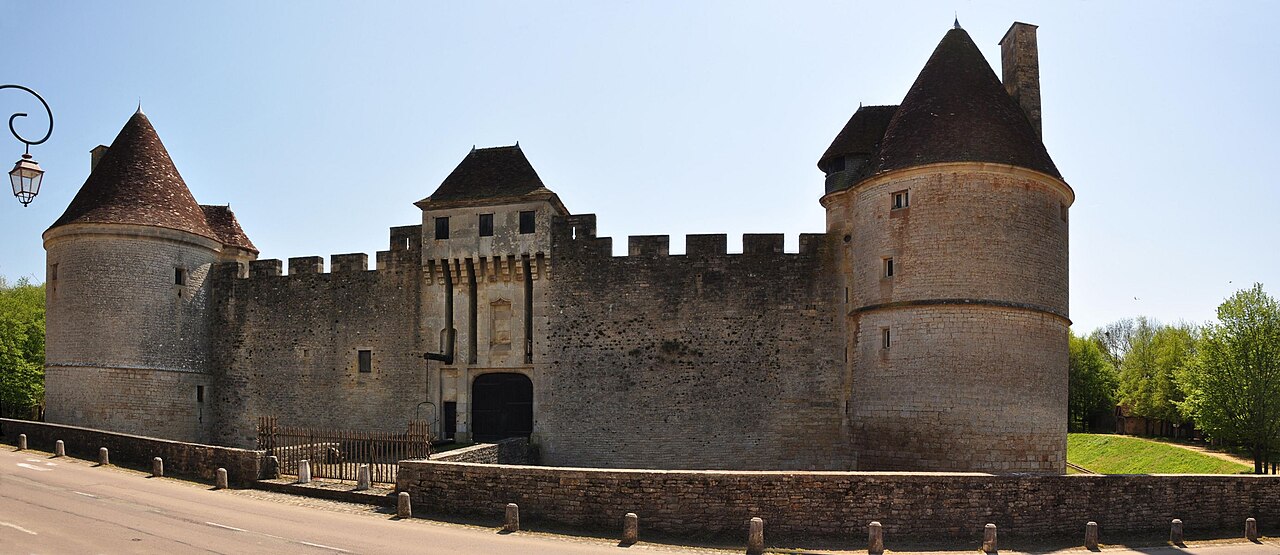
In 1608, the castle came into the possession of the Pibrac family, who initiated a significant transformation. This renovation aimed to convert the medieval fortress into a more comfortable and elegant residence, reflecting the changing needs and tastes of the era. During this period, the castle's defensive features were likely softened or removed, including the disappearance of the original keep that once stood within its walls. The architectural style shifted towards that of a residential château, emphasizing comfort and aesthetic appeal over military utility.

Architectural features and changes

The current appearance of Marigny-le-Cahouët Castle primarily results from the 17th-century rebuilding phase. The castle features characteristic elements of a French country residence from this period, including steeply pitched roofs adorned with distinctive decorative roof tiles that are noted for their colorful patterns. The structure likely includes large windows, , and other elements typical of the transition from fortress to noble residence.

19th-century restoration and ownership

In the 19th century, the castle underwent further restoration under the ownership of the Siraudin family. This restoration aimed to preserve and enhance the château's residential qualities, maintaining its historic character while adapting it to contemporary standards of the time. The work done during this period helped retain the castle's structural integrity and aesthetic charm.

Modern era and current status

Since 1962, Marigny-le-Cahouët Castle has been owned by the Rougé family, who continue to hold the property as a private residence. Due to its private ownership, the castle is not open to the public for visits. Despite this, it remains an important architectural and historical landmark within the region, admired for its blend of medieval origins and later residential adaptations.

Notable characteristics

Among the castle's most striking features are its colorful roof tiles, which contribute to its distinctive silhouette against the Burgundy landscape. The castle's evolution from a medieval fortress to a refined residence illustrates the broader historical trends in French castle architecture, where defensive needs gave way to comfort and style over time.

Historical significance in burgundy

Marigny-le-Cahouët Castle holds a notable place in the history of Burgundy, a region rich in medieval heritage. Its connection to prominent noble families and its architectural evolution reflect the political and social changes that shaped the area from the Middle Ages through the modern period. The castle's endurance and adaptations provide valuable insights into the region's feudal past and subsequent aristocratic lifestyles.

Frequently asked questions (FAQ)

What is the historical significance of Marigny-le-Cahouët Castle?
Marigny-le-Cahouët Castle dates back to the 12th century and played a crucial role in the regional defense during the medieval period. Its architecture reflects the military and residential styles of the time, showcasing the evolution of castle design in France.
When was Marigny-le-Cahouët Castle built?
The castle was constructed in the early 1100s and has undergone various renovations throughout the centuries. Its long history contributes to its charm, making it an important landmark in the region.
Can I visit Marigny-le-Cahouët Castle?
Yes, visitors are welcome to explore Marigny-le-Cahouët Castle. Guided tours are available, providing insights into its rich history and architectural features.
What are the opening hours for Marigny-le-Cahouët Castle?
The castle is open for visitors from 10 AM to 5 PM, Tuesday through Sunday. It is advisable to check for any seasonal variations in opening hours before planning your visit.
Is it possible to access Marigny-le-Cahouët Castle with a wheelchair?
The castle strives to be accessible to all visitors; however, due to its historical structure, some areas may be challenging for wheelchair users. It is recommended to contact the castle administration for specific accessibility information prior to your visit.
What is the best time to visit Marigny-le-Cahouët Castle?
The best time to visit is during the spring and early autumn when the weather is mild and the surrounding landscapes are beautiful. These seasons often have fewer tourists, allowing for a more enjoyable experience.
Are there any nearby attractions to Marigny-le-Cahouët Castle?
Yes, the area around Marigny-le-Cahouët features several charming towns and scenic landscapes ideal for exploration. Nearby attractions include local vineyards and historical sites, making it a great destination for a full day of sightseeing.
What are the ticket prices for visiting Marigny-le-Cahouët Castle?
Ticket prices for Marigny-le-Cahouët Castle are quite reasonable, with discounts available for children and seniors. Check the official website for the latest pricing and any special promotions or group rates.

Information

Hill Castle

Current owner

Private owner

Address

Rue du Château, Marigny-le-Cahouët, Côte-d'Or, France

Loading map...

Visitor reviews

No reviews yet. Been here? Write the first review and help other travelers!

Write the first review

Visited this castle? Share your experience

Your review helps other travelers and adds first-hand knowledge to our encyclopedia.
Write a review

(5/5)

0/2000 characters

Your review will be visible after admin approval

Nearby castles

6.6 km
Posanges Castle — France castle

Posanges Castle

D-905, France

Posanges Castle, locally known as Château de Posanges, is a notable example of a 15th-century fortified hill castle located in the village of Posanges within the Côte-d'Or department of France. This castle is distinguished by its moated square enclosure and round towers at each of its four corners, a typical defensive architectural feature of the late medieval period. Historical background and origins The earliest mention of a castle in the village of Posanges dates back to 1299, though it remains uncertain whether this earlier structure occupied the same site as the current castle. The existing castle was constructed in the mid-15th century by Guillaume du Bois, a figure who rose through the ranks of Burgundian nobility. Initially serving as a squire to John I the Fearless, Duke of Burgundy, and later to his successor Philip III the Good, Guillaume du Bois was appointed bailiff of Auxois by 1429 and granted the lordship of Posanges in 1437. Between 1440 and 1445, he commissioned the building of the castle as his fortified residence. Architectural features and design The castle's layout is characterized by a square plan surrounded by a moat, which provided an additional layer of defense. Each corner of the enclosure is fortified with a round tower, enhancing the castle's ability to withstand attacks and allowing defenders to cover all angles of approach. Notably, the castle lacks a traditional keep (donjon), which was common in earlier medieval fortifications, indicating a shift in defensive strategies during the late medieval period. The walls and towers have largely remained intact, preserving the castle's late medieval architectural style with minimal alterations over the centuries. This preservation offers valuable insight into Burgundian military architecture of the 15th century. Later history and usage Throughout its history, Posanges Castle appears to have experienced a relatively peaceful existence, avoiding the extensive damage or modifications often seen in castles involved in major conflicts. In the 20th century, specifically between 1964 and 1974, the castle was repurposed as a fabric factory, a period during which the structure was adapted for industrial use. Following this industrial phase, the castle underwent restoration efforts to return it to a more historically sympathetic state. Today, it serves as a private residence and is not open to the public, which limits direct visitor access but helps ensure its preservation. Significance and cultural heritage Posanges Castle represents an important example of Burgundian late medieval military architecture. Its well-preserved moated enclosure and corner towers illustrate defensive innovations of the period. The castle's association with notable historical figures such as Guillaume du Bois and its connection to the Dukes of Burgundy further enhance its historical value. While the castle itself cannot be visited, its exterior and setting in the village of Posanges contribute to the cultural landscape of the region, offering a glimpse into the architectural and feudal history of Burgundy.

Late Medieval (14th–15th c.)
Details
9.2 km
Alesia — France castle

Alesia

Alise-Sainte-Reine, France

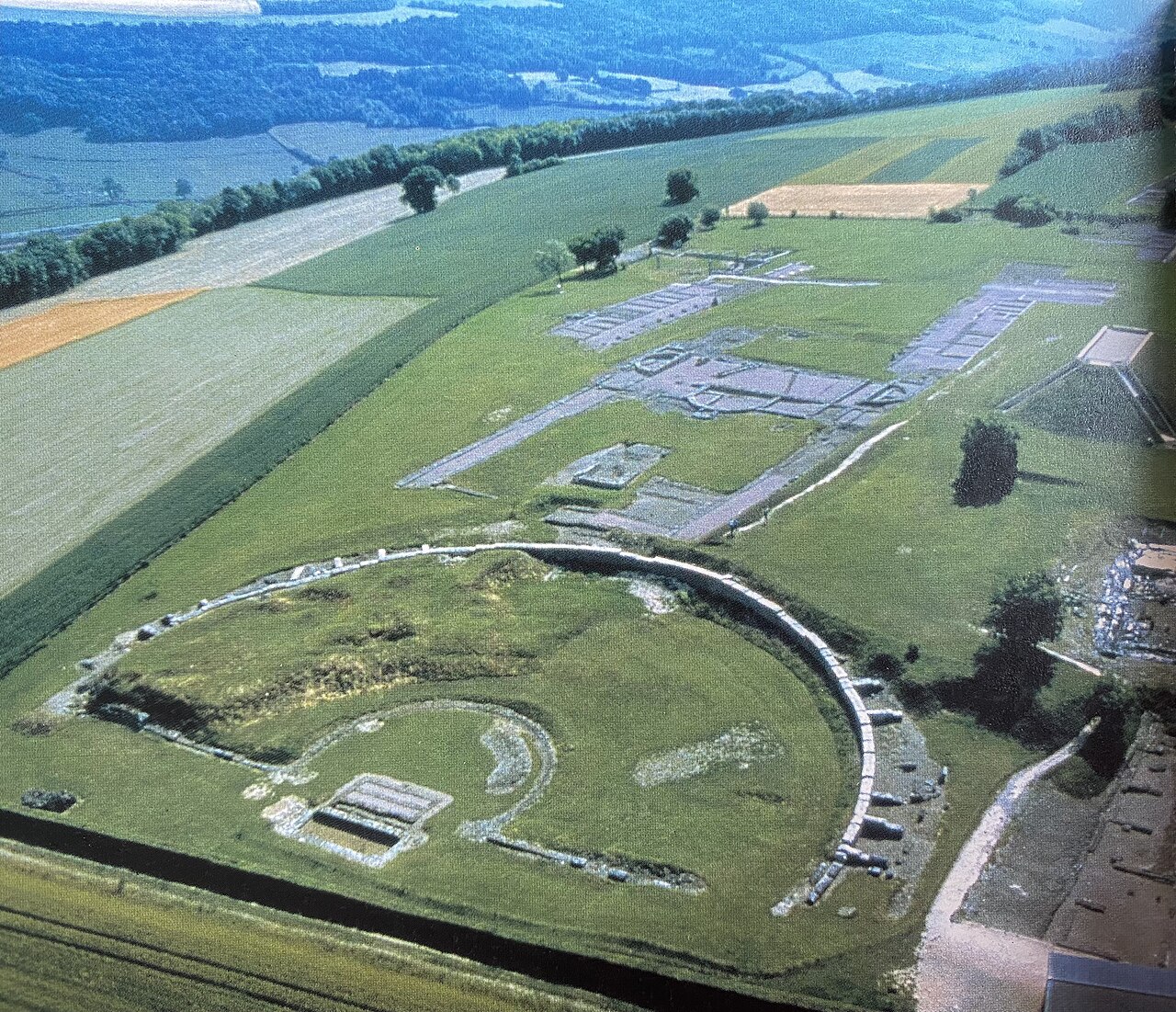
Alesia was the capital of the Mandubii, a Gallic tribe allied with the Aedui. This ancient settlement functioned as a Celtic oppidum—a fortified hilltop town—before becoming a significant site during the Gallic Wars. The oppidum was famously besieged and conquered by Julius Caesar in 52 BCE, a decisive event that marked the Roman conquest of Gaul and the decline of Gallic independence. For centuries, the exact location of Alesia was debated among historians and archaeologists. Modern scholarship and archaeological excavations have largely confirmed that Alesia was situated on Mont-Auxois, near the village of Alise-Sainte-Reine in the Burgundy region of eastern France. This site is characterized by its commanding vantage point over the surrounding landscape, typical of hill castles or hillforts designed for defense and control. Historical significance of Alesia The siege of Alesia in 52 BCE is among the most famous military engagements of the ancient world. The Roman forces, led by Julius Caesar, faced a large Gallic army under the leadership of Vercingetorix, the chieftain of the Arverni tribe. The Romans constructed extensive fortifications around the hillfort, including double lines of walls and ditches, to encircle and isolate the defenders. This siege engineering feat demonstrated advanced Roman military tactics and engineering skills, ultimately forcing the Gallic surrender. Following the conquest, Alesia transitioned from a purely military stronghold to a Gallo-Roman town. The settlement adopted Roman urban features such as organized streets, public buildings, and baths, reflecting the integration of Gallic peoples into the Roman Empire. Although the town declined in later centuries, its archaeological remains provide valuable insight into the cultural and military history of the region. Archaeological discoveries and site features Extensive excavations at Mont-Auxois have uncovered remnants of the fortification walls, trenches, and other defensive structures attributed to Caesar's siege works. Archaeologists have also identified evidence of Roman camps and siege lines, which illustrate the scale and complexity of the military operations conducted during the siege. The oppidum itself shows typical characteristics of a hill castle or hillfort, with steep slopes enhancing its natural defenses. The strategic location allowed control over key routes and the surrounding territory, which was crucial for both the Mandubii tribe and later Roman authorities. Fortifications and layout The fortifications consisted of multiple layers of earthworks and palisades, designed to withstand assaults and sieges. The Romans augmented these defenses with their own siege works, including circumvallation and contravallation lines—fortified walls encircling both the town and the Roman camps. These features are among the best-preserved examples of Roman siege engineering. Legacy and cultural importance Alesia holds a prominent place in both French national history and the study of ancient military tactics. The site symbolizes the transition from Gallic independence to Roman rule and is commemorated by monuments and a museum near Alise-Sainte-Reine. The archaeological park offers visitors a chance to explore the remains and learn about the historical context of the siege and the broader Gallic Wars. Today, Alesia is recognized as a key heritage site in Burgundy, attracting historians, archaeologists, and tourists interested in ancient history and Roman military architecture. The site's preservation and interpretation contribute to understanding the complex interactions between Roman and Gallic cultures during a transformative period in European history.

Early Medieval (5th–10th c.)
Details
10.6 km

Semur-en-Auxois Castle

Semur-en-Auxois, France

Semur-en-Auxois Castle, or Château de Semur-en-Auxois, is a remarkable example of medieval military architecture perched on a rocky ridge in the historic town of Semur-en-Auxois, located in the Côte-d'Or department of Bourgogne-Franche-Comté, France. The castle's strategic position atop a narrow meander of the Armançon river provided a natural defensive advantage, which was enhanced over centuries of fortification and expansion. The origins of the site date back to at least the 10th century, making it one of the earliest fortified locations in the region. The initial fortifications were likely wooden or rudimentary stone structures that protected the settlement during the turbulent early medieval period. The castle as it stands today was primarily constructed in the late 13th century, following the granting of town privileges in 1276 by Robert II, Duke of Burgundy. This development marked Semur-en-Auxois as the capital of the bailiwick of Auxois, elevating its political and military significance. Architectural design and layout The castle was built on the narrowest point of the ridge, effectively controlling access to the rest of the promontory. It features a rectangular layout fortified by four round corner towers, a common design in medieval fortifications aimed at providing overlapping fields of fire and reducing blind spots. The most imposing of these towers is the northern one, which served as the keep, known historically as "Le Donjon" and today as the Orle d'Or Tower. This keep stands approximately 40 meters high and boasts walls up to 5 meters thick at the base, underscoring its defensive purpose. Its architectural style is linked to the "Philippian" military architecture, named after Philip II of France (Philippe Auguste), reflecting innovations in fortification design during the early 13th century. The keep’s formidable mass and verticality exemplify the transition from earlier motte-and-bailey designs to more permanent stone fortresses. Corner towers and their functions The north tower (Orle d'Or) functioned as the main stronghold and last refuge during sieges. The west tower, initially called the Butcher's Tower and later the Géhenne or Pordeau Tower, was used for storage, including salt after the castle's military function ceased. The east tower, known as the Tour du Pin or Solobert Tower, later called the Prison Tower, likely served as a detention area. The south tower, known as the Margot Tower, was repurposed for storage and is currently used by a local theater group. Medieval military history and modifications During the Hundred Years' War, the castle’s strategic importance was reinforced under the orders of Philip the Bold, Duke of Burgundy. In 1354, Jean de Noyers, governor of Burgundy, undertook extensive strengthening works. By 1358, Étienne de Musigny, lieutenant of the governor, added hoardings atop the towers, wooden structures that provided defenders with improved protection and the ability to drop projectiles on attackers. The castle remained loyal to the Burgundian dukes throughout the war, but in 1478, it was captured by the French forces of Louis XI. This marked a shift in control that aligned Semur-en-Auxois with the French crown. The town and castle later played roles in the French Wars of Religion during the 16th century, when it was held by the Catholic League until 1589, when royalist forces under Guillaume de Saulx, Viscount of Tavannes, besieged and reclaimed it. Dismantling and later use Following the turbulent religious conflicts, King Henry IV ordered the dismantling of the castle's fortifications in 1602 to prevent its future military use. This dismantling caused significant structural damage, including a large vertical crack on the exterior of the keep, which remains visible today. The castle’s defensive role ended, and the towers were repurposed for civilian uses such as granaries and storage for salt. Current state and visitor experience Today, Semur-en-Auxois Castle is classified as a restored hill castle, preserving much of its imposing silhouette and medieval character. While the interiors of the four towers are not open to the public, visitors can appreciate the castle’s massive stone walls, the keep’s towering presence, and the picturesque medieval town that grew around it. The castle’s location offers stunning views of the surrounding Burgundy countryside and the winding Armançon river. The town itself retains its medieval charm, with narrow streets, ancient buildings, and cultural activities that enrich the visitor experience. The Margot Tower’s use by a local theater group exemplifies the castle’s ongoing integration into community life. Architectural significance The castle is an important example of early medieval fortification evolving into a more advanced Philippian style fortress, showcasing the transition in military architecture during the Middle Ages. Its massive keep and robust towers illustrate defensive innovations that influenced castle construction across France. Semur-en-Auxois Castle remains a significant cultural heritage site, reflecting the complex history of Burgundy and medieval France. Its combination of natural defensive advantages, architectural sophistication, and historical importance make it a compelling destination for enthusiasts of medieval history and castle architecture. Visiting information and tips Visitors interested in exploring the castle and the town should plan to spend time walking the ramparts and exploring the medieval streets. While the towers' interiors are closed, the exterior views and the castle’s imposing presence provide a vivid sense of its historical role. The best time to visit is during spring and summer when the weather is conducive to outdoor exploration and local cultural events are held. The town offers amenities including guided tours, local museums, and dining options that highlight Burgundy’s rich culinary traditions.

Early Medieval (5th–10th c.)
Details