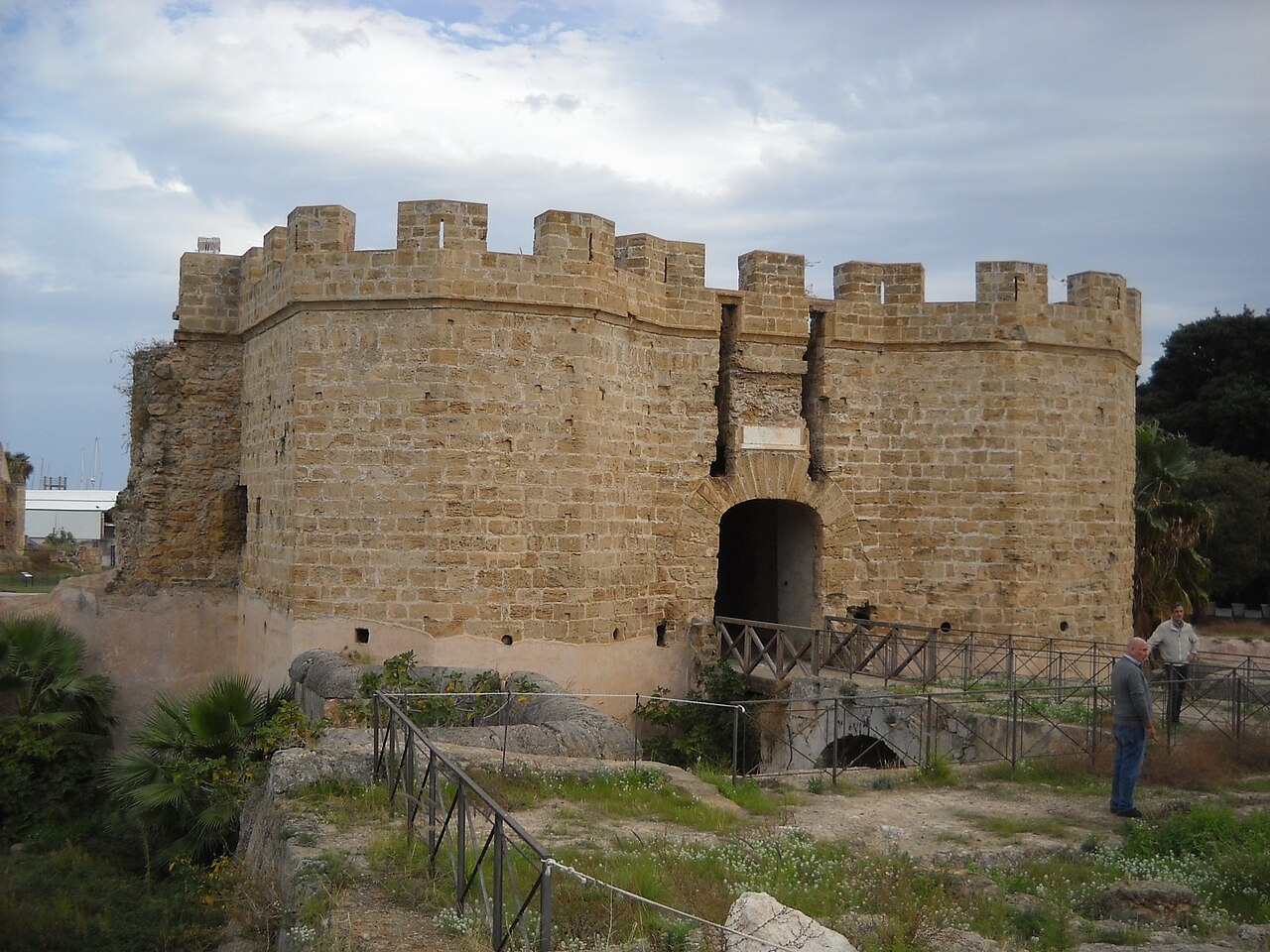
La Zisa
La Zisa stands as a remarkable example of the cultural fusion that characterized Sicily during the Norman period. Built in the 12th century in Palermo, this palace exemplifies the unique blend of Norman and Islamic architectural styles that flourished under the rule of the Norman kings. Originally conceived as a summer residence for the Sicilian court, La Zisa is renowned for its exquisite design inspired by Moorish architecture and its advanced climate control features, which were revolutionary for the time.
The palace was commissioned around 1165 by King William I of Sicily, known as "Il Malo" due to his controversial reputation. Despite his detractors' claims of indulgence in luxury and leisure, the king invested in creating a magnificent retreat that reflected the rich cultural tapestry of Sicily. The name "La Zisa" derives from the Arabic term "al-azīza," meaning "the gorgeous" or "the dear," highlighting the palace's intended grandeur and elegance.
Architectural design and features
Islamic influence and structural elements
The design of La Zisa is a testament to the skilled Arabian craftsmen who brought Islamic architectural principles to the Norman court. The palace features characteristic elements such as ogival archways, muqarnas (ornamental vaulting), and vaulted niches. These elements not only contribute to the aesthetic appeal but also serve functional purposes in the building's climate adaptation.
Innovative cooling system
One of the most striking aspects of La Zisa is its early form of air conditioning. The palace was strategically oriented to face north-east to capture the temperate sea breezes. The first level fornices were designed to channel these cool winds into the interior spaces. Additionally, a large pool in front of the building was connected to a smaller internal pool within the main hall, creating a cooling effect through evaporative humidity. The palace also incorporates a network of vent ducts linking the upper floors with the lower vestibule, facilitating continuous airflow throughout the structure. Thick walls and small windows further helped maintain a stable internal temperature, providing relief from the intense Sicilian summer heat.
Historical context and evolution
Norman rule and cultural synthesis
The Normans, originally arriving in Sicily as mercenaries, quickly assimilated local cultures, especially the Arabic influence, which is vividly reflected in La Zisa. This palace was part of a larger hunting and leisure complex known as the Genoardo, which included other notable structures like the Cuba Sottana, Cuba Soprana, and Uscibene palace. The Genoardo served as a royal retreat and hunting reserve, emphasizing the importance of leisure and nature in Norman court life.
Completion and modifications
La Zisa was completed under the reign of King William II, nicknamed "Il Buono" for his more favorable rule. Since its completion, the palace has remained largely unaltered in its core design. However, in the 14th century, defensive merlons were added to the structure, partially damaging the original Arabic inscriptions in Kufic script that adorned the upper facade.
In the 17th century, the palace underwent significant modifications after being acquired by Giovanni di Sandoval e Platamone. His marble coat of arms, featuring two lions, was placed above the entrance. During this period, several interior rooms were altered, new ceilings were added, a grand staircase was constructed, and new windows were installed to adapt the palace to contemporary needs.
Later history and restoration
From the early 19th century until the mid-20th century, La Zisa served as a private residence for the Notarbartolo di Sciara princes. Over time, neglect and lack of maintenance led to deterioration of the palace's structure and decorative elements.
Recognizing its cultural and historical significance, the Region of Sicilia acquired La Zisa and undertook an extensive restoration project beginning in the 1990s. This restoration lasted over two decades and aimed to preserve the palace's unique blend of Norman and Islamic architectural heritage. The restoration also included efforts to recover and protect the intricate mosaic decorations and structural features.
Present-day significance and visitor experience
Today, La Zisa is an integral part of the UNESCO World Heritage Site known as "Arab-Norman Palermo and the Cathedral Churches of Cefalù and Monreale." It stands as a symbol of Sicily's multicultural past and architectural innovation. Visitors can explore the palace's well-preserved halls, including the central hall renowned for its mosaic decoration and the remains of a once-functional fountain that channeled water through the interior and outside the building.
The palace also houses exhibitions of Islamic art, tools, and Mediterranean artifacts, enriching the visitor's understanding of the cultural exchanges that shaped this region. La Zisa's combination of historical significance, architectural beauty, and innovative design makes it a must-visit site for those interested in medieval history, architecture, and the unique heritage of Sicily.
Frequently asked questions (FAQ)
- How do I get to La Zisa Castle?
- La Zisa Castle is located in Palermo, Italy, and can be easily reached by public transport or car. If you are using public transport, you can take a bus to the nearby stops, and the castle is a short walk from there.
- What is the historical significance of La Zisa?
- La Zisa Castle, built in the 12th century, is a prime example of Arab-Norman architecture and represents the fusion of Islamic and Norman styles. It served as a royal residence and reflects the rich cultural heritage of Sicily during the time of the Norman kings.
- When was La Zisa Castle constructed?
- La Zisa Castle was constructed in the 12th century, specifically around 1165, under the reign of King William I of Sicily. It was originally designed as a summer palace and showcases the grandeur of Norman architecture.
- Can I take guided tours of La Zisa Castle?
- Yes, guided tours are available at La Zisa Castle, providing visitors with in-depth knowledge about its history and architecture. These tours typically enhance the visitor experience by offering insights that you might miss on a self-guided visit.
- Why is La Zisa considered an architectural gem?
- La Zisa is celebrated for its unique blend of Norman and Islamic architectural elements, characterized by intricate decorations and a stunning garden. The castle's design and layout reflect the artistic influences of the time, making it a remarkable representation of medieval architecture.
- Is it possible to visit La Zisa Castle with mobility issues?
- Yes, La Zisa Castle is accessible to visitors with mobility challenges, although some areas may have limited access due to the castle's historical structure. It is recommended to check in advance for specific accessibility features and any assistance that may be available.
- What are the opening hours for La Zisa Castle?
- La Zisa Castle is typically open to visitors from 9 AM to 7 PM, but hours may vary seasonally. It is advisable to check the official website or contact the castle directly for the most current information before your visit.
- What are the ticket prices for La Zisa Castle?
- Ticket prices for La Zisa Castle are generally affordable, with reduced rates for students and seniors. Children under a certain age may enter for free, making it a great attraction for families.
- What are some nearby attractions to La Zisa Castle?
- Nearby attractions include the beautiful Palatine Chapel and the bustling markets of Ballarò and Vucciria. Visitors can also explore the historic center of Palermo, which is packed with stunning architecture and cultural sites.
Information
Loading map...
Visitor reviews
No reviews yet. Been here? Write the first review and help other travelers!
Write the first reviewVisited this castle? Share your experience
Your review helps other travelers and adds first-hand knowledge to our encyclopedia.