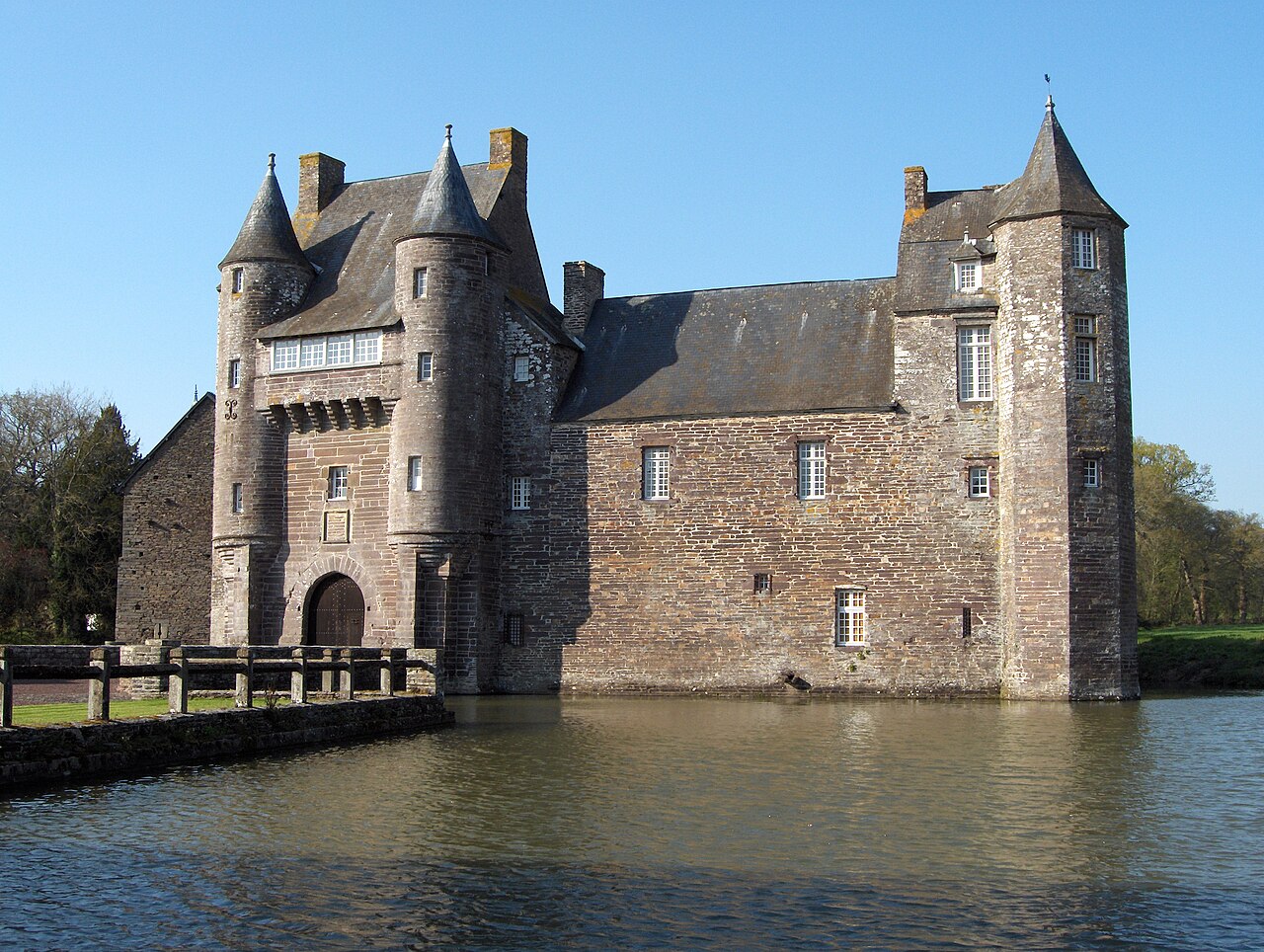
Manoir de Boyac
The Manoir de Boyac stands as a significant historic site in the Hauts-de-France region of France, representing one of the region's oldest noble estates with roots stretching back to the early medieval period. This manor's history is deeply intertwined with the religious and feudal transformations that shaped medieval France, reflecting the evolution of rural noble residences from the 9th century onward.
Early history and ecclesiastical connections
The origins of the Manoir de Boyac trace back to a rural estate known as "batalaoc" in the 9th century, situated within the territory historically referred to as the plebe Armaël. This estate was notably granted in 858 to the monks of the Abbey of Redon by Catwaten, son of the noble Drelawen. This early donation reflects the common medieval practice of land endowment to ecclesiastical institutions, which played a crucial role in land management and local governance during this period.
Throughout the 10th century, the estate experienced changes in ownership that highlight the complex feudal relationships of the time. Count Matuédo transferred the estate, then known as "Buiac," in usufruct to Bily, the Bishop of Vannes. This arrangement allowed Bily the right to use the land without owning it outright. In 913, Bily returned the property to the monks of Redon, reaffirming the religious community's custodianship and influence in the region. The estate's name evolved over the centuries, appearing as "Boyat" in 914, "Bouyac" in 1440, "Bouiac" by 1460, and finally "Boyac" from 1513 onward, reflecting linguistic and administrative changes in the area.
Architectural layout and features
The Manoir de Boyac is characterized by its courtyard-centric design, a typical feature of noble rural residences in medieval France. The remaining structures are arranged around a compact courtyard approximately sixty square feet in area, enclosed by a sturdy wall and secured by a gate. This layout provided both privacy and a degree of defense, creating a protected domestic space for the manor's inhabitants.
The ensemble includes multiple buildings that formed the manor complex, although detailed documentation on construction materials and specific architectural styles is limited. The enclosing walls emphasize the manor's function as a self-contained unit, combining living quarters with essential dependencies such as storage and service areas. The gate remains the primary access point, maintaining the integrity and security of the courtyard.
Defensive and residential elements
While the manor does not exhibit the fortification features of larger castles, its walled courtyard and gate reflect the need for controlled access and protection against minor threats. The compactness of the layout suggests a focus on residential comfort and estate management rather than military defense. This balance is typical of hill castles serving as noble residences in rural settings during the early to late medieval periods.
Historical significance and later developments
By the 17th century, the seigneurie of Boyac was documented as a noble residence with various dependencies, highlighting its continued importance in the feudal and administrative structures of the region. The manor's configuration around a courtyard with a gate was noted in administrative reforms of royal domains around Ploërmel in 1676, underscoring its role as a landed estate under noble jurisdiction.
In modern times, the Manoir de Boyac has been recognized for its cultural and historical value, receiving official designation as a historic monument on July 1, 2011. This status helps preserve the manor's legacy as a tangible link to the region's medieval heritage and noble estate traditions.
Current condition and public access
The manor's remains are well preserved enough to convey the original layout and function of the estate. Although privately owned, the exterior of the manor is accessible to visitors, allowing public appreciation of its historic architecture and courtyard arrangement. The preservation of the gate and enclosing walls provides a clear sense of the manor's spatial organization and defensive considerations.
No extensive archaeological excavations or decorative inscriptions have been reported, leaving the visible structures as authentic representations of rural noble residences from the medieval and early modern periods. The manor stands as a testament to the continuity of noble landholding and architectural traditions in the Hauts-de-France region.
The manor in regional context
Situated near the historic town of Ploërmel, the Manoir de Boyac occupies a place within the broader landscape of feudal estates and ecclesiastical properties that shaped medieval Brittany and northern France. Its connections to the Abbey of Redon and the Bishop of Vannes illustrate the intertwined nature of religious and noble power in land management during the early medieval period.
The manor's evolution over centuries reflects broader linguistic, administrative, and social changes in the region, making it a valuable case study for historians and architects interested in the development of rural noble residences and their role within the feudal system.
Frequently asked questions (FAQ)
- What is the historical significance of Manoir de Boyac?
- Manoir de Boyac is a notable example of French heritage, showcasing the architectural styles of the 17th century. It has played a crucial role in the local history of the region, serving as a residence for prominent families and a witness to various historical events.
- When was Manoir de Boyac built?
- The construction of Manoir de Boyac began in the early 1600s and was completed in the mid-17th century. Its long history contributes to its charm and the stories that surround it, making it a fascinating place to explore.
- Can I visit Manoir de Boyac?
- Yes, Manoir de Boyac is open to the public for visits. Guests can enjoy guided tours that provide insights into its history, architecture, and the lives of its past residents.
- What are the opening hours for Manoir de Boyac?
- Manoir de Boyac is typically open from 10 AM to 6 PM, Tuesday through Sunday. It's advisable to check their official website or contact them directly for any seasonal changes in hours.
- Is it possible to access Manoir de Boyac with a wheelchair?
- Yes, Manoir de Boyac is committed to being accessible to all visitors. There are facilities in place to assist those with mobility challenges, allowing everyone to enjoy the beauty of the castle.
- What are the ticket prices for visiting Manoir de Boyac?
- Ticket prices for Manoir de Boyac vary depending on age and tour options. Generally, adult tickets are around €10, while discounts are available for children and seniors.
- When is the best time to visit Manoir de Boyac?
- The best time to visit Manoir de Boyac is during the spring and early autumn when the weather is mild and the gardens are in full bloom. Visiting during these seasons allows for a more enjoyable experience of the outdoor areas surrounding the castle.
- What nearby attractions can I explore after visiting Manoir de Boyac?
- After visiting Manoir de Boyac, guests can explore several nearby attractions, including the charming village of Boyac and other historical sites in the region. The beautiful countryside also offers opportunities for hiking and enjoying nature.
Information
Website
Visit websiteSources & official resources
Verify the information above using these authoritative references.
Loading map...
Visitor reviews
No reviews yet. Been here? Write the first review and help other travelers!
Write the first reviewVisited this castle? Share your experience
Your review helps other travelers and adds first-hand knowledge to our encyclopedia.