Mamucium
Mamucium, also known as Mancunium, is a significant Roman fort located in the Castlefield area of Manchester in North West England. Established around AD 79 during the early phase of Roman Britain, this fort was strategically positioned near the junction of two important Roman roads, serving as a military base for a cohort of Roman auxiliaries. The fort's location on a natural hillock overlooking the River Medlock contributed to its defensive advantages, classifying it as a hill castle in terms of topographical setting.
The architecture of Mamucium reflects typical Roman military engineering of the period, with robust stone walls, defensive gates, and internal structures such as granaries, barracks, and administrative buildings. The fort's walls were constructed using local sandstone, featuring rectangular towers and a fortified gatehouse that controlled access. Outside the fort, a vicus or civilian settlement developed, housing soldiers' families, merchants, craftsmen, and various industries supporting the military presence.
Historical context and military significance
Founded during the reign of Emperor Vespasian, Mamucium played a crucial role in the Roman military network across northern Britain. It helped secure the region against local tribes and maintained control over vital transportation routes. The fort was part of a chain of forts across the province, contributing to the Roman strategy of consolidating their hold over newly conquered territories.
The garrison at Mamucium was primarily composed of auxiliary troops, non-citizen soldiers recruited from various parts of the empire, reflecting the diversity of the Roman military. The presence of the vicus indicates a semi-permanent settlement where soldiers and their families lived alongside local Britons and merchants, facilitating cultural exchange and economic activity.
Archaeological discoveries and preservation
Excavations at Mamucium have revealed substantial remains of the fort's walls, gatehouse, and granaries, along with artifacts such as pottery, tools, and military equipment. These findings have provided valuable insights into Roman military life and the daily activities within the fort and its surrounding settlement.
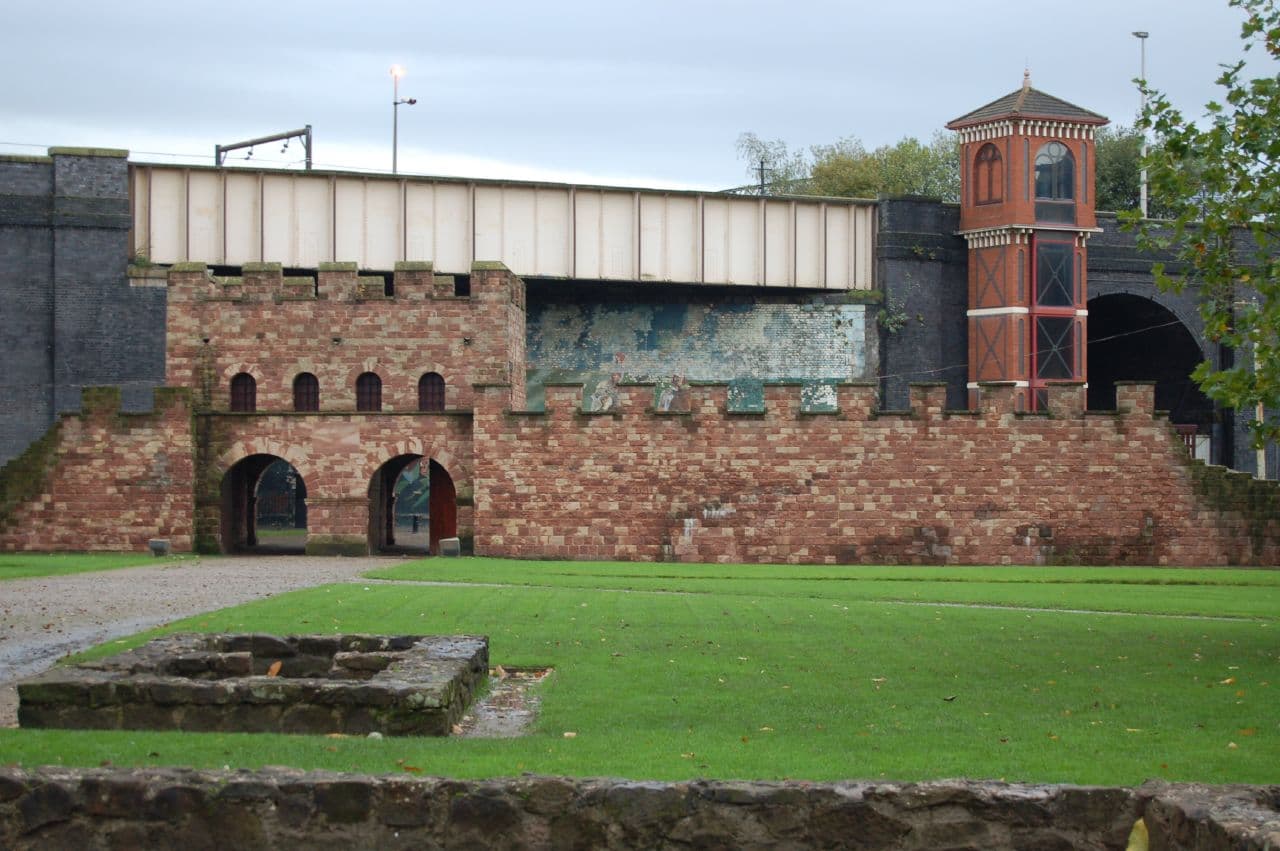
Despite much of the original structure being lost during the rapid expansion of Manchester in the Industrial Revolution, key sections of the fort have been preserved and reconstructed. The site is now part of the Castlefield Urban Heritage Park, a protected Scheduled Ancient Monument that includes renovated warehouses and public spaces.
Modern significance and visitor experience
Today, Mamucium serves as an important cultural and historical landmark in Manchester. Visitors can explore reconstructed sections of the fort's defensive walls, the gatehouse, and ancillary buildings from the vicus, which have been carefully restored to provide a tangible connection to Roman Britain. Interpretive displays and guided tours offer educational opportunities about the fort's military purpose and its role in the broader Roman frontier system.
The site’s integration into Castlefield Urban Heritage Park allows visitors to appreciate the juxtaposition of Roman heritage with Manchester's industrial past, making Mamucium a unique destination for those interested in archaeology, history, and architecture.
Frequently asked questions (FAQ)
- What is the best time to visit Mamucium Roman fort?
- The best time to visit Mamucium is during the spring and summer months when the weather is mild and the outdoor exhibits are fully accessible. Weekdays tend to be less crowded than weekends, allowing for a more peaceful exploration of the site.
- How do I get to Mamucium Roman fort in Manchester?
- Mamucium is located in the Castlefield area of Manchester, easily reachable by public transport including tram and bus services. It is within walking distance from Manchester city centre and well signposted for visitors.
- Is Mamucium Roman fort accessible for people with disabilities?
- The site has made efforts to improve accessibility, including paved pathways and ramps in key areas. However, some uneven surfaces and reconstructed sections may present challenges, so visitors with mobility concerns should check in advance for specific accommodations.
- Can I join guided tours at Mamucium?
- Guided tours are available at Mamucium, often organized by local heritage groups or the Castlefield Urban Heritage Park management. These tours provide detailed historical context and architectural insights, enhancing the visitor experience.
- What remains of the original Roman fort can I see today?
- Visitors can see reconstructed sections of the fort's walls, the gatehouse, granaries, and other ancillary buildings from the vicus. Archaeological remains and interpretive displays help illustrate the fort's layout and Roman military life.
Photo gallery

Information
Loading map...
Visitor reviews
No reviews yet. Been here? Write the first review and help other travelers!
Write the first reviewVisited this castle? Share your experience
Your review helps other travelers and adds first-hand knowledge to our encyclopedia.