Buckton Castle
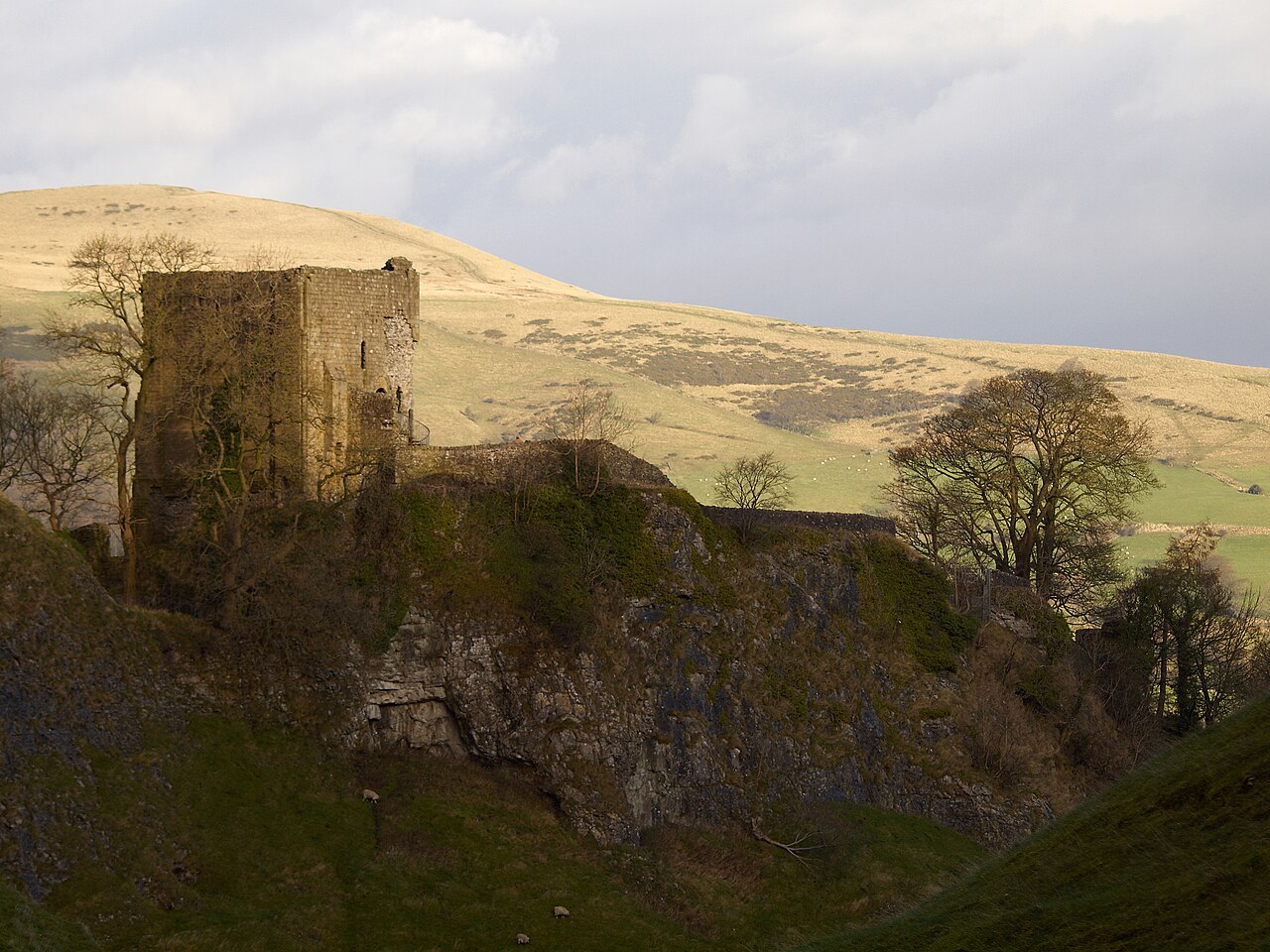
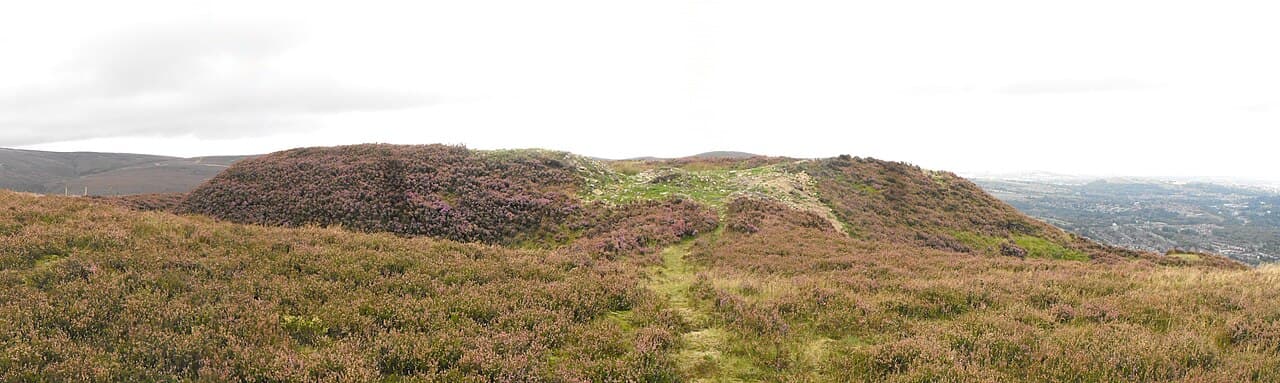
Buckton Castle represents one of the earliest stone enclosure castles in the North West of England, located near Carrbrook in Stalybridge, within the metropolitan borough of Tameside, Greater Manchester. Historically part of Cheshire, this high medieval castle dates back to the 12th century and survives today only as archaeological ruins beneath layers of heather and peat. The castle’s remains lie close to Buckton Vale Quarry and are protected as a scheduled monument, marking its importance in England’s medieval fortification heritage.
Architectural features and layout
The castle was designed as a stone enclosure, a form characterized by a strong curtain wall surrounding an inner courtyard. Buckton Castle’s curtain wall measured approximately 2.8 metres (9 feet) thick, indicating a significant defensive purpose. This wall enclosed a central area, which was protected further by a substantial ditch or moat, measuring about 10 metres (33 feet) wide and 6 metres (20 feet) deep. Such dimensions suggest a formidable defensive perimeter, typical of early stone castles built to assert territorial control and provide refuge.
Unlike many castles that evolved into large complexes, Buckton Castle appears to have been relatively modest in size and scope. Archaeological evidence indicates that the castle may never have been fully completed, as suggested by the scarcity of domestic artifacts and structural remains within the enclosure. The castle’s design reflects early experimentation with stone fortifications in the region during the 12th century, a period when timber motte-and-bailey castles were being replaced or supplemented by stronger stone structures.
Historical context and significance
The earliest documentary mention of Buckton Castle dates from 1360, by which time it was already in a derelict state. This suggests that the castle’s active use was relatively brief, likely confined to the 12th century. Its construction coincides with a period of consolidation of Norman power in northern England, when stone castles were erected to secure control over contested territories.
In the centuries following its abandonment, the site of Buckton Castle took on various roles. During the 16th century, it is believed to have been used as a beacon site during the Pilgrimage of Grace, a widespread uprising against Henry VIII’s religious reforms. This use highlights the strategic vantage point offered by the castle’s location, even after its military function had ceased.
In the 18th century, the ruins attracted treasure hunters, spurred by rumors of hidden gold and silver. Although no significant treasure was found, these legends reflect the enduring local fascination with the site’s mysterious past.
During the Second World War, the site was repurposed as an anti-aircraft decoy, demonstrating its continued tactical value across centuries. This adaptation involved creating visual distractions to mislead enemy aircraft, a common defensive strategy in wartime Britain.
Archaeological investigations and preservation
Between 1996 and 2010, Buckton Castle was the focus of detailed archaeological research as part of the Tameside Archaeology Survey. Initial investigations were conducted by the University of Manchester Archaeological Unit, followed by work from the University of Salford's Centre for Applied Archaeology. This extensive project included community archaeology initiatives, engaging over 60 local volunteers in excavation and research activities.
The archaeological work uncovered the castle’s buried remains, providing valuable insights into early medieval castle construction in the region. Finds from the site, though limited, support the hypothesis that the castle may have been abandoned before completion. The preservation of the site as a scheduled monument ensures ongoing protection and recognition of its historical and cultural importance.
Location and environment
Buckton Castle is situated near the village of Carrbrook, close to Stalybridge in Greater Manchester. Its placement on elevated ground allowed for commanding views of the surrounding landscape, a typical feature for medieval fortifications designed for surveillance and defense. The proximity to Buckton Vale Quarry indicates a landscape that has undergone significant change, yet the castle’s earthworks and stone remains persist beneath natural overgrowth.
Legacy and cultural impact
While Buckton Castle never developed into a large or long-lasting fortress, its early stone construction marks it as a significant example of medieval military architecture in North West England. The castle’s ruins and archaeological record contribute to understanding the transition from timber to stone fortifications during the high medieval period.
Its varied uses over time—from a defensive stronghold to a beacon site, a treasure hunting locale, and a wartime decoy—illustrate the adaptability of such sites and their continuing relevance in different historical contexts. Today, Buckton Castle remains a point of interest for historians, archaeologists, and visitors intrigued by England’s medieval past and the evolution of castle architecture.
Frequently asked questions (FAQ)
- What is the historical significance of Buckton Castle?
- Buckton Castle is a remarkable example of medieval architecture, dating back to the 12th century. It played a strategic role in the defense of the region and has witnessed numerous historical events, including battles and sieges, making it a vital part of the local heritage.
- When was Buckton Castle built?
- Buckton Castle was constructed in the early 12th century, around the year 1100. It was built as a fortification to protect the surrounding lands and has since become a symbol of the area's rich history.
- What are the opening hours for Buckton Castle?
- Buckton Castle is open to visitors from 10 AM to 5 PM, seven days a week. However, it's advisable to check the official website for any seasonal changes or special events that may affect these hours.
- Can I access Buckton Castle with a wheelchair?
- While Buckton Castle is a historical site with some uneven terrain, efforts have been made to improve accessibility. There are designated pathways for easier access, but visitors should be aware that some areas may still pose challenges for those with mobility impairments.
- What is the best time to visit Buckton Castle?
- The best time to visit Buckton Castle is during the spring and early autumn when the weather is mild, and the grounds are in full bloom. This is also when the castle hosts various events and activities that enhance the visitor experience.
- Are there any nearby attractions to visit?
- Yes, Buckton Castle is located near several other historical sites and scenic areas. Visitors can explore local museums, parks, and other castles, making it an excellent base for a day of sightseeing in the region.
- How much are the ticket prices for Buckton Castle?
- Ticket prices for Buckton Castle are typically £10 for adults and £5 for children. Family tickets and group discounts are also available, and it's wise to check online for any special promotions or events that may offer reduced rates.
Photo gallery

Information
Loading map...
Visitor reviews
No reviews yet. Been here? Write the first review and help other travelers!
Write the first reviewVisited this castle? Share your experience
Your review helps other travelers and adds first-hand knowledge to our encyclopedia.