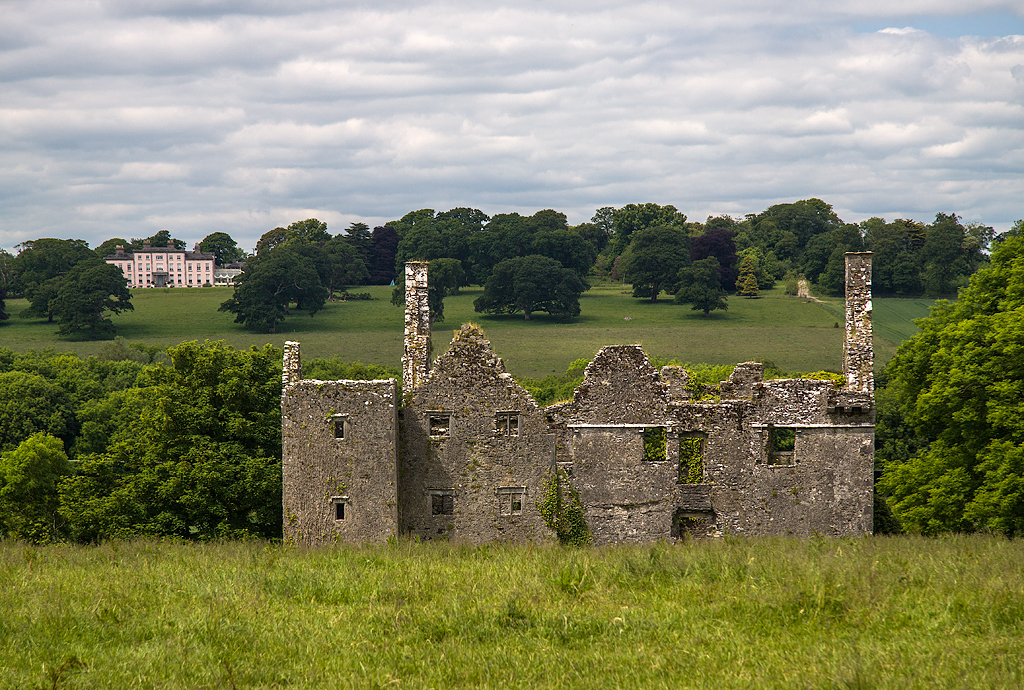
Mallow Castle
Mallow Castle stands as a remarkable historical site in County Cork, Ireland, embodying centuries of architectural evolution and turbulent history. The castle complex, located in the town of Mallow within the Castlelands area, presents a rich narrative spanning from its Anglo-Norman origins in the late 12th century to its current status as an evocative ruin and heritage site.
The earliest fortification at Mallow was constructed around 1185 by order of King John, marking the site as a strategic stronghold during the medieval period. This initial castle, often referred to as the 13th-century Desmond Castle, became the seat of the powerful Earls of Desmond by the late 13th century. The Geraldine family, as they were known, held sway over the region and the castle was a symbol of their influence until the Geraldine Wars led to the confiscation of their estates by Queen Elizabeth I.
The 16th-century fortified house: transition from fortress to residence
In the late 16th century, the estate was granted to Sir Thomas Norreys, then Lord President of Munster. Between 1585 and 1599, Norreys constructed the current castle structure, a fortified house often described as a "stronghouse". This building represents a transitional architectural form between a medieval stone fortress and a more domestic fortified residence. It was built using stones from the previous castle located approximately 40 meters north, integrating the legacy of earlier fortifications into its fabric.
The castle is a long, rectangular, three-storey stone building with two polygonal towers at the northwest and southwest corners. It features early Jacobean architectural elements such as high gables, stepped battlements, and mullioned windows. The design includes projecting wings on the north and south walls, with the main entrance in the north wing. This layout was strategically planned to allow defenders to maintain a continuous field of musket fire, reflecting the unsettled political climate of the time.
Historical conflicts and ownership transitions
The castle passed to the Jephson family in 1607 through marriage. The Jephsons were prominent local landowners who retained ownership for nearly 400 years. During the Irish Confederate Wars in the 1640s, Mallow Castle was a focal point of military action. In 1642, it withstood a siege by Confederate forces under Viscount Mountgarret. However, in 1645, it was captured by Lord Castlehaven but was soon retaken by Parliamentarian forces led by Lord Inchiquin.
Later, during the Williamite War in 1689, the castle was burned by Jacobite forces, causing significant damage and leading to its abandonment as a primary residence.
The 19th-century mansion and estate development
Following the destruction of the fortified house, the Jephson family constructed a new grand residence approximately 70 meters northeast of the original castle. This 19th-century baronial mansion was developed by enlarging and ornamenting the old stable block of the earlier castle. The mansion exemplifies the shift from defensive architecture to comfortable country living, featuring eight reception rooms, including a music room, billiard room, and library, alongside twelve bedrooms.
This mansion remains a private residence and is not open to the public, contrasting with the accessible ruins of the fortified house.
Architectural features and site layout
The Mallow Castle estate encompasses approximately 33 acres (13 hectares) of gardens and parkland. The site contains three principal structures that illustrate the castle's layered history. To the east lie the ruins of the original 13th-century castle, showcasing early medieval military architecture.
The central feature is the 16th-century fortified house with its distinctive polygonal towers and Jacobean stylistic details. Its defensive design includes stepped battlements and a layout that facilitated musket defense, highlighting the blend of residential and military functions.
To the north, the 19th-century mansion reflects Victorian baronial tastes and the evolution of aristocratic living standards.
Preservation and public access
Recognized for its historical and architectural significance, the mid-16th-century fortified house was designated a National Monument in 1928. In recent decades, ownership of the castle grounds and structures transferred to Cork County Council, which now maintains the site. Visitors can freely explore the evocative ruins of the fortified house, gaining insight into Ireland's complex history and architectural heritage.
The 19th-century mansion remains a private home and is not accessible to the public. The site offers a unique opportunity to witness the evolution of castle architecture from medieval fortress through Jacobean stronghouse to Victorian country mansion, all set within a picturesque Irish landscape.
Cultural significance and legacy
Mallow Castle stands as a testament to the dynamic history of Ireland, reflecting shifts in power, architectural styles, and social structures over more than eight centuries. Its layered construction and varied uses illustrate the adaptation of defensive architecture to changing political realities and domestic needs.
Today, the castle ruins and estate serve not only as a heritage attraction but also as a symbol of the region's rich past, connecting visitors with the stories of Anglo-Norman lords, Tudor administrators, and Irish families who shaped the landscape of Munster.
Frequently asked questions (FAQ)
- How do I visit Mallow Castle and what are the opening hours?
- Mallow Castle ruins are open to the public and can be visited freely throughout the year. There are no official opening hours as the site is accessible at all times, but it is best to visit during daylight for safety and viewing conditions.
- What is the historical significance of Mallow Castle?
- Mallow Castle is historically significant as a site that evolved from a 13th-century Anglo-Norman fortress to a 16th-century fortified house and later a 19th-century mansion. It played key roles in regional conflicts including the Irish Confederate Wars and the Williamite War.
- Can I visit the 19th-century mansion at Mallow Castle?
- The 19th-century mansion at Mallow Castle is privately owned and not open to the public. Visitors can only explore the ruins of the 16th-century fortified house and the surrounding grounds.
- What architectural styles are represented at Mallow Castle?
- Mallow Castle features a mix of architectural styles, including early medieval military architecture from the 13th century, Jacobean elements in the 16th-century fortified house, and Victorian baronial style in the 19th-century mansion.
- Is Mallow Castle accessible for people with mobility issues?
- The castle ruins are on uneven terrain and may present challenges for visitors with mobility issues. There are no specialized accessibility facilities on site, so visitors should plan accordingly.
Information
Sources & official resources
Verify the information above using these authoritative references.
Loading map...
Visitor reviews
No reviews yet. Been here? Write the first review and help other travelers!
Write the first reviewVisited this castle? Share your experience
Your review helps other travelers and adds first-hand knowledge to our encyclopedia.