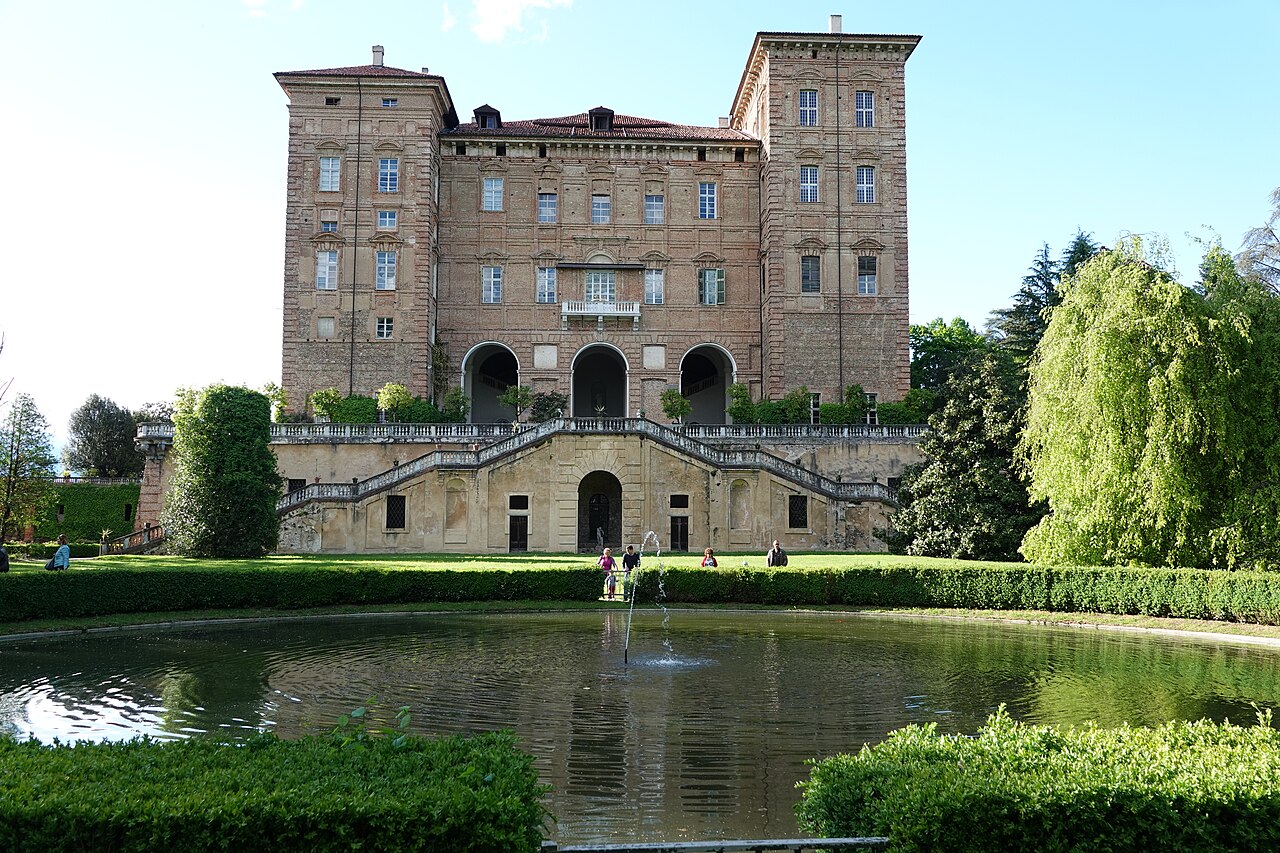
Malgrà Castle
Malgrà Castle stands prominently in the town of Rivarolo Canavese, Italy, marking the landscape since its construction began in 1333 under the direction of the Counts of San Martino. Originally conceived as a military presidium, the castle's initial purpose was defensive, guarding the territory with a robust structure that included a tall defence tower and two distinct wings. This late medieval fortress reflects the strategic architectural priorities of the 14th century, designed to withstand sieges and control the surrounding area.
The architectural evolution from fortress to noble residence
As peace gradually took hold in the region during the 14th century, the castle underwent significant transformations that shifted its character from purely military to residential and representational. The original complex, composed of two separate parts and the defensive tower, was expanded by adding an additional floor to the west wing. This extension not only increased living space but also allowed for the introduction of more refined architectural elements.
Decorative enhancements included the application of frescoes over the main entrance and beneath the small porch in the inner courtyard, signaling the castle's transition into a noble mansion. These frescoes contribute to the castle's artistic heritage, showcasing the tastes and cultural aspirations of its owners during the late medieval period.
Ownership changes and 17th-century modifications
In the early 17th century, ownership of Malgrà Castle passed from the San Martino family to the Gria family, and later to the Cortina of Favria family. During this period, the castle's interiors were further adapted to accommodate the lifestyle of the nobility. The north wing was transformed to include large salons, which featured ceilings decorated with floral motifs. These rooms, now used as temporary exhibition spaces, reflect the baroque influences and the growing importance of comfort and aesthetics in aristocratic residences of the time.
The elegant staircase leading to the first-floor corridor was designed by the architect Boggio di San Giorgio. This corridor is characterized by a series of round-arched windows that offer views over the Canavese countryside, blending functional circulation with scenic appreciation.
19th-century restoration and artistic revival
Towards the end of the 19th century, Malgrà Castle underwent a significant restoration and stylistic refurbishment, driven by the vision of Countess Natalia Francesetti. She enlisted the expertise of Alfredo d’Andrade, a prominent figure in the field of architectural restoration, along with his collaborator Carlo Nigra. Their work aimed to preserve the castle's historical character while enhancing its aesthetic appeal, aligning with the period's interest in historicism and the revival of medieval architecture.
This restoration phase helped secure Malgrà Castle's status as a cultural landmark, ensuring that its architectural and artistic elements were conserved for future generations. The combination of medieval foundations with later decorative and structural interventions makes the castle a valuable example of architectural evolution over several centuries.
Architectural features and layout
The castle's layout reflects its dual function as a fortress and noble residence. The defensive tower remains a dominant feature, symbolizing the castle's original military purpose. The two wings, with their successive additions and modifications, illustrate the adaptation of the structure to changing needs and tastes.
The presence of frescoes, decorative ceilings, and the refined staircase highlight the castle's transition from a purely defensive stronghold to a comfortable and prestigious home. The inner courtyard with its porch and artistic embellishments serves as a central organizing space, typical of castles that evolved into noble residences.
Historical and cultural significance
Malgrà Castle is a significant monument within the Canavese region, representing the historical trajectory from medieval fortification to Renaissance and post-Renaissance aristocratic dwelling. Its preservation allows insight into the architectural trends and social history of northern Italy from the 14th century onward.
The castle's role as a military presidium during turbulent times and its later transformation into a noble mansion reflect broader historical patterns of peace, stability, and cultural development in the region. Today, it serves not only as a heritage site but also as a venue for exhibitions, connecting the past with contemporary cultural activities.
Visiting Malgrà Castle
The castle's large salons, adorned with floral ceiling decorations, are now used for temporary exhibitions, inviting visitors to experience the blend of historical architecture and artistic display. The views from the first-floor corridor's round-arched windows offer a picturesque panorama of the surrounding countryside, enhancing the visitor experience.
While specific visiting hours and ticket prices may vary, Malgrà Castle remains an important cultural destination in Rivarolo Canavese, attracting those interested in medieval architecture, noble residences, and Italian heritage.
Frequently asked questions (FAQ)
- How do I get to Malgrà Castle?
- Malgrà Castle is located in Rivarolo Canavese, Italy, and is easily accessible by car or public transportation. There are parking facilities nearby, and local buses connect to the castle from major cities in the region. Consider using GPS for the most efficient route.
- What is the historical significance of Malgrà Castle?
- Malgrà Castle dates back to the 14th century and was built as a defensive structure during the feudal era. It has a rich history, serving various roles over the centuries, including being a residence for noble families. The castle is a testament to medieval architecture and the strategic importance of the region.
- When was Malgrà Castle built?
- Construction of Malgrà Castle began in the 14th century, around the year 1300, and it was completed in the following decades. The castle has undergone several renovations since its original construction, reflecting the architectural styles of different periods. Its historical layers make it an interesting site for visitors interested in medieval history.
- Can I visit Malgrà Castle year-round?
- Yes, Malgrà Castle is open to visitors year-round, although specific opening hours may vary by season. It's advisable to check the official website or contact the castle management for the most current information on visiting hours and any special events. Guided tours are often available to enhance your experience.
- Why is Malgrà Castle a popular tourist attraction?
- Malgrà Castle is popular due to its impressive architecture and rich historical context, making it a fascinating destination for history enthusiasts. The castle's picturesque location offers stunning views of the surrounding landscape, and its well-preserved structures provide insight into medieval life. Visitors appreciate the blend of history, culture, and natural beauty.
- Is it possible to take guided tours of Malgrà Castle?
- Yes, guided tours of Malgrà Castle are available and are highly recommended for those who want to learn more about its history and architecture. Knowledgeable guides provide insights into the castle's past, making the visit more engaging. It's best to book tours in advance, especially during peak tourist seasons.
- What are the ticket prices for Malgrà Castle?
- Ticket prices for Malgrà Castle vary depending on the type of tour and whether you are a student, adult, or senior. Generally, entrance fees are affordable, making it accessible for families and individuals. Check the official website for the most current pricing and any special discounts that may be available.
- What are the opening hours of Malgrà Castle?
- Malgrà Castle typically opens to visitors from 10 AM to 6 PM, but hours may change depending on the season or special events. It’s advisable to verify the opening hours prior to your visit to ensure you have ample time to explore. Keep in mind that the castle may close on certain holidays.
- What are some nearby attractions to Malgrà Castle?
- In addition to Malgrà Castle, visitors can explore the charming town of Rivarolo Canavese, which features quaint shops and local eateries. Nearby attractions include the stunning Sacra di San Michele and the beautiful landscapes of the Canavese region. Consider spending a day exploring both the castle and the surrounding area for a well-rounded experience.
Information
Loading map...
Visitor reviews
No reviews yet. Been here? Write the first review and help other travelers!
Write the first reviewVisited this castle? Share your experience
Your review helps other travelers and adds first-hand knowledge to our encyclopedia.