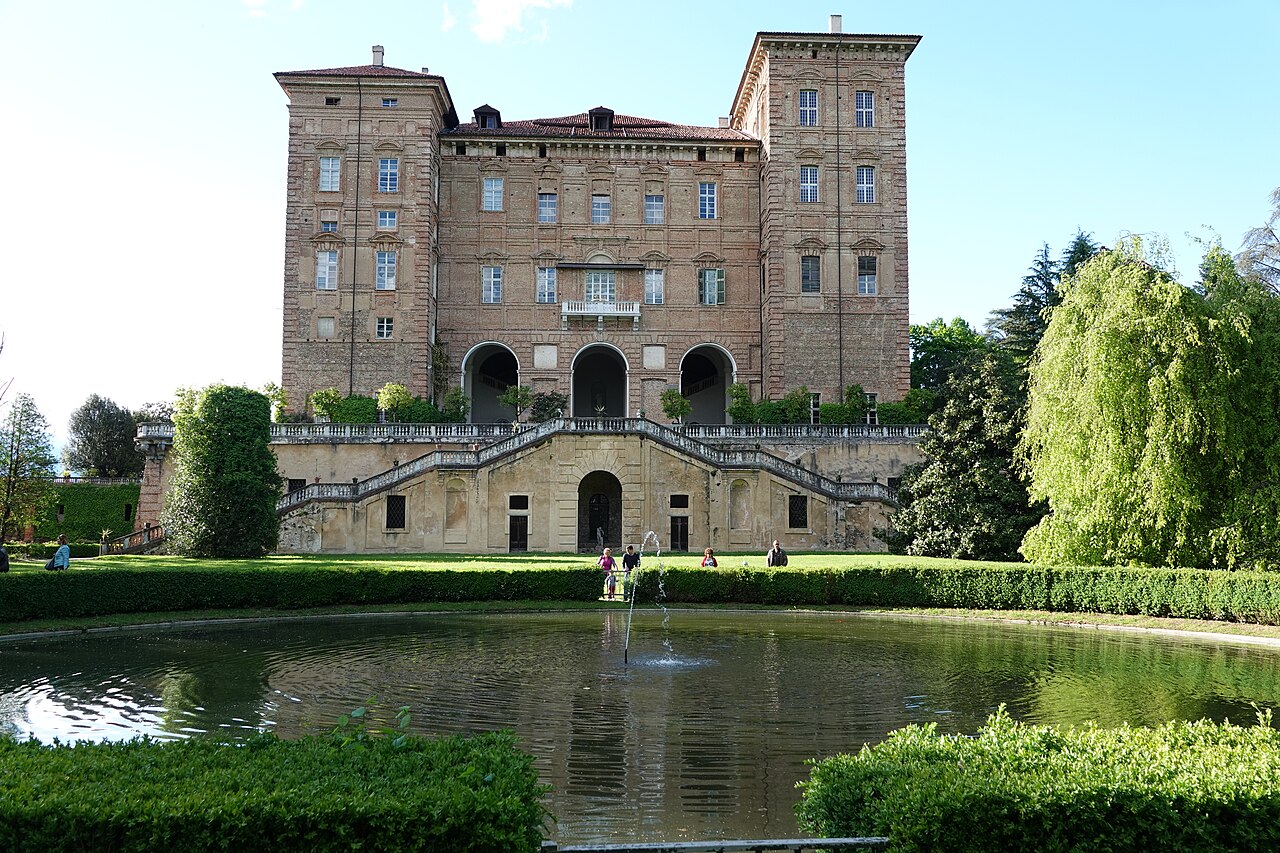
Castellamonte Castle
Castellamonte Castle stands prominently on a hill overlooking the town of Castellamonte in the Canavese region of northern Italy. This medieval fortress is a significant example of fortified architecture that evolved over centuries, reflecting the turbulent history and varied architectural styles of the area. Its origins trace back to at least the 11th century, with documentary evidence from 1066 indicating the castle's presence, though the initial construction likely predates this record.
Historical background and significance
The castle was originally built as a defensive stronghold during the High Medieval period, serving as a key fortification within the territory controlled by the descendants of Arduino, Marquis of Ivrea, who later became King of Italy. Castellamonte Castle was a central part of the defensive network protecting the Canavese region. The castle complex was fortified by a substantial curtain wall encircling the entire hill, punctuated by seven gates, many of which remain visible today.
During the Tuchini Rebellion (1383-1387), the castle suffered significant damage and was largely destroyed. This rebellion devastated the region and led to the castle's decline. However, it was rebuilt at the start of the 15th century, preserving key elements such as the tower-gate of the perimeter wall and the tower-door. The reconstruction included four main buildings arranged around the access road, forming a compact fortified complex.
Architectural features and later modifications
Medieval fortifications
The original medieval structure included a massive curtain wall that enclosed the hilltop, providing a formidable defense line. The surviving tower-gate and tower-door are characteristic of medieval military architecture, designed for both defense and control of access. The four buildings constructed around the entrance road during the 15th century formed the core of the castle's living and administrative quarters.
Baroque and neo-Gothic transformations
In the 19th century, the castle underwent significant changes under new ownership. The property passed to the Counts of St. Martin of Sale and Castelnuovo, and later to the Ricardi family of Netro. During this period, the castle complex was transformed to accommodate residential and aesthetic functions.
The building on the right side of the courtyard, known as the White Palace, features a 17th-century layout attributed to the architect Amedeo di Castellamonte, a notable figure in Piedmontese Baroque architecture. This section reflects the transition from purely defensive architecture to more refined residential design, incorporating Baroque stylistic elements.
On the left side stands the Red Tower, remodeled by Luigi Formento in the neo-Gothic style. This transformation included the addition of decorative elements typical of the 19th-century Gothic Revival movement, such as pointed arches and ornamental battlements, turning the tower into a villa with romantic historicist features.
The castle complex today
Today, Castellamonte Castle consists of four main buildings accessed through an imposing Baroque portal leading into a large square garden. Sections of the original perimeter walls and gates are still visible, providing insight into the castle's medieval defensive layout. The juxtaposition of medieval fortifications with Baroque and neo-Gothic renovations illustrates the castle's layered history and architectural evolution.
The castle remains an important cultural landmark in the Canavese region, offering visitors a glimpse into the area's medieval past and its architectural transformations through the centuries. Its location on a hill provides commanding views of Castellamonte and the surrounding landscape, emphasizing its original strategic importance.
Architectural details and construction techniques
The medieval walls were constructed using local stone, typical of the region's fortifications, with thick masonry designed to withstand siege warfare. The surviving towers exhibit the use of narrow slit windows for archers and crenellated battlements for defense. The 15th-century rebuilding preserved these military features while adapting the castle for residential use.
The Baroque modifications introduced more elaborate decorative stonework and larger windows, reflecting changes in architectural tastes and the reduced need for military defense. The neo-Gothic alterations by Luigi Formento further enhanced the castle's aesthetic appeal, adding ornamental elements that evoke medieval romanticism rather than functional fortification.
Visiting Castellamonte Castle
While the castle is privately owned, it remains a significant historical site in the region. Visitors interested in medieval architecture and Piedmontese history can appreciate the castle's complex evolution from a military fortress to a noble residence. The visible remains of the curtain walls and towers provide tangible connections to the castle's defensive origins, while the Baroque and neo-Gothic buildings illustrate its adaptation to changing times and tastes.
The castle's hilltop position allows for panoramic views of the Canavese area, enhancing its appeal as a heritage site. Although access to the interior may be limited, the exterior and the surrounding gardens offer a valuable experience for those exploring the architectural heritage of northern Italy.
Frequently asked questions (FAQ)
- What is the historical significance of Castellamonte Castle?
- Castellamonte Castle, originally built in the 12th century, served as a strategic stronghold for the local nobility and played a crucial role in regional power dynamics. Its architecture reflects the defensive needs of the time, showcasing various styles that evolved over the centuries. Today, it stands as a testament to the rich history of the Piemonte region in Italy.
- When was Castellamonte Castle constructed?
- The construction of Castellamonte Castle began in the 12th century, with various expansions and renovations occurring in the following centuries. The castle's architecture evolved to meet the needs of its inhabitants and the advancements in military technology. Visitors can appreciate the blend of medieval and Renaissance styles throughout the structure.
- Can I visit Castellamonte Castle?
- Yes, Castellamonte Castle is open to the public for guided tours. Visitors can explore its historic rooms and learn about its fascinating history from knowledgeable guides. It's advisable to check the castle's official website for any specific visiting requirements or restrictions.
- What are the opening hours for Castellamonte Castle?
- Castellamonte Castle typically opens to visitors from 10 AM to 5 PM, but hours may vary seasonally. It is recommended to check the castle's official schedule before planning your visit. Special events and holidays may also affect the regular hours.
- Is it possible to access Castellamonte Castle with limited mobility?
- While Castellamonte Castle is a historic site, some areas may present challenges for visitors with limited mobility due to its ancient architecture. However, the castle staff is committed to accommodating guests and can provide information on accessible routes and areas. It is best to contact them in advance to discuss specific needs.
- When is the best time to visit Castellamonte Castle?
- The best time to visit Castellamonte Castle is during the spring and fall when the weather is mild and pleasant. These seasons also attract fewer tourists, allowing for a more enjoyable experience while exploring the castle and its surroundings. Summer can be quite hot, while winter may bring cold temperatures and potential closures.
- What are the ticket prices for Castellamonte Castle?
- Ticket prices for Castellamonte Castle are generally affordable, with discounts available for students and seniors. Children under a certain age may enter for free. It's advisable to check the official website for the most current pricing and any special offers or group rates.
- What nearby attractions should I visit while in Castellamonte?
- While visiting Castellamonte Castle, consider exploring the charming town of Castellamonte itself, known for its ceramics and beautiful landscapes. Nearby attractions include the scenic Canavese region and its vineyards, offering opportunities for wine tasting and outdoor activities. Don't miss the chance to experience local cuisine in the area as well.
Information
Loading map...
Visitor reviews
No reviews yet. Been here? Write the first review and help other travelers!
Write the first reviewVisited this castle? Share your experience
Your review helps other travelers and adds first-hand knowledge to our encyclopedia.