Mała Nieszawka
Mała Nieszawka Castle stands as a significant example of a high medieval hill castle in Poland, with origins dating back to the early 13th century. Established initially as a wooden and earthwork fortification known as Nieszawa, it was granted to the Teutonic Knights by Prince Konrad Mazowiecki in 1230. The Knights named the original stronghold "Vogelsang," meaning "birdsong," marking the foundation of the first and smallest komturstwo (commandery) in Poland. Although the exact location of this initial fortification is uncertain, it was likely near the present-day Toruń Główny railway station.
The strategic importance and early history
The capture of Pomerania Gdańskie by the Teutonic Order in 1308 intensified tensions with Poland, elevating the importance of the Nieszawa site as a strategic stronghold on the left bank of the Vistula River. Recognizing this, the Order commenced construction of a new, more durable brick and stone castle before 1327, located approximately 5 kilometers downstream from the original fort. The building work was interrupted by conflicts with King Władysław Łokietek but resumed after the war ended in 1332, reaching completion in the 1380s.
Architectural design and layout
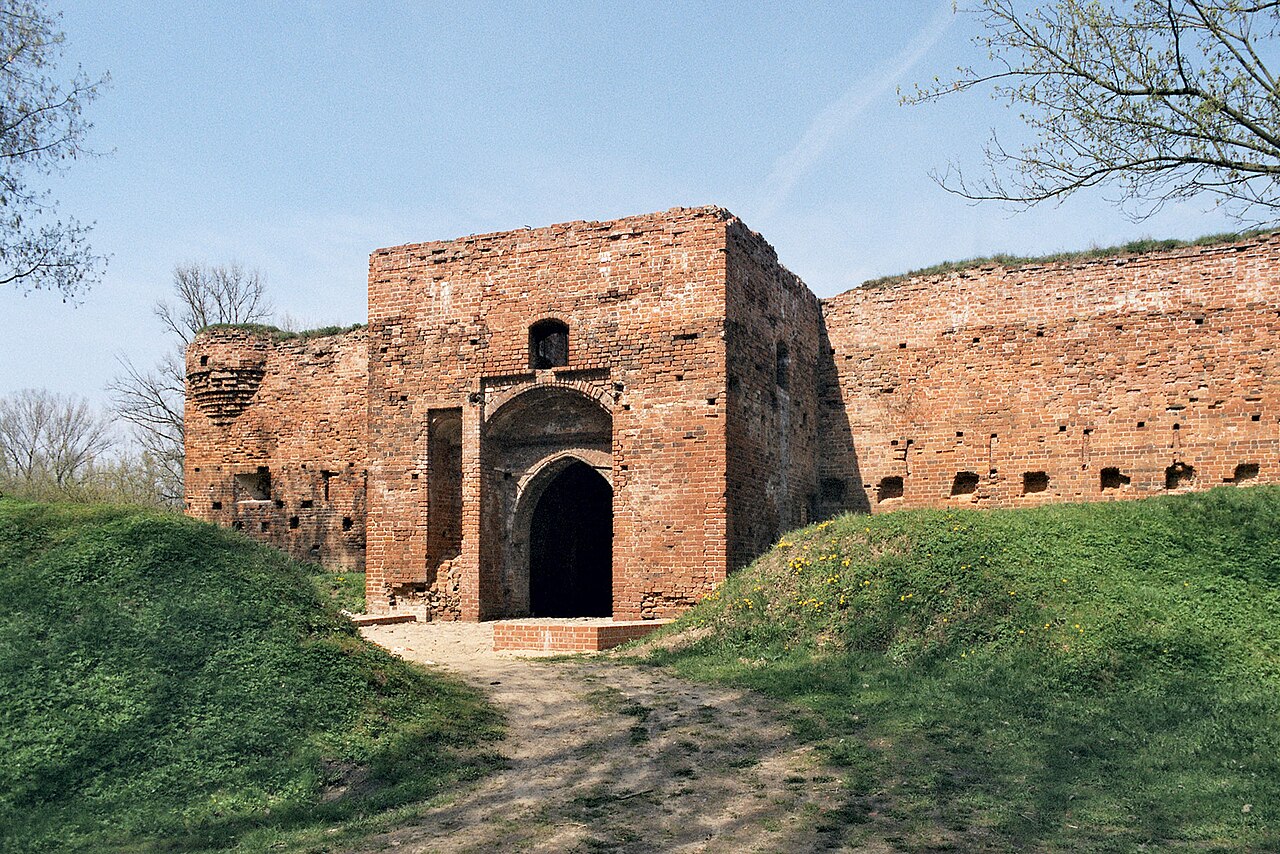
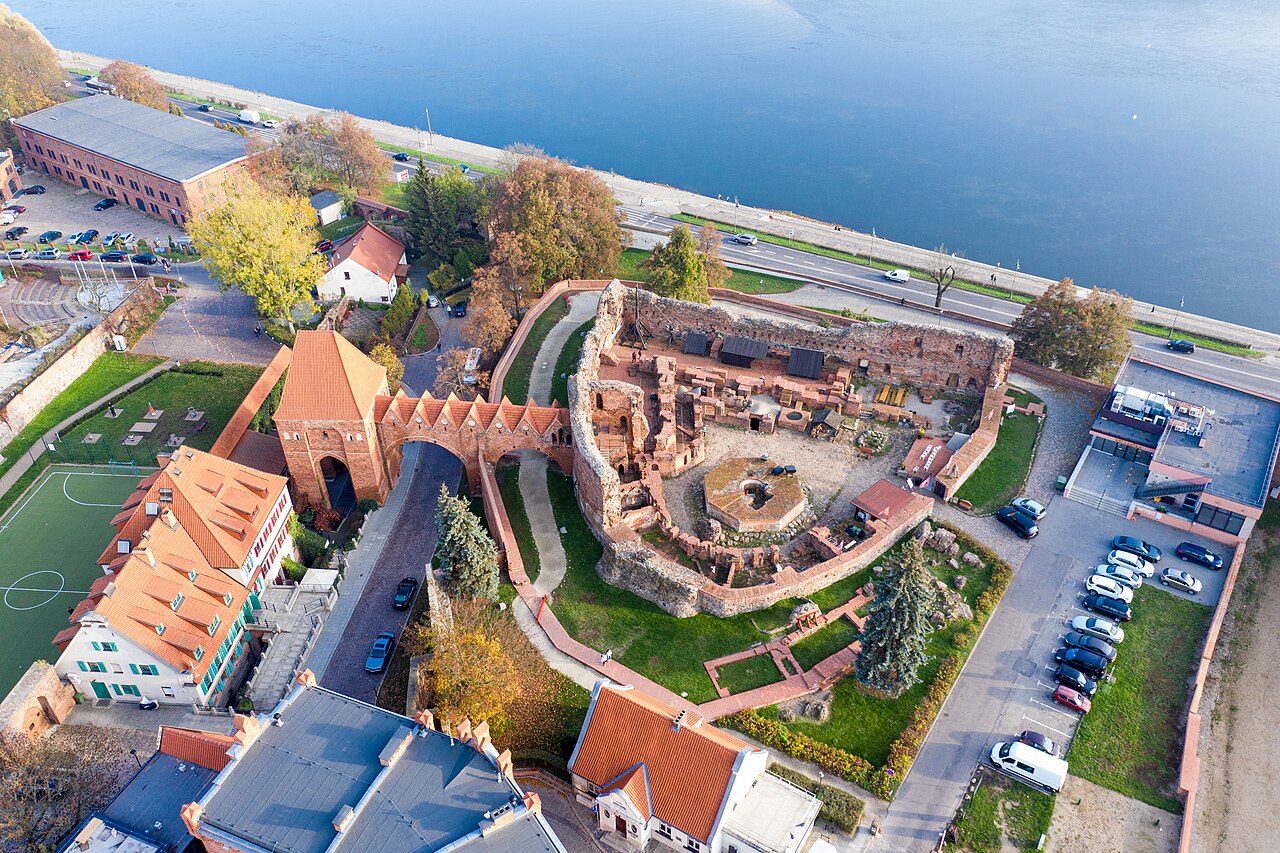
The castle was constructed on a small hill on a peninsula formed by a bend in the Vistula River, taking advantage of natural defenses. It comprised the main castle and a northern outer bailey (podzamcze). The main castle featured a nearly square plan measuring approximately 35 by 35.7 meters. It was built primarily of brick on a stone foundation, surrounded by an additional outer wall (parkan) that created a spacious inter-wall courtyard. A deep, water-filled moat separated the main castle from the outer bailey to the north, with access controlled by a northern gatehouse, a drawbridge, and a gate preceded by a gate neck (szyja bramna).
Castle wings and internal structures
The castle did not have a full four-winged enclosure. The north wing extended only from the western corner to the gate and housed a basement and ground-floor guardroom for the gate. The upper floor possibly served as the komtura's residence. The east wing included partially vaulted basement rooms used for storage and utility purposes, featuring a hypocaust heating system, an advanced Roman-style underfloor heating furnace. The south wing was the most representative part of the castle, with vaulted basements likely serving as the convent's cellars and dormitory. The west wing contained the castle kitchen.
The internal courtyard was likely surrounded by a wooden gallery (krużganek) that provided access to upper-floor rooms. A well, lined with wood, was situated in the courtyard, supplying fresh water to the inhabitants.
Role in Polish-Teutonic conflicts
During the Polish-Teutonic War of 1410, the castle was captured by the forces of King Władysław Jagiełło. However, it was returned to the Teutonic Order following the First Peace of Toruń. The subsequent conflict known as the "Golub War" in 1422 ended with a treaty signed on September 27 at Lake Mełneńskie. This agreement returned the Nieszawa district to Poland and stipulated the demolition of the castle by the Teutonic Knights by June 24, 1423. Despite some delays, the castle's walls were dismantled by 1424.
Present state and archaeological significance
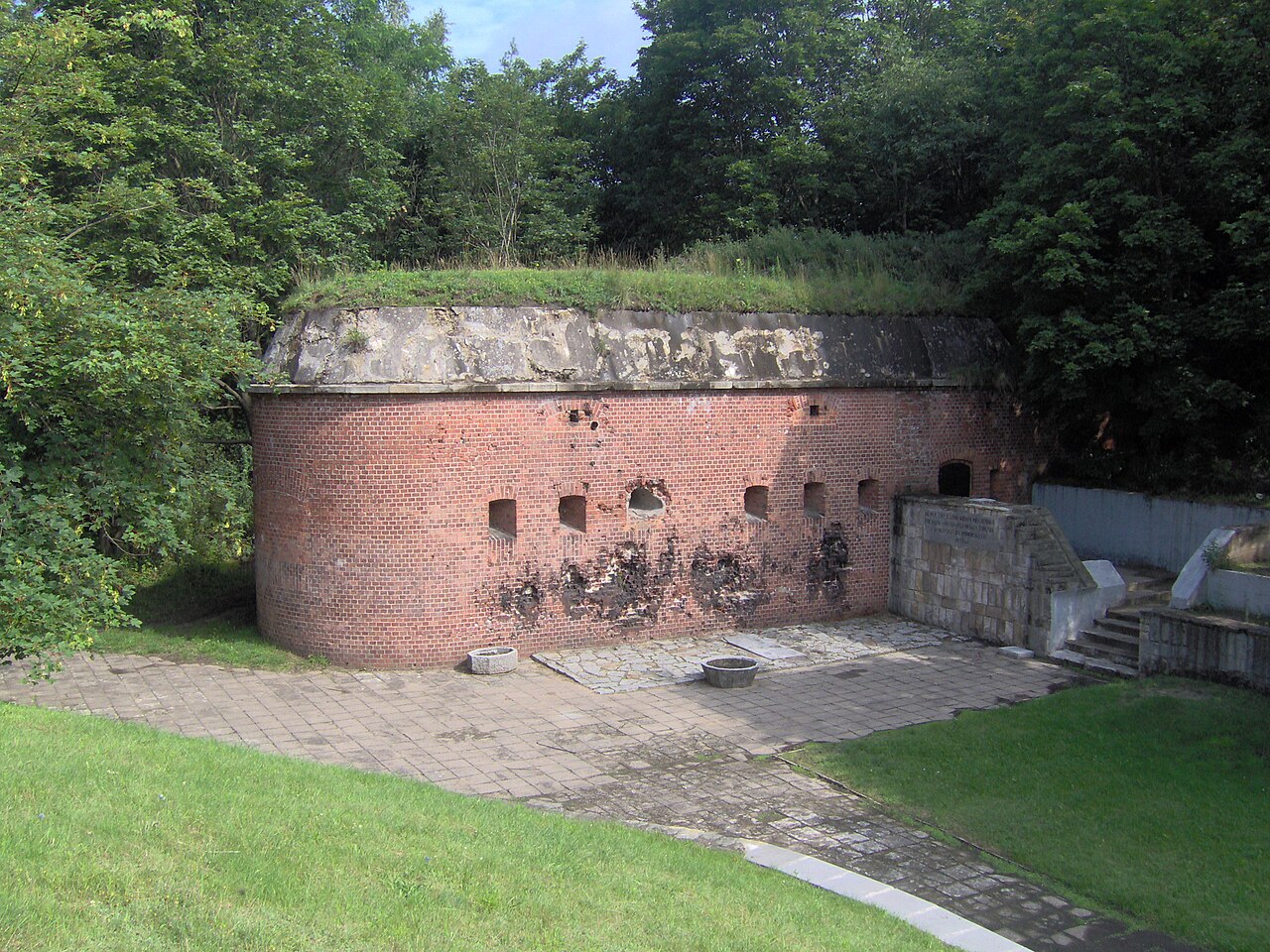
Today, only the remnants of the castle's foundations and some cellar remains have survived, uncovered through archaeological excavations. The site offers valuable insights into Teutonic military architecture and the turbulent history of the Polish-Teutonic borderlands during the 14th and 15th centuries. Mała Nieszawka Castle remains an important cultural heritage site, reflecting the architectural and historical legacy of the Teutonic Order in Poland.
Architectural features and construction techniques
The use of brick on stone foundations was typical of Teutonic castles in this period, combining durability with the availability of local materials. The castle's layout, with its moat, drawbridge, and gate neck, exemplifies medieval defensive design aimed at controlling river access and protecting against siege warfare. The hypocaust system in the east wing is a notable feature, demonstrating advanced heating technology uncommon in many contemporary castles.
Defensive elements
The castle's position on a peninsula created a natural defense barrier, supplemented by the water-filled moat and strong perimeter walls. The outer bailey provided additional space for support buildings and troops, enhancing the castle's defensive capabilities. The drawbridge and gatehouse controlled access, vital for security during frequent conflicts.
Living quarters and functional spaces
The south wing's vaulted basements likely served dual purposes of storage and accommodation for the knights, while the north wing's guardroom and possible komtura's residence highlight the administrative and military functions combined within the castle. The kitchen in the west wing and the well in the courtyard ensured the castle's self-sufficiency during sieges.
Visiting Mała Nieszawka Castle today
While only archaeological remains are visible at the site, Mała Nieszawka Castle is accessible to visitors interested in medieval history and Teutonic architecture. The location near the Vistula River offers scenic views, and the site is of particular interest to historians and archaeologists studying the region's medieval past.
Nearby attractions
Visitors can explore the historic city of Toruń nearby, renowned for its well-preserved medieval old town and association with the astronomer Nicolaus Copernicus. The region offers rich cultural experiences alongside the exploration of Teutonic heritage.
Frequently asked questions (FAQ)
- How do I get to Mała Nieszawka Castle?
- Mała Nieszawka Castle is located near the village of Mała Nieszawka in the Kuyavian-Pomeranian Voivodeship of Poland. It is accessible by car and local transport from the nearby city of Toruń, which is well connected by train and road.
- What is the historical significance of Mała Nieszawka Castle?
- Mała Nieszawka Castle played a crucial role in the Polish-Teutonic conflicts during the 14th and early 15th centuries. It was a strategic stronghold on the Vistula River, witnessing key battles and political treaties between Poland and the Teutonic Order.
- Can I visit the castle ruins?
- Yes, visitors can explore the archaeological site of Mała Nieszawka Castle. While only the foundations and cellar remains are visible, the site offers informative displays and a glimpse into medieval castle architecture.
- When was the castle built and by whom?
- The original wooden and earthwork fortification was granted to the Teutonic Knights by Prince Konrad Mazowiecki in 1230. The current brick castle was constructed by the Teutonic Order beginning before 1327 and completed in the late 14th century.
- What architectural features are notable at Mała Nieszawka Castle?
- Notable features include the brick walls on stone foundations, the moat with a drawbridge, the gatehouse with a gate neck, vaulted basements, and a hypocaust heating system in the east wing, reflecting advanced medieval construction techniques.
- Is the castle accessible year-round?
- The archaeological site is generally open to visitors year-round, but it is advisable to check local information for any seasonal restrictions or guided tour availability.
- Are there any other attractions near Mała Nieszawka Castle?
- Nearby Toruń offers a wealth of medieval architecture, museums, and cultural sites, including the birthplace of Nicolaus Copernicus. The region is rich in history and ideal for combining a castle visit with other historical explorations.
Information
Current owner
State museum
Loading map...
Visitor reviews
No reviews yet. Been here? Write the first review and help other travelers!
Write the first reviewVisited this castle? Share your experience
Your review helps other travelers and adds first-hand knowledge to our encyclopedia.